
Shear Emulsifier Selection and Scale-Up
An emulsion that looks smooth in a beaker can fail after one day on the shelf. The usual first response is to change the surfactant, add thickener, or run the mixer longer. Those changes may help, but they do not answer the central question: what droplet size distribution did the process create, and can the formulation hold it? A shear emulsifier is used to create and control that distribution, yet it is not a universal fix. Its value depends on the oil phase, the aqueous phase, the stabilizer, the viscosity, the temperature, and the way the equipment is operated.
A shear emulsifier changes that starting point by applying intense mechanical energy in a small working zone. Instead of moving the whole batch gently, it forces the mixture through a rotor-stator head where droplets are stretched, broken, and pushed into contact with surfactant. The result can be a finer emulsion with a narrower distribution, but only if the formulation and the process are matched. TENCAN supplies a shear emulsifier for this type of work, and the selection process should begin with the emulsion requirement rather than with a single machine setting.
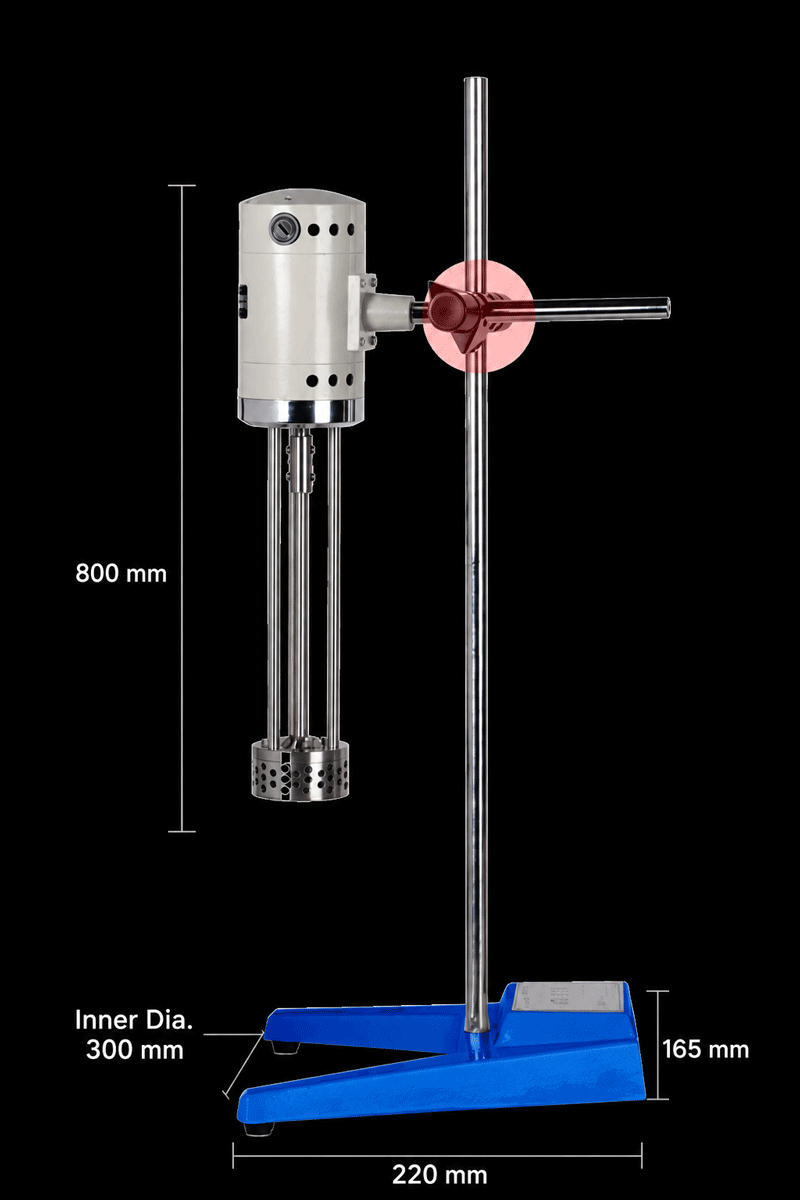
What a Shear Emulsifier Does That a Stirrer Cannot
A stirred tank can blend oil and water, but blending is not emulsification. A simple impeller creates bulk flow. It distributes droplets through the vessel but provides limited local shear, so large droplets remain and the distribution is often wide. A shear emulsifier creates a concentrated high-shear region. The rotor turns inside a close-fitting stator, and the mixture is repeatedly pulled into the working head, accelerated, forced through slots or openings, and expelled. The repeated passage is important because a single pass rarely gives a stable droplet size.
The Rotor-Stator Working Zone
The working head is the heart of the machine. Geometry, clearance, slot design, and rotor speed all influence the balance between pumping and shearing. A tool with tight clearance and aggressive slot geometry may create strong shear, but it can also add heat and limit flow. A more open tool may process viscous material more easily while giving a broader droplet size distribution. For this reason, the working head should be selected for the formulation, not only for the volume of the batch. The same drive can behave very differently with two different rotor-stator tools.
Droplet Breakup Is Only Half the Story
Emulsification involves two competing processes. Shear breaks droplets apart, and collisions allow them to recombine. Surfactant molecules must migrate to the new interface quickly enough to stabilize the newly created surface. If adsorption is slow, if surfactant is insufficient, or if the interfacial tension is too high, small droplets will coalesce soon after they are formed. The mixer may therefore produce a fine emulsion that looks good while hot and separates after cooling. A shear emulsifier cannot compensate for a formulation that lacks the interfacial coverage or viscosity to keep droplets apart.
Batch, Inline, and Small-Volume Operation
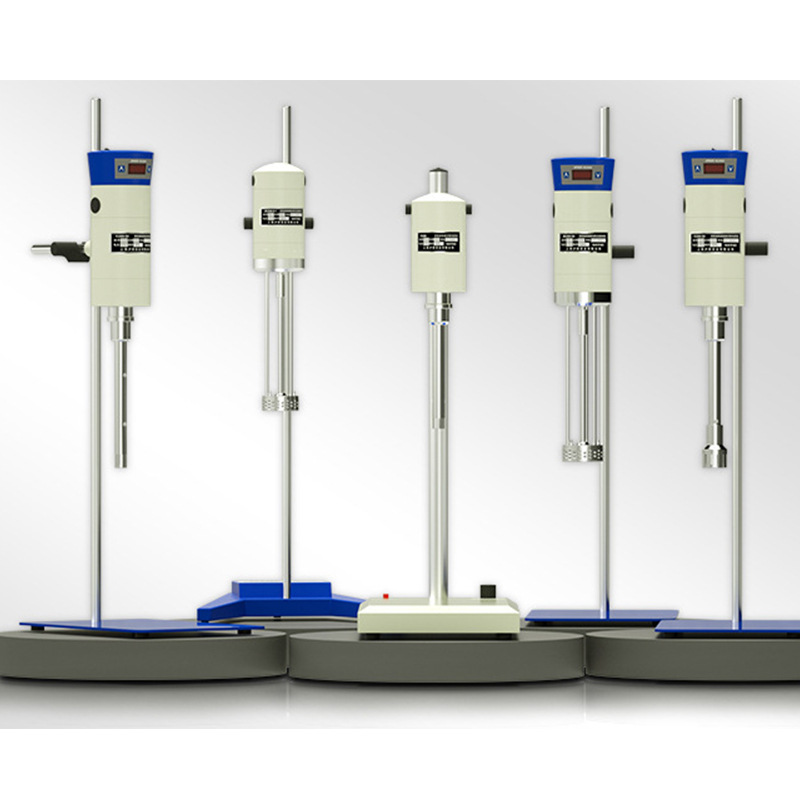
Shear emulsifiers appear in several practical arrangements. A batch unit works in a vessel and may be mounted top-entry, bottom-entry, or on a movable stand. An inline unit is installed in a circulation loop or a continuous line and relies on flow through the working head. Small-volume units are common in laboratories, where a few hundred milliliters may be enough for screening. Each arrangement has a different shear history. In a batch vessel, some material passes through the head many times while material near the wall may pass less often. In an inline loop, the number of passes is easier to estimate from flow rate and loop volume. Before selecting a TENCAN shear emulsifier, confirm the intended working volume, viscosity range, batch or inline mode, and cleaning method.
Premixing and Feed Order
A shear emulsifier is not usually the first place to combine all ingredients. Premixing affects whether the oil phase is dispersed as large islands, whether the surfactant has dissolved, and whether solids are wetted. If the feed order creates a viscous gel before the oil is added, the rotor-stator head may see a very different material than it sees later. If the oil is added too quickly, the working zone can be overloaded and the emulsion may temporarily invert. Feed rate and addition sequence should therefore be treated as process variables. The same shear emulsifier can produce different results from the same formula when the feed order changes.
Define the Emulsion Before You Choose Hardware
Equipment selection becomes much more reliable when the target is written as a set of measurable requirements rather than as a request for a high-shear mixer. The requirements do not need to be perfect at the start, but they should define what success looks like and what constraints the process must respect.
Target Droplet Size and Distribution
An average droplet size alone can hide a problem. Two emulsions with the same mean may behave differently because one has a narrow distribution and the other contains a tail of large droplets. The large droplets can promote creaming, while very small droplets may increase viscosity or susceptibility to Ostwald ripening. Define the relevant range and the acceptable span, then use microscopy, laser diffraction, or another validated method to check it. A shear emulsifier should be evaluated by the distribution it produces after a defined number of passes or a defined batch time, not by a single visual observation.
Viscosity and Phase Behavior
Viscosity affects pumping, residence time, and the amount of energy that actually reaches the interface. A low-viscosity oil-in-water system may flow easily through a rotor-stator head but can also foam or drain poorly. A high-viscosity cream or paste may need a different working head and a different feeding strategy. Non-Newtonian behavior adds another complication because the viscosity during processing can differ from the viscosity measured after cooling. If the material forms a gel, a lamellar phase, or a high-internal-phase emulsion, the selected shear emulsifier must be able to handle that change without stalling or creating dead zones.
Surfactant, Interfacial Tension, and Stabilizer
The surfactant system determines how quickly new interface can be covered. A single surfactant may work at one temperature and fail at another. A blend may produce a more robust film, but it can also create competing phases or foam. Polymeric stabilizers increase continuous-phase viscosity and slow droplet movement, but they can also depress the ability of the rotor-stator head to generate fine droplets. The process window should therefore be tested with the intended surfactant system, at the intended concentration, and with the intended order of addition. A shear emulsifier that performs well with a simple oil and water model may behave differently with the real formulation.
Temperature and Heat Sensitivity
Mechanical energy in the shear zone is converted partly into heat. Small batches can warm quickly, and temperature-sensitive ingredients may degrade at the interface or during holding. A higher tip speed can reduce droplet size but also raise temperature and promote air entrainment. If the formulation contains proteins, volatile actives, or heat-sensitive polymers, the process may need cooling, shorter runs, or a lower-energy tool. Record the temperature before, during, and after emulsification, and do not assume that a water bath alone controls the temperature inside the working head.
Water Quality and Ionic Environment
Water is not an inert background. Hardness, pH, dissolved salts, and trace contaminants can change surfactant behavior and interfacial charge. An emulsion that is stable in deionized water may cream or coagulate when made with process water. If the product will be manufactured in a different location, test the local water or define a water specification. Ionic strength can also affect the performance of thickening polymers and the hydration of some surfactants, so the same shear emulsifier setting may not reproduce the same droplet distribution after a water source change.
Contamination and Material Compatibility
Product contact materials, seals, and lubricants must be compatible with the formulation and the cleaning agents. Abrasive pigments, high-salt systems, and solvents can change wear rates and extractable profiles. For pharmaceutical, cosmetic, or food-adjacent work, the cleaning and validation requirements may influence the choice of seals and surface finish more than the mixing principle itself. A shear emulsifier is only suitable when the wetted materials, cleaning procedure, and maintenance access fit the application.
Inside the Shear Emulsifier: Variables That Change Results
Once the emulsion target is defined, the next step is to understand which machine variables can be adjusted and which ones are fixed by design. The goal is not to run at the highest possible speed. The goal is to deliver a repeatable shear history that creates the required distribution without damaging the formulation.
Rotor-Stator Geometry and Tool Selection
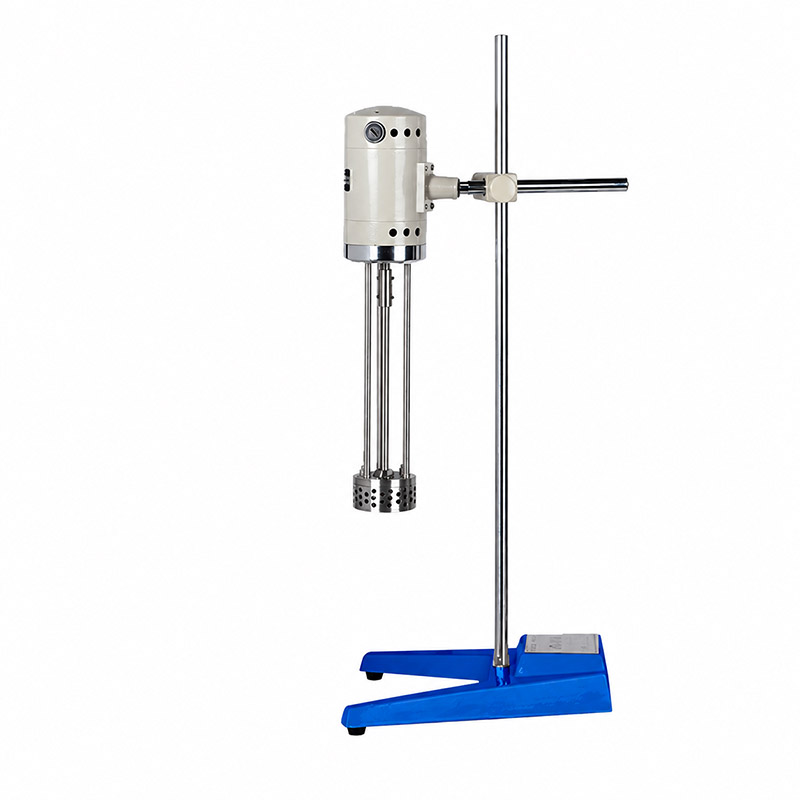
Rotor diameter, stator slot width, clearance, and the number of teeth determine the local shear and the pumping characteristics. A fine-tooth tool can create a strong shearing action, but it may handle only a limited viscosity or solids load. A coarse tool can move more material, but it may leave larger droplets. In many programs, a single tool is used for screening and a different tool is evaluated for scale-up. The choice should be made with test data, not by assuming that a smaller gap always means a better emulsion. The TENCAN shear emulsifier product page is the reference point for confirming available configurations before a trial plan is written.
Tip Speed and Shear Rate
Rotor speed is often reported in rpm, but rpm alone does not describe the shear intensity. Tip speed, calculated from rotor diameter and rotational speed, is more useful because it reflects the velocity at the outer edge of the rotor. A large rotor at moderate rpm can produce a similar tip speed to a small rotor at high rpm, yet the flow patterns and residence times will differ. For scale-up, tip speed is a starting parameter, not a complete answer. The gap geometry, number of passes, and fluid residence time also affect the result.
Residence Time and Number of Passes
Emulsification is cumulative. A droplet may need several passes through the high-shear zone before it reaches the target size, especially in a viscous or surfactant-limited system. In batch operation, the number of passes is not uniform throughout the vessel. In inline operation, the number of passes can be estimated from the circulation flow rate and the loop volume, but short-circuiting and dead volumes can distort the estimate. A practical trial should record the mixing time, the circulation rate if available, and the resulting droplet size at several time points. This makes it possible to distinguish a formulation limit from an insufficient shear history.
Energy Input and Motor Load
Power draw can be a useful indicator of how the machine is working, but it should not be used as the only scale-up parameter. A high motor load may mean that the product has become more viscous, that the working gap is partially blocked, or that the tool is too aggressive for the batch. A low load may indicate that the head is not fully immersed or that the material is bypassing the high-shear zone. Track power, temperature, and product appearance together. If motor load rises sharply during a run while the product temperature also rises, the process may be creating an unwanted viscosity increase rather than a better emulsion.
Aeration, Foam, and Surface Activity
High-shear equipment can entrain air, particularly when the rotor is near the surface or when the formulation contains a strong surfactant. Foam is not only a handling problem. Air bubbles can interfere with droplet size measurement, reduce heat transfer, and change the effective density of the emulsion. In some cases, the bubble interface competes with the oil-water interface for surfactant. If foaming is observed, check the fill level, the working head position, the feed method, and the antifoam strategy. Increasing speed to solve a foam problem often makes it worse.
Cleaning, Changeover, and Wear
The working head creates narrow passages that can trap product. Cleaning must be designed into the process, especially when the formulation changes frequently or when microbial control is important. A shear emulsifier should be easy to disassemble, inspect, and reassemble in the same way each time. Seal wear and rotor wear can change the shear gap and the flow pattern, so maintenance records should be linked to emulsion quality data. If a batch suddenly becomes coarser after many successful runs, wear or a damaged tool is one possible cause, although formulation variation and raw material changes should be checked first.
From Bench Trial to Production: Scaling a Shear Emulsifier
Scale-up is often treated as a matter of keeping the same speed. That approach is unreliable because a production vessel has a different geometry, a different heat-transfer surface, and a different flow pattern. A more defensible approach is to identify the key emulsion attributes, measure them at small scale, and then reproduce the relevant shear and residence-time conditions in larger equipment.
Preserve the Shear History, Not Just the RPM
If the laboratory unit runs at a certain tip speed for a certain time, the production unit may need a different rpm to achieve the same tip speed. Even then, the number of passes and the local energy dissipation can differ. For batch equipment, the ratio of working-head diameter to vessel diameter, the fill level, and the position of the head all matter. For inline equipment, flow rate, loop volume, and the pressure drop across the working head matter. The scale-up plan should state which variables are held constant and which are allowed to change, and it should include a range rather than a single point.
Geometric Similarity Has Limits
Complete geometric similarity is rarely possible when a laboratory shear emulsifier is compared with a production system. Shaft length, bearing design, motor power, and cleaning access all change. As a result, the larger machine may not reproduce the small-scale flow field exactly. This is why pilot trials are valuable. A pilot run can reveal whether the formulation is sensitive to residence time, temperature rise, or air entrainment before the full production scale is committed. If no pilot scale is available, the first production batch should be treated as a validation batch with additional sampling.
Define Acceptance Criteria Before the Trial
Acceptance criteria should include more than a visual check. Depending on the product, they may include droplet size distribution, viscosity, yield stress, color, pH, microbial status, and stability under accelerated conditions. The method and sampling point must be defined, because an emulsion sampled from the top of a vessel may not represent the whole batch. A trial that produces a good center sample but a poor top sample has not solved the mixing problem. The shear emulsifier, the vessel, and the sampling plan should be evaluated as one system.
Run a Structured Pilot Plan
A simple pilot plan can compare two or three tip speeds, two mixing times, and two feed orders while keeping everything else fixed. This is usually more informative than changing many variables at once. The results should be plotted against the process variables so that the operating window becomes visible. The window should be wide enough for normal raw material variation and operator timing. If the emulsion only works at one narrow setting, production will be fragile even if the laboratory result looks excellent.
Documentation for Tech Transfer
Technology transfer should include the actual equipment configuration, the tool identification, the batch size, the feed sequence, the temperature profile, and the sampling plan. A statement such as mix at high speed is not sufficient. The receiving team needs to know which speed, for how long, with which tool, and at what product temperature. Photographs of the assembled working head and the vessel setup can prevent costly differences between sites. If the process is validated, the documentation should also define which changes require revalidation.
Troubleshooting Common Emulsion Problems on a Shear Emulsifier
Most emulsion problems are not solved by simply increasing shear. The following symptoms have several possible causes, and the right response depends on whether the limitation is formulation, equipment, or procedure.
Creaming or Sedimentation
Creaming is upward movement of dispersed droplets, while sedimentation is downward movement of dispersed solids. Both indicate that the continuous phase cannot keep particles apart or that the droplet size is too large. Check the droplet distribution first. If a large-droplet tail is present, review the number of passes, the tool geometry, and the feed order. If the distribution is already fine, the problem may be depletion flocculation, insufficient yield stress, or a density difference that the formulation cannot overcome. More shear will not fix a stability problem caused by the continuous phase.
Coalescence, Oiling Off, and Poor Shelf Life
Coalescence appears as oil droplets on the surface, an oily film, or a gradual increase in droplet size. It often points to inadequate interfacial coverage, incompatible surfactants, or a temperature excursion. Check whether the emulsion was stable immediately after processing and whether it failed after cooling or storage. If the failure occurs during cooling, the surfactant system may be changing phase. If it occurs during processing, excessive shear or local overheating may be damaging the interface. A lower tip speed or a shorter high-shear stage can sometimes improve stability by reducing overprocessing.
Wide or Bimodal Droplet Size Distribution
A wide distribution can come from incomplete processing, poor premixing, or recombination after shearing. If the size distribution is bimodal, one population may represent droplets that passed through the high-shear zone and another may represent droplets that bypassed it. In a batch vessel, this can happen when the working head is poorly positioned or when the batch is too viscous to circulate. In an inline loop, it can happen when the loop has dead zones or when the flow rate is too low to keep solids suspended. Review the flow pattern before changing the formulation.
Foaming and Air Entrainment
Foam is common in systems with proteins, saponins, or high surfactant levels. It can also appear when the rotor is partially exposed or when the return flow falls through the headspace. Check the fill level and the position of the working head first. If the formulation is inherently foamy, a slower speed or a different feeding method may help. Antifoam can be effective, but it can also affect droplet size and stability, so it should be evaluated as part of the formulation rather than added as an afterthought.
Batch-to-Batch Variation
Variation often comes from uncontrolled timing, temperature, or raw material differences. Operators may stop at a visual endpoint that is not reproducible. A shear emulsifier trial should define the energy input or mixing time, the temperature limit, and the sampling point. Record the actual rpm, the tool used, the batch size, and the number of passes if applicable. If the variation persists, compare the particle or droplet size of the incoming raw materials. A change in oil viscosity or surfactant quality can shift the emulsion even when the machine settings are unchanged.
When to Stop Processing
More shear is not always better. Once the droplet distribution stops changing, additional processing may only add heat, air, and wear. A time study should show the point of diminishing return. If the target has not been reached at that point, the limiting factor may be surfactant coverage, viscosity, or tool selection rather than mixing time. Stopping at a defined endpoint is also better for reproducibility than stopping when the batch looks white enough or thick enough.
A Practical Selection Checklist for a TENCAN Shear Emulsifier
The checklist below is intended to turn a general request into a testable equipment specification. Not every item applies to every project, but each one has a direct effect on whether the emulsifier can produce a consistent result.
- Working volume and batch size range, including the minimum volume needed to cover the working head.
- Expected viscosity during processing, not only the final viscosity after cooling.
- Target droplet size distribution and the analytical method used to measure it.
- Batch, inline, or small-volume operation and the available vessel or loop volume.
- Temperature limits, cooling capacity, and acceptable processing time.
- Feed order, addition rate, and whether solids or high-melting ingredients are present.
- Wetted materials, seal compatibility, and cleaning or validation requirements.
- Foaming tendency and whether antifoam or vacuum operation is needed.
- Available utilities, motor load, and the space required for assembly and cleaning.
- Documentation needs for tech transfer, maintenance, and replacement parts.
Use the TENCAN shear emulsifier page to confirm the available product configuration, then compare that information with the trial requirements. If the application involves high viscosity, abrasive solids, volatile solvents, or strict cleaning validation, raise those points before the equipment is selected. A machine that is adequate for a simple oil-in-water lotion may not be adequate for a filled paste or a solvent-borne dispersion.
Frequently Asked Questions
Is a shear emulsifier the same as a homogenizer?
The terms overlap, but they are not identical in every company or market. A shear emulsifier generally relies on a rotor-stator working head, while a homogenizer may use a different valve, nozzle, or high-pressure principle. Compare the actual working mechanism and the droplet size data, not only the product name.
How many passes does an emulsion need?
There is no universal number. It depends on the formulation, viscosity, tool geometry, and target distribution. Run a time or pass study and stop when the distribution no longer changes meaningfully or when the formulation begins to show heat or air damage.
Can a shear emulsifier handle high-viscosity products?
Some can, but viscosity affects pumping, motor load, and the usable working volume. The working head and feeding method may need to change. A trial with the actual formulation is more reliable than a general viscosity rating.
Why does my emulsion become coarser after changing to a larger machine?
The larger machine may have a different tip speed, residence time, or flow pattern. It may also heat the batch differently. Compare the shear history and the temperature profile, not only the rpm, and adjust the process in steps.
Emulsion quality is built from formulation, process, and equipment together. Before committing to a production scale, confirm the target droplet distribution, test the actual formulation, and record the variables that define the shear history. A shear emulsifier can be a precise tool when it is selected for the material and operated within a validated window. It becomes a source of variation when the process is defined by a single speed setting or a visual endpoint. TENCAN, Changsha Tianchuang Powder Technology Co., Ltd, can support the equipment side of that work, while the final validation should always be based on measured results from the real formulation.