
Shear Emulsifier for Laboratory: How It Works and How to Choose
Why Laboratory Emulsion Processing Needs a Dedicated Tool
Creating stable emulsions in the lab is rarely straightforward. Whether you are developing a new cosmetic cream, a food dressing, a pharmaceutical suspension, or a chemical dispersion, you need a reliable method to break down droplets and keep them uniformly distributed. Traditional stirring or shaking often fails to achieve the narrow droplet size distribution required for stability, especially when immiscible liquids like oil and water are involved.
This is where a laboratory shear emulsifier becomes indispensable. By applying intense mechanical shear through a precisely engineered rotor-stator system, a shear emulsifier can produce fine, stable emulsions and dispersions in minutes. In this article, we will walk through how a shear emulsifier works, where it is used, and what factors you should consider when selecting one for your lab.
How Does a Shear Emulsifier Work?
Rotor-Stator Principle
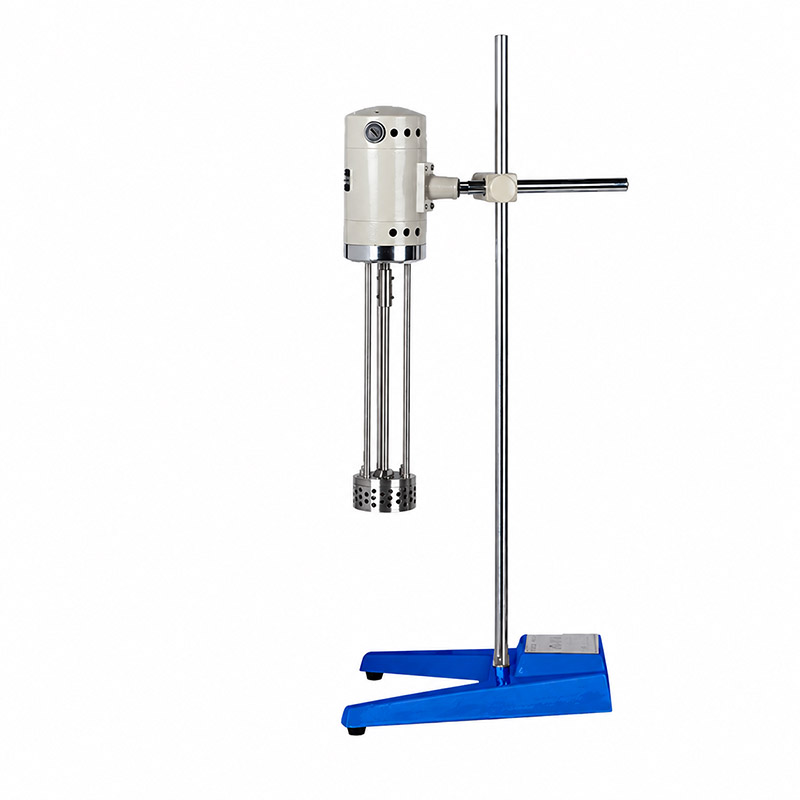
At the heart of a shear emulsifier is a rotor that spins at high speed inside a stationary stator. The rotor creates a strong suction force, drawing the liquid mixture into the gap between the rotor and stator. As the material passes through the narrow clearance, it experiences intense mechanical shear, turbulence, and hydraulic forces. These forces break down large droplets into fine, uniform droplets, forming a stable emulsion.
Multi-Stage Configurations
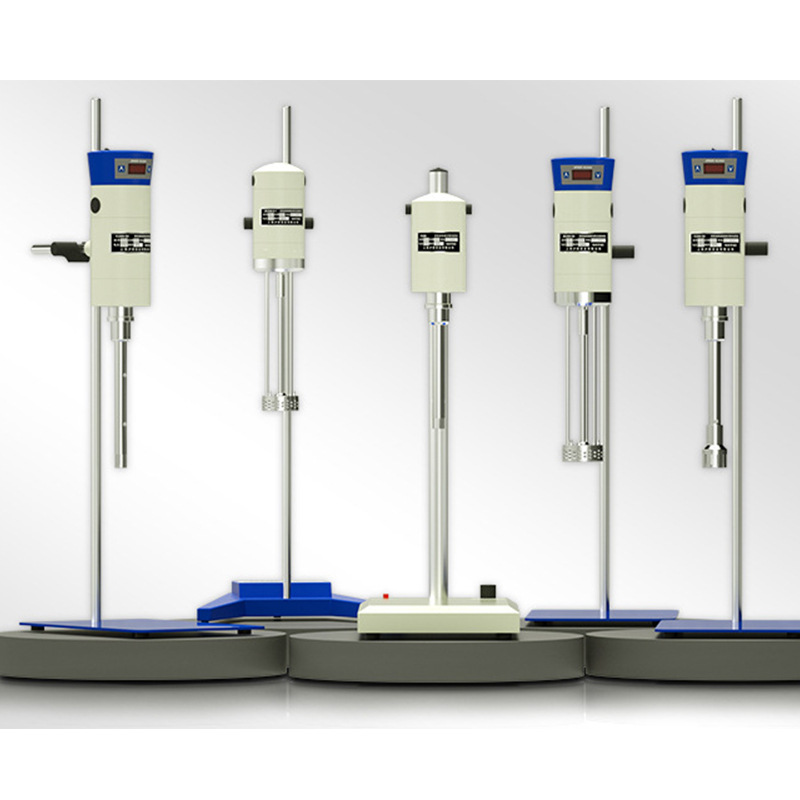
Many laboratory emulsifiers offer one-stage, two-stage, or three-stage rotor-stator combinations. A single-stage design is suitable for basic emulsification, while multi-stage configurations provide progressively finer droplet sizes and better homogeneity. The choice depends on the required final droplet size and the viscosity of the materials being processed.
Key Processing Parameters
- Rotational speed: Typically controlled by a variable frequency drive, allowing precise adjustment of shear intensity. Speeds can range from a few thousand rpm up to 20,000 rpm or more, depending on the model.
- Rotor-stator gap: A smaller gap creates higher shear forces but may require more power and careful handling of viscous materials.
- Processing time: Emulsion quality improves with cycling time, but excessive processing can cause temperature rise. Many lab units include a timer or programmable control.
- Temperature control: Some models offer a jacketed vessel for heating or cooling, essential for temperature-sensitive formulations.
Common Applications of Shear Emulsifiers in the Lab
Food and Beverage Industry
In R&D labs, shear emulsifiers are used to create stable salad dressings, mayonnaise, sauces, dairy products, and beverage emulsions. The ability to control droplet size directly affects mouthfeel, shelf life, and visual appearance.
Cosmetics and Personal Care
Creams, lotions, sunscreens, and serums require fine, stable emulsions for consistent texture and active ingredient delivery. A lab emulsifier helps formulators achieve repeatable results from batch to batch.
Pharmaceuticals
Emulsions for topical or oral drug delivery need precise droplet size to ensure bioavailability and stability. Shear emulsifiers are used in pre-formulation studies and small-scale production of pharmaceutical emulsions and suspensions.
Chemical and Industrial Applications
From paints and coatings to adhesives and lubricants, many industrial products rely on stable emulsions or dispersions. Lab-scale emulsifiers allow chemists to test formulations before scaling up to production.
How to Choose the Right Laboratory Shear Emulsifier
Batch Volume and Vessel Design
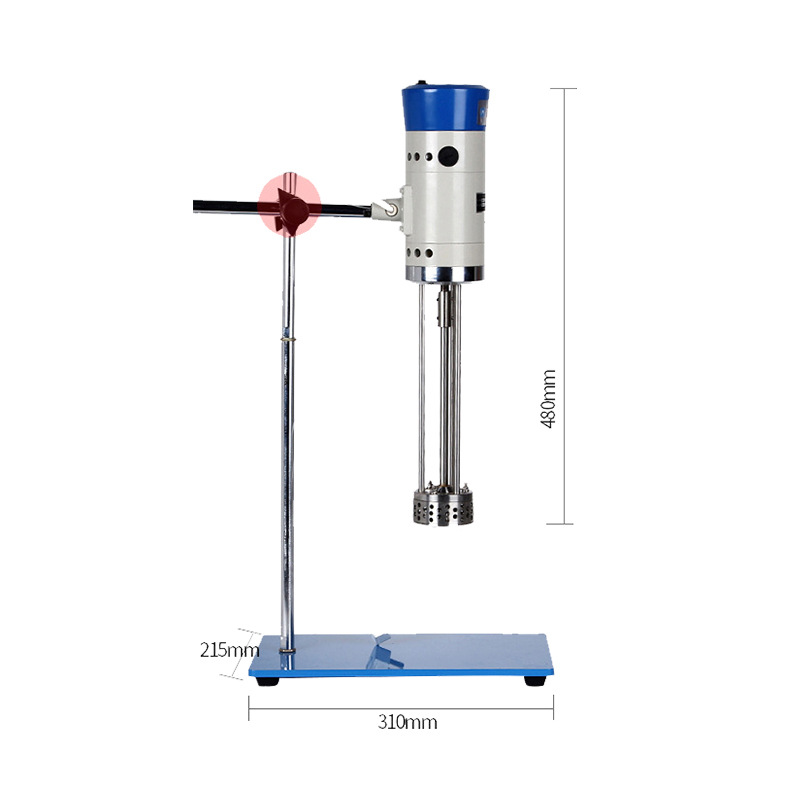
Consider the typical sample volume you need to process. Lab emulsifiers are available with vessels ranging from 50 mL to several liters. Some models are designed to be immersed directly into a beaker or tank, while others have a dedicated mixing vessel. If you work with small volumes (e.g., 100–500 mL), a hand-held or bench-top unit with a single shaft may be sufficient. For larger batches, a floor-standing model with a hydraulic lift might be more practical.
Material Viscosity
High-viscosity materials require more torque and a more robust drive system. If your formulations are thick pastes or gels, look for a shear emulsifier with a powerful motor (e.g., 0.5–1.5 kW or more) and a design that can handle high loads without overheating.
Rotor-Stator Geometry
Different rotor-stator designs produce different shear patterns. A general-purpose design works for most emulsions, but specialized geometries (e.g., slotted, toothed, or conical) can improve performance for specific materials. If you are developing a product with very tight droplet size requirements, consider a unit that offers interchangeable stator heads.
Material of Construction
Wetted parts should be compatible with your formulation. Stainless steel (316L) is the standard for food and pharmaceutical applications due to its corrosion resistance and ease of cleaning. For highly acidic or abrasive materials, optional coatings or specialty alloys may be required.
Control and Automation
Digital speed display, programmable timers, and data logging are valuable for process reproducibility. Some advanced models allow you to store recipes and recall them for consistent results across batches. If your lab operates under GMP or ISO standards, documentation of process parameters is essential.
Ease of Cleaning and Maintenance
Quick-disassembly designs reduce downtime between formulations. Look for emulsifiers with easily removable shafts and stator heads that can be cleaned manually or placed in an ultrasonic bath. For multi-stator systems, ensure spare parts are available.
Complementary Equipment for Complete Lab Processing
In many labs, the shear emulsifier is part of a broader powder processing and mixing workflow. For example, after emulsifying a liquid phase, you may need to blend dry powders into the mixture using a V-type mixer or a double cone mixer. If you are working with high-viscosity pastes, a vacuum kneading machine can help deaerate the product. For dispersing solid particles into a liquid phase, a high speed dispersing homogenizer is another common choice.
Selecting the right combination of equipment depends on your specific formulation and process flow. A well-equipped lab can handle everything from initial powder mixing to final emulsion stabilization.
Practical Tips for Reliable Emulsion Results
- Start with the right formulation: The choice of emulsifier surfactant and the order of addition significantly affect emulsion stability. The shear emulsifier provides the mechanical energy, but chemistry is equally important.
- Control temperature: High shear generates heat. If your formulation is sensitive to temperature, use a jacketed vessel and monitor the temperature during processing. Intermittent operation (e.g., 2 minutes on, 1 minute pause) can help manage heat buildup.
- Optimize processing time: The required time depends on the material and target droplet size. Start with a short cycle (e.g., 1–2 minutes) and check droplet size under a microscope or using a particle size analyzer. Extend the time gradually until the desired size is achieved.
- Avoid air entrapment: Immerse the rotor-stator head below the liquid surface to prevent air from being drawn into the emulsion. For viscous materials, a vacuum attachment can help remove entrapped air.
- Clean immediately after use: Dried residues can be difficult to remove. Rinse the rotor and stator with warm water or a suitable solvent right after processing.
Making Your Selection
When you are ready to choose a shear emulsifier, having a clear understanding of your material properties and processing goals will help you narrow down the options. Key information to prepare includes:
- Material type (oil, water, solid content, viscosity)
- Batch volume per operation
- Target droplet size or dispersion fineness
- Required temperature range
- Cleaning and sterilization requirements
- Local power supply voltage and frequency
With this information, you can discuss with a technical specialist to find the most suitable model and configuration. Whether you are formulating a new cosmetic emulsion, scaling up a food product, or developing a pharmaceutical suspension, a well-chosen laboratory shear emulsifier will give you the control and repeatability you need for successful research and development.