
Stainless Steel Roll Mill Jar Selection Guide
An apparently simple choice—a jar for a roller mill—can decide whether a milling trial is reproducible. Researchers often adjust rotation speed and milling time while overlooking the container itself. Fill level, media, sealing, cleaning, and jar material can create as much variation as the motor setting. A stainless steel roll mill jar is a practical option for many laboratory programs, but it is not a universal container. Its suitability depends on the sample, the target particle size, the acceptable contamination level, and the way the jar is mounted and handled. TENCAN lists a stainless steel roll mill jar for roller milling applications, and the product page should be used to confirm dimensions, closure details, and available options before a test is planned. The notes below focus on the decisions that make the jar part of a controlled method rather than an uncontrolled variable.
What the Jar Does in a Roller Milling Circuit
A roll mill jar is the working chamber of a roller mill. The jar rests on rotating rollers and turns around its horizontal axis. As it turns, the grinding media and sample are lifted, then tumble or fall back. Depending on speed, fill, and media, the charge may mix gently, shear, or impact. The jar therefore does more than hold material: it shapes the motion of the entire charge and contains the dust or slurry produced during that motion.
The useful working volume is smaller than the nominal jar volume. Media occupies space, powder fills the voids between media, and free headspace allows the charge to move. A jar that is packed too tightly may rotate as a solid mass; a jar with too little material may allow media to slide rather than tumble. Both conditions can make results look inconsistent even when the roller mill speed is unchanged.
Jar geometry also matters. The internal surface, the transition to the lid, and the closure are potential dead zones. Fine powder can collect where the wall meets the base or where a gasket sits. A smooth, accessible interior is easier to inspect and clean, while a complicated closure needs more attention during changeover. The jar must also sit stably on the rollers without slipping, wobbling, or contacting the frame.
For dry milling, the jar must control dust and limit loss of fine particles. For wet milling, the closure must contain the slurry and resist the solvent or additive used. Neither requirement can be assumed from the jar name alone. Users should confirm that the selected jar, lid, and sealing arrangement are suitable for the intended duty. The stainless steel roll mill jar from TENCAN is intended for roller mill use; the product page is the correct place to verify the available size and configuration rather than relying on assumptions from a photograph.
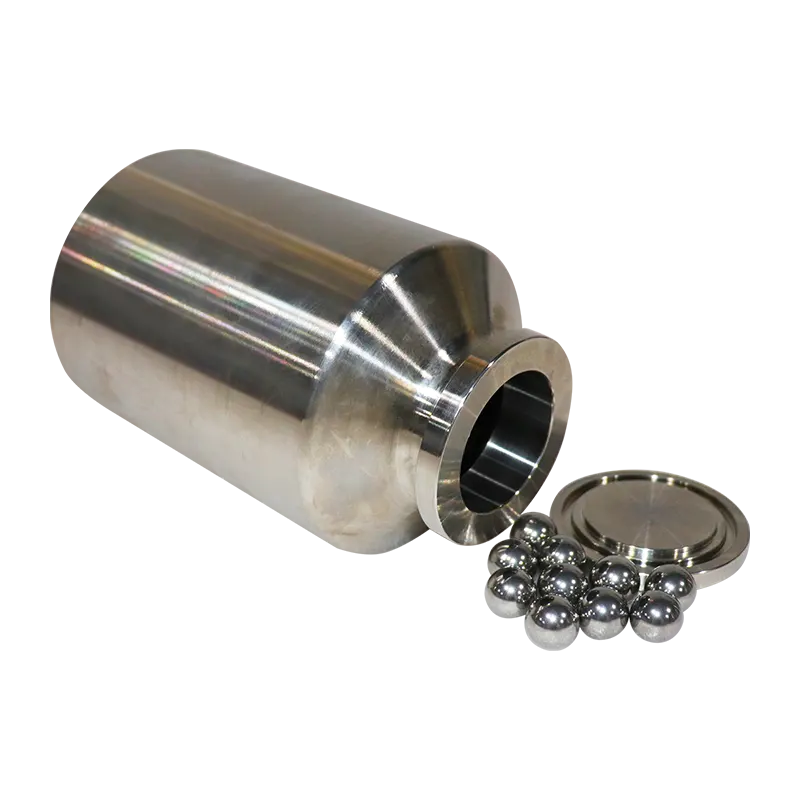
Stainless steel roll mill jar for laboratory roller milling.
Why Stainless Steel? Material Compatibility Comes First
Stainless steel is chosen for laboratory jars because it is strong, tolerant of handling, and available in formats that can be cleaned and reused. It does not have the brittle failure mode of a ceramic jar, and it can be made with a secure closure for roller service. Those practical advantages matter in a busy laboratory where jars are loaded, unloaded, washed, and stored repeatedly.
Stainless steel is not chemically inert, however. It is a metallic alloy, and wear or corrosion can release alloy constituents into the sample. That is not automatically a problem. Many milling studies are concerned with particle size reduction, mixing, or subsequent processing rather than trace-metal analysis. In those cases, a small amount of metal contact may be acceptable if it is understood and controlled. The decision should be based on the sample chemistry and the purpose of the test, not on the word "stainless" alone.
Three questions help. First, will the sample be analyzed for elements that are present in the jar alloy? If so, a procedural blank and a container blank are more informative than a general material claim. Second, does the sample contain strong acids, high chloride levels, oxidizing agents, or other species that could attack the surface? Aggressive chemistry deserves a direct compatibility check with the supplier and a small-scale trial. Third, will abrasion produce visible wear on the interior? Abrasive powders can polish or scratch the wall, and a scratched surface is harder to clean. A jar that changes appearance after a run should be inspected before it is reused.
Surface condition is part of the selection. A smooth, well-finished interior supports cleaning, while cracks, pits, deep scratches, and trapped residues create opportunities for cross-contamination. The exact alloy grade and surface finish should be confirmed for the product being ordered. If the application is sensitive to iron, chromium, nickel, or other alloy constituents, the user should not assume that stainless steel is acceptable simply because it resists rust. A documented blank run is the practical way to decide whether the container is suitable for a particular analytical method.
Stainless steel also has a place in methods where the jar must survive repeated use with hard, dense media. The jar and media should be considered as a system. A very hard or dense media charge increases the energy available for breakage, but it also increases wear on the jar wall and closure. The user should look for signs of excessive wear and should not continue with a jar whose interior has become rough or whose lid no longer seats correctly.
Users sometimes ask whether a stainless steel jar can be used for every powder because it is "metal." That is too broad. A soft organic powder may be easy to mill in stainless steel but may be sensitive to heat or metal dust. A hard mineral may wear the jar quickly. A hygroscopic powder may pick up moisture during handling, independent of the jar material. The jar choice should be made together with the sample preparation and analytical method, not in isolation. If the sample is valuable or the supply is limited, a small trial in the chosen jar is usually more informative than a long theoretical comparison.
Fill Ratio, Grinding Media, and Powder Load
Most milling problems that appear after a jar change trace back to the working volume rather than the jar material. A jar rated at a given total volume does not provide that volume for powder. Media, powder, and free space compete for the interior. The practical target is a charge that can move freely enough to produce repeated collisions and shear, without leaving so much empty space that the media simply slides along the wall.
A useful starting point is to treat the charge as three separate quantities: the bulk volume of the media, the bulk volume of the powder, and the free headspace. Record each one during method development. If the powder is fluffy, its bulk volume may be much larger than its mass suggests; if it is dense, a small mass may occupy little space. The same mass of two different powders can therefore produce very different jar loads. This is one reason a milling recipe cannot be transferred between materials without adjustment.
Media selection follows the same logic. Smaller media provide more contact points and can be useful for fine grinding, but they carry less impact energy per collision. Larger media deliver more energy at each impact, but they may damage the jar, leave a coarser distribution, or fail to penetrate a fine powder bed. Media density, shape, and surface condition also influence the result. The media must be compatible with the sample and must not introduce unacceptable contamination. If the jar is stainless steel and the media are also metallic, the contamination question applies to both components, not only to the jar.
Media size should not be chosen from a single number copied from another project. It should be tested against the feed size and the target size. A feed with coarse particles may need a stronger impact regime, while a fine feed may benefit from more contact points and gentler mixing. The best way to judge is to inspect the particle size distribution, not only the median. A narrow distribution may be more important than a small median in a downstream process.
Powder load has an equally strong effect. Too much powder can cushion media impacts and reduce breakage. Too little powder can increase media-to-media contact, accelerate wear, and make sampling difficult. The powder should be sufficient to give a representative sample after milling, but not so much that it fills the voids and restricts motion. For small batches, the minimum reliable load may be set by analytical needs rather than by the jar capacity.
Rotation speed interacts with all of these variables. At low speed, the charge may slide or mix without strong impact. At higher speed, media may be lifted further before falling, increasing energy but also heat and wear. The correct setting depends on jar diameter, media mass, and the material being processed. A speed that works in a small jar may not reproduce in a larger one. The operator should record the actual roller setting and the jar size together; a speed number without that context is difficult to interpret.
| Variable | If too low | If too high | Record |
|---|---|---|---|
| Media volume | Poor energy transfer and slow breakage | Restricted motion, heat, and wear | Bulk volume and media size |
| Powder load | Low recovery and excessive media wear | Cushioning and incomplete milling | Mass, bulk density, and fill level |
| Free space | Media sliding and poor tumbling | Excessive impact and dust | Observed charge motion |
| Speed | Mixing without breakage | Heat, wear, and jar stress | Roller setting and jar diameter |
Images and visual checks are useful during development. A photograph of the loaded jar before milling and a note on the observed charge motion can be more useful than a single speed setting. If the charge appears to rotate as a single mass, the jar is likely overfilled or the speed is too low for the media charge. If media are throwing heavily against the lid, the speed or fill may be too high for the closure. These observations are not a substitute for particle size analysis, but they help explain why a run failed.
Particle size results should be read as a distribution, not a single headline number. A run can reduce the median while leaving a coarse tail, or it can create fines that affect flow, filtration, or sintering. The jar and media that produce the best median may not produce the best distribution. For that reason, method development should include a consistent sampling procedure and a clear target for the upper end of the distribution as well as the median. If the analytical instrument requires a minimum sample mass, that requirement also sets a lower limit on the powder load, which may be more restrictive than the jar volume.
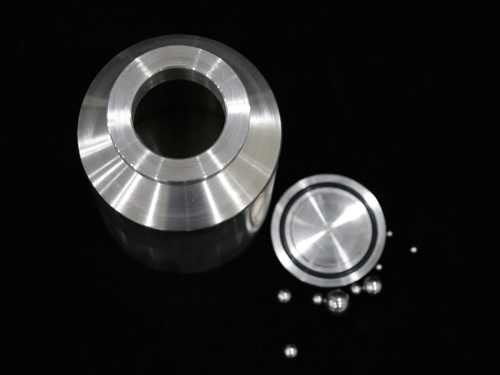
Jar selection should be matched to the roller mill and the intended charge.
Sealing, Dust Control, and Wet or Dry Operation
Dry and wet operation place different demands on a roll mill jar. In dry milling, fine powder can migrate into the lid, threads, or gasket area. The closure must limit dust release and prevent sample loss, but it must also be possible to open and clean without spreading powder. A jar that seals well but traps material in a narrow crevice may create cross-contamination between batches. The operator should inspect the closure after every run and use a consistent cleaning procedure.
Wet milling introduces a liquid phase, which changes the load on the jar and the risk of leakage. Slurry can penetrate joints, dry in crevices, and carry fine particles into areas that are difficult to clean. The viscosity of the slurry also affects motion. A viscous slurry may damp media movement, while a thin slurry may allow media to settle when the mill stops. Solvent compatibility, closure compatibility, and the possibility of pressure buildup should be checked before a sealed wet run. If the jar is not intended for pressure service, the method should not generate pressure inside it.
Temperature is another practical factor. Milling adds energy, and a long run can warm the jar and sample. Some materials are sensitive to heat, and some solvents have low boiling points. The operator should monitor the jar by touch or with an appropriate temperature check, and should stop if the lid or contents become unexpectedly hot. A jar that is comfortable to handle at the end of a short run may still be too warm for a heat-sensitive sample after a longer run.
The roller mill itself also imposes limits. The jar must fit the roller spacing, sit within the guard, and rotate without slipping. An oversized or overweight jar can overload the rollers or create a handling hazard. A jar that is difficult to lift when full is not convenient, even if its capacity looks attractive on paper. The right choice is the largest jar that can be handled safely and driven correctly, not the largest jar that physically fits.
Cleaning and Cross-Contamination Control
Cleaning is where many contamination problems begin. Stainless steel can be cleaned to a high standard, but the result depends on the method. Dry powder should be removed before it becomes wet and compacted. A soft brush, vacuum, or dry wipe may be appropriate for the first step. If a solvent is used, it should be compatible with the sample, the jar, and the closure. Water and detergent can be effective for many residues, but the jar must be rinsed and dried thoroughly. Trapped moisture can affect the next batch, and a wet jar can cause powder to adhere to the wall.
Abrasive cleaning is a trade-off. It may remove stubborn residue, but it can also scratch the interior and create new places for material to collect. The same concern applies to metal tools. A jar that is scratched should be inspected carefully; if the surface cannot be cleaned reliably, it should not be used for sensitive work. The lid, gasket, and any recessed area deserve particular attention because they are easy to overlook.
Dedicated jars are the simplest way to control cross-contamination. If the laboratory processes several material families, assigning a jar to one family reduces the risk of carryover. When dedicated jars are not practical, a documented cleaning sequence and a blank run provide evidence that the method is under control. The blank should follow the same loading, milling, and cleaning path as a real sample, because contamination can come from the jar, the media, the closure, or the handling steps.
The product page for the stainless steel roll mill jar is the reference for the actual jar configuration being used. Operators should not assume that a cleaning method suitable for one jar is suitable for another. The supplier should be asked about the recommended cleaning limits if the intended method involves strong acids, hot alkaline detergents, or prolonged soaking. These questions are easier to resolve before the jar is placed in service than after a batch has been contaminated.
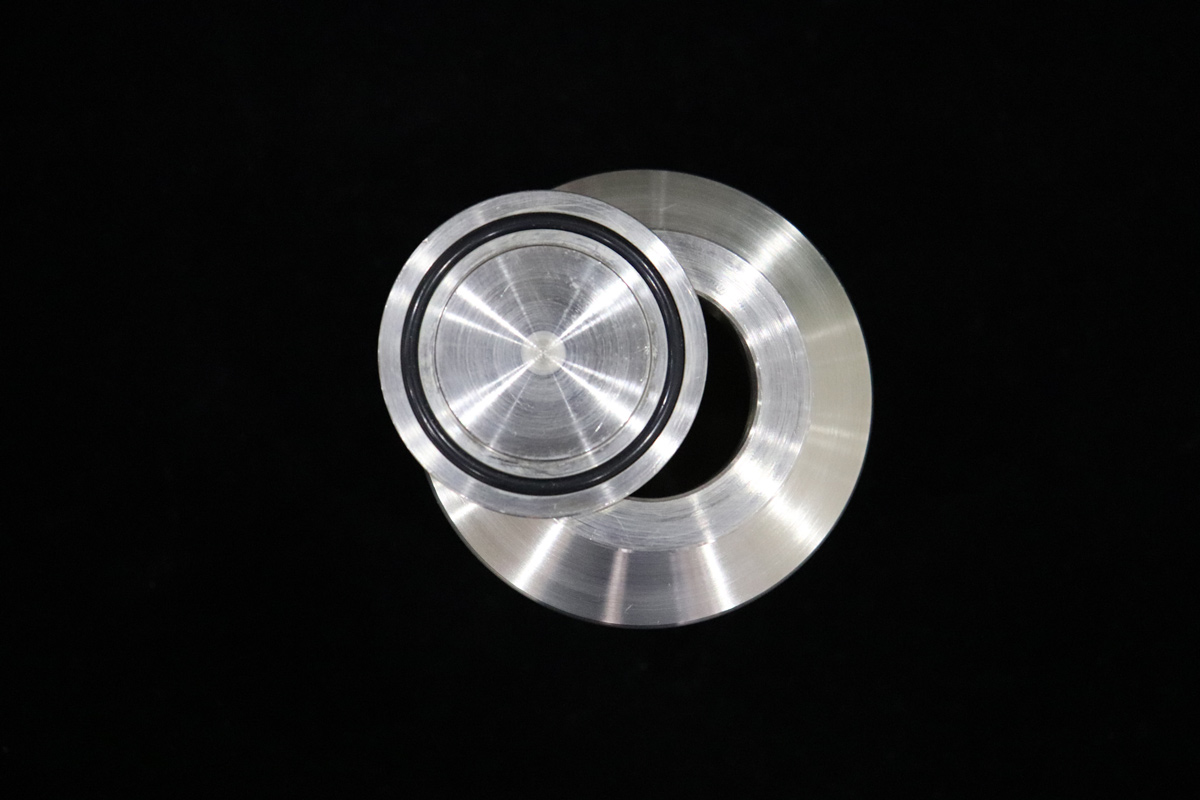
Inspect the jar, lid, and sealing surfaces as part of routine cleaning.
Matching the Jar to the Roller Mill and Workflow
A roll mill jar must match the roller mill, not just the sample. The jar's outside diameter, length, and mass determine whether it will rest correctly on the rollers and whether the drive can turn it without slipping. A jar that is too small may not make consistent contact; a jar that is too large may contact the frame or guard. The purchase decision should therefore begin with the mill's working dimensions and load limit, not with the jar catalog alone.
Handling is part of the match. A full jar can be heavy, especially when it contains dense media. The operator should be able to lift it safely, place it on the rollers, and remove it without awkward twisting. If the jar is too heavy for one person, the workstation should be arranged for a lift or a two-person handling procedure. A jar that is difficult to handle is more likely to be dropped, and a dropped jar may be damaged in ways that are not immediately visible.
The laboratory workflow also affects jar choice. One large jar may seem efficient, but it may require a larger sample than the method can spare, and it may not reproduce the motion of a smaller jar used during development. Several smaller jars can provide replicates or parallel conditions, but they also increase handling and cleaning work. The right balance depends on the number of samples, the available sample mass, and the analytical turnaround time.
Scale-up from a small jar to a larger one is not a simple volume ratio. Media size, fill level, speed, and the ratio of media to powder all influence the result. A larger jar with the same media and speed may produce a different energy profile. The practical approach is to keep the method variables documented and to change one factor at a time. If a larger jar is required, the first runs should be compared with the established small-jar method using the same sample and the same target measurement.
Before ordering, users can confirm the jar dimensions, closure type, and available options on the TENCAN stainless steel roll mill jar page. They should also confirm that the selected jar is compatible with the roller mill in their laboratory. A jar that is technically suitable for the material but does not fit the machine is not a usable solution.
When Stainless Steel Is Not the Right Container
Stainless steel is a strong default for general laboratory milling, but it is not the right container for every project. The clearest case against it is a sample that will be analyzed for alloy constituents at trace levels. Even a small amount of wear can be significant when the analytical limit is very low. A blank run may show whether the contribution is acceptable, but if the method cannot tolerate it, a different jar material should be considered.
Corrosion is the second warning sign. Strong acids, high-chloride solutions, oxidizing agents, and some wet residues can attack stainless steel, particularly at scratches, crevices, or the closure. The result may be pitting, staining, or release of metal into the sample. A jar that looks fine after one run may not remain fine after repeated exposure. Compatibility should be checked for the actual concentration, temperature, and contact time, not only for the chemical name.
Highly abrasive samples also deserve caution. Abrasion is not limited to the jar wall; it can affect the lid, the media, and the sample itself. If the interior becomes rough, cleaning becomes less reliable and contamination risk increases. The operator should inspect the jar after each run and retire it if the surface condition has changed. This is particularly important when the same jar is used for multiple projects.
Finally, consider whether the jar is being used for milling or only for mixing. A jar that is adequate for gentle blending may not be adequate for prolonged high-energy milling. The duty cycle, media charge, and sample hardness all affect the demands on the container. The supplier should be told how the jar will be used, not only what material will be processed. That information allows a more realistic recommendation and reduces the chance of choosing a jar that is either marginal or unnecessarily heavy.
A Practical Selection and Validation Checklist
Use the following checklist to move from a general jar choice to a documented method. The questions are deliberately practical; they can be answered with sample information, machine dimensions, and a small number of trial runs.
| Decision area | Question to answer | Evidence to keep |
|---|---|---|
| Sample chemistry | Will the sample react with or be contaminated by a stainless steel surface? | Material safety data, compatibility note, blank result |
| Target particle size | Is the goal coarse crushing, fine milling, or only mixing? | Feed size, target size, particle size distribution |
| Contamination limit | What level of metal contact is acceptable? | Analytical method, detection limit, blank run |
| Working volume | How much media, powder, and free space will the jar contain? | Bulk volume, mass, fill observation |
| Media | Is the media compatible with the sample and the jar? | Media material, size, condition, wear check |
| Machine fit | Will the jar fit the rollers, guard, and load limit? | Jar dimensions, mill specification, trial fit |
| Sealing | Is the closure suitable for dry powder or wet slurry? | Supplier confirmation, leak check |
| Cleaning | Can the jar be cleaned to the required standard? | Cleaning procedure, inspection record |
Validation should be proportional to the risk. For a simple mixing study, a visual check and a repeat run may be enough. For a trace-metal-sensitive project, a blank jar run, a media blank, and replicate samples are more appropriate. The blank should include the same jar, lid, media, and cleaning procedure. If the blank shows contamination, the source should be isolated before the method is changed. The jar, the media, and the handling steps are separate variables, and changing all of them at once makes the result difficult to interpret.
Record the jar identity, media charge, powder mass, fill level, roller setting, and run time. A photograph of the loaded jar can help another operator reproduce the setup. If a run fails, these records make it possible to separate a material effect from a jar effect. Without them, the jar is often blamed for a problem that began with an overloaded charge or an inconsistent cleaning step.
A stainless steel roll mill jar is a tool, not a result. Its contribution depends on how well it matches the sample, the mill, the analytical requirement, and the laboratory's cleaning discipline. Confirming the jar configuration on the product page and testing the complete setup with a representative sample is more useful than selecting a jar from a single material claim. When the application is sensitive to metal, heat, corrosion, or cross-contamination, the decision should be supported by a small validation run rather than by convenience alone.