
Resin Ball Mill Selection Guide
A resin ball mill is often specified when a laboratory needs to reduce resin granules, resin-rich compounds, or resin-coated powders without turning the sample into a single fused mass. The difficult part is not finding a ball mill; it is finding a combination of jar, media, speed, and run time that respects the resin's thermal sensitivity while still delivering a usable particle size distribution.
In this guide, resin covers thermoplastic and thermoset feedstocks, resin-rich compounds, and resin-coated powders. The term is deliberately broad because the mill selection depends on the specific grade. A brittle, highly filled molding compound behaves very differently from a soft, low-melting granule or an ion-exchange resin that must retain its structure.
The starting question should therefore be practical: what must the resin ball mill actually achieve? Particle size reduction, deagglomeration, homogenization, and surface treatment all use ball milling, but they do not use the same operating window. A setup that works for one resin grade can cause smearing, static agglomeration, or contamination in another.
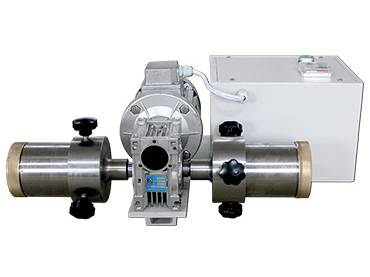
The resin ball mill from TENCAN is listed in the other grinding equipment group. As with any resin application, the final configuration should be confirmed against the current product specification, because chamber volume, drive arrangement, jar options, and control features need to match the batch size and material risk.
Why Resin Ball Milling Needs a Different Starting Point
Resin is not a mineral. Mineral particles usually fail by brittle fracture, producing sharper fragments and a relatively predictable size reduction path. Many resins are viscoelastic: they can deform, recover, soften, or smear before they fracture. The same mechanical action that reduces particle size can also generate heat and compact the sample. That is why a resin ball mill should be selected around thermal behavior and surface chemistry, not only around chamber size.
A second difference is the meaning of the target size. In some resin projects, the goal is a fine powder with a narrow particle size distribution. In others, the goal is simply to break soft agglomerates back to the primary particle size. In a third group, the mill is used to blend a resin with fillers, pigments, or additives. These are different duties. Deagglomeration usually needs lower energy and shorter residence time than true comminution, while homogenization may need more mixing action than impact. Clarifying the duty prevents overmilling and makes the later scale-up more reliable.
Dry processing is common for resin powders and granules, but it brings dust, static, and heat management issues. Resin particles can adhere to the jar wall, coat the media, and form soft lumps that look like larger particles. A dry resin ball mill therefore needs a realistic assessment of humidity, loading method, and cleaning. If the resin is prone to static, simple actions such as conditioning the feed, avoiding excessive handling, and using a grounded, well-fitted jar arrangement may matter as much as the mill drive itself.
Wet processing can reduce dust and help control temperature, but it is not automatically better. The liquid carrier must be compatible with the resin, the jar, the media, and the downstream process. A solvent that softens or swells the resin can turn a milling trial into a cleaning problem. Water-based processing may be suitable for some resin dispersions but not for moisture-sensitive grades. The decision should be based on the final use of the material, not only on the milling step.
Feed preparation is another point where resin projects differ from mineral projects. Resin granules may be too large or too cohesive for direct milling. Pre-sizing, gentle drying, or chilling may improve flow, but each added step must be checked for its effect on the resin. If the feed contains hard fillers, the mill must also handle the abrasive fraction without allowing jar or media wear to become the dominant contaminant.
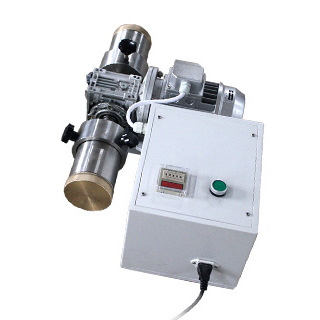
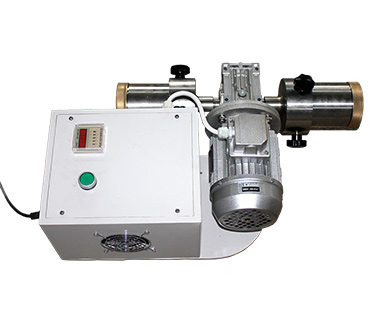
The product page is a useful starting point because it identifies the machine as a resin ball mill and shows the supplied product views. It does not replace a material trial. Resin suppliers may change formulation, molecular weight, additive package, or filler loading, and those changes can shift the safe operating window. A documented trial on the actual lot is more valuable than a generic assumption based on the resin family name.
How a Resin Ball Mill Works and Where Heat Builds Up
A ball mill reduces material through a combination of impact and attrition. As the jar rotates, the grinding media is lifted and then falls or rolls back into the charge. Coarser particles are broken by the higher-energy contacts, while finer particles are affected more by surface friction and shear. In a resin ball mill, the useful action is usually a controlled mix of these mechanisms. If the energy is too high, the resin may deform rather than fracture.
The speed regime deserves close attention. At low speed, the media may slide or roll with limited cascading, so grinding is slow but gentle. At a moderate speed, the media cascades and cataracts through the charge, producing repeated contacts. At a speed that is too high, the media can centrifuge against the jar wall and stop doing useful work. The exact transition depends on jar diameter, media density, and fill level, so a speed that works in one jar should not be copied blindly to another.
Heat in a resin ball mill comes from several sources. Friction between media and resin, friction between the charge and the jar wall, deformation of soft particles, and motor losses all contribute. Resin has relatively low thermal conductivity in many forms, so heat generated at particle contacts may not dissipate quickly. The result can be a local hot spot even when the outside of the jar feels only warm. Softening, tackiness, discoloration, odor, and media coating are practical warning signs.
Temperature monitoring should be part of the trial method. Measuring the jar surface is convenient but may lag behind the internal charge temperature. If the mill allows it, a probe in the headspace or a short pause-and-measure routine can reveal whether the process is drifting. The operator should also record room temperature and humidity, because a resin that mills cleanly on a cool, dry day may behave differently in a warm, humid room.
When heat is the limiting factor, the first response is usually to reduce specific energy input. That can mean shorter run intervals, a lower media load, a less aggressive speed, or a smaller batch that leaves more free volume. Intermittent milling with short cooling pauses is often more effective for heat-sensitive resins than one long continuous run, because it gives the charge time to shed heat. The tradeoff is longer overall cycle time and more handling, so the process should be confirmed by both particle size and material condition.
Atmosphere can also matter. Air is adequate for many routine resin milling tasks, but oxygen-sensitive resins may need an inert or reduced-oxygen environment. Moisture-sensitive resins may need dry air or a sealed jar. These choices affect jar design, sealing, and operating procedure. They should be defined before the mill configuration is fixed, because a jar that is convenient for dry powder may not be the best choice for a sealed or low-moisture process.
Choosing the Jar and Grinding Media for Resin
The jar and media are the parts of the resin ball mill that touch the product, so they deserve more attention than the drive alone. The main selection criteria are contamination risk, wear resistance, density, chemical compatibility, cleaning, and the energy the resin can tolerate. A hard, dense jar and media set may grind quickly, but it can also deliver more impact energy and more wear debris. A softer or lower-density set may be gentler, but it may not reduce a highly filled resin efficiently.
Contamination is a special concern with resins because small amounts of metal or ceramic wear can change color, electrical properties, curing behavior, or acceptance in a sensitive application. The jar material should be chosen against the resin and any hard filler. If the resin contains silica, glass fiber, or mineral filler, the abrasive load on the jar and media is higher than for an unfilled resin. In that case, wear monitoring and a blank run can be more informative than a visual check alone.
Media density affects both grinding energy and heat. Dense media can break harder agglomerates, but it also increases the load on the drive and the contact stress in the charge. For a soft resin, a lower-density media may reduce smearing and temperature rise, provided it is heavy enough to do useful work. The right choice is not universal. It depends on whether the resin is brittle or ductile, whether the goal is deagglomeration or fine grinding, and whether the jar can tolerate the media load.
Media size should be matched to the feed and the target size. Larger media creates stronger individual contacts and can handle larger feed particles, but it provides fewer contact points for a given load. Smaller media increases the number of contacts and may improve fine grinding, but it can also promote static agglomeration and make cleaning more difficult. For resin work, a narrow media size range is often easier to control than a mixed charge, because the contact energy is more consistent from batch to batch.
Jar fill and ball-to-powder ratio are related decisions. Too much powder can cushion the media and reduce grinding; too little powder wastes capacity and may increase media-to-media contact. Too much media can restrict movement and raise heat, while too little media reduces the number of useful contacts. The practical window should be established by trial, using the same jar, media, and resin lot. Recording the fill by volume or mass is more useful than describing it as half full or lightly loaded.
Cleaning is part of the selection, not an afterthought. Resin films, fine dust, and static-charged particles can remain in corners, behind seals, and on media surfaces. A jar that is easy to disassemble and inspect will usually give more reliable results than a complex assembly that is hard to clean. The cleaning method must also be compatible with the jar material and the resin. Aggressive scraping or incompatible solvents can damage the jar and create a new contamination source.
The TENCAN resin ball mill should be matched with a jar and media set that reflects these risks. Because resin formulations vary widely, the exact jar material, media type, and load should be confirmed with the supplier and verified in a small trial before a production or pilot batch is committed.
| Selection factor | What it affects | Practical check |
|---|---|---|
| Jar material | Contamination, wear, cleaning, chemical compatibility | Check resin and filler chemistry, then run a blank or small trial |
| Media density | Impact energy, heat generation, drive load | Compare particle size and sample appearance at the same run time |
| Media size | Feed acceptance, fine grinding, cleaning | Inspect media and jar after each trial for coating and wear |
| Fill level | Media motion, heat, throughput | Record jar fill and media load; change one factor at a time |
| Sealing | Dust control, moisture, atmosphere | Confirm seal condition before every run |
Setting Operating Variables Around the Resin, Not the Machine
Operating a resin ball mill well means choosing variables that fit the resin's limits. Speed is the most visible variable, but it is not the only one. Run time, fill level, feed size, batch mass, and cooling intervals all interact. A change that improves fineness in a hard, brittle resin may cause caking in a soft, low-melting resin. For that reason, trials should change one major variable at a time and record the outcome.
Speed should be high enough to produce media motion but not so high that the charge centrifuges or heats rapidly. In many resin applications, a moderate cascading action is more useful than violent impact. The operator should observe or infer media behavior from the mill's sound, power draw, and product result. If the mill becomes quieter while the product stops changing, the media may be riding on the wall rather than tumbling through the charge.
Feed size and feed uniformity influence the number of milling passes or the run time. A wide feed distribution can leave coarse particles that need more energy while fines are already overprocessed. Pre-screening or gentle deagglomeration before milling may narrow the feed and improve consistency. If the resin is supplied as large granules, a separate size reduction step may be needed, but it should not expose the resin to excessive heat or contamination.
Run time should be set by sampling, not by habit. A short trial with samples taken at intervals shows whether the target size is reached before the resin begins to smear or agglomerate. The particle size may improve initially and then worsen as fine particles stick together. That apparent reversal is a sign that the process has passed its useful window. The mill should be stopped and the charge inspected before extending the run.
Batch size affects the ratio of media to powder and the free volume in the jar. A small batch in a large jar may have too much free space, while an oversized batch may cushion the media and limit motion. For scale-up, batch size should be linked to jar volume and media load rather than treated as an independent number. This is especially important for resins, because a small change in loading can shift the heat balance and the final particle size distribution.
Temperature and humidity should be recorded as process variables, not background conditions. A resin that is near its softening range may behave well in a cool room and poorly after the mill has run for an hour. If the room cannot be controlled, the trial should include a worst-case condition. The goal is not to create an unnecessarily complex procedure; it is to identify which variables actually change the result and which ones can be held constant.
| Variable | Typical effect in resin milling | Adjustment path |
|---|---|---|
| Rotational speed | Changes media motion, impact energy, and heat | Use the lowest speed that gives steady media action and acceptable size reduction |
| Run time | Controls size reduction and overmilling risk | Sample at intervals; stop before fines agglomerate or resin softens |
| Media load | Affects contact frequency, heat, and drive load | Compare results at fixed speed and batch mass |
| Batch mass | Changes media-to-powder ratio and free volume | Keep the ratio within the validated range when scaling |
| Feed condition | Influences run time and consistency | Pre-screen or gently deagglomerate if the feed is uneven |
Scale-Up, Sampling, and Contamination Control
Scaling a resin ball mill from a small jar to a larger unit is not simply a matter of multiplying the batch mass. Media motion, impact energy, heat removal, and powder flow all change with jar diameter and geometry. A useful scale-up approach keeps the grinding mechanism as similar as possible, then confirms the result with particle size distribution, thermal history, and contamination checks. If the small mill works by gentle cascading and the larger mill works by high-impact cataract action, the same resin may not tolerate the larger unit.
Particle size distribution is a more meaningful endpoint than a single average size. Resin powders often have a fines fraction that affects flow, dust, and agglomeration, and a coarse fraction that affects downstream processing. Laser diffraction, sieving, or image analysis may be appropriate depending on the size range and the material. The method should be chosen before the trial so that samples are handled consistently. Wet analysis may require a dispersant that does not swell or dissolve the resin; dry analysis may require gentle dispersion to avoid breaking agglomerates.
Thermal history should be recorded alongside the size data. Color, odor, tackiness, and differential scanning calorimetry can reveal whether the resin experienced an unacceptable heat exposure. Not every project needs a full thermal analysis, but a heat-sensitive resin should not be scaled up on size data alone. If the small batch shows surface softening at the same point where the size curve flattens, the larger mill may intensify that problem.
Contamination control starts with the jar, media, and seals. A new or recently cleaned jar should be checked for residue before use. Media should be inspected for chips, flat spots, and resin coating. If the resin contains hard filler, the jar surface should be checked for wear after the trial. A mass balance can show whether material is lost to the jar wall, seals, or media, but it will not identify the composition of a small contaminant. For sensitive applications, a blank run with the same jar and media can establish a baseline.
A practical validation plan uses a small design of experiments rather than a single trial. Variables such as speed, time, media load, and batch mass can be tested at two or three levels. The response should include particle size, size distribution, sample appearance, temperature, and handling behavior. The best result is not always the finest powder; it is the powder that meets the downstream requirement without introducing a new problem.
A Selection Checklist for Resin Ball Mill Projects
A resin ball mill project becomes easier to specify when the material and process requirements are written down before the equipment is selected. The checklist below is not a substitute for a trial, but it helps separate must-have features from preferences.
- Define the resin grade, filler content, softening behavior, and any sensitivity to heat, moisture, or oxygen.
- State the process goal: coarse size reduction, fine grinding, deagglomeration, blending, or surface treatment.
- Record the feed size range and the target particle size distribution, including any fines limit.
- Confirm whether the process will be dry, wet, or sealed, and identify the compatible jar and media materials.
- Choose a batch size that fits the jar volume and the available media load without excessive free space.
- Set a speed and time window that produces useful media motion without overheating the resin.
- Plan sampling intervals so that overmilling and agglomeration are detected early.
- Check cleaning, seal access, and media inspection before the first production run.
- Establish a contamination baseline with a blank run if the resin is used in a sensitive application.
- Confirm the final specification and available options on the resin ball mill product page before ordering.
Maintenance deserves a place in the same checklist. Resin dust can accumulate around seals and fasteners, and hardened resin films can affect jar balance or lid fit. The jar should be inspected for chips and wear, the media should be checked for coating and breakage, and the drive should be kept free of dust. A simple log of run time, batch, resin lot, cleaning, and inspection makes it easier to trace a change in product quality.
It is also worth distinguishing between a process problem and an equipment problem. If the particle size stops improving, the cause may be media centrifugation, an overloaded jar, a feed that is too coarse, or a resin that has softened and agglomerated. Changing the mill before identifying the cause can add cost without solving the issue. A short, well-recorded trial usually reveals whether the resin ball mill is being asked to do the wrong duty or whether the operating window needs adjustment.
The most reliable starting point is a sample of the actual resin, a clear target specification, and a trial plan that changes one variable at a time. A resin ball mill can be a practical tool for laboratories and pilot operations, but its performance depends on the material, the jar and media selection, and the discipline of the process. Treat the first run as a validation step, document what happened, and use that evidence to set the operating procedure for the next batch.