
Ceramic Roll Mill Jar: A Reliable Choice for Contamination-Sensitive Grinding
Why Choose a Ceramic Roll Mill Jar for Your Roller Ball Mill?
When you work with materials that demand high purity and low contamination, the choice of grinding jar becomes critical. A ceramic roll mill jar offers a clean, abrasion-resistant, and chemically inert environment for powder processing. Whether you are grinding ceramic raw materials, battery electrode components, or mineral samples, the ceramic jar helps preserve the chemical composition of your powder while delivering consistent particle size reduction.
Unlike metal jars, which can introduce iron or chromium contamination, or polymer jars that may wear and shed particles, a well-made ceramic jar provides a hard, dense surface that resists wear and does not react with most materials. This makes it a preferred option for laboratories and small-scale production in industries such as advanced ceramics, lithium-ion battery materials, pharmaceuticals, and fine chemicals.
In this article, we will discuss the key features of ceramic roll mill jars, how they compare with other jar materials, and what you should consider when selecting one for your roller ball mill.
What Is a Ceramic Roll Mill Jar?
A ceramic roll mill jar is a cylindrical container designed to be used on a roller ball mill (also called a jar rolling mill). The jar is placed on two or more rotating rollers, and the tumbling motion of the jar, combined with grinding media inside, reduces the particle size of the powder. The jar body is made from high-density ceramic materials such as alumina (Al₂O₃) or zirconia (ZrO₂). These ceramics offer excellent hardness, wear resistance, and chemical stability.
Commonly available capacities for laboratory ceramic roll mill jars range from about 0.5 liters to 10 liters or more, depending on the manufacturer. The jars typically have a smooth inner surface and a tight-fitting lid to prevent dust leakage during rotation. Some models also feature a rubber gasket or a clamping mechanism to ensure a secure seal.
You can find ceramic roll mill jars in various grades: high-alumina (92%–99% Al₂O₃) is the most common, while zirconia jars offer even higher density and wear resistance for extremely hard materials. For most laboratory applications, alumina ceramic provides a good balance of performance and cost.
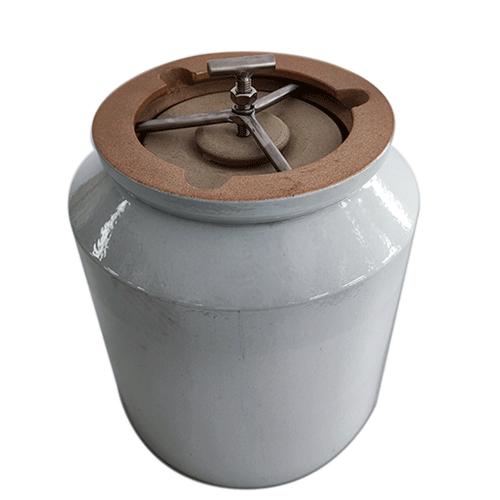
Key Advantages of Ceramic Roll Mill Jars
1. Low Contamination
Ceramic is inherently non-metallic and does not introduce iron, chromium, nickel, or other metallic elements into your sample. This is especially important when preparing materials for electronic ceramics, catalysts, or battery powders where trace metal impurities can degrade performance. The high hardness of ceramic also means that the jar itself wears very slowly, so the amount of ceramic debris transferred to the powder is minimal.
2. Excellent Wear Resistance
Alumina and zirconia ceramics are among the hardest materials used for grinding jars. They resist abrasion from hard grinding media such as zirconia balls or steel balls. This prolongs the service life of the jar and reduces the frequency of replacement. In many laboratory settings, a ceramic jar can last for years of regular use without significant deterioration of the inner surface.
3. Chemical Inertness
Ceramic materials are resistant to most acids, alkalis, and organic solvents. This allows you to grind materials that are corrosive or that require a specific pH environment. You can also use wet grinding with water or organic liquids without worrying about chemical attack on the jar. Note that hydrofluoric acid and strong hot alkalis may attack alumina, so check compatibility for your specific chemistry.
4. Thermal Stability
Ceramic jars can withstand moderate temperatures generated during grinding. While they are not intended for high-temperature applications, they perform well in the typical temperature range of roller ball milling (ambient to about 100°C). If your process generates significant heat, you can implement intermittent operation to allow cooling.
5. Easy to Clean
The smooth glazed surface of a ceramic jar resists powder adhesion and can be easily cleaned with water, solvents, or ultrasonic cleaning. This is a practical advantage when switching between different materials to avoid cross-contamination.
Comparing Ceramic Jars with Other Materials
To help you decide whether a ceramic roll mill jar is right for your application, here is a comparison with other common jar materials:
| Material | Contamination Risk | Wear Resistance | Chemical Resistance | Cost |
|---|---|---|---|---|
| Ceramic (Alumina/Zirconia) | Very Low | Excellent | Excellent | Moderate |
| Stainless Steel | Moderate (Fe, Cr, Ni) | Good | Good | Low-Moderate |
| Nylon / Polyurethane | Low (polymer debris) | Fair | Good (organic solvents) | Low |
| PTFE (Teflon) | Very Low | Poor | Excellent | High |
As you can see, ceramic jars offer a unique combination of low contamination, high wear resistance, and broad chemical compatibility. If your priority is to avoid metal contamination and you need a durable jar for frequent use, ceramic is often the best choice. For applications where cost is the primary concern and contamination is less critical, a stainless steel jar might be considered. If you are grinding very abrasive materials, ceramic or corundum roll mill jar (a high-purity alumina jar) is recommended.
Applications of Ceramic Roll Mill Jars
Ceramic roll mill jars are widely used in the following fields:
- Ceramic powder preparation: Grinding alumina, zirconia, silicon carbide, and other technical ceramics.
- Battery material research: Processing cathode (e.g., NMC, LFP) and anode materials where metal contamination must be avoided.
- Mineral processing: Grinding ore samples, clays, and geological materials.
- Pharmaceutical and fine chemical: Mixing and milling active ingredients, pigments, and dyes.
- Electronic materials: Preparing ferrites, piezoelectric ceramics, and dielectric powders.
If you are working with moisture-sensitive or air-sensitive materials, you can also use a ceramic jar with a vacuum or inert gas adapter. However, standard ceramic jars are not designed for high vacuum; for that purpose, you may need a specialized stainless steel roll mill jar with a vacuum seal.
How to Select the Right Ceramic Roll Mill Jar
When choosing a ceramic roll mill jar, consider the following factors:
1. Jar Capacity
Select a capacity that matches your batch size. A typical rule of thumb is to fill the jar to about 30%–50% of its volume with grinding media, and then add enough powder to fill the remaining voids. For a 1-liter jar, you might use 300–500 ml of grinding balls and 100–200 grams of powder, depending on the material density. Do not overload the jar, as this reduces grinding efficiency and may cause excessive wear.
2. Ceramic Material Type
Alumina (92%–99% Al₂O₃) is the standard choice. Zirconia (Y₂O₃-stabilized) offers higher density and toughness, making it suitable for very hard materials like silicon carbide or for ultra-fine grinding where minimal contamination is critical. However, zirconia jars are more expensive. For most laboratory applications, high-alumina is sufficient.
3. Grinding Media Compatibility
Ceramic jars work well with ceramic grinding balls (e.g., zirconia, alumina) or steel balls. If you use steel balls, the jar’s ceramic surface will resist wear, but the steel balls themselves may introduce metal contamination. For truly contamination-free grinding, use matching ceramic balls.
4. Lid Design
Check the lid sealing mechanism. A simple screw cap with a rubber gasket is common for standard jars. Some jars have a quick-release clamp or a locking plate. Ensure the lid is easy to open and close and provides a dust-tight seal during operation.
5. Compatibility with Your Roller Mill
Not all ceramic jars fit all roller mills. Verify the jar diameter and length to ensure it sits properly on the rollers. Most roller mills accept jars with outer diameters between 100 mm and 250 mm. If you are unsure, consult the roller mill manufacturer or the jar supplier.
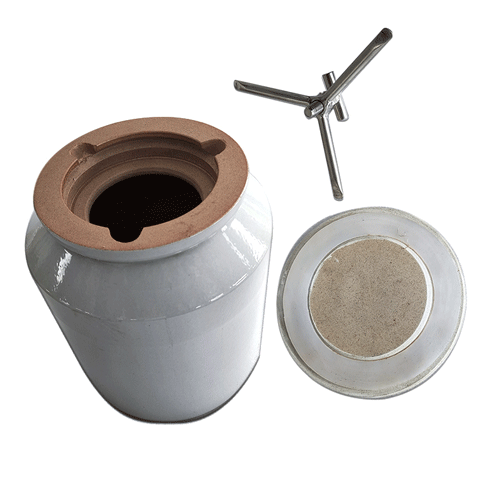
Tips for Using Ceramic Roll Mill Jars
- Start with a clean jar: Before first use, wash the jar with a mild detergent and rinse thoroughly. Avoid abrasive cleaners that could scratch the glazed surface.
- Balance the load: When using multiple jars on a roller mill, try to balance the total weight to avoid excessive vibration. If you are using jars of different materials, ensure the weight distribution is reasonable.
- Monitor temperature: If the jar becomes hot to the touch, stop the mill and allow it to cool. You can also use a timer to run the mill in cycles (e.g., 30 minutes on, 10 minutes off).
- Inspect for wear: Periodically check the inner surface for cracks, chips, or excessive wear. A damaged jar should be replaced to avoid contamination and potential breakage.
- Use appropriate grinding media: Do not use media that is significantly harder than the jar material, as this can accelerate wear. For an alumina jar, zirconia media is a good match.
Where to Find Quality Ceramic Roll Mill Jars
If you are looking for a dependable ceramic roll mill jar, consider the range offered by TENCAN POWDER. Their ceramic jars are manufactured from high-purity alumina with a smooth surface finish, ensuring consistent performance and long service life. They also offer other jar materials such as nylon, stainless steel, PTFE, and polyurethane, so you can select the best option for your specific application.
When you request a quote, be prepared to provide details such as the material you are grinding, desired particle size, batch volume, and any special requirements (e.g., vacuum or temperature control). This information helps the supplier recommend the most suitable jar and grinding media configuration.
In summary, a ceramic roll mill jar is an excellent investment for laboratories that require high purity, durability, and chemical resistance. By understanding your material properties and choosing the right jar, you can achieve reliable, reproducible results in your powder processing work.