
304 Stainless Steel Planetary Mill Jar: Selection, Use, and Best Practices for Laboratory Grinding
Why Material Choice Matters in Planetary Ball Milling
When you set up a planetary ball mill for lab-scale grinding, the jar material is one of the most critical decisions you will make. It directly affects contamination levels, grinding efficiency, and the types of materials you can process. Among the many options available, the 304 stainless steel planetary mill jar stands out as a versatile, durable, and cost-effective choice for a wide range of applications.
In this article, we will walk through the key features of 304 stainless steel jars, discuss when to use them, and how to combine them with the right grinding media. We will also cover vacuum sealing options and practical advice for achieving consistent results.
What Is a 304 Stainless Steel Planetary Mill Jar?
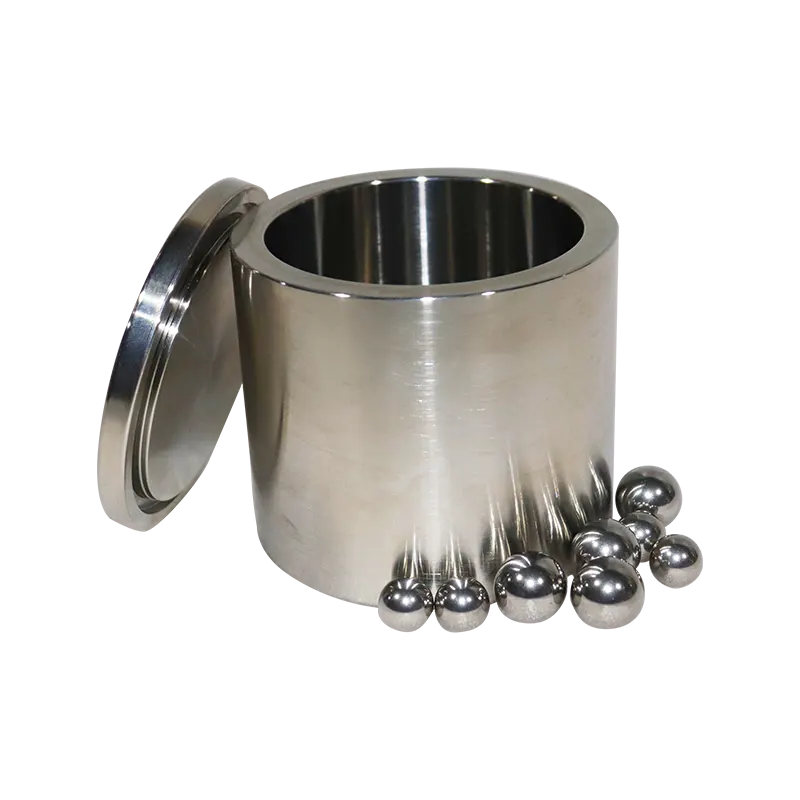
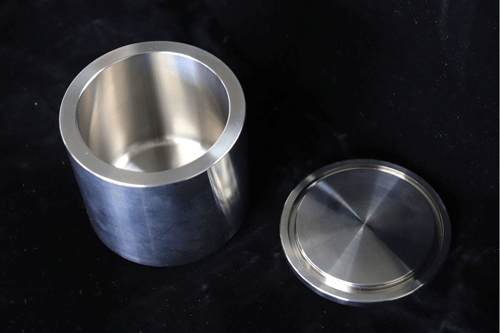
A 304 stainless steel planetary mill jar is a cylindrical container made from grade 304 austenitic stainless steel, designed to fit into a planetary ball mill. It serves as the vessel where your sample, grinding balls, and optional liquid medium are placed. The jar is then secured onto the mill's rotating platform, where it undergoes planetary motion — spinning on its own axis while revolving around a central axis. This creates high-energy impacts and friction that grind the sample down to fine particles.
Grade 304 stainless steel contains approximately 18% chromium and 8% nickel, which gives it excellent corrosion resistance, good mechanical strength, and the ability to withstand moderate temperatures. It is one of the most widely used stainless steel grades in laboratory and industrial equipment.
Key Advantages of a 304 Stainless Steel Jar
1. High Corrosion Resistance
304 stainless steel resists oxidation and attack from many organic and inorganic chemicals. This makes it suitable for grinding materials that are slightly acidic or alkaline, as well as for wet grinding processes where water or solvents are used. It is also resistant to rust under normal laboratory conditions, provided you avoid prolonged exposure to chlorides or strong reducing agents.
2. Good Mechanical Strength and Durability
The jar can withstand the high impact forces generated during planetary milling without cracking or deforming. This is important when you are grinding hard materials such as minerals, ceramics, or metal powders. The robust construction also means the jar can be used repeatedly over many cycles, offering a long service life.
3. Low Contamination for Many Applications
For many common materials, the wear from a 304 stainless steel jar introduces only trace amounts of iron, chromium, and nickel into the sample. If your analysis can tolerate these elements, or if you are simply mixing and blending, the contamination level is often acceptable. For applications where iron contamination is a concern, you can consider using a jar with a lining, such as a 304 stainless steel jar lined with zirconia.
4. Compatibility with Vacuum and Inert Gas Sealing
Many 304 stainless steel jars are designed with threaded ports and O-ring seals, allowing them to be used in vacuum or inert gas environments. This is essential when you are milling materials that are sensitive to oxygen, moisture, or air exposure — such as metal powders, sulfides, or certain battery materials. The vacuum planetary mill jar option extends the utility of stainless steel jars to air-sensitive applications.
Materials Suitable for 304 Stainless Steel Jars
In practice, a 304 stainless steel planetary mill jar works well for a broad range of materials. Here are some common categories:
- Minerals and ores: limestone, quartz, feldspar, bauxite, etc.
- Ceramics and glass: alumina, silicon carbide, glass frit, etc.
- Chemicals and pharmaceuticals: pigments, dyes, catalysts, active pharmaceutical ingredients (dry grinding).
- Battery materials: cathode and anode powders (e.g., LCO, NMC, graphite) – provided the material does not react with stainless steel under the milling conditions.
- Metal powders: many non-ferrous and ferrous metals can be ground, but pay attention to possible reaction with the jar surface.
However, you should avoid using 304 stainless steel jars with strong acids, chlorides (e.g., salt water, hydrochloric acid), or materials that may cause pitting corrosion. For highly corrosive samples, consider jars made from PTFE, nylon, or agate.
Selecting the Right Grinding Media for Your 304 Stainless Steel Jar
The grinding balls you use inside the jar must be compatible with both the jar material and your sample. For a 304 stainless steel jar, the most common grinding media include:
- Stainless steel balls: Same material family, low risk of cross-contamination, good impact strength. Suitable for mineral, metal, and general grinding.
- Zirconia balls (ZrO₂): Very hard, wear-resistant, and introduce minimal contamination. Ideal for fine grinding of ceramics, pigments, and electronic materials. If you need even lower contamination, you can pair a zirconia jar with zirconia balls.
- Tungsten carbide balls: Extremely hard and dense, suitable for very hard samples (e.g., silicon carbide, cemented carbides). However, they can cause higher wear on the jar surface if used aggressively.
- Ceramic balls (e.g., alumina): Good for dry grinding of non-metallic materials, but may cause some contamination from the jar if the jar is not lined.
When selecting ball size, consider that larger balls (10–20 mm) provide stronger impact and are better for coarse grinding, while smaller balls (1–5 mm) increase contact points and are preferred for fine grinding or dispersion. In many cases, using a mix of ball sizes can improve efficiency.
Practical Tips for Using a 304 Stainless Steel Jar
1. Ball-to-Powder Ratio
A typical starting point for planetary ball milling is a ball-to-powder weight ratio between 5:1 and 20:1, depending on the material and target particle size. For example, if you are using a 250 mL jar, you might fill about 30–50% of the jar volume with grinding balls and then add your sample. The exact ratio should be optimized through small-scale experiments.
2. Maximum Fill Volume
Never fill the jar completely. The total volume of sample plus grinding balls should not exceed about two-thirds of the jar's capacity. This leaves enough space for the balls to move freely and generate the necessary impact forces.
3. Speed and Time
Planetary ball mills typically operate at rotational speeds from 50 to 600 rpm. For 304 stainless steel jars, it is safe to run at the mill's maximum rated speed, but you should start with a moderate speed (e.g., 300–400 rpm) and adjust based on results. For heat-sensitive materials, use intermittent grinding cycles (e.g., 10 minutes on, 5 minutes off) to control temperature rise.
4. Cleaning and Maintenance
After each use, clean the jar thoroughly with a suitable solvent or detergent to prevent cross-contamination. Avoid using abrasive scouring pads that could scratch the inner surface. Periodically check the O-rings and sealing surfaces if you use the jar under vacuum.
Comparing 304 Stainless Steel Jars with Other Materials
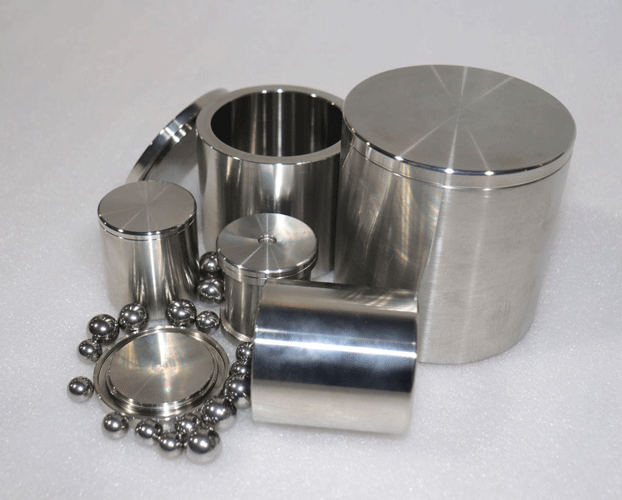
To help you make an informed decision, here is a quick comparison of common jar materials:
| Material | Key Feature | Best For | Contamination Risk |
|---|---|---|---|
| 304 Stainless Steel | Balance of cost, strength, and corrosion resistance | General mineral, ceramic, metal grinding | Low (Fe, Cr, Ni) |
| Zirconia (ZrO₂) | Very hard, wear-resistant, low contamination | Fine grinding of ceramics, electronics, medical | Very low (ZrO₂) |
| Agate (SiO₂) | Non-metallic, smooth surface | Grinding of soft materials, geological samples | Very low (SiO₂) |
| Tungsten Carbide | Extremely hard, high density | Hard materials, mechanical alloying | Moderate (W, Co) |
| Nylon / PTFE | Non-reactive, good for corrosive samples | Acids, alkalis, biological samples | Minimal |
For most routine laboratory milling, a 304 stainless steel jar offers the best value. If your application demands ultra-low contamination or involves highly corrosive materials, you can switch to one of the specialized jars mentioned above.
When Should You Choose a Vacuum Configuration?
If you are milling materials that oxidize easily, such as aluminum, titanium, or certain metal sulfides, you should consider using a vacuum or inert gas atmosphere. A 304 stainless steel jar with a vacuum lid and O-ring seal can be connected to a vacuum pump or argon line. This prevents oxidation and also helps reduce powder agglomeration caused by moisture. The vacuum planetary mill jar is a practical solution for these sensitive processes.
When using a vacuum jar, ensure that the seal is intact and that the jar is properly evacuated before starting the mill. After grinding, release the vacuum slowly to avoid sudden air ingress that could disturb the powder.
Final Thoughts on Selecting a 304 Stainless Steel Planetary Mill Jar
Choosing the right jar for your planetary ball mill is a decision that affects both the quality of your results and the efficiency of your workflow. The 304 stainless steel planetary mill jar provides a reliable, durable, and versatile option that works well for a wide range of materials. By understanding its properties, limitations, and proper usage, you can achieve consistent particle size reduction and minimize unwanted contamination.
If you are unsure about which jar material or configuration is best for your specific sample, it is always a good idea to start with a small batch test. Document your parameters — jar material, ball size, ball-to-powder ratio, speed, and time — and adjust based on the grinding outcome. Equipment suppliers like TENCAN can also provide guidance based on your material composition and target particle size.
Remember that the goal is not just to grind, but to grind reliably and reproducibly. A well-chosen jar is the foundation of that success.