
Heavy-Duty Planetary Ball Mill Selection
A planetary ball mill can produce a clean, narrow particle size distribution in one campaign and a broad, irreproducible result in the next without any obvious change in the operator's procedure. The difference usually lies in variables that are easy to overlook: jar volume, ball charge, sample fill, rotation mode, total energy input, and the way the mill transfers that energy into the powder. For laboratories working with hard, brittle, dense, or heat-sensitive materials, a heavy-duty platform is often considered when ordinary benchtop units approach their practical limits. The real selection question is whether the mill, jar set, and method can hold a defined particle size target while remaining practical to clean, maintain, and reproduce.
The Heavy-duty Full-directional Planetary Ball Mill from Changsha Tianchuang Powder Technology Co., Ltd (TENCAN) is one example of a platform aimed at demanding laboratory grinding. Its relevance should be judged against the material and method, not against a generic list of features. A heavy-duty platform, full-directional jar motion, and the jar and media selected for the sample all interact. The notes below focus on the technical decisions that determine whether such a mill is suitable and how to build a more reliable method around it.
Why Planetary Ball Milling Reproducibility Is Hard to Hold
Reproducibility in planetary milling is not a single property of the machine. It is the result of controlled energy input, a stable jar and media condition, and a sample preparation routine that does not change between runs. A mill can be mechanically sound and still generate inconsistent data if the jar is filled differently, the balls are worn, or the operator stops the cycle at a different temperature. Before comparing models, define what must remain constant in your method and what may legitimately change when the material changes.
Grinding Is Energy Transfer, Not a Timer Setting
During planetary milling, the jar rotates around a central axis while also turning around its own axis. The resulting centrifugal field makes the grinding balls travel, collide, and roll against the sample and jar wall. The useful work is the portion of that motion that creates fracture and fresh surface area; the rest becomes heat, sound, and wear. A longer timer setting therefore does not automatically mean more size reduction. It can mean more heat, more jar wear, and more agglomeration if the sample has already reached its practical grinding limit.
Feed size is the first constraint. A sample that enters the jar as coarse granules may need a different ball size and charge than a pre-milled powder. Material behavior matters as well: brittle crystals fracture differently from ductile metals, fibrous plant material, or soft polymers. The mill can only provide motion and energy. The jar, media, and sample load determine how that energy is converted into comminution.
Where Methods Drift
Most laboratory variation appears in a small number of places. Recording these variables is more useful than recording only the rotation speed and run time.
- Jar fill and the empty volume left for ball movement.
- Ball-to-powder ratio and the size distribution of the grinding balls.
- Whether the sample was dried, pre-crushed, or added as a slurry.
- Pause intervals and the temperature of the jar at the end of each cycle.
- Jar and ball wear, cleaning residues, and the condition of seals.
A drift in any one of these items can shift the median particle size or widen the distribution. The practical response is to create a one-page method record that includes jar type, ball charge, sample mass, liquid-to-solid ratio if wet, planned pauses, and the measurement method used for particle size. When a result changes, the record shows whether the change came from the mill or from the preparation. This is especially important when a heavy-duty mill is used for method development that may later move to another laboratory.
Particle Size Is a Distribution, Not a Single Number
A single D50 value can hide a broad tail of coarse particles or a fine fraction that causes downstream processing problems. D10, D50, and D90 together describe the spread more honestly, while the measurement technique itself must be appropriate for the material. Laser diffraction, sieving, dynamic image analysis, and microscopy do not answer exactly the same question. If the target is a narrow distribution, the method should be judged on the full curve and on repeatability across at least three independent runs, not on the most favorable result.
How a Full-Directional Planetary Ball Mill Transfers Energy
A full-directional planetary ball mill changes the direction of jar motion rather than relying on one fixed rotation pattern. The intent is to distribute grinding energy more evenly through the jar and reduce the chance that a portion of the sample sits in a low-energy zone. The actual effect depends on the model's motion profile, jar geometry, fill level, and the properties of the powder. It is a process tool, not a guarantee that every material will mill to a narrow distribution.
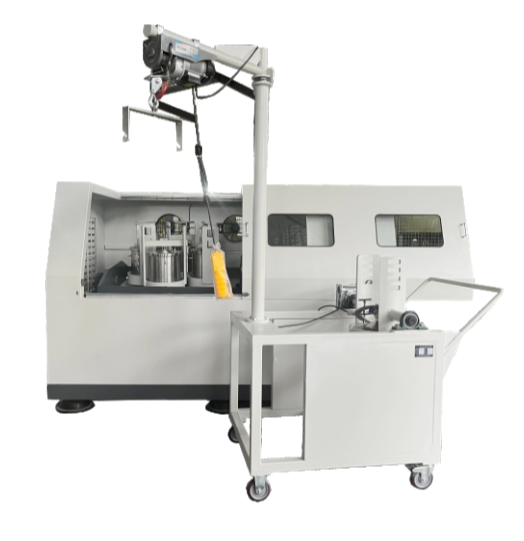
Jar Motion and the Grinding Zone
In a conventional planetary mill, the grinding zone moves as the jar turns. Balls are lifted, thrown, and rolled, and the sample is repeatedly caught between ball surfaces and the jar wall. When the motion direction changes, the pattern of impacts and shear can shift as well. This can be useful for materials that tend to pack in one corner of the jar or form a stable layer on the wall. The benefit must still be demonstrated with the actual sample, because a more complex motion does not correct an unsuitable ball charge or an overfilled jar.
The jar should be loaded so that the balls have room to move and the sample can be distributed through the charge. An overloaded jar reduces free path length and can turn the charge into a compact mass. An underloaded jar wastes capacity and may increase wear if the balls strike the wall with little powder present. The right fill range is material-dependent, and it should be established by a small design-of-experiments set rather than by copying a single number from another project.
Heavy-Duty Construction: Useful, but Not Self-Validating
The heavy-duty designation is most relevant when the mill must handle dense jars, high ball charges, long runs, or a demanding laboratory schedule. Buyers should ask which mechanical and thermal limits are defined for the platform and how those limits are protected during operation, rather than assuming that a larger machine automatically produces a finer powder. A heavy-duty platform can improve tolerance to sustained load, but it does not replace the energy balance between jar, media, and sample. The useful question is whether the machine can hold the required motion without excessive heat or wear.
For a method that is still being developed, the full-directional planetary ball mill should be evaluated with the intended jar size and the intended sample. A short trial with a representative material is more informative than a demonstration using a soft reference powder. The trial should record power behavior, noise, temperature rise, and the condition of the jar after the run. If the material is abrasive or the jars are heavy, the handling and clamping routine also becomes part of the safety and reproducibility assessment.
Controls and Repeatable Settings
A control system is useful only when its settings can be documented and repeated. Stored programs reduce typing errors, but they do not replace a written method. The operator should know whether the displayed speed is jar speed, disc speed, or a relative value, and whether the same setting produces the same motion after a program change. The same question applies to pause logic and restart behavior. When a mill is used by several people, a simple access routine and a settings log prevent small changes from becoming unexplained variation.
Jar and Media Selection: The Contamination Side of the Method
Jar and media selection determines both the contamination risk and the amount of energy that reaches the sample. A hard, dense jar and ball set can deliver more impact energy, but it may also wear the product or introduce elements that are unacceptable in the final material. A softer or lower-density set may reduce contamination but require longer processing or a different charge. The correct choice comes from the material specification, not from a general preference for one jar material.
Material Compatibility and Wear
Laboratories commonly compare agate, zirconia, alumina, stainless steel, tungsten carbide, and polymer jars. Each has a different combination of hardness, toughness, density, and chemical resistance. Stainless steel may be appropriate for some metals and brittle inorganics but can be a poor choice when iron contamination matters. Zirconia and alumina are often considered for wear resistance, while agate is used where a relatively inert, lower-density jar is acceptable. Polymer jars can be useful for soft or sensitive materials, but heat and solvent compatibility must be checked.
Contamination is not limited to the jar body. Lid seals, gaskets, and the grinding balls may also contribute. A wear test should include a blank run with the intended jar and media, followed by analysis of the blank for the elements that matter in the final product. The test should use the same speed, time, and fill level as the real method. If contamination appears, the first response is not always a different mill. It may be a different jar material, a lower-energy profile, or a shorter run with better feed preparation.
Cleaning is part of contamination control. A jar that is visually clean can still carry residues in the seal, at the thread, or in scratches on the inner surface. Dedicated jars for sensitive materials reduce cross-batch risk, but they must still be inspected for wear. The cleaning procedure should be written down, including the solvent, drying step, and any prohibition on abrasive cleaning. If the method requires trace-level control, a blank run after cleaning provides more useful evidence than a visual check alone.
Ball Size, Density, and Charge
Ball size has a direct effect on the balance between impact and shear. Larger balls carry more mass and can break coarse particles, but they may leave a coarser final distribution and create more wear. Smaller balls provide more contact points and can improve fine grinding, provided they carry enough energy and are not lost through the discharge or stuck to the jar. A mixed ball charge can sometimes improve packing and fracture efficiency, but it makes the method harder to reproduce unless the mix is specified by size and mass.
Ball density matters when the jar and mill can support it. Dense media deliver more kinetic energy at the same rotational setting, which can shorten the time to a target size but also increase heat and contamination. The ball-to-powder ratio should be treated as a method variable, not as an approximate rule. A change from a 5:1 to a 10:1 ratio changes the number of contacts per unit of powder, the free volume, and the temperature profile. The ratio must be recorded with the sample mass and jar volume because it cannot be interpreted on its own.
Dry and Wet Processing Choices
Dry milling is convenient when the final product must remain a powder and the material does not compact on the jar wall. It can suffer from dusting, static, and caking, especially with fine or soft materials. Wet milling can improve dispersion and reduce dust, but it adds a liquid that must be compatible with the sample and later removed. The liquid can also change the fracture behavior by cooling the charge, reducing friction, or promoting agglomeration. The decision should be based on the downstream process, not only on grinding speed.
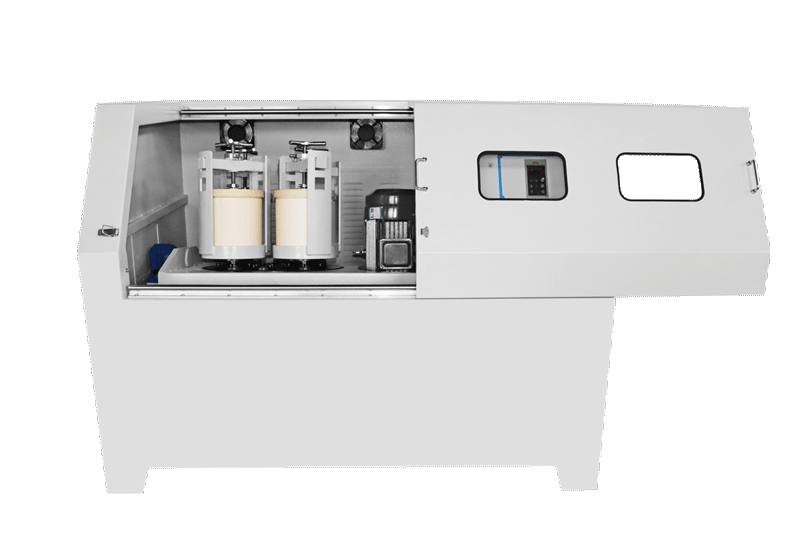
Energy Input, Fill Ratio, and Particle Size Distribution
Energy input in planetary milling is influenced by rotation settings, run time, jar diameter, ball mass, and the number of interruptions. Two runs with the same total time can deliver different energy if one uses a different jar or a different ball charge. For this reason, a method should be described by the complete set of conditions rather than by a single speed value. When a result is transferred between laboratories, the receiving team needs enough information to reproduce the energy environment, not just the timer setting.
Why Longer Runs Can Worsen Results
Beyond a certain point, additional milling may not reduce the median size. It can increase the fine fraction, raise the temperature, and promote re-agglomeration or cold welding. In ductile materials, particles may flatten and join rather than fracture. In soft or sticky materials, a layer can form on the jar and media, cushioning later impacts. The result is a broader distribution and a method that becomes less stable over time. If the curve stops moving, the next experiment should change the ball charge, fill level, or media size, not simply add more time.
A practical way to find the limit is to run a time series with the same jar and charge, taking small samples at planned intervals. The series should be long enough to show a plateau, not just the first improvement. Each sample should be measured by the same technique and, where possible, by the same operator. This approach also shows whether the material is heat-sensitive. If the D50 improves while the D90 worsens, the process is creating fines without controlling the coarse tail, and the method needs a different energy pattern.
Jar diameter and geometry also change the energy environment. A larger jar gives the balls a longer path and can alter the frequency of impacts, so a program that works in a small jar may not transfer directly. The same rotation setting can produce a different tip speed at the jar wall. This is one reason a scale-up trial should be based on measured particle size and temperature, not on a simple time multiplier. The operating window is found by testing, not by assumption.
Reading a Particle Size Result
D10, D50, and D90 are useful only when the measurement method is stated. Laser diffraction results depend on the optical model, dispersion pressure, and sonication used during analysis. Sieve results depend on the sieve series and the duration of agitation. Microscopy can reveal agglomerates that a laser instrument reports as primary particles. For method development, keep the analytical method fixed and report the full distribution, the span, and the number of replicates. A result that cannot be repeated by a second analyst should be treated as an observation, not as a specification.
Sampling is part of the measurement. A small scoop taken from the top of the jar may not represent the whole charge, especially if the powder has settled or segregated. The jar should be opened and the contents mixed consistently before sampling, or the entire charge should be processed through a suitable divider. The sample mass required by the analyzer should be defined in advance. These details are not administrative. They determine whether the reported particle size describes the batch or only the easiest particles to collect.
Heat and Sensitive Materials
Planetary milling converts mechanical energy into heat. With dense media, high fill, or long runs, the jar can become warm enough to change the sample, the binder, or the solvent. A heavy-duty platform may tolerate that load better mechanically, but it does not remove the thermal effect on the product. Short cycles with controlled pauses, a lower ball charge, or a temperature-controlled configuration can reduce the risk. The right choice depends on the material's degradation temperature and on whether the process can be validated with the available cooling method.
| Variable to record | Why it matters | Practical check |
|---|---|---|
| Jar material and volume | Sets contamination risk and free volume | Record serial number and condition |
| Ball material, size, and mass | Controls impact energy and wear | Weigh the charge; do not count balls only |
| Sample mass and fill ratio | Changes contact frequency and heat | Use the same filling procedure |
| Motion program and pauses | Defines energy input and thermal profile | Save the program and keep a run log |
| Particle size method | Determines whether results are comparable | Fix instrument settings and sampling plan |
Scaling and Troubleshooting a Heavy-Duty Method
Scaling a planetary milling method is not a matter of multiplying the run time by the volume ratio. Larger jars change the distance traveled by the balls, the collision frequency, and the heat removal path. A heavy-duty full-directional mill may offer a different motion pattern from a small benchtop unit, so the energy per unit mass must be re-established. The safest scale-up starts with the same material and the same measurement method, then changes one variable at a time until the target distribution is reproduced.
Scale-Up Logic
The first scale-up question is whether the new jar can be loaded to the same effective fill and ball-to-powder ratio as the laboratory jar. If the geometry prevents that, the method must be rebuilt rather than copied. The second question is whether the mill can deliver the required energy without exceeding the temperature or wear limits of the jar and media. The third is whether the sampling method still represents the larger batch. A successful scale-up is demonstrated by a stable distribution across repeated batches, not by a single run that meets the target.
Where the product is sensitive to heat or contamination, the larger run may need a lower energy density and a longer cycle, even though that seems counterintuitive. A smaller ball size can improve fine grinding but may be difficult to separate from the product. A larger ball can reduce the number of contacts and leave a coarser tail. These trade-offs should be tested with a small matrix of ball size, fill level, and run time. The matrix does not need to be large; four to six well-chosen trials often reveal whether the method has a stable operating window.
Troubleshooting Broad Distributions and Caking
A broad or bimodal distribution usually points to incomplete fracture of coarse particles, agglomeration of fines, or both. The first check is the feed. If the feed itself is variable, the mill cannot produce a consistent product. The second check is the ball charge: too few large balls may leave coarse particles untouched, while too many fines may cause caking. The third is the fill level. An overfilled jar limits ball travel and can create a stagnant zone. A short run with a narrower feed size or a corrected charge is a better diagnostic than a long run at higher speed.
Caking and wall adhesion are often caused by moisture, static, soft particles, or a jar material that the sample wets. Drying the feed and jar before use may help. If the material is waxy or polymeric, a different jar surface or a wet process may be necessary. The operator should also check whether the mill is pausing long enough for heat to dissipate. A heavy-duty mill can run for extended periods, but that capability should not be used to compensate for a method that is already outside its thermal window.
Contamination, Color, and Maintenance Signals
A color change, a magnetic response, or an unexpected peak in elemental analysis can indicate wear from the jar or media. The response should be based on the specification of the final product. In some cases, a small amount of wear is acceptable; in others, it disqualifies the method. The mill itself should be checked for loose clamps, abnormal noise, seal condition, and residue around the jar seat. These checks are part of method control because a mechanical change can alter the motion and therefore the particle size result.
Maintenance should be scheduled around the method, not only around breakdowns. Jar seats, clamps, seals, and drive components should be inspected at defined intervals, and any change should be logged. If a mill begins to sound different at the same settings, the cause may be a worn component rather than a change in the material. Keeping a reference jar and a reference sample can help separate mechanical drift from sample variability. This simple practice is often more valuable than adding another sensor.
Selection Checklist for a Heavy-Duty Full-Directional Planetary Ball Mill
Selecting a heavy-duty full-directional planetary ball mill should begin with the material and the target distribution, not with the largest available model. The mill must be compatible with the required jar size, ball charge, and operating time, and it must be supported by a cleaning and maintenance routine that fits the laboratory. The planetary ball mill for heavy-duty laboratory grinding is a reasonable candidate when the method needs a robust platform, but the decision should be supported by a trial and by a clear record of the process window.
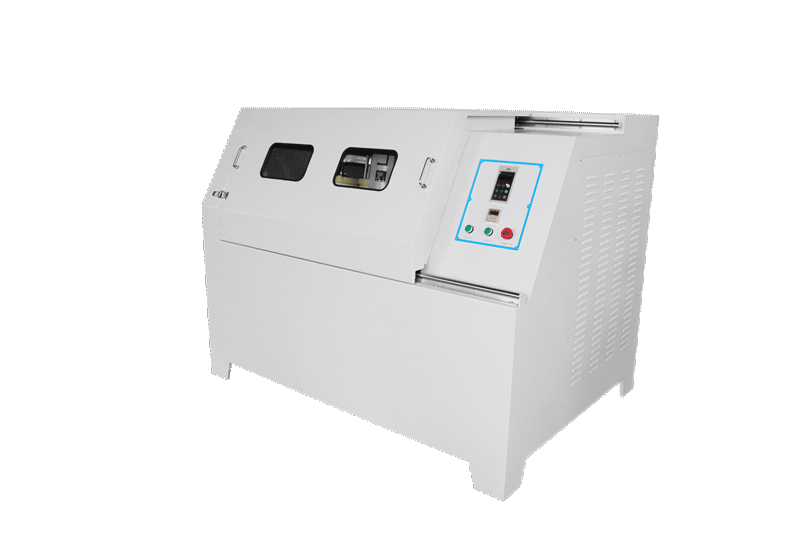
| Selection area | Question to answer | Evidence to request |
|---|---|---|
| Material compatibility | Which jar and media contact the sample? | Material information and blank-run analysis |
| Energy requirement | Can the platform deliver the required motion for the intended jar? | Trial with a representative load |
| Thermal control | How will heat be managed during long runs? | Temperature log and pause strategy |
| Reproducibility | Can settings be saved and exported? | Sample run log and method record |
| Maintenance | How are jars, seals, and drive components inspected? | Service schedule and spare-part list |
Questions to Ask Before Purchase
A supplier discussion is more productive when it is specific. Ask how the full-directional motion is defined for the model, which jar sizes and materials are supported, and what limits apply to ball mass and run time. Ask for the recommended procedure for a material similar to yours, not for a generic demonstration. Confirm how the control system records settings and whether the run log can be exported. These questions reveal whether the mill can become part of a controlled method or will remain a general-purpose machine with an uncertain process window.
- What is the maximum supported jar and ball load for the intended motion profile?
- Which jar and media materials are available, and what contamination data can be provided?
- How is heat managed during long or repeated cycles?
- Which settings are stored, displayed, and exportable for method records?
- What maintenance and wear checks are required, and how often?
The answers should be compared with the actual sample. A machine that is oversized for the method can be as problematic as one that is too small, because the available energy may be difficult to control at the low end. A machine that is too small may force excessive run times and heat. The right balance is a platform with enough reserve for the intended workload while still allowing stable, repeatable settings at the working point.
Validation Before Committing a Method
A validation trial should use the real material, the intended jar and media, and the analytical method that will be used for release. Run at least three replicates at the proposed conditions and include a blank or placebo run for contamination. Measure the full particle size distribution, not only the median. Record temperature, noise, and any visible change in the jar or product. If the result meets the target but the run is difficult to clean or the jar shows unusual wear, the method is not yet ready for routine use.
The final selection decision should also consider the people who will use the mill. A heavy-duty platform can require more careful jar handling and clamping than a small benchtop unit. Training, access control, and a clear shutdown procedure reduce the risk of inconsistent loading. The most reliable installation is one where the method, the machine, and the laboratory routine support each other. That is a more durable advantage than a single favorable test result. Final operating limits and results remain subject to testing and process requirements.