
Lab Roll Ball Mill: A Practical Guide for Laboratory Grinding and Material Preparation
What Is a Lab Roll Ball Mill and Why Do You Need One?
If you work in a laboratory that handles powders — whether for ceramics, minerals, battery materials, or chemical research — you have likely faced the challenge of achieving consistent and reproducible particle size reduction. A lab roll ball mill, also known as a jar mill or roller ball mill, is one of the most straightforward and reliable solutions for wet or dry grinding of small to medium sample batches.
Unlike planetary ball mills that rely on high-energy planetary motion, a roll ball mill operates on a gentler principle: the grinding jar rotates on a set of powered rollers, causing the grinding media (balls) and the material inside to tumble, shear, and impact repeatedly. This design makes it particularly suitable for materials that are sensitive to excessive heat or impact, and for processes that require a simple, low-maintenance setup.
How Does a Roll Ball Mill Work?
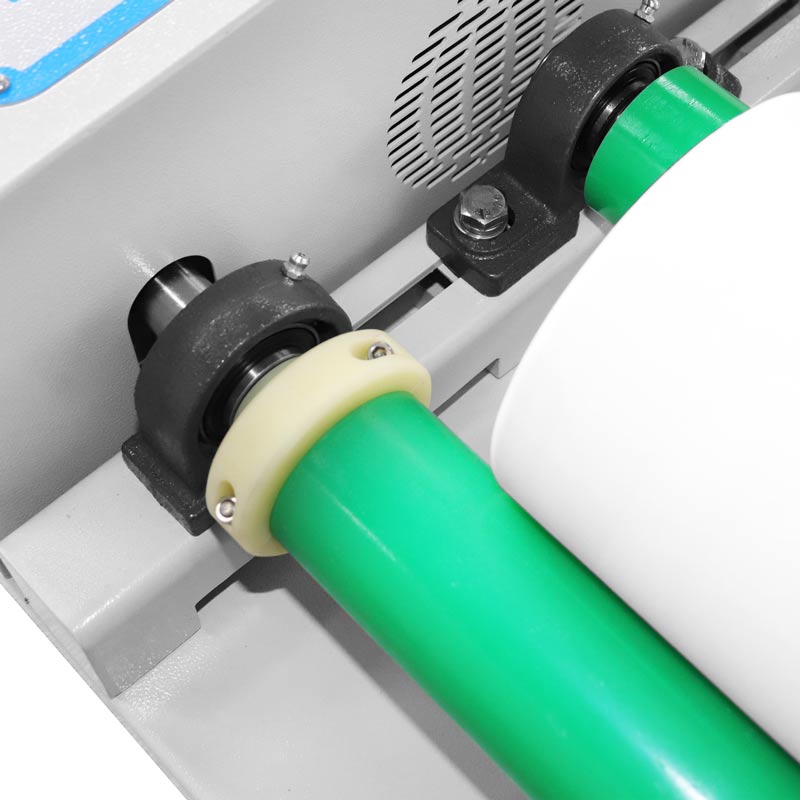
The core concept is simple: a cylindrical grinding jar (or multiple jars) is placed horizontally on a set of rotating rollers. The friction between the jar surface and the rollers causes the jar to rotate. Inside the jar, the grinding balls and the powder are lifted by the rotating motion and then fall back, generating impact and attrition forces that break down the particles.
Key parameters that influence the grinding result include:
- Rotational speed — Typically adjustable between 50 and 300 rpm for laboratory models. Too slow and the balls simply roll without effective impact; too fast and the balls may centrifuge against the jar wall, losing grinding action.
- Grinding jar volume — Common lab sizes range from 0.5 L to 20 L per jar. The useful working capacity is usually about 30% to 50% of the jar volume to allow enough space for tumbling action.
- Ball-to-powder ratio — A typical starting point is 5:1 to 10:1 by weight, but this depends heavily on the material density and target fineness.
- Grinding ball size and material — Larger balls (e.g., 10–20 mm) provide stronger impact for coarse grinding; smaller balls (e.g., 3–10 mm) generate more contact points for fine grinding. Common ball materials include agate, zirconia, alumina, stainless steel, and tungsten carbide.
One of the main advantages of a roll ball mill is its ability to accommodate a wide range of jar materials — from agate and alumina to stainless steel and nylon — allowing you to minimize contamination for different sample types.
Common Applications of Lab Roll Ball Mills
Because of its gentle yet effective milling action, the roll ball mill is widely used in:
- Ceramic and glass powder preparation — Grinding alumina, zirconia, silica, and feldspar for glaze or body formulations.
- Mineral processing laboratories — Size reduction of ore samples for assay or beneficiation studies.
- Battery material research — Mixing and grinding cathode and anode powders, such as LCO, NMC, or graphite.
- Chemical and pharmaceutical industries — Fine grinding of pigments, catalysts, and active ingredients.
- Geological and soil analysis — Homogenizing soil, rock, and sediment samples.
You can also use the roll ball mill for mechanical alloying of metal powders, but keep in mind that the energy input is lower than that of a planetary ball mill, so longer milling times or higher ball-to-powder ratios may be needed.
How to Select the Right Lab Roll Ball Mill
Choosing the right equipment for your lab involves more than just picking a model. Here are the key factors to consider:
1. Number of Working Stations
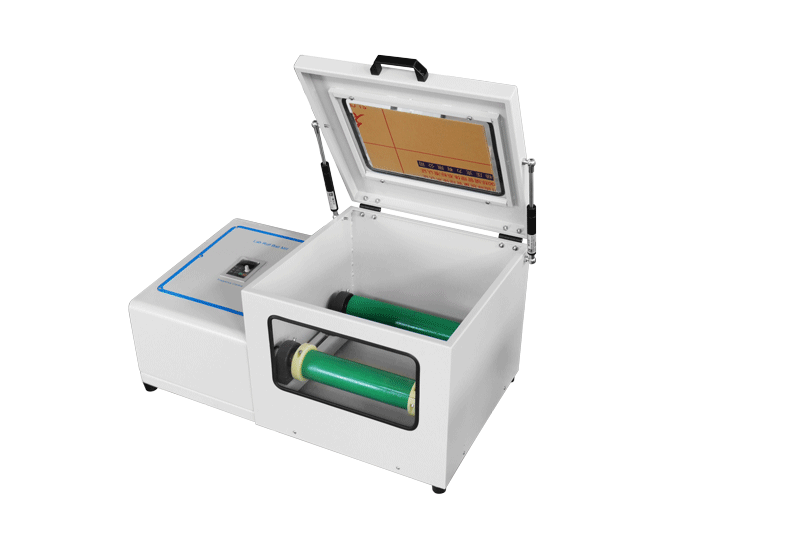
Roll ball mills are available in configurations with 2, 4, or 8 independent stations. If you need to grind multiple samples simultaneously under identical or different conditions, a multi-station model can save time and improve throughput. For single-sample work, a two-station mill is often sufficient.
2. Jar Material Compatibility
Always match the jar material to your sample. For example:
- Agate — Excellent for high-purity grinding of silica-based materials; low contamination but brittle.
- Alumina — Durable and cost-effective for ceramic and mineral samples.
- Zirconia — High wear resistance for hard materials; ideal for battery materials.
- Stainless steel — Suitable for metal powders but may introduce iron contamination.
- Nylon or PTFE — Good for organic or corrosive samples.
3. Roller Speed Control
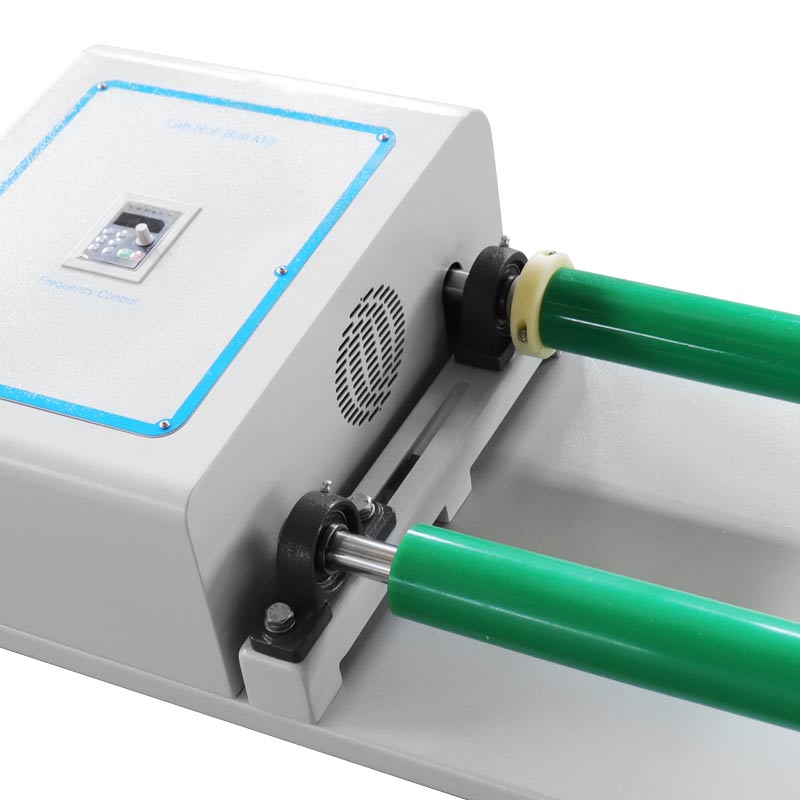
Variable speed control is essential for optimizing the milling process. Look for a mill with a digital speed display and a range that allows you to find the critical speed for your jar size. Some models offer programmable timers and forward/reverse rotation to improve uniformity.
4. Safety Features
Since the jars rotate at speed, a secure locking mechanism is important to prevent jars from slipping. Some mills include a safety cover or interlock that stops the rollers when the cover is opened.
5. Sample Volume and Jar Size
Estimate the typical batch size you need to process. If you often work with small samples (50–500 g), a 0.5–2 L jar may be ideal. For larger batches (1–5 kg), consider 5–10 L jars. Keep in mind that the jar should not be filled more than half full with grinding media and powder to maintain effective tumbling.
Practical Tips for Better Grinding Results
Based on years of experience in powder processing, here are a few practical recommendations:
- Start with a pre-crush — If your feed material is larger than 5 mm, consider using a jaw crusher or hammer mill first. A roll ball mill works best when the feed size is below 3–5 mm.
- Optimize the ball-to-powder ratio — For most materials, a ratio of 6:1 to 8:1 is a good starting point. For softer materials, a lower ratio may suffice; for harder materials, increase the ratio.
- Use wet grinding when possible — Adding a liquid (water, ethanol, or isopropanol) can reduce dust, lower temperature rise, and prevent particle agglomeration. Wet grinding often yields finer particles than dry grinding.
- Monitor milling time — Over-grinding can lead to excessive wear and contamination. Take samples at intervals and check particle size to determine the optimal time.
- Clean the jar and balls thoroughly — Cross-contamination between samples can ruin your results. Use dedicated jars for specific materials, or clean them with the same type of material or appropriate solvents.
When to Choose a Roll Ball Mill Over Other Lab Mills
Each lab mill has its strengths. The roll ball mill stands out when:
- You need a simple, low-noise, and low-maintenance machine.
- Your sample is moderately hard or brittle, and you don't require extremely high energy (e.g., for true nano-grinding).
- You want to process multiple samples in parallel using different jar materials.
- You are mixing or blending powders that do not need intense impact.
For applications requiring ultra-fine particles below 1 micron, a planetary ball mill or a stirred ball mill may be more appropriate. However, the roll ball mill is often the first choice for routine grinding, sample preparation, and small-scale production.
If you are evaluating options for your laboratory, consider the lab roll ball mill from TENCAN as a reliable starting point. Its modular design, flexible jar options, and robust construction make it suitable for a wide range of powder processing tasks. For more specialized needs, you can also explore the light-duty roll ball mill for smaller samples or the large roll ball mill for higher throughput.
Ultimately, the best way to determine the right mill for your material is to test it under controlled conditions. A reputable supplier can provide technical recommendations based on your specific powder characteristics, target particle size, and batch size. Remember that consistent results come from careful selection of parameters, not just the equipment itself.