
Dual Planetary Ball Mill: Higher Energy, Faster Grinding for Advanced Material Research
Why Choose a Dual Planetary Ball Mill for Your Material Processing?
When you need to grind materials down to the micron or even nanometer scale, standard planetary ball mills often deliver excellent results. But what if your research demands even higher energy input, faster processing times, or the ability to handle tougher materials like carbides, metal alloys, or brittle ceramics? That is where the dual planetary ball mill comes into play. This advanced milling system features a unique dual-drive design that generates significantly more impact and friction energy than conventional planetary mills, allowing you to achieve finer particle sizes in a fraction of the time.
In this article, we will walk through how a dual planetary ball mill works, what makes it different from a standard planetary ball mill, and how to decide if it is the right choice for your lab or production line.
How Does a Dual Planetary Ball Mill Work?
Like a standard planetary ball mill, the dual planetary ball mill operates on the principle of planetary motion: the grinding jars rotate around their own axes while simultaneously revolving around a central sun wheel. However, the dual version takes this concept a step further by incorporating two independent driving mechanisms—one for the sun wheel and one for the jar rotation—or by using a more complex gear train that increases the relative speed between the jar and the sun wheel.
The result is a much higher centrifugal force acting on the grinding balls and the powder. In many laboratory dual planetary ball mills, the rotational speed of the sun wheel can reach up to 600 rpm or more, while the jar rotation speed can be independently controlled or optimized through a fixed transmission ratio. This dual action creates intense collisions between the grinding media and the sample, generating impact forces that are considerably higher than those in a single-drive planetary mill.
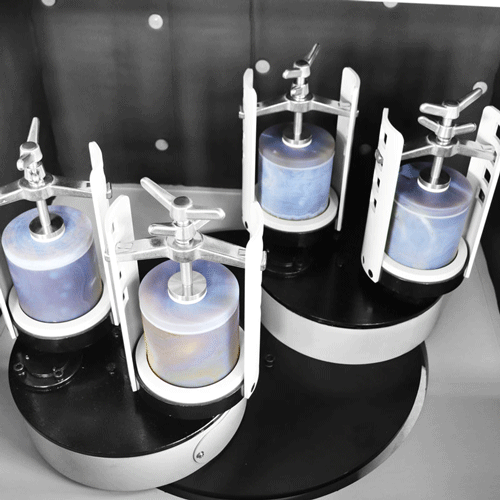
The enhanced energy density makes the dual planetary ball mill particularly effective for:
- Mechanical alloying – where repeated cold welding and fracturing of metal powders create homogeneous alloys at the atomic level.
- Nano-powder preparation – reducing particle size to below 100 nm in a shorter time.
- Grinding hard and brittle materials – such as silicon carbide, tungsten carbide, and zirconia.
- Reactive milling – inducing chemical reactions through mechanical energy.
Key Differences from a Standard Planetary Ball Mill
To help you understand whether a dual planetary ball mill fits your application, here are the main technical distinctions:
1. Higher Impact Energy and Faster Grinding
A standard planetary ball mill typically generates a centrifugal acceleration of about 10–15 g. A dual planetary ball mill can achieve 20 g or more, depending on the design. This means the grinding balls hit the powder with much greater force, accelerating the comminution process. For example, a material that requires 2 hours of grinding in a conventional planetary mill may be reduced to the same fineness in 30–40 minutes in a dual mill.
2. Independent or Optimized Speed Control
In many dual planetary mills, the sun wheel and the jar each have their own motor or a specially designed gear system that allows the jar to rotate at a speed that is not simply a fixed multiple of the sun wheel speed. This gives you more flexibility to adjust the grinding parameters for different materials. Some models even allow you to set the rotation direction and speed ratio independently, which can be critical for mechanical alloying or for preventing powder agglomeration.
3. Greater Capacity Options
Dual planetary ball mills are often built with larger capacities to handle both lab-scale and small production batches. While standard lab mills typically offer jar volumes from 50 mL to 1 L, dual mills can accommodate jars up to 5 L or more per station, and some models come with multiple stations (e.g., 4 jars) for simultaneous processing. This makes them suitable for pilot-scale runs and small-scale production.
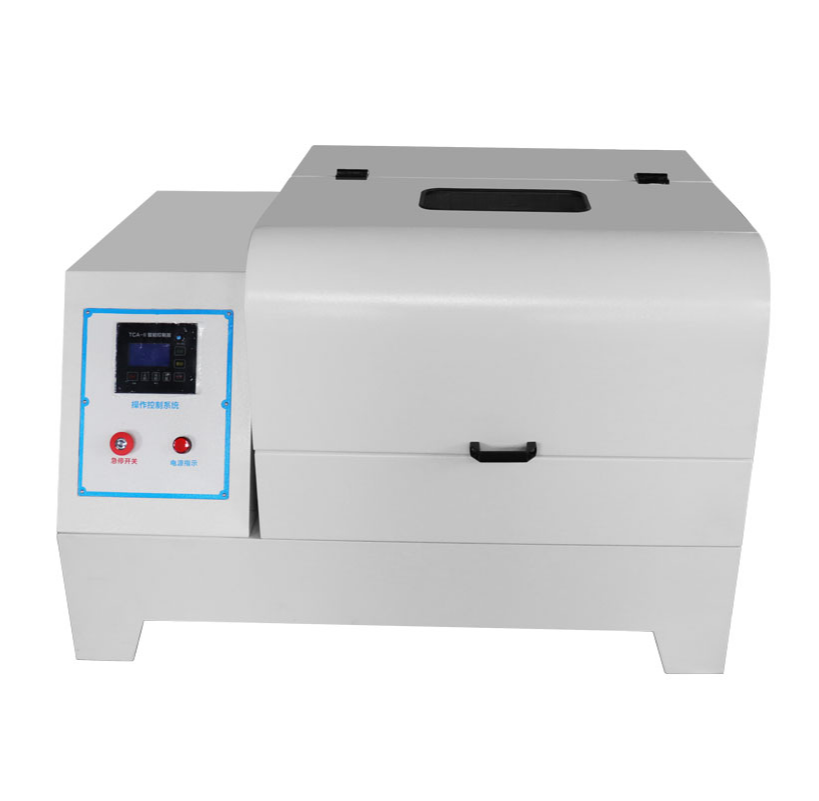
4. Enhanced Cooling and Safety Features
Because of the higher energy input, dual planetary ball mills generate more heat. Quality manufacturers integrate efficient cooling systems—such as forced air circulation or water cooling jackets around the mill chamber—to keep the temperature under control. This is especially important when grinding temperature-sensitive materials like polymers, pharmaceuticals, or certain metal powders. Additionally, safety interlocks and robust clamping mechanisms are standard to ensure the jars remain securely fastened during operation.
Applications of Dual Planetary Ball Mills
The dual planetary ball mill is widely used in research institutions, universities, and industrial R&D centers where high-energy milling is required. Common application areas include:
- Advanced ceramics – grinding alumina, zirconia, silicon nitride, and other hard ceramics to submicron sizes.
- Battery materials – preparing cathode and anode powders, solid electrolytes, and carbon composites for lithium-ion batteries.
- Metallurgy and powder metallurgy – mechanical alloying of metal powders, creating oxide dispersion strengthened (ODS) alloys.
- Nanomaterials – producing nanoparticles of metals, oxides, and semiconductors via wet or dry grinding.
- Catalysts and chemicals – fine grinding of catalysts, pigments, and active pharmaceutical ingredients (APIs).
How to Select the Right Dual Planetary Ball Mill
Choosing the right dual planetary ball mill depends on several factors. Here are the key considerations:
Sample Volume and Jar Capacity
Determine how much powder you need to process per batch. For laboratory research, a 4-station mill with 500 mL or 1 L jars is often a good starting point. If you plan to scale up, look for models that offer larger jar capacities or multiple stations.
Material Hardness and Contamination Sensitivity
Select the grinding jar and ball material based on the sample. Common materials include:
- Stainless steel – general purpose, good for hard materials.
- Tungsten carbide – for extremely hard samples (e.g., carbides, minerals).
- Zirconia – for ceramic and electronic materials, low contamination.
- Alumina – for abrasive materials, but may cause some wear.
- Agate, nylon, PTFE – for softer materials or when metal contamination is unacceptable.
Speed Range and Programmability
Look for a mill with a wide speed range (e.g., 100–600 rpm) and programmable settings for forward/reverse rotation, pause cycles, and batch grinding. This is especially useful for mechanical alloying and for avoiding powder caking.
Cooling and Atmosphere Control
If you need to grind under inert gas or vacuum, choose a model that supports vacuum or argon-filled grinding jars. For temperature-sensitive materials, a mill with active cooling is essential.
Local Voltage and Electrical Requirements
Confirm that the mill supports your local voltage (110V or 220V) and frequency (50Hz or 60Hz). Most lab mills are designed for universal voltage, but it is always wise to check.
Practical Tips for Using a Dual Planetary Ball Mill
Based on our experience in the field, here are some practical recommendations to get the best results from your dual planetary ball mill:
- Ball-to-powder ratio (BPR): For most applications, a BPR of 10:1 to 20:1 by weight is a good starting point. Heavier BPR increases energy transfer but also generates more heat.
- Grinding ball size: Use a mix of ball sizes (e.g., 10 mm and 5 mm) to optimize both impact and friction. Larger balls provide more impact, while smaller balls increase surface area for fine grinding.
- Wet grinding: Adding a suitable liquid (e.g., ethanol, water, or isopropanol) can reduce agglomeration, dissipate heat, and improve grinding efficiency. Typically, the liquid volume should be enough to cover the powder.
- Running mode: Use intermittent grinding (e.g., 10 minutes on, 5 minutes off) to prevent overheating, especially for long runs.
- Safety: Always ensure the jar clamps are tight and the safety cover is closed before starting. Never open the mill while it is in motion.
Where to Find a Reliable Dual Planetary Ball Mill
When sourcing a dual planetary ball mill, it is important to work with a manufacturer that understands both the technical requirements and the practical challenges of powder processing. TENCAN's dual planetary ball mill is designed with these considerations in mind, offering robust construction, precise speed control, and a range of jar and ball options to suit different materials. We also provide customized solutions for non-standard applications, including special jar materials, vacuum capabilities, and integrated cooling systems.
Whether you are developing new materials for energy storage, advanced ceramics, or mechanical alloys, a dual planetary ball mill can significantly accelerate your research and improve the quality of your powders. If you have specific questions about selecting the right model or configuring the mill for your material, feel free to reach out to our technical team. We are here to help you make an informed decision based on your actual process requirements.