
Resin Ball Mill: A Practical Guide for Laboratory Grinding of Temperature-Sensitive Materials
When you are working with epoxy resins, polyurethane, acrylics, or other polymer-based materials in the lab, you quickly realize that conventional ball mills can generate too much heat. The heat softens the resin, causes it to stick to the jar walls and grinding balls, and often leads to agglomeration rather than particle size reduction. This is a common frustration for researchers in coatings, adhesives, electronics encapsulation, and composite material development.
A resin ball mill is a specialized laboratory milling solution designed to address exactly these challenges. It combines effective grinding action with careful temperature control and material compatibility, allowing you to process soft, heat-sensitive, or even tacky materials without degrading their properties. In this article, we will walk through how a resin ball mill works, what materials it handles best, how to select the right configuration, and practical tips for achieving consistent results.
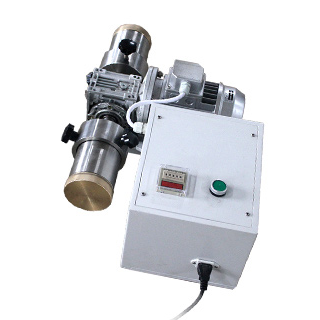
What Makes a Resin Ball Mill Different from a Standard Ball Mill?
At first glance, a resin ball mill looks similar to other laboratory ball mills — it has a rotating drum or jar that contains grinding media and the sample material. However, the key differences lie in the design details that matter for resin processing:
Low-Noise, Low-Heat Drive System
Standard planetary ball mills often operate at high speeds (up to 600 rpm or more) to generate the impact forces needed for hard minerals. A resin ball mill typically uses a roller or jar mill mechanism with a slower, more controlled rotation speed. Many models operate in the range of 50–200 rpm, which reduces frictional heat buildup. The motor and drive are designed to run quietly and smoothly, with less vibration, which also helps keep the mill body temperature lower.
Jar and Media Material Selection
Resin materials can be chemically reactive or abrasive in different ways. For example, some epoxy formulations contain hard fillers like silica or alumina, while others are purely organic. A resin ball mill often offers jars made from materials such as stainless steel, agate, zirconia, or nylon. Nylon or polyurethane jars are particularly useful for minimizing contamination when processing soft resins, as they are non-reactive and have low surface energy, reducing adhesion.
Grinding media selection is equally important. For resin grinding, you might use ceramic balls (zirconia or alumina) or, in some cases, glass beads. The media size and density should be matched to the viscosity and hardness of the resin. Heavier media like zirconia provide more impact, while lighter media reduce heat generation.
Sealing and Temperature Management
Many resin materials are sensitive to moisture or oxygen during processing. A good resin ball mill comes with well-sealed jar lids that prevent solvent evaporation or moisture ingress. Some advanced models can be equipped with a cooling jacket or thermostatic control to maintain a stable temperature inside the jar. This is especially important when you need to keep the resin below its glass transition temperature (Tg) to avoid softening.
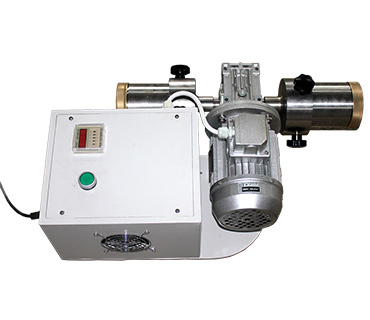
Which Materials and Applications Benefit from a Resin Ball Mill?
While the name suggests it is only for resins, this type of mill is actually suitable for a broader range of soft, heat-sensitive, or sticky materials. Common applications include:
- Epoxy and polyurethane resins — for producing fine dispersions of fillers, pigments, or curing agents.
- Acrylic and vinyl polymers — used in paints, adhesives, and sealants.
- Thermoplastic powders — such as polyamide, polyethylene, or polytetrafluoroethylene (PTFE) that require gentle grinding to avoid melting.
- Pharmaceutical excipients and active ingredients — some APIs and binders are heat-sensitive and require low-energy milling.
- Food ingredients — like cocoa butter, waxes, or fat-based powders that soften at low temperatures.
- Electronic materials — conductive adhesives, underfill compounds, and encapsulants that need uniform particle distribution without thermal degradation.
In each case, the goal is to achieve particle size reduction, mixing, or dispersion without causing thermal damage, chemical change, or excessive contamination.
How to Select the Right Resin Ball Mill for Your Lab
Choosing the correct resin ball mill configuration depends on several factors. Here are the key considerations:
Sample Volume and Jar Capacity
Laboratory resin ball mills are available in jar capacities ranging from as small as 50 mL up to 5 L or more. For most R&D work, a 500 mL to 1 L jar is sufficient. If you are scaling up a formulation, you might want a mill that can handle multiple jars or a larger single jar. Remember that the actual usable volume is typically about one-third to one-half of the jar’s total capacity, because you need space for the grinding media and the material movement.
Rotational Speed Range
Look for a mill with adjustable speed control. A typical range for resin processing is 30–200 rpm. Lower speeds are suitable for very soft materials that might smear, while higher speeds can be used for tougher or filled resins. Some mills offer programmable speed profiles, which can be useful for multi-step processes (e.g., slow mixing followed by higher-speed dispersion).
Temperature Control Options
If your material is particularly sensitive (e.g., a resin with a Tg below 40°C), consider a version with a cooling jacket or a system that allows you to immerse the jar in a circulating water bath. Alternatively, you can use intermittent operation — run the mill for 10 minutes, then pause for 5 minutes to let the jar cool. This is a simple yet effective method for many labs.
Grinding Media and Jar Material
For most resin applications, we recommend:
- Jar material: Stainless steel for general use, nylon or polyurethane to avoid metal contamination, or agate for very high purity work.
- Grinding media: Zirconia (YTZ) beads for high density and low wear, alumina for moderate density, or glass beads for light grinding of soft resins. Media size typically ranges from 1 mm to 10 mm depending on the starting particle size and target fineness.
Safety and Ease of Cleaning
Resin residues can be sticky and difficult to remove. Look for a mill with easy-to-clean jar interiors, smooth surfaces, and removable seals. Some mills have a quick-release clamping system for the jar, making it faster to change samples. Also, ensure the mill has a safety interlock that stops rotation when the lid is opened.
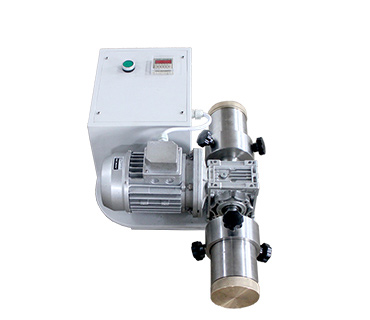
Practical Tips for Successful Resin Ball Milling
Getting the best results from your resin ball mill involves more than just choosing the right equipment. Here are some practical tips drawn from experience:
- Start with a low ball-to-powder ratio. For resins, a ratio of 2:1 to 5:1 by weight is often sufficient. A higher ratio increases heat generation and may cause sticking.
- Pre-cool the jar and grinding media. If your resin is very soft, place the jar and balls in a freezer or refrigerator for 30 minutes before milling. This gives you a few extra minutes of effective grinding before the temperature rises.
- Use wet grinding when possible. Adding a small amount of solvent or compatible liquid (e.g., acetone, ethanol, or a reactive diluent) can reduce the viscosity of the resin, lower frictional heat, and prevent agglomeration. The liquid also helps disperse fillers more evenly.
- Monitor the temperature. If you do not have a built-in temperature sensor, periodically touch the jar (carefully!) to check if it is getting too hot. If it feels warm to the touch (above about 40°C), stop and let it cool.
- Use intermittent milling cycles. For example, run 10 minutes, pause 5 minutes, then repeat. This is a simple way to keep the overall temperature down without complex cooling systems.
- Clean the jar immediately after use. Resin residues harden over time and become harder to remove. While the jar is still warm, wipe it with a cloth soaked in a compatible solvent. Alternatively, you can fill the jar with solvent and run it empty for a few minutes to clean the media.
When a Resin Ball Mill Might Not Be the Best Choice
No single piece of equipment works for every situation. A resin ball mill excels at gentle grinding of soft, heat-sensitive materials. However, if you need to grind very hard materials like quartz, silicon carbide, or dense ceramics, a planetary ball mill or a vibratory ball mill would be more effective because they generate higher impact forces. Also, if your resin contains large, tough particles (e.g., >5 mm), you may need to pre-crush them using a resin ball mill with a larger grinding jar and heavier media, or use a different pre-grinding step.
For materials that are extremely sticky or have a very low melting point, consider using a cryogenic milling approach. Some resin ball mills can be adapted for cryogenic grinding by adding liquid nitrogen cooling, but that is a specialized application.
Making an Informed Choice for Your Laboratory
When you are evaluating a resin ball mill, it helps to think about the specific materials you process today and the ones you might work with in the future. Think about the contamination tolerance, the required particle size, and the throughput you need. A well-chosen resin ball mill can become a workhorse in your lab, handling everything from formulation development to small-scale production.
If you are unsure about the right configuration, a good approach is to discuss your material with a technical specialist. Provide details such as the resin type, typical hardness, initial particle size, target particle size, batch size, and any special requirements like inert atmosphere or solvent compatibility. With that information, the supplier can recommend the most suitable jar and media combination, speed range, and optional features.
We have found that many labs start with a basic model and later upgrade with additional jars or accessories as their needs grow. That is perfectly fine — the key is to get a machine that gives you consistent, repeatable results from day one.
For more information on specific models and configurations, you can visit the resin ball mill product page or explore other laboratory grinding equipment such as the three roll mill, which is another excellent option for dispersing high-viscosity resin formulations.