
Lightweight Vibrating Ball Mill: Lab Guide
Why Lab Particle Size Control Often Begins With the Mill
A common laboratory problem is not a lack of grinding power but a lack of control. A sample may be reduced to a fine powder in one batch, then produce a broader particle size distribution, a different color, or a higher contamination level in the next. Researchers often respond by changing milling time, but time is only one variable. The condition of the grinding chamber, the size and density of the media, the fill level, the feed size, and the way the mill transmits energy to the load can all change the result. When these variables are not separated, a milling trial becomes difficult to reproduce, and a promising laboratory result becomes difficult to transfer to another operator or another site.
A lightweight vibrating ball mill is useful in this context because it makes the energy input visible as a set of mechanical choices. Instead of relying on a large rotating drum and gravity, a vibrating mill oscillates a grinding chamber at a controlled frequency. The media and the powder are accelerated by the chamber wall, then collide with each other and with the chamber surfaces. The result is a compact grinding system with a small working volume, short transport distances, and a strong dependence on frequency, amplitude, media selection, and load. For laboratory work, that dependence is not a disadvantage. It is the basis for controlled experimentation.
Three outputs matter in almost every laboratory milling project: the target particle size, the width and shape of the particle size distribution, and the reproducibility of the result. A mill that reaches a fine median size but produces a wide distribution may create problems downstream in sintering, coating, dispersion, or analysis. A mill that works well once but cannot repeat the result after cleaning or media replacement is equally problematic. The lightweight vibrating ball mill should therefore be evaluated as part of a process, not as an isolated piece of equipment.
The first selection question is not which mill is largest or most powerful. It is which combination of chamber volume, media material, media size, vibration condition, and operating time can deliver the required particle size without damaging the material or contaminating it. That question cannot be answered from a single number. It requires an understanding of how the mill breaks particles, how the sample responds, and how the result will be measured. This is especially true for small batches, where sampling error and wall effects can be significant.
The discussion below moves from breakage mechanics to machine structure, material matching, scale-up, and a practical selection checklist. The aim is to help laboratory researchers, materials engineers, and equipment buyers ask better questions before a trial begins. A compact vibrating mill can be a highly effective tool, but only when its operating window is matched to the material and the analytical target.
How a Lightweight Vibrating Ball Mill Produces Fine Particles
In a vibrating ball mill, the grinding chamber is driven in a rapid oscillatory motion. The motion may be circular, elliptical, or otherwise directional depending on the drive design. The media inside the chamber do not simply roll over one another as they would in a conventional tumbling mill. They are repeatedly accelerated by the chamber wall, lose contact, and then strike other media, the sample, or the chamber surface. Breakage comes from a combination of impact, compression, and shear. For brittle materials, impact and compression usually dominate. For softer or more cohesive materials, shear and surface attrition may play a larger role.
Frequency and amplitude are the two most visible vibration variables, but they should not be considered separately. A high frequency with a small amplitude produces many acceleration cycles but limited displacement. A lower frequency with a larger amplitude may produce stronger individual impacts but fewer of them. The energy transferred to the load also depends on the mass of the chamber, the mass of the media, and the stiffness of the mounting system. This is why simply increasing the frequency on a lightweight mill can change the result in ways that are not obvious from the motor setting alone.
Dry and wet milling are both possible in vibration ball mills, but they are not interchangeable. Dry milling is convenient for materials that must remain a powder and for studies where solvent addition would change the surface chemistry. It can also produce dust and may suffer from agglomeration when fine particles recombine. Wet milling can improve dispersion, reduce dust, and help prevent fine particles from coating the media and chamber. However, it introduces a liquid phase, requires compatible jar and media materials, and adds a drying step that may cause agglomeration or thermal exposure. The right choice depends on the material, the target size, and the analytical method that follows.
A mill does not produce a single particle size. It produces a distribution created by repeated breakage events, and that distribution can change as milling continues. Early in the process, coarse particles are reduced quickly and the median size falls. Later, the remaining coarse particles become harder to break, while fine particles may agglomerate or be re-deposited on media and walls. Overmilling can therefore increase fines without improving the median size, and it can alter surface properties, crystal structure, or reactivity. The practical objective is usually the narrowest distribution that meets the downstream requirement, not the smallest number that can be reported.
Heat is another consequence of intensive vibration. Mechanical energy that does not go into creating new surface area is largely converted into heat, and a small laboratory chamber can warm quickly. Temperature-sensitive polymers, pharmaceuticals, biological materials, and some hydrated minerals may need shorter cycles, intermittent operation, or external cooling if the mill and chamber are suitable for it. Temperature should be recorded during method development, because a change in chamber temperature can affect brittleness, stickiness, and the extent of agglomeration.
Feed size also sets a limit on what the mill can do efficiently. A vibrating ball mill is a fine-grinding and laboratory-milling tool, not a primary crusher. If the feed contains particles that are too large for the chamber and media, breakage becomes slow and uneven, and the media may be damaged. Pre-crushing, sieving, or selecting a representative sub-sample may be necessary. The maximum practical feed size should always be confirmed for the specific chamber, media, and material, because a soft, friable sample and a hard, dense sample behave very differently under the same vibration condition.
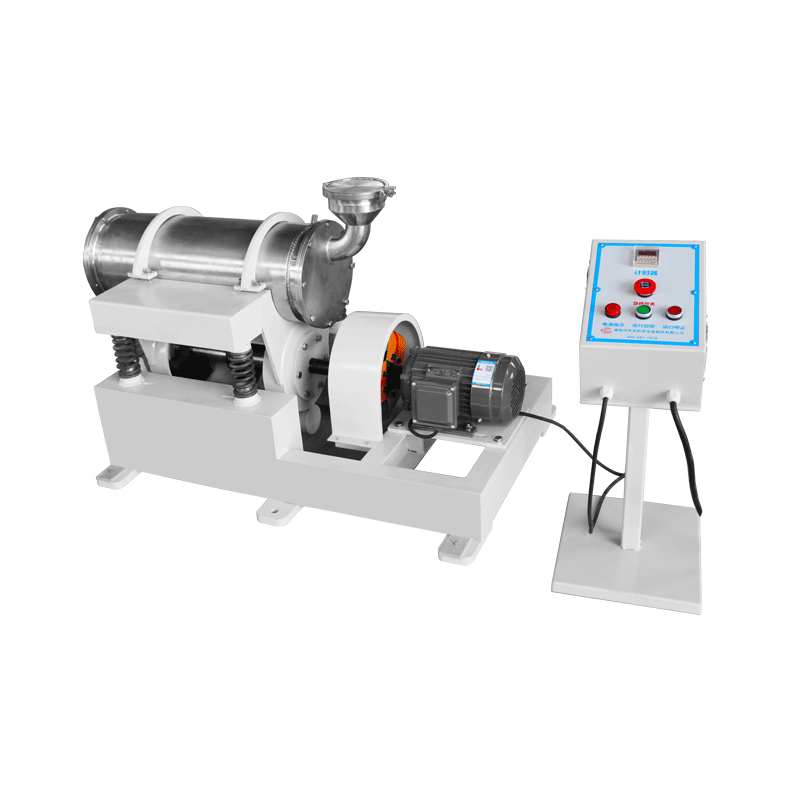
The TENCAN lightweight vibrating ball mill applies this vibration-based breakage principle in a compact laboratory format. Its value is not that it replaces every other mill, but that it allows small samples to be processed with a mechanical action that can be adjusted and repeated. For method development, the key is to record the variables that define that action, including the chamber and media used, the load, the vibration setting, and the milling time.
Machine Structure, Grinding Media, and the Variables That Matter
A typical lightweight vibrating ball mill consists of a rigid base, a spring or elastomer-mounted vibrating frame, a drive motor with an eccentric or unbalanced mass system, one or more grinding chambers, clamping hardware, and a control interface. The frame transmits vibration to the chamber, while the base and isolation elements limit movement of the whole machine. The word lightweight refers to the laboratory scale and the handling of the unit; it does not mean that the mill can be operated without stable mounting. Vibration isolation and secure clamping are essential for repeatable results and safe operation.
The grinding chamber is the process boundary. Its material, internal surface finish, sealing method, and geometry all influence contamination, sample loss, and cleanability. A chamber that is difficult to empty will leave retained powder that contaminates the next batch. A seal that is not compatible with a solvent will fail or introduce extractables. A chamber with sharp internal corners may trap material and reduce the effective grinding volume. These are practical details that should be checked before a mill is purchased, especially when the laboratory handles multiple materials or regulated samples.
Grinding media are the working tools of the mill. Media density affects impact energy, media diameter affects the number of contacts and the size of the stress zones, and media material affects contamination. Large, dense media can break coarse particles efficiently but may leave a relatively coarse final distribution and cause more wear. Small media create many contact points and can improve fine grinding, but they carry less impact energy and may not be effective if the feed is too coarse. A practical media charge often combines a narrow size range with a media material that is harder and more wear-resistant than the sample.
| Media or chamber material | Common laboratory use | Trade-offs to check |
|---|---|---|
| Agate | Soft to medium-hard samples where low contamination is important | Lower density and impact energy; check for chipping and sample hardness |
| Zirconia | General fine grinding and many ceramic or mineral samples | Good wear resistance in many applications; confirm grade and compatibility |
| Alumina | Cost-sensitive grinding of compatible ceramic and mineral samples | Wear and contamination must be measured for the specific sample |
| Stainless steel | Hard or tough samples where iron contamination is acceptable | Metal wear can change sample chemistry; avoid for sensitive analysis |
| Tungsten carbide | Hard materials and demanding wear conditions | High density and cost; check binder contamination and chamber compatibility |
Media size should be selected from the feed size and the target size together. If the media are too small relative to the feed, the coarse particles will not receive enough energy and milling will be slow. If the media are too large for the target size, the mill may produce a broad distribution with an unnecessary amount of coarse material. In a lightweight vibrating mill, the available chamber volume limits the media charge, so there is always a compromise between impact energy and the number of contact points.
Fill level and ball-to-powder ratio are often underestimated. An underfilled chamber may allow media to move too freely, producing uneven impacts and excessive wear. An overfilled chamber can cushion the media, reduce motion, and prevent efficient breakage. The optimum depends on the chamber geometry, media size, and sample bulk density. A useful starting point is to keep enough free volume for media movement while ensuring that the sample is distributed through the media rather than sitting as a static layer. The ratio of media mass to sample mass should be recorded as part of the method, because changing it changes the number of available stress events per particle.
Chamber and media contamination is a materials question, not a cleaning question alone. A soft sample ground with hard media may still pick up wear products from the chamber if the chamber material is softer. A hard sample can wear the media and introduce trace elements that interfere with X-ray diffraction, spectroscopy, or chemical analysis. The correct choice is the combination with sufficient wear resistance and acceptable elemental composition. When contamination limits are tight, a blank milling run followed by analysis of the blank can reveal whether the selected chamber and media are suitable.
Operating time, vibration setting, and intermittent cycles should be treated as process parameters, not as convenience settings. Continuous operation may raise the chamber temperature and promote agglomeration. Intermittent operation can limit heating but adds more stopping and starting events. A short pre-grind followed by sieving and a second grind may produce a different distribution from a single long run. These differences matter when the mill is used for method development, because the goal is a repeatable procedure that another operator can follow.
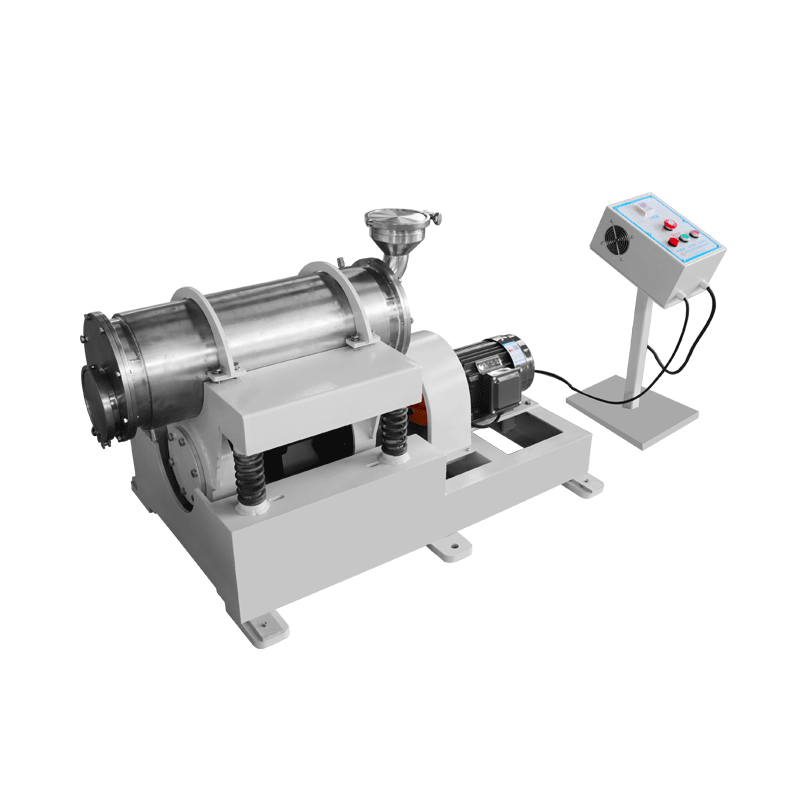
The TENCAN lightweight vibrating ball mill should be configured with the chamber and media that match the sample, not simply with the materials that happen to be available. The product page is the reference point for the current configuration, and the final selection should be confirmed against the material, the target particle size, and the cleaning requirements of the laboratory.
Matching Material Properties to Vibration Milling Conditions
Material hardness is an important starting point, but it is not enough on its own. A hard, brittle ceramic may fracture readily under impact, while a softer polymer may deform, smear, or melt. A tough composite may absorb energy and resist breakage even when its individual components are hard. The relevant properties include hardness, fracture toughness, brittleness, elasticity, thermal sensitivity, moisture content, and chemical reactivity. A material that is easy to grind in a mortar may behave poorly in a vibrating mill if it is ductile or prone to agglomeration.
Brittle materials generally respond well to impact and compression. The mill should be configured to deliver enough energy to initiate cracks, but not so much energy that the chamber heats excessively or the media wear increases. Ductile materials require a different approach. They may flatten, cold-weld, or coat the media, which reduces grinding efficiency and changes the effective media size. In such cases, wet milling, a different media shape, or a shorter, more controlled cycle may be more appropriate. If the material cannot be made brittle by cooling or chemical treatment, a vibrating ball mill may not be the most suitable tool.
Moisture and surface chemistry can change the outcome dramatically. A powder that appears dry may carry adsorbed water that causes sticking, blocking, or agglomeration. A material that is sensitive to oxidation may require an inert atmosphere or a sealed chamber, but this must be confirmed with the mill supplier and the chamber design. Hygroscopic samples may need to be loaded and unloaded under controlled humidity. These are not minor details, because a milling method that works in one laboratory may fail in another if the sample conditioning is different.
Feed particle shape also matters. Platelets, needles, and fibers can pack differently from equiaxed particles and may require more free volume or a different media size. Flaky materials may orient themselves under vibration and produce uneven breakage. In some cases, the objective is not to reduce the particle size but to delaminate, blend, or activate a surface. A vibrating mill can perform these functions, but the operating conditions should be selected for the intended mechanism rather than copied from a particle size reduction procedure.
The target particle size and the analytical method should be defined together. Laser diffraction, sieving, dynamic image analysis, and microscopy measure different aspects of a powder and can produce different apparent results. A method that targets a median size without controlling the upper tail may produce a powder that fails a downstream specification. For a laboratory vibrating mill, it is useful to define a target median, an upper size limit, and an acceptable distribution width before the first trial. That definition prevents the common mistake of milling longer simply because the number on the analyzer has not yet reached an arbitrary value.
Contamination tolerance is often the deciding factor in media selection. If the sample will be used for trace element analysis, the media and chamber must not introduce the elements being measured. If the sample is a pigment or a food-related material, wear products and cleaning residues may be unacceptable. If the sample is a hazardous or radioactive material, the mill must be suitable for containment and decontamination. A lightweight vibrating ball mill can be used in many of these settings, but the chamber, seals, and media must be selected for the application rather than chosen only for grinding efficiency.
Method development should use a structured design rather than a one-factor-at-a-time search. A simple screening experiment can vary media size, milling time, and load while holding the chamber and vibration setting constant. The results can then be used to identify the region where the target size and distribution are achievable. Replicates are essential, because small laboratory mills can be sensitive to loading and sampling. If the replicate variability is large, the method is not ready for routine use, even if the best result looks acceptable.
Sample representativeness is another practical concern. A gram-scale sample may not represent a heterogeneous batch, and the first powder produced may be finer or coarser than the material left in the chamber. Good practice includes gentle mixing before sampling, sieving or quartering where appropriate, and reporting the sample mass used in the mill. For a lightweight vibrating ball mill, small batch sizes are an advantage for expensive or scarce materials, but they also require careful attention to sampling and analytical uncertainty.
From Sample to Process: Scale-Up, Cleaning, and Maintenance
Scale-up from a lightweight laboratory vibrating mill to a larger mill is not a simple volume ratio. Larger equipment may have different vibration amplitudes, chamber geometry, media trajectories, and heat removal. A process that works in a small chamber may not reproduce at a larger scale if the energy per unit mass, the media size, or the residence time changes. The safer approach is to identify the key performance parameters in the laboratory, then test them in a pilot or production configuration. If production data are not available, the laboratory result should be described as a starting point rather than a guaranteed scale-up recipe.
Reproducibility begins with record keeping. The method record should include the mill model or configuration, chamber material and volume, media material, media diameter, media mass, sample mass, fill level, vibration setting, milling time, any intermittent cycles, and the temperature or ambient conditions if relevant. The analytical method and sampling procedure should also be recorded. Without these details, a successful result cannot be repeated, and a failed result cannot be diagnosed. This is especially important in a multi-user laboratory where the mill may be used by different researchers on different days.
Cleaning is part of process validation. Dry powders can be removed with vacuum and brushes, but brushes may shed fibers and vacuum lines may retain material. Wet cleaning may be necessary for cohesive or oily samples, but the chamber and seals must be compatible with the cleaning solvent, and residual solvent must be removed before the next batch. A cleaning blank can confirm that no detectable residue remains. For a lightweight vibrating ball mill used with multiple materials, dedicated chambers or liners may be preferable when cross-contamination cannot be controlled by cleaning alone.
Maintenance should focus on the components that transmit vibration and the components that contain the sample. Springs, elastomeric mounts, fasteners, clamps, and seals should be inspected for wear, cracking, or loosening. The eccentric or unbalanced mass system should be checked according to the manufacturer instructions. The chamber should be examined for scratches, deformation, and wear, because a damaged surface can trap material and change the grinding action. Motor cooling and electrical connections should also be checked, particularly in a dusty laboratory environment.
Safety is not limited to the electrical system. A vibrating mill can generate noise, and the chamber can become hot during extended operation. Dust from dry milling may be hazardous if the material is toxic, combustible, or sensitizing. Solvent-based wet milling may create flammable vapors. The mill should be operated in an appropriate enclosure or ventilation system, with hearing protection if the noise level requires it, and with the manufacturer instructions for clamping, balancing, and maximum load. A lightweight unit may be easier to move, but it should not be operated on an unstable surface.
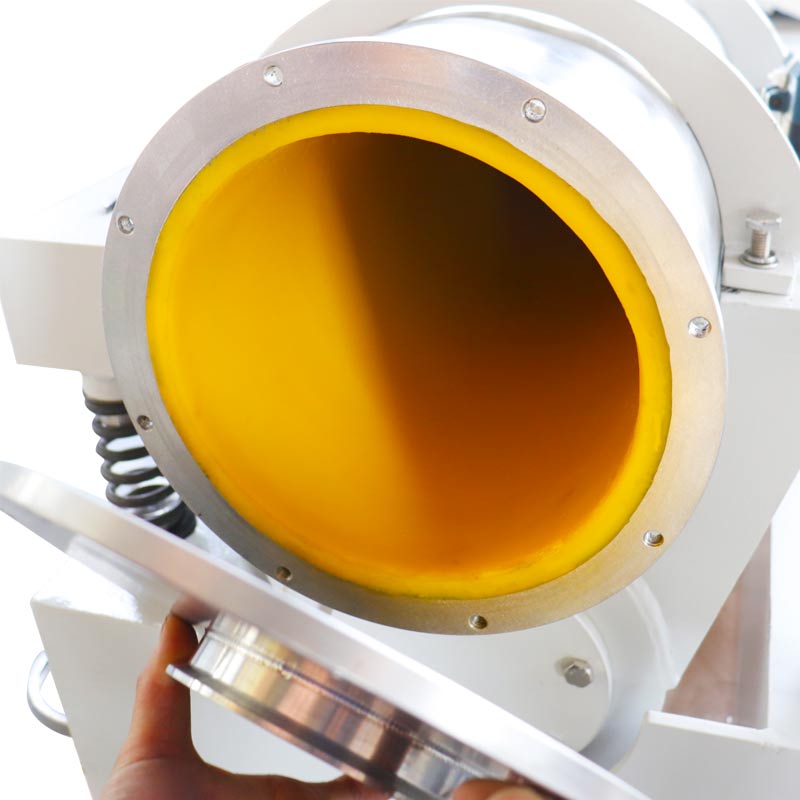
The decision to use a lightweight vibrating ball mill should be based on the actual workload. If the laboratory needs frequent small batches, rapid method development, and flexible chamber materials, a compact vibrating mill can be a good fit. If the requirement is continuous production, very large feed particles, or strict containment of a highly hazardous material, a different equipment class may be more appropriate. The boundary between these situations should be defined before purchase, not after the first trial.
A Practical Selection Checklist for Laboratory Buyers
A laboratory buyer can compare vibrating ball mills more effectively by turning the application into a checklist. The checklist should be written for the real sample, not for an idealized powder. It should distinguish between requirements that are mandatory and preferences that are merely convenient. The following points are a useful starting structure:
- Define the sample mass per batch and the number of batches per day or week.
- Record the feed size, feed shape, moisture content, and any pre-treatment needed.
- State the target median particle size, upper size limit, and acceptable distribution width.
- Identify the analytical method and the sampling procedure that will judge success.
- List any contamination limits, especially elements that must not be introduced.
- Confirm whether dry milling, wet milling, or both are required.
- Check chamber and media compatibility with the sample and any solvent.
- Review cleaning, containment, noise, and ventilation requirements.
- Ask for the operating variables that can be adjusted and recorded.
- Plan a validation trial with replicates before committing to a method.
Questions for the supplier should be specific. Ask which chamber materials and media are available for the intended sample, how the chamber is sealed, how it is cleaned, and which operating variables are adjustable. Ask how the mill behaves with a light or bulky powder, because a fixed media charge may not suit every bulk density. Ask for the recommended procedure for a first trial and for the information needed to evaluate reproducibility. These questions are more useful than a general request for a quotation, because they reveal whether the mill can be integrated into the laboratory workflow.
Which samples are suitable for a lightweight vibrating ball mill?
Brittle minerals, ceramics, glasses, slags, cements, catalysts, pigments, and many dry powders are common candidates. Soft, ductile, fibrous, or heat-sensitive materials require a preliminary test, because they may smear, agglomerate, or degrade. The final decision should be based on a trial with the actual sample and the intended chamber and media.
Is wet milling better than dry milling?
Neither method is universally better. Wet milling can improve dispersion and reduce dust, but it adds a liquid, a drying step, and possible solvent interactions. Dry milling is simpler and avoids drying, but it may produce more dust and agglomeration. The choice should be made from the material, the target size, and the downstream process.
How long should a laboratory vibration milling trial run?
There is no universal time. A sensible trial uses short intervals with sampling or inspection between them, so that the change in particle size can be observed rather than assumed. Overmilling can broaden the distribution, generate heat, and increase wear. The trial should stop when the target distribution is reached, not when the timer expires.
What should be recorded for repeatability?
Record the mill configuration, chamber material and volume, media material and size, media mass, sample mass, fill level, vibration setting, time, intermittent cycles, and any temperature measurements. Also record the sampling and analytical methods. A result without these details is difficult to reproduce or compare with another laboratory.
A final validation should include a blank run, a replicate run, and a check of the cleaned chamber before the method is released. The blank run shows whether the chamber and media introduce contamination. The replicate run shows whether the method is stable. The cleaning check shows whether cross-contamination can be controlled. If these three checks pass, the method has a stronger basis than a single successful grind.
For laboratories that need a compact vibration mill for method development, the TENCAN lightweight vibrating ball mill is a practical starting point, provided that the chamber, media, load, and operating conditions are selected for the sample. The most reliable purchase decision is not based on a single particle size claim. It is based on a documented trial that shows how the mill behaves with the real material, how the result is measured, and how the process will be repeated.