
Lab Roll Ball Mill: A Practical Guide for Laboratory Grinding and Mixing
What Is a Lab Roll Ball Mill and Why Do You Need One?
If you work in a materials lab, you have probably faced the challenge of grinding or mixing small batches of powder with consistent results. Planetary ball mills are powerful, but they can be expensive and generate high impact energy that may not be suitable for every material. A lab roll ball mill (also called a jar mill or roller ball mill) offers a simpler, more cost-effective alternative for many routine tasks.
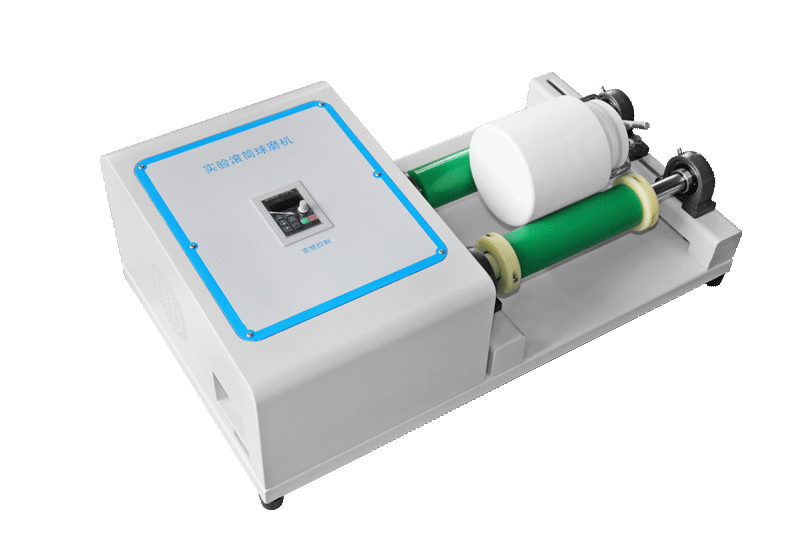
A lab roll ball mill consists of one or more horizontal rollers that rotate grinding jars. The jars are filled with grinding media (typically balls) and the sample powder. As the rollers turn, the jars rotate, causing the media to cascade and tumble inside. This gentle but effective action grinds, mixes, and disperses powders through impact and attrition. The process is easy to control and can run for hours without supervision.
How Does a Lab Roll Ball Mill Work?
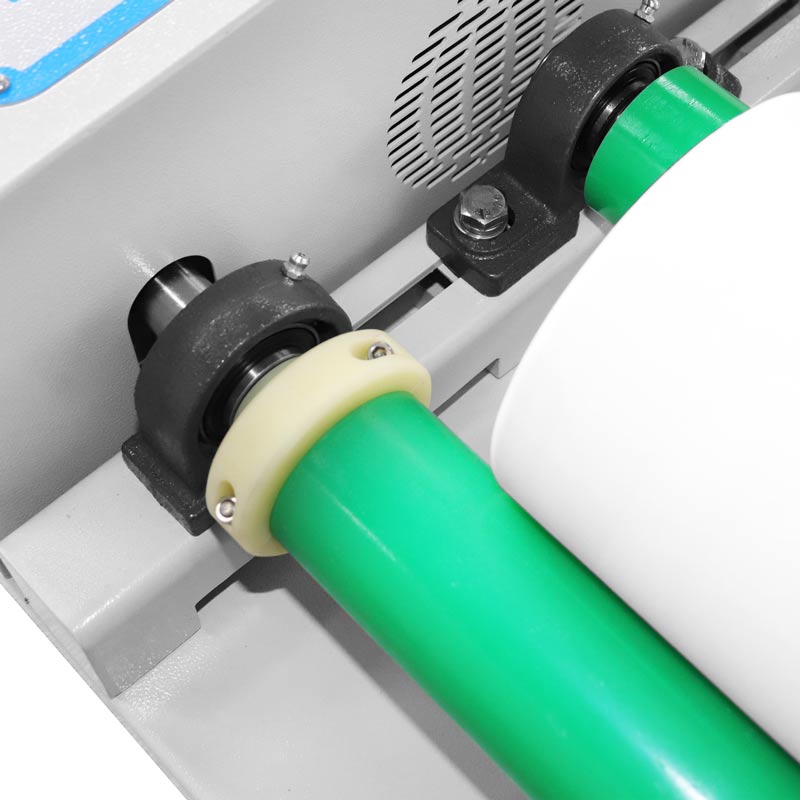
The working principle is straightforward. A motor drives rubber-coated rollers that contact the surface of the grinding jar. Friction between the roller and jar rotates the jar at a speed determined by the roller diameter and motor speed. Inside the jar, the grinding balls are lifted by the rotating wall and then fall or roll back down, creating a tumbling motion.
This motion produces two main forces:
- Impact – from balls falling onto the powder
- Attrition – from balls rubbing against each other and the jar wall
Compared to a planetary ball mill, the roll ball mill operates at lower energy. This makes it ideal for materials that are brittle, soft, or moderately hard, and for mixing powders without excessive particle size reduction. It is also widely used for blending, homogenizing, and mechanical alloying of ductile metal powders.
Most lab roll ball mills allow you to adjust the rotational speed via a variable frequency drive (VFD). Typical speed ranges are from 50 to 300 rpm, depending on the jar diameter. The optimal speed is usually around 60–80% of the critical speed, where the balls begin to cataract rather than centrifuge. You can also set timers and forward/reverse cycles to improve uniformity.
Key Applications Across Industries
The versatility of a lab roll ball mill makes it a staple in many research fields:
- Ceramics and Glass – Grinding of frits, glazes, clays, and alumina powders for ceramic bodies and electronic substrates.
- Battery Materials – Mixing of cathode and anode active materials, carbon black, and binders for electrode slurry preparation.
- Minerals and Mining – Size reduction of ore samples, coal, and mineral sands for assay and processing studies.
- Chemical and Pharmaceutical – Blending of active ingredients, excipients, and catalysts under controlled conditions.
- Nanomaterials – Long-duration grinding to achieve sub-micron or even nanometer particle sizes, provided the material is suitable and proper media is used.
Because the jar is sealed, you can also perform wet grinding or dry grinding. For materials sensitive to air or moisture, you can use jars with a vacuum or inert gas port, such as the inner lined roll ball mill with optional gas sealing.
How to Select the Right Lab Roll Ball Mill
Choosing the correct model depends on your sample volume, material properties, and desired outcome. Here are the main factors to consider:
Number of Working Stations
Lab roll ball mills come in configurations with 2, 4, or 8 stations. A two-station jar mill is suitable for small labs that process one or two jars at a time. For higher throughput, a four-station jar mill or eight-station jar mill allows simultaneous grinding of multiple samples under identical conditions, which is ideal for comparative experiments.
Jar Volume and Material
Common jar sizes range from 0.5 L to 20 L per jar. The jar material must be compatible with your sample to avoid contamination. Options include:
- Stainless steel – for general use, durable and easy to clean
- Alumina (ceramic) – for low-contamination grinding of ceramics and electronics materials
- Zirconia – for high-wear resistance and minimal metal contamination
- Agate – for trace analysis, especially in geochemistry
- Polyurethane or nylon – for soft materials or when metal contamination is unacceptable
If you plan to grind hard materials like quartz or silicon carbide, choose a jar with inner lining, such as the inner lined roll ball mill, which extends service life and reduces wear.
Speed Control and Programmability
A variable speed drive is essential for adjusting the grinding intensity. Look for a model with digital display, timing function, and programmable forward/reverse cycles. This helps prevent particle agglomeration and ensures uniform mixing.
Scale: Light-Duty vs. Large
For occasional use with small jars (up to 2 L), a light-duty roll ball mill is compact and economical. For continuous operation with larger jars (5 L to 20 L), a large roll ball mill provides a more robust motor and frame, suitable for pilot-scale production.
Practical Tips for Best Results
- Ball-to-powder ratio: A common starting point is 5:1 to 10:1 by weight. Adjust based on material density and target fineness.
- Media size: Use balls with diameters from 5 mm to 20 mm. Larger balls provide more impact, smaller balls give more surface area for fine grinding.
- Filling volume: Fill the jar to about one-third to one-half of its volume with media and powder. Overfilling reduces grinding efficiency.
- Wet grinding: Adding a liquid (water, ethanol, or other solvent) can reduce dust, prevent agglomeration, and improve fineness. Typically, the liquid should just cover the powder.
- Speed: Start at a lower speed to avoid bouncing or excessive noise, then increase gradually. The optimal speed is usually between 60 and 100 rpm for a 10 cm jar diameter.
- Cleaning: Always clean the jar and media thoroughly between different materials. Use the same material for pre-grinding if contamination is critical.
Why Choose a Lab Roll Ball Mill from TENCAN?
At TENCAN (Changsha Tianchuang Powder Technology Co., Ltd.), we have been manufacturing lab roll ball mills for over 20 years. Our range includes models from 2 to 8 stations, with various jar materials and options for speed control, timing, and inert gas protection. Each mill is built with a sturdy frame, polyurethane rollers for long life, and safety guards to prevent accidents.
We understand that every lab has unique requirements. Our engineers can help you choose the right lab roll ball mill based on your material, batch size, and budget. Whether you need a simple light-duty mill for occasional use or a high-capacity unit for continuous production, we have a solution.
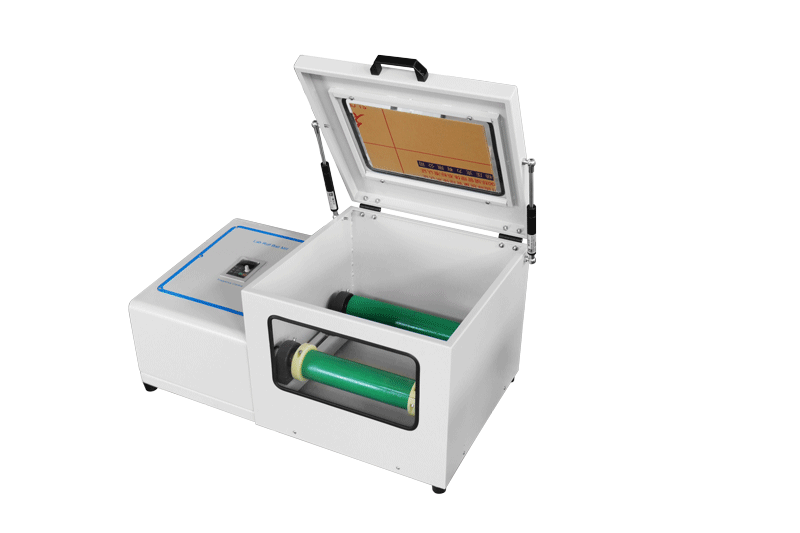
Explore our complete drum ball mill series to find the model that matches your application. If you are unsure about the required jar material, speed, or number of stations, contact us with your sample details – we will recommend the most suitable configuration.