
Inner Lined Roll Ball Mill Selection Guide
An inner lined roll ball mill is usually considered when a laboratory or pilot plant needs batch grinding but cannot accept the iron pickup that comes from an unlined steel drum. The drum turns on rollers, the grinding media tumble inside, and the material contacts a lining selected for wear resistance, chemical compatibility, or low contamination rather than the mill shell itself. That sounds like a simple material change. In practice, the lining influences media motion, working volume, cleaning, and the amount of foreign matter that can reach the product. This guide examines those interactions for engineers and buyers who need to specify, test, or troubleshoot an inner lined roll ball mill. It does not offer a universal recipe, because the right configuration depends on feed material, target particle size, batch size, and the acceptable contamination limit.
What the inner lining changes in a roll ball mill
An inner lined roll ball mill belongs to the drum or roller mill family. A horizontal grinding drum is supported by rollers or a frame. As the drum turns, the media charge rises on one side and then falls or rolls back, applying impact and attrition to the material. The inner lining is the surface that the media and powder actually touch. It protects the shell, but it also becomes part of the grinding environment. Its hardness, surface condition, thickness, mass, and chemical resistance can change wear rate, contamination risk, heat retention, and cleaning effort.
The lining is a wear part and a process surface
Two mistakes are common when specifying this type of mill. The first is to treat the lining as a passive protective layer. In contamination-sensitive work, the lining can be a significant source of foreign particles if it is softer than the material being ground or if the media charge is highly abrasive. The second is to assume that a harder lining always gives a better result. A very hard lining may extend service life, but it can also increase cost, complicate inspection, and change the way media slip or tumble inside the drum. A lining that is too smooth may encourage sliding rather than cascading. A thick lining may reduce the effective working volume. These effects are usually smaller than changes in speed or media size, but they matter when a process is already close to its target.
What the lining does not solve
An inner lining cannot correct poor feed preparation, the wrong media size, overfilling, or a particle size target that is unrealistic for a drum mill. It also does not eliminate contamination from grinding media, feed impurities, seals, or sample handling. If the requirement is low iron pickup, the whole contact path must be reviewed: feed tools, media, lining, discharge, and cleaning. A lining is also not a temperature-control device. It may influence heat transfer and thermal mass, but grinding heat still comes from mechanical work. Finally, a lining does not make a batch mill continuous. Loading, discharge, and cleaning remain part of the cycle time.
How to judge whether a lining is working
A useful lining evaluation looks beyond visual wear. Record product contamination, lining wear pattern, media consumption, batch-to-batch particle size distribution, cleaning time, and any change in the appearance or smell of the product. A lining that lasts a long time but contaminates the batch is not successful. A lining that stays clean but wears quickly may be too costly. If the mill is used for several materials, check whether the lining retains fines or moisture from the previous batch. The best lining for one product may be a poor choice for another, even when both are processed in the same size of drum.
Matching the lining to the material and contamination limit
Lining selection should begin with the material being processed, not with a catalog preference. The key questions are simple: How abrasive is the feed? What contamination is unacceptable? Does the process use water, solvents, acids, or salts? Will the mill run dry or wet? What cleaning method will be used? The answers narrow the practical options before any test begins. For a specific TENCAN inner lined roll ball mill, confirm which lining materials are available for the selected drum and application.
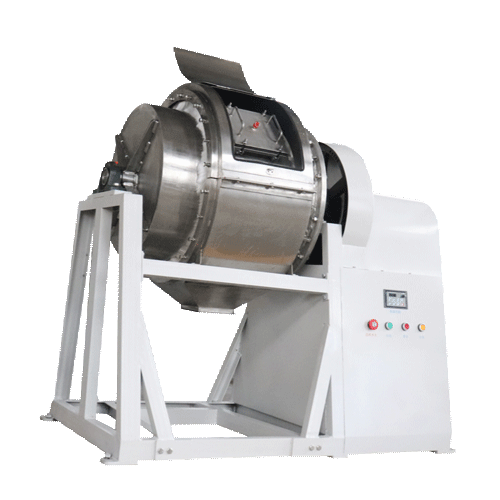
Product view of the inner lined roll ball mill; lining and drum configuration should be confirmed for the intended application.
Hardness, wear, and contamination
Hard minerals such as quartz, alumina, and some slags are abrasive. They can wear a soft lining quickly and produce a large amount of lining debris. In those cases, a hard ceramic lining may be considered, but ceramic wear creates ceramic particles. The important question is whether that debris is acceptable in the final product. For softer or chemically sensitive materials, a polymer lining may reduce metallic contamination, but it may have lower abrasion resistance and a lower temperature limit. Metallic linings can be tough and practical where iron is not a concern, but they are usually the wrong choice for strict low-iron work. There is no universal ranking. The correct choice depends on the product specification and the cost of contamination.
Chemical compatibility and cleaning
A lining must resist the liquid or atmosphere in the drum. Water-based slurries, organic solvents, acidic solutions, and salt-containing feeds can attack some materials. Surface finish and porosity also matter. A lining that absorbs moisture or retains fine powder can cause cross-contamination between batches. If the laboratory processes many different materials, a dedicated lining or a dedicated drum may be more practical than deep cleaning a shared unit. Check whether the cleaning solvent is compatible with the lining and with the media. A lining that swells, softens, or cracks during cleaning will create more problems than it solves.
Mechanical fit and working volume
The lining has thickness, so it reduces the internal volume of the drum. That reduction affects the usable batch size, the media charge, and the free space available for material movement. A thick lining may improve wear life but leave less room for grinding. The lining must also be installed securely. Fasteners, joints, and edges should not trap material or create dead zones where powder accumulates. Differential expansion between the lining and the shell can matter if the mill is used with warm materials or in a warm room. Ask for the net working volume after lining, not just the nominal drum size.
Media, charge, and the grinding window
Even a well-chosen lining cannot compensate for poor media selection. Grinding media do most of the work, and they are also a major source of wear and contamination. Media should be compatible with both the product and the lining. If the lining is ceramic but the media are steel, iron contamination can still occur from media wear. If the lining is polymer but the media are large and dense, the lining may suffer impact damage. The mill, lining, and media should be treated as one system.
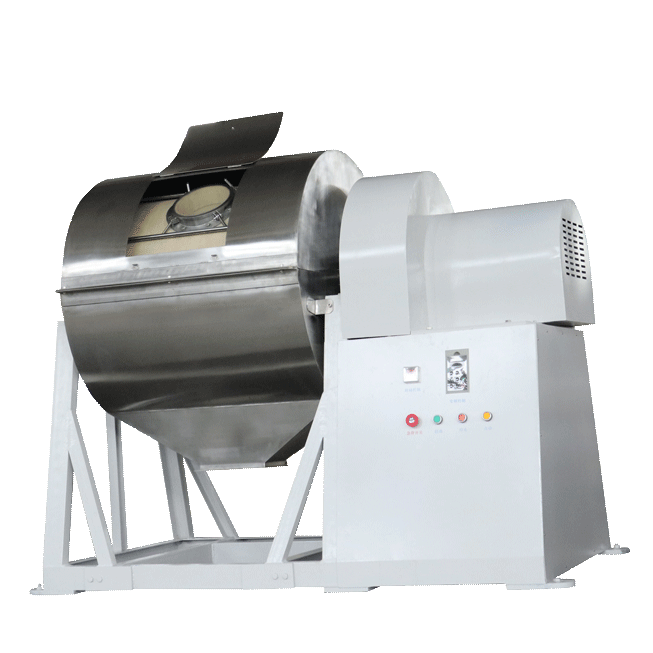
Equipment view of the inner lined roll ball mill; media size and charge should be matched to the drum and product.
Media size and density
Larger media deliver more impact energy and can break coarser feed particles. Smaller media provide more contact points and are often better for fine grinding, but they may not break large particles efficiently. High-density media increase grinding energy, but they also increase wear, heat generation, and the risk of lining damage. Media shape also affects motion. Spherical media roll and tumble in a predictable way, while cylindrical or irregular media may interlock or change the charge profile. In a roll ball mill, the media must suit the feed size, the target particle size, and the lining. A practical test plan should narrow the media range rather than jumping directly to a single size.
Fill level and ball-to-powder ratio
If the media fill is too low, grinding becomes inefficient and the lining may receive more direct impact or abrasion. If the fill is too high, the media cannot move freely, power demand rises, and heat generation increases. The material fill also matters. Too much powder can cushion the media and slow breakage; too little powder reduces the number of particle contacts per pass. The ball-to-powder ratio is a useful scale-up parameter because it describes how much media energy is available for a given mass of product. For fine grinding, a higher ratio may improve results, but it also reduces batch capacity. The best balance should be confirmed by testing rather than assumed.
Media wear and lining wear
Media consumption is an indirect contamination indicator. If media wear increases after a change in lining, speed, or fill, the product may be receiving more foreign particles. Keep records of media weight before and after representative runs when contamination is critical. Inspect used media for cracks, flats, and chipping. Broken media can damage the lining and create sharp fragments that are difficult to remove. Avoid mixing media of different materials unless there is a clear technical reason and the effect on contamination is understood. A simple, documented media specification is easier to control than a mixed charge that changes from batch to batch.
Speed, feed size, and particle size distribution
Rotation speed is one of the strongest variables in a roll ball mill. It changes the media trajectory, the energy of each impact, the amount of attrition, and the heat generated. Speed should not be adjusted only to shorten a batch. It should be selected with the feed size, media charge, and target distribution in mind. If the mill has variable speed, record the setting for every trial. If the speed is fixed, compensate through media size, fill, batch size, or milling time rather than forcing the process beyond its practical window.
Critical speed as a reference
The theoretical critical speed is the speed at which media would centrifuge and stop tumbling. For a drum with an internal diameter D in meters, a common reference formula is Nc = 42.3 divided by the square root of D, in revolutions per minute. This is a reference value, not a recommended operating point. Many drum mills operate below critical speed, and the best point depends on media, feed, and the required particle size. The formula is useful for comparing drums of different sizes and for checking whether a proposed speed is plausible. It does not replace a trial with the actual material.
Cascade, cataract, and centrifuging
At low speed, media tend to roll, slide, or cascade. Attrition and surface rubbing are significant, while impact energy is relatively low. At higher speed, media are lifted farther and fall in a cataracting pattern, adding impact. At very high speed, the charge can centrifuge against the lining and grinding almost stops. Fine grinding often needs a balance between impact and attrition. Too much impact can fracture media, damage a soft lining, or create a broad particle size distribution. Too little impact can leave coarse particles in the product. The correct visual appearance of the charge is not a substitute for particle size data, but it helps explain what the mill is doing.
Feed size and target PSD
A roll ball mill is usually a fine-grinding or finishing mill, not a primary crusher. Feed that is too coarse may not be nipped by the media, may damage the lining, or may remain as coarse tail in the product. Pre-crushing, screening, or another size-reduction step may be needed. Media must be large enough to contact the feed particles, but not so large that they cause excessive lining wear. The target particle size distribution should be defined by more than a single median value. D50 is useful, but the span, coarse tail, and fines content also matter. Overgrinding can cause agglomeration, surface changes, and contamination. If the specification is tight, consider staged milling or classification rather than one long batch.
Dry and wet processing
Wet grinding can improve particle dispersion, reduce dust, and help control temperature, but it introduces slurry viscosity, drying, and lining compatibility issues. Dry grinding is simpler in some laboratories, but it can cause caking, dust, and media coating. The inner lining must suit the chosen route. A lining that performs well in dry mineral powder may not be the best choice for a solvent-based slurry. The same drum may require different cleaning procedures for dry and wet work. Before choosing a route, confirm that the mill configuration and the lining are suitable for the intended liquid or atmosphere.
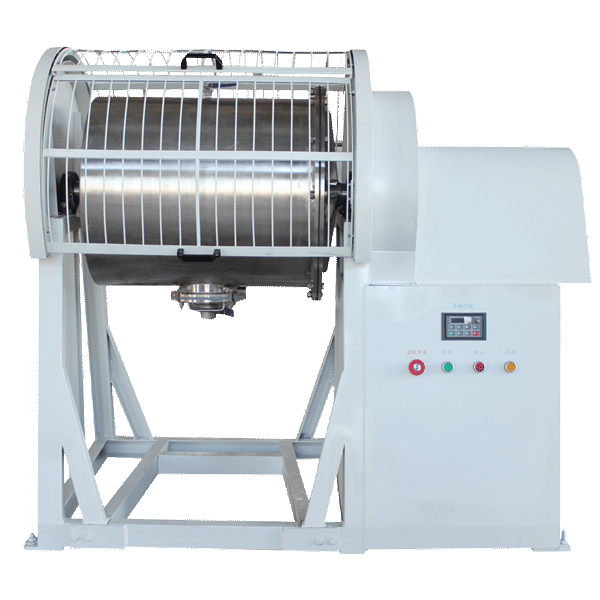
Inner lined roll ball mill configuration; batch trials should confirm speed, media, and feed size together.
Batch size, scale-up, and throughput expectations
Batch size should be based on the net working volume after the lining is installed. The drum must hold the media charge, the material, and enough free space for the charge to move. A batch that fills the drum too completely will grind poorly, regardless of the lining. For scale-up, volume alone is not enough. Keep the media-to-powder ratio, the percentage of critical speed, the media size relative to feed size, and the slurry or powder rheology as close as possible. A pilot run can then show whether the larger drum produces a similar distribution or whether the speed and media charge need adjustment.
Scale-up parameters
Measure the baseline in a small drum: media mass, product mass, media diameter, rotation speed, milling time, and product PSD. When moving to a larger inner lined roll ball mill, use those ratios as a starting point. Check the net volume after lining, because a thick lining can reduce capacity more than expected. If the larger mill has a different diameter, compare the speed as a percentage of critical speed rather than as raw rpm. If the media are changed, compare the energy per unit mass, not just the ball size. The goal is to reproduce the grinding environment, not merely the drum shape.
Throughput and scheduling
Throughput in a batch mill includes loading, grinding, discharge, cleaning, and inspection. A fast grind that takes hours to clean may be less productive than a slightly slower grind with a simpler cleaning routine. Lining choice can affect this balance. A rough or porous lining may hold more powder and require more cleaning time. A smooth lining may clean faster but wear differently. For a production schedule, run a complete cycle test rather than measuring only the grinding time. Include the time needed to change media, inspect the lining, and verify the next batch. That total is the number that matters for planning.
Temperature, cleaning, and maintenance discipline
Grinding generates heat through friction and impact. Low-melting materials, hydrating salts, and oxidation-sensitive powders may be affected by even a modest temperature rise. The lining has thermal mass and may influence heat transfer, but it does not remove heat. If temperature is a concern, reduce speed, shorten the cycle, use intermittent milling, or control the room temperature. An inert atmosphere should be used only if the mill is designed for it. Do not improvise a sealed atmosphere around a standard drum without understanding the pressure and safety implications.
Cleaning and cross-contamination
Cleaning starts with the lining surface. Inspect for cracks, chips, embedded powder, and discoloration. Use soft brushes, vacuum equipment, and cleaning agents that are compatible with the lining and media. Avoid metal scrapers that can gouge a polymer or ceramic surface. If the mill is used for trace-sensitive work, a dedicated lining or a documented cleaning validation may be more reliable than visual cleaning. Dry residues may need a different procedure from wet slurries. After cleaning, allow the drum to dry completely if the next batch is moisture-sensitive.
Inspection and records
Keep a simple maintenance log for the lining, media, rollers, seals, and fasteners. Record the date, product, batch size, speed, media charge, and any observed wear. A photograph of the lining at each inspection can reveal gradual changes that are hard to see day to day. Check media for breakage after every high-energy run. Confirm that lining fasteners remain secure and that no material is trapped behind edges. If a lining is replaced, run a baseline batch and compare the particle size distribution with the previous lining. This turns maintenance into process data rather than a visual guess.
Selection checklist and common process symptoms
Use a structured checklist when discussing an inner lined roll ball mill with a supplier or planning an internal trial. The table below is not a substitute for testing, but it helps expose assumptions before they become expensive.
| Decision area | Questions to answer | Why it matters |
|---|---|---|
| Feed material | What is the hardness, abrasiveness, moisture, and chemical nature of the feed? | Sets the lining and media shortlist. |
| Target PSD | What are the D50, coarse limit, fines limit, and acceptable span? | Defines whether a drum mill can meet the specification. |
| Contamination limit | Is iron, ceramic, polymer, or cross-batch contamination the main concern? | Determines the full contact path, not just the lining. |
| Batch size | What is the usable product mass after media and free space are allowed for? | Links drum volume to realistic output. |
| Dry or wet | Will the process use powder, slurry, solvent, or water? | Affects lining compatibility, cleaning, and dust control. |
| Media | What material, size, shape, and charge are being considered? | Controls grinding energy and contamination risk. |
| Speed | Is the mill fixed-speed or variable-speed, and how close is operation to critical speed? | Sets the impact and attrition balance. |
| Cleaning | What cleaning method and validation are required between products? | Prevents cross-contamination and lining damage. |
| Scale-up | Which ratios will be kept constant between lab and pilot runs? | Reduces the risk of a successful lab batch failing at larger size. |
When a process underperforms, the lining is only one possible cause. The table below shows where to look first.
| Symptom | Likely areas to check | First practical step |
|---|---|---|
| Slow grinding | Media size, fill, speed, feed size, batch size | Run a small matrix of media and time changes before changing the lining. |
| Wide particle size distribution | Overfilling, excessive impact, short cycle, feed variation | Check fill level and speed; compare D50 and span, not only the median. |
| High contamination | Lining wear, media wear, feed tools, cleaning residue | Audit every contact surface and weigh media before and after a run. |
| Media breakage | Media quality, impact energy, lining damage, foreign objects | Inspect media and lining; reduce speed or revise media size if needed. |
| Excess heat | Speed, fill, batch time, lining thermal mass | Reduce energy input or use shorter cycles; verify material temperature limits. |
| Caking or coating | Moisture, dry processing, electrostatic effects, overgrinding | Control humidity, adjust time, or evaluate a wet route if compatible. |
Practical questions buyers ask
What is an inner lined roll ball mill used for?
It is used for batch grinding and size reduction where the product should contact a lining rather than an unlined steel shell. Typical work includes laboratory sample preparation, ceramic and mineral powders, chemical materials, and other batches where contamination, cleaning, or wear protection matters. The exact suitability depends on feed size, target particle size, and mill configuration.
How do I choose the lining material?
Start with the contamination limit and the abrasiveness of the feed. Then check chemical compatibility, cleaning method, temperature, and mechanical fit. A hard lining is not automatically better if it produces unacceptable ceramic wear debris. A soft lining is not automatically cleaner if it wears rapidly or absorbs moisture. Confirm available options for the specific drum and test with the actual material.
Can it grind to a micron-level particle size?
It may be possible for some materials, but the result depends on feed size, media, speed, milling time, and the required distribution. A roll ball mill is not a guarantee of a specific micron target. Define the target as a distribution, run a small batch, and measure the product. If the target requires very fine or narrow distribution, compare the results with other milling routes before committing to scale-up.
An inner lined roll ball mill is most useful when the lining, media, and operating variables are treated as one system. Begin with the material and the contamination limit, confirm the net working volume, and test the media and speed together. Keep records that connect lining condition, media wear, and particle size results. That approach gives buyers and process engineers a defensible basis for selection, and it avoids the common mistake of expecting a lining change to solve a problem created by feed size, fill level, or an unrealistic particle size target.