
Product features
Selectable contact lining
Choose the lining, media and seals together according to abrasion, liquid chemistry and permitted contaminants.
Batch tumbling action
The rotating drum repeatedly moves media through the charge for grinding and blending.
Dry or wet routes
Both routes can be evaluated when the chosen vessel, lining and sealing arrangement suit the process.
Maintenance planning
Lining inspection and accessible discharge arrangements are part of selecting a practical batch-processing setup.
Applications
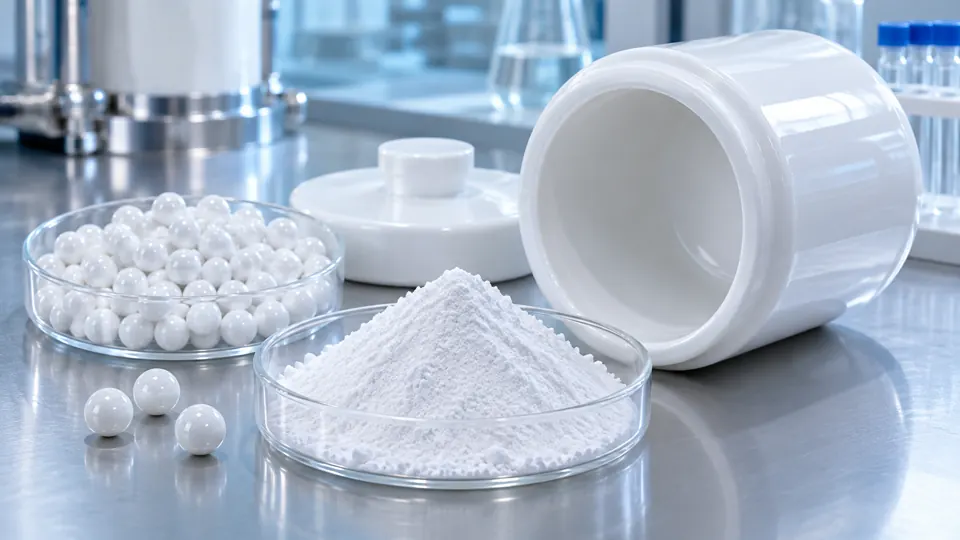
Contamination-limited powders
Assess a contact-material combination designed around the particular elements or materials that must be limited.
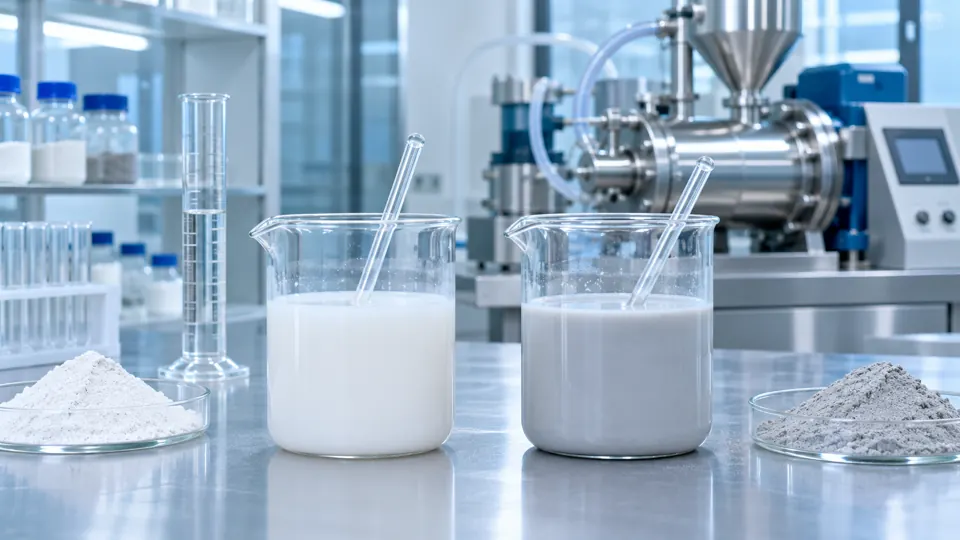
Liquid-containing batches
Evaluate a compatible liner and media combination for wet grinding or slurry blending.
Wear-sensitive processing
Compare liner condition and product composition when abrasive feed makes contact wear important.
Evaluating results
Particle distribution
Measure fineness and coarse residue under the proposed charge and run time.
Material pickup
Test for substances associated with the liner and media to verify compatibility with the product.
Liner condition
Inspect wear and retained material after representative batches when planning cleaning and maintenance.
These are evaluation points for a sample trial, not measured results for a specific sample. Confirm performance under your actual operating conditions.
How it works
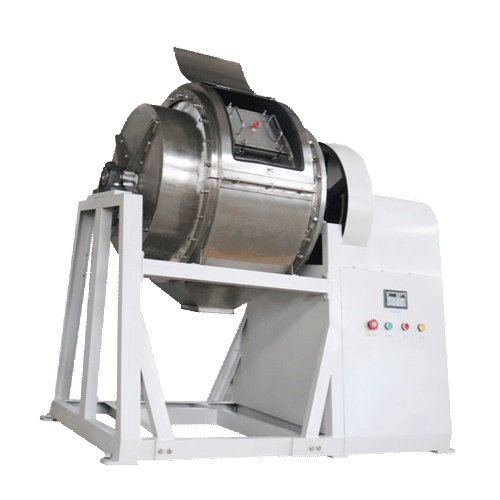
Contact selection
Specify lining, balls and sealing materials before setting the batch and media charge.
Tumbling action
Drum rotation carries the media upward before sliding or falling contact acts on the material.
Discharge and inspection
Stop and recover the batch using the selected arrangement, then inspect the lining during cleaning.
Construction and configuration
Drum and lining
The load-bearing barrel and internal contact layer may be different materials; identify the final sample-contact surface.
Lining and media pairing
Match wear and chemistry requirements across both the jar lining and grinding media.
Connections and discharge
Confirm seal materials, liner maintenance access and any optional ball-separation or unloading equipment.
More product images


Technical specifications
Compare the listed specifications and configurations. Scroll horizontally to view the complete table.
Specification table 1
| Parameter | Volume (L) | Speed (rpm) | Material charge (L) | Motor power (kw) | Grinding vessel material | Feed size (mm) | Discharge size (mesh) | Speed control |
|---|---|---|---|---|---|---|---|---|
| QM-30L | 30 | 20~60 | 10.5 | 0.75 | Carbon steel or stainless steel; optional nylon, polyurethane, PTFE or corundum lining | ≤5 | ≥300 | Variable-frequency or fixed speed |
| QM-50L | 50 | 20~50 | 17.5 | 1.5 | ||||
| QM-100L | 100 | 20~45 | 35 | 2.2 | ≤10 | |||
| QM-200L | 200 | 20~40 | 70 | 4 | ||||
| QM-300L | 300 | 20~38 | 105 | 5.5 | ||||
| QM-500L | 500 | 20~36 | 175 | 7.5 | ≤20 | |||
| QM-1000L | 1000 | 20~34 | 350 | 11 | ||||
| QM-2000L | 2000 | 20~34 | 700 | 22 |
Confirm the selected model, power supply, contact materials and operating conditions before ordering. Performance depends on the material and process.