
Jar Mill with 8 Working Stations: Lab Guide
Laboratory grinding often becomes a scheduling problem before it becomes a technical one. A project needs several formulations compared, a geologist submits a batch of rock samples, or a quality team wants triplicate runs at the same target size. A single-jar mill can do the work, but the queue grows quickly, and small differences in handling between runs can blur the comparison. A jar mill with 8 working stations addresses that bottleneck by providing multiple grinding positions in one laboratory footprint. The useful question is not simply whether eight stations raise throughput. It is whether the mill can keep each station comparable, protect sample integrity, and fit the material, jar, and media choices the work requires.
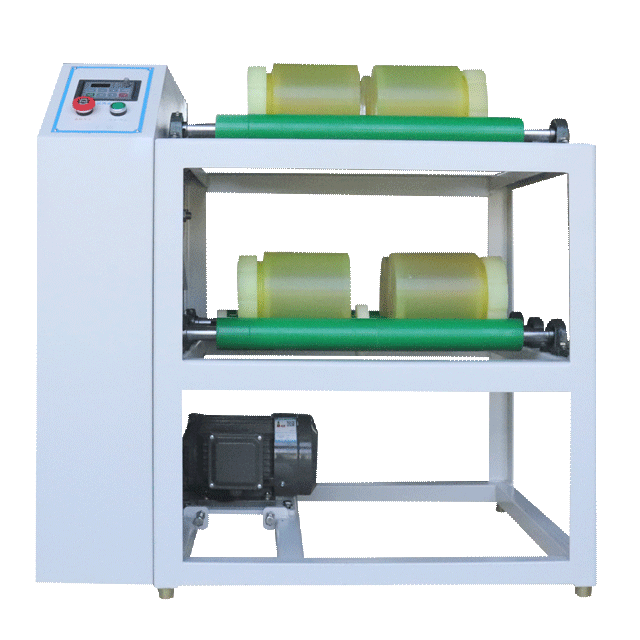
TENCAN jar mill with 8 working stations for parallel laboratory sample preparation.
What the Eight-Station Layout Changes in Laboratory Grinding
A standard laboratory jar mill is built around a simple idea: a sealed jar containing sample and grinding media rotates, and the tumbling action reduces particle size. The eight-station version extends that idea into a small working platform. Instead of treating one jar as one experiment, the laboratory can organize several jars as a batch, a comparison set, or a sequence of related tests. That change sounds modest, but it affects sample scheduling, operator attention, and the way results are compared. A shared platform also changes bench space and utility planning. Eight separate small mills would require eight drive systems, eight sets of controls, and eight areas for jar handling. Consolidating the work into one unit can simplify the laboratory layout, provided the unit is installed with enough clearance for loading, unloading, cleaning, and service. The practical gain is not only speed; it is a more organized workflow around a single piece of equipment.
From one jar to a small sample batch
When a method requires duplicate or triplicate runs, a single-jar mill forces the operator to wait for one jar before starting the next. If the sample is heterogeneous, the wait can also introduce handling differences: the first aliquot may be prepared in the morning and the last in the afternoon, with different room temperature or operator fatigue. An eight-station platform reduces that gap. Multiple jars can be loaded with the same protocol and run together, so the comparison is less dependent on day-to-day changes in the lab.
The benefit is not unlimited capacity. Eight working stations do not turn a laboratory jar mill into a production mill, and they do not remove the need to validate each jar position. They create a practical batch size for method development, quality control, geological sample preparation, and materials research. The right expectation is better organization and more comparable small-scale runs, not continuous tonnage. This is also why parallel sample grinding works best when the laboratory defines what is being compared: the material, the formulation, the jar position, or the run condition.
Where parallel grinding helps, and where it does not
Parallel grinding is most useful when the sample set is already divided and the method is stable. Examples include comparing several additives in a ceramic slurry, preparing multiple ore samples for the same assay, or running a blank and a reference material alongside unknowns. In those cases, the eight-station format lowers the number of separate mill setups and makes the run log easier to manage.
It is less useful when each sample needs a completely different jar material, media size, or speed. A shared platform can still run those tests, but the operator must document each station separately and avoid treating the whole run as one condition. The more variables differ between stations, the more the eight-station mill becomes eight small experiments rather than one batch. That is not a fault of the design; it is a planning issue. Good laboratory practice is to decide before loading whether the goal is replication, comparison, or screening.
| Laboratory task | Why eight stations can help | What still needs control |
|---|---|---|
| Replicate analysis | Several jars can follow the same protocol in one run | Equal sample mass, media charge, jar type, and run time |
| Formulation screening | Multiple variants can be ground side by side | Station-specific records and avoidance of cross-contamination |
| Sample preparation | Batches can be organized by sample ID | Representative subsampling and clean jar handling |
How the Jar Mill Works and Where Samples Can Drift
In a typical roller jar mill, the jar rotates about a horizontal axis. Grinding media inside the jar is lifted on one side and falls or rolls back on the other. The sample is caught between moving media, between media and the jar wall, and in the flowing powder or slurry. Particle size reduction comes from a mix of impact, attrition, and abrasion. The balance among those mechanisms changes with jar diameter, rotation speed, media size and density, fill level, and the material being ground.
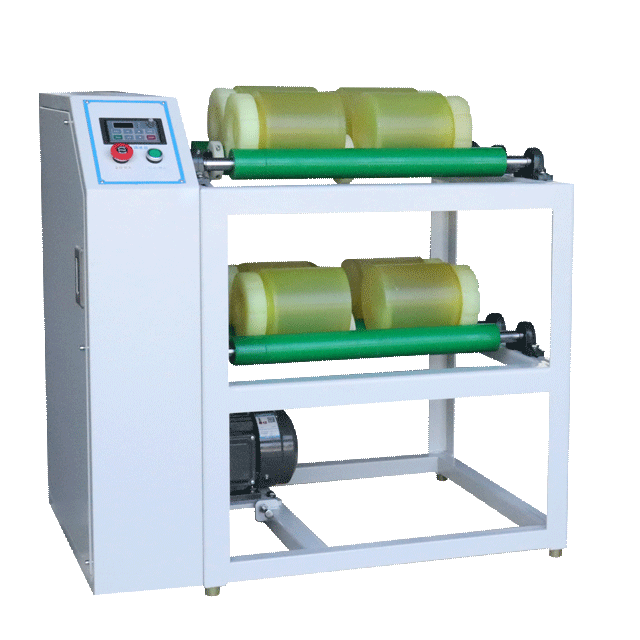
Rotation, media motion, and breakage mechanisms
At low rotational speed, the media charge may slide or roll without much lifting. Breakage is gentle and may be dominated by attrition, which can be useful for fragile materials but slow for hard particles. As speed increases, the media is lifted higher and the cascading action becomes more energetic. At excessive speed, the charge can centrifuge against the jar wall and lose the relative motion that does the grinding. The useful operating window is therefore a process decision, not a single universal speed. For a given jar diameter and media load, the operator should look for steady tumbling and avoid conditions where the charge simply rides with the wall.
Because the eight stations share one laboratory platform, it is tempting to assume that one speed setting produces the same result in every jar. That is only true when jar diameter, jar shape, media charge, and sample mass are also matched. A smaller jar on the same mill may see a different effective motion from a larger jar, even at the same displayed speed. This is one reason a new method should be tested with the actual jar set and load pattern, not only with a single demonstration jar.
Jar geometry and effective diameter
The internal shape of the jar influences how media is lifted and how the sample circulates. A jar with a larger internal diameter has a different media path from a narrow jar, even if both hold a similar sample mass. Rounded corners, internal ribs, and the fit of the lid can also change the movement of powder or slurry. When a method is transferred from one jar size to another, the operator should expect to adjust speed, media charge, or run time rather than assuming a direct scale-up.
Jar condition matters for the same reason. A worn jar surface may hold onto fine powder, and a damaged lid may not seal consistently. On an eight-station mill, mixing jars of different ages or histories can introduce variation that looks like a material effect. Keeping a jar log and retiring damaged jars is a simple control that supports repeatability.
Jar fill, media fill, and sample load
The free space inside a jar matters. Too little free space can restrict media movement and reduce the tumbling action. Too much free space can let media and powder slide rather than interact efficiently. In practice, the operator adjusts the amount of media, the sample mass, and the empty headspace together. The correct combination depends on jar volume, media size, bulk density of the sample, and whether the process is wet or dry. A mixture that looks reasonable when the jar is stationary may pack or cake once rotation begins.
Sample load should also be recorded as a mass, not only as a visual level. A jar filled to the same apparent height with a low-density powder and a high-density oxide represents very different masses and very different grinding loads. When the same protocol is repeated across eight stations, weighing each charge is one of the simplest ways to reduce station-to-station variation. The same discipline applies to media: count or weigh the charge instead of estimating it by eye.
Station-to-station variation
The main sources of variation are usually straightforward: different jar materials, worn jars, unmatched media charges, unequal sample masses, inconsistent initial particle size, and uneven run time. A jar that has been used many times may have a rougher interior or a different effective volume. Media may be screened out, replenished, or mixed between sizes without a record. These small changes can produce a particle size distribution that looks shifted even when the mill settings are unchanged.
A practical eight-station routine treats each position as a documented unit. The log should identify the station, jar, media lot, sample mass, and any deviation from the standard method. If one station is used as a control, its result provides a reference for the others. Without that record, a difference between stations cannot be attributed to the material or the process.
Matching Jars, Media, and Materials to the Grinding Task
The jar and media are not passive containers and loose objects. They are the grinding tools. Their material, size, and condition determine how energy is transferred to the sample and whether the sample remains representative. For an eight-station jar mill, the selection should be made per method, then checked for compatibility across the set.
Jar material compatibility
Different jar materials suit different priorities. Dense ceramic jars can provide good wear resistance for hard minerals, while polymer or lined jars may be preferred when metal contamination must be avoided. The choice is always a compromise: harder jar materials may reduce wear but can add their own contamination if they abrade; softer materials may protect the sample from one type of contamination while wearing faster themselves. The correct question is not which jar is universally better, but which jar is acceptable for the sample, the target size, and the analytical method that follows.
Chemical compatibility matters as well. A wet grinding liquid may attack a jar lining, a binder, or a seal. A dry powder may react with moisture or oxygen if the jar is not sealed effectively. For sensitive materials, the operator should confirm that the jar, lid, and media are compatible with the sample and the intended atmosphere before running a full batch. This is especially important when the same mill is used for several material families and cross-contamination is a risk.
Jar size and working volume
The selected jar size sets the practical sample range. A jar that is too large for a small sample may not develop enough media interaction, while a jar that is too small may not provide a representative aliquot or may be overloaded. The working volume should leave room for media motion and for the sample to expand or aerate during grinding. When an eight-station platform is used for method development, it is often useful to keep one jar size and one media type as the standard, then introduce variables in a planned way.
Jar size also affects handling. Larger jars are heavier when loaded, require more bench clearance, and may be harder to clean thoroughly. Smaller jars are easier to handle but may increase the number of runs needed for a given sample mass. The best compromise depends on the laboratory workload and the smallest sample mass that must still be representative.
Media size, density, and number
Media size controls the scale of the grinding action. Larger media can deliver more impact energy and break coarse particles, but it may leave a coarser distribution and can damage fragile samples. Smaller media provides more contact points and can support finer grinding, but it may not have enough mass to break hard feed particles efficiently. Media density has a similar effect: denser media transfers more energy per collision, which can be helpful for hard materials but may increase wear and heat.
The media charge should be selected with the jar volume and sample load, not by filling the jar as much as possible. A charge that is too small may not cover the sample or generate enough contact. A charge that is too large may leave little room for sample and media motion. Media should also be inspected for cracks, flats, and contamination. Worn media changes the grinding result, and a mixed media charge can make a method difficult to reproduce.
Contamination control and sample integrity
Contamination can enter through jar wear, media wear, seals, and handling. The risk is not only a change in chemistry; a harder contaminant can also affect particle size measurement or later sintering. When the analytical method is sensitive to iron, zirconium, alumina, or other jar components, the operator should choose a jar and media combination that is acceptable for the detection limit. A pre-run blank or a small trial can reveal whether contamination is likely to matter.
Sample integrity also depends on how the jar is cleaned and stored. Residual powder from a previous run can seed the next sample, and cleaning with an abrasive tool can damage the jar surface. A documented cleaning sequence, dedicated jars for sensitive materials, and a drying step before storage are basic controls. On an eight-station mill, labeling jars by station and sample ID reduces the chance of a mix-up when several similar powders are processed together.
Setting Process Variables for Repeatable Results Across Eight Stations
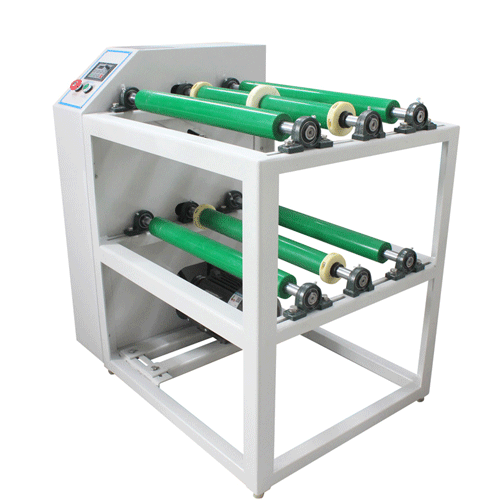
Once the jar and media are selected, the process variables determine how quickly the target size is reached and how repeatable the result will be. The aim is not to find a single setting that works for every material. It is to establish a controlled window in which the mill, jar, media, and sample interact consistently. On the TENCAN jar mill with 8 working stations, the same principles apply to each working position, but the exact speed range and control arrangement should be confirmed against the product page and the laboratory's operating procedure.
Speed and run time
Speed affects the energy of media motion, while run time determines how long that energy is applied. Increasing either one can reduce particle size, but the response is not linear. A longer run may improve size reduction up to a point, then produce little additional benefit while increasing wear, heat, and the risk of over-grinding. Over-grinding can widen the distribution, generate fines that are difficult to handle, or change the surface chemistry of the powder.
A useful method-development sequence is to start with a conservative speed and a short run, then inspect the result before extending time. If the target is far away, adjust one variable at a time. Changing speed, media size, and sample mass together makes it difficult to know which change produced the result. For an eight-station run, the same logic applies across the set: keep the variables matched when the goal is replication, and change only the intended variable when the goal is comparison.
Temperature, atmosphere, and volatile components
Grinding generates heat through friction and impact. In a small jar, the temperature rise may be modest, but heat-sensitive polymers, biological materials, and hydrated minerals can still be affected. A sealed jar can retain moisture or solvent vapor, and the internal pressure may change with temperature. If the sample is oxygen-sensitive, the headspace and sealing method matter as much as the milling speed.
Operators should watch for condensation, caking, color change, or a distinct odor when the jar is opened. These are practical signs that the process may have altered the sample beyond particle size reduction. For sensitive work, shorter runs with cooling intervals or a different jar configuration may be more appropriate. The exact limits depend on the material and must be established by testing, not assumed from a general rule.
Load balance and operating rhythm
With eight working stations, the operator has choices about how many jars to load and how to distribute them. A full set of matched jars is the simplest way to maximize comparable output. If fewer jars are used, the loading pattern should still be planned so that the platform is not operated in an unstable or unbalanced condition. The supplier's instructions for the specific mill should take priority over a general laboratory habit.
The operating rhythm also matters. Loading all jars, starting the run, and stopping at the same time is straightforward when the method is identical. When stations contain different samples, a single run time may not suit all of them. In that case, separate runs or a staged schedule may be better than forcing every sample through the same duration. The eight-station format is a tool for organization, not a reason to ignore individual material requirements.
| Variable | Main effect | Practical check |
|---|---|---|
| Rotation speed | Changes media lift and energy | Confirm steady tumbling without centrifuging |
| Run time | Controls cumulative energy input | Inspect at intervals rather than extending blindly |
| Media charge | Sets contact frequency and free space | Match charge to jar volume and sample mass |
| Sample mass | Affects loading and sampling | Weigh each station and record the value |
Documentation as a process control
Documentation is part of the process, not an administrative afterthought. A run sheet should record the jar ID, media type and size, sample mass, liquid addition, target speed, actual run time, and any interruption. When a result changes, the first step is to compare the records, not to assume that the material has changed. Over several batches, the records show whether the eight-station platform is stable and whether one position behaves differently from the rest.
A simple design-of-experiments approach can be useful when the laboratory needs to understand interactions between speed, media size, and sample load. The eight stations provide replication within one run, but they do not replace randomization or independent trials. If all eight jars are prepared by the same operator in the same order, any operator effect may be hidden. A planned loading order or a repeated control jar can help separate platform variation from sample variation.
Wet or Dry Grinding and Particle Size Control
Jar mills can be used for dry powders and for slurries, but the choice changes the entire process. Wet grinding can improve dispersion, reduce dust, and help control temperature, but it adds liquid handling, jar cleaning, and a drying step. Dry grinding avoids the drying step and keeps the sample as a powder, but it can generate dust, promote caking, and make fine particles difficult to collect. The right choice depends on the material, the target size, and what happens after grinding.
Wet grinding in a laboratory jar mill
In wet grinding, the liquid helps transport particles and can reduce the chance of fine powder adhering to the jar wall. It can also make the slurry easier to sample after the run, provided the slurry is homogeneous. The liquid must be compatible with the jar, media, and sample, and it must not dissolve or react with the material. The solids loading, liquid viscosity, and media size all affect how easily the slurry moves inside the jar.
After wet grinding, the operator must decide how to recover the sample. Settling, filtration, centrifugation, or evaporation may be needed. Each step can change the particle size distribution if fines are lost or if drying causes agglomeration. For this reason, wet grinding methods should be validated from jar loading through final sample preparation, not only at the mill discharge.
Dry grinding and fine powder behavior
Dry grinding is often simpler in terms of sample recovery, but fine powders can become cohesive. They may coat the jar and media, reducing the effective grinding action and making the final sample difficult to remove completely. In some materials, dry grinding also increases the tendency to cake or to generate static charge. The operator may need to adjust the sample load, use a shorter run, or choose a jar material that reduces adhesion.
Particle size measurement should match the product form. A dry powder may need de-agglomeration before laser diffraction or sieving; a slurry may need a dispersant. Comparing a wet-milled slurry with a dry-milled powder without accounting for agglomeration can lead to misleading conclusions. The analytical method should be kept consistent when the goal is to compare stations or formulations.
Target size, distribution, and realistic expectations
A jar mill is a versatile laboratory tool, but it is not a universal fine-grinding solution. The achievable size depends on the feed material, its hardness and toughness, the media, the jar, the energy input, and the time allowed. A hard, coarse material may require a staged approach: preliminary crushing, then jar milling, and perhaps a different mill if the target is very fine. A soft material may reach the target quickly but may also agglomerate or degrade if over-ground.
Particle size distribution is as important as a single median value. A process that produces a small median but a wide distribution may behave differently in later processing than a process with a slightly larger but narrower distribution. The operator should track the distribution, not just the d50, and should confirm that the sampling method is representative. For critical work, a statistically designed trial across the eight stations can reveal whether the platform itself contributes variation.
When particle size plateaus
Many grinding curves flatten before the target is reached. The remaining coarse particles may be hard, or the fine particles may cushion further breakage. Adding more time can increase temperature and wear without improving the result. When a plateau appears, the operator should review the feed size, media size, media charge, and sample load before extending the run. A change in media size or a staged reduction may be more effective than a longer run at the same setting.
The plateau is also a reminder that particle size is not the only output. Surface area, crystal structure, and flow behavior can change during milling. If the downstream process is sensitive to those properties, the milling endpoint should be defined by the application requirement, not only by a particle size number.
Practical Selection and Operating Checklist for an Eight-Station Jar Mill
The most reliable way to select and operate an eight-station jar mill is to work from the sample backward. Start with the material, the required final particle size, the analytical method, and the number of samples. Then choose the jar and media, confirm the mill configuration, and establish a documented run procedure. The following checks are a practical starting point.
Questions to settle before purchase
- What jar sizes and jar materials are needed for the current sample set, and will those needs change within the next year?
- How many samples must be processed per batch, and is the eight-station format a good match for that workload?
- Does the method require wet or dry grinding, and what cleaning or drying steps will follow?
- Are there contamination limits that rule out certain jar or media materials?
- What speed control, timer, and safety features are needed for the laboratory's operating procedure?
For the TENCAN Jar mill with 8 working station, the product page is the appropriate place to confirm the available configuration, dimensions, and electrical requirements. Those details should be verified against the actual laboratory setup before an order is placed. A mill that fits the bench but not the jar set, or the jar set but not the local power supply, creates avoidable delays.
Before each run
- Verify that jars, lids, and media are clean, dry, and free of cracks or chips.
- Weigh the sample and media for each station; do not rely on visual fill alone.
- Record jar ID, media type and size, sample mass, liquid if used, and intended speed and time.
- Check that lids and seals are seated correctly and that the jar is compatible with the process.
- Confirm the loading pattern and follow the manufacturer's instructions for operating the mill.
During and after the run
Listen and observe the mill at the start of the run. A sudden change in sound or motion can indicate an unbalanced load, a loose jar, or a mechanical issue. If the mill has a transparent guard or inspection point, use it only according to the safety instructions; never bypass guards or reach into a moving system. Record the actual run time and any interruption, because a stopped run is not equivalent to a continuous one.
After the run, let the mill stop completely before opening the chamber. Inspect each jar for leakage, pressure, or unusual heat. Empty the sample in a consistent way, and note whether material adheres to the jar or media. Clean the jars according to the validated procedure, and separate jars used for different material families when cross-contamination is a concern. At the end of the batch, compare the results across stations. If one station is consistently different, check the jar, media, and load before changing the method.
Scale-up and method transfer
An eight-station jar mill is useful for method development because it generates several small results under one set of conditions. Transferring that method to a different jar size or mill type should be treated as a new validation exercise. The ratio of media to sample, the energy input, and the heat removal may all change. A result that is repeatable on the eight-station platform is a good starting point, but it is not proof that a larger mill will produce the same distribution without adjustment.
When transferring a method, keep the feed material and analytical method constant, and change one process variable at a time. Compare not only the median size but also the distribution and any handling differences. If the larger mill cannot reproduce the small-scale result, the laboratory may need to adjust media size, solids loading, or run time. This is normal process development, and it is more efficient than assuming that a laboratory result will scale directly.
When a different mill may be a better fit
An eight-station jar mill is a laboratory platform, not a production solution. If the workload requires continuous operation, large sample masses, or very fine grinding beyond the practical range of jar milling, a different mill type may be more appropriate. The same is true when the process needs high shear dispersion rather than size reduction, or when the sample must be processed in a fully contained atmosphere. Recognizing those limits early prevents a laboratory mill from being asked to do a job it was not designed for.
For method development, the eight-station format offers a useful middle ground: more capacity than a single-jar mill, but still small enough for controlled trials and careful sample handling. The key is to treat the platform as a system. Jar choice, media choice, sample load, speed, time, and cleaning all contribute to the result. When those factors are documented and tested, the mill can support faster comparisons without sacrificing the traceability that laboratory work requires.