
Lab Roll Ball Mill: Speed, Load, and Results
A lab roll ball mill can produce two very different outcomes from the same jar and the same powder. One run gives a narrow particle size distribution after a reasonable grinding time. Another run, repeated with the same jar and media, gives a broader curve and a different median. The roller drive may be working normally in both cases. The difference is often hidden in variables the simple machine does not make visible: jar diameter, actual rotational speed, media size distribution, powder fill, and the way the sample was charged.
That is why a roll ball mill should be treated as a process system rather than a bench accessory. The equipment is mechanically straightforward, but the grinding result depends on how the jar, media, sample, and roller settings work together. For laboratories comparing formulations, preparing analytical samples, or developing a milling step, the practical goal is not to find one universal setting. It is to build a repeatable baseline that can be adjusted with purpose. The lab roll ball mill from TENCAN is designed around this jar-on-rollers principle, with the final result shaped by the operating choices described below.
What the Roller Drive Changes in a Laboratory Ball Mill
In a roll ball mill, a cylindrical jar rests on driven rollers. As the rollers turn, friction rotates the jar. The grinding media inside the jar tumble, slide, and interact with the powder. Size reduction comes from a combination of impact and attrition, but the balance between those mechanisms depends on how the charge moves. Unlike a planetary mill, where jars are carried around a central axis and may experience a complex centrifugal field, a roll mill relies mainly on the rotation of the jar about its own horizontal axis. That difference influences the energy available to the sample, the media motion, and the kind of grinding problem for which the equipment is best suited.
The roller drive controls rotational speed, but it does not define the internal motion by itself. A large jar and a small jar can be run at the same roller rpm and still have different internal surface speeds. For that reason, a useful process record includes jar outside diameter as well as roller speed. If a method is transferred from one jar size to another, the operator should expect to adjust speed or time rather than assume the original setting will reproduce the same result.
The useful role of a lab roll ball mill
A roll ball mill is often a practical choice when the sample volume is modest and the jar can be changed for cleaning, material compatibility, or cross-contamination control. Because the sample remains inside a removable jar, the mill can support dry and wet trials without requiring the powder to contact the roller frame. It is also useful for laboratories that need a simple mechanical action that is easy to observe and document. The equipment does not hide the sample behind a complex chamber, so the relationship between jar loading, media condition, and grinding time is relatively direct.
This does not mean that a roll mill is the right answer for every particle size target. If a process requires very high energy density, intensive shear, or rapid circulation of a large slurry volume, other mill designs may be more appropriate. A roll mill is better understood as a controlled tumbling system. It can be highly effective within its working window, but the window should be defined by the material and the target, not by the machine alone.
Where the simple geometry becomes a limitation
The jar-on-rollers layout has practical limits. If the jar surface is not clean, if the rollers are not aligned, or if the jar load is poorly distributed, the jar may slip or rotate unevenly. That affects reproducibility before any material variable is considered. Very heavy jars or high media loads can also place different demands on the drive and frame than small laboratory jars. The user should confirm that the selected jar and load are compatible with the equipment configuration and that the jar sits securely during operation.
Grinding time is another limitation. A roll mill may need longer residence time than a high-energy mill to reach a fine target, and extending time can widen the particle size distribution if fines are generated while coarse particles remain. The correct response is not always to run longer. It may be better to review media size, media load, powder fill, or jar speed. In some cases, the material simply needs a different grinding principle, and recognizing that early avoids wasting sample and operator time.
Reproducibility begins with the jar
Two jars can look similar and behave differently. Wall thickness, internal diameter, surface condition, and the fit of the lid all affect how the media charge moves and how much sample is retained after discharge. A jar that is worn, out of round, or lined with a material that has become rough can change the friction between media and wall. Even the same nominal jar volume may have a different internal shape from another supplier. For repeatable work, the jar should be identified as a controlled item, not treated as an interchangeable container.
Jar material also matters. Ceramic, agate, zirconia, stainless steel, polymer, and other options are selected for different reasons: contamination tolerance, density, cleaning behavior, and resistance to wear. A dense jar wall may be robust, but it also changes the mass that the rollers must turn. A lighter jar may be easier to handle, but it may not be suitable for every media set. The practical rule is to choose the jar for the chemistry and contamination requirement first, then verify that the jar and media combination can be run safely and reproducibly on the mill.
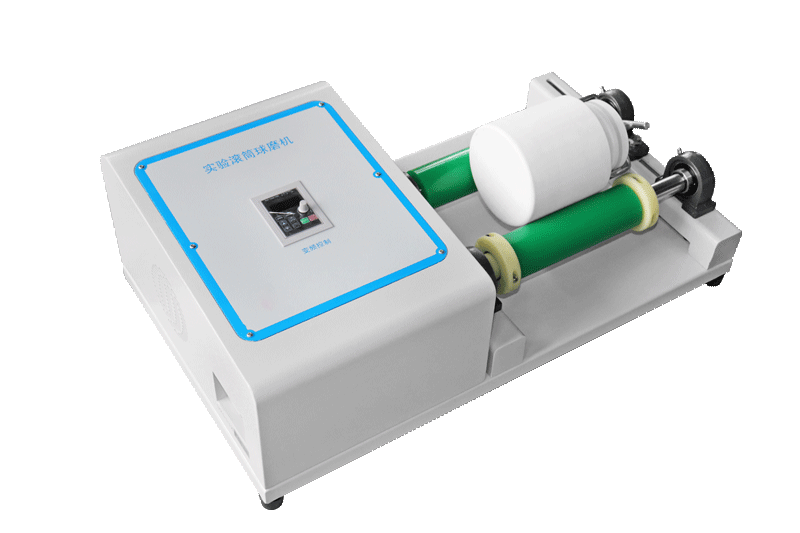
A roller-driven jar mill is simple in principle, but jar size, roller speed, media load, and sample fill must be controlled together.
Speed, Media, Fill, and Feed: The Variables That Interact
Operators often ask for a recommended speed or a standard media load. A single number is rarely enough because the variables interact. A change that improves grinding in one jar may cause excessive wear in another. A media load that works for a dense powder may be too aggressive for a fragile material. The aim is to understand the direction of each effect, then establish a baseline through controlled trials.
Jar speed and the motion of the media charge
At low rotational speed, the media may slide or roll over the powder with limited impact. The sample can be mixed well, but size reduction may be slow. As speed increases, the media charge is lifted higher and then cascades or cataracts back into the lower part of the jar. This can improve grinding, but the useful range is bounded. If the speed is too high, media may be carried around the jar wall and lose contact with the powder bed. The result can be reduced efficiency, more wear on the jar and media, and a less predictable particle size distribution.
The relevant reference is not roller rpm alone. It is the internal motion of the charge, which depends on jar diameter and the effective critical speed of the system. Many laboratories use a controlled fraction of critical speed as a starting point, but the exact fraction should be confirmed for the material and jar. When transferring a method, it is better to calculate or measure the relationship between roller speed and jar rotation than to copy an rpm value from a different jar size. If the jar slips, the actual rotation is lower than the set value, and the method becomes difficult to troubleshoot.
Media size, density, and wear
Grinding media do several jobs: they transfer energy to the powder, create contact points, and wear over time. Larger or denser media can deliver more impact energy per collision, which may help break coarse or hard particles. Smaller media provide more contact points and can be useful for finer grinding, but they also have lower mass per ball and may not break tough particles efficiently. The best media size is therefore related to the feed size and the target size, not simply to the mill volume.
Media density affects the energy that can be delivered at a given speed. A denser medium may grind faster, but it also increases jar load, drive demand, and contamination risk if the medium wears. Media shape and quality matter as well. Cracked, flattened, or irregular media can change the motion of the charge and introduce variability. For repeatable work, the media should be inspected, cleaned, and replaced as a controlled consumable. Recording media material, nominal size, and approximate charge mass is more useful than recording only the jar volume.
Fill level and the space available for motion
A jar can be underfilled, overfilled, or filled in a way that looks reasonable but leaves no room for media motion. If the powder fills the voids between media and leaves little free space, the charge can cushion itself. Impact energy is absorbed, and grinding becomes slow or uneven. If the jar is too lightly loaded, productivity per batch may be low, and the media may wear against the jar wall with limited powder present. The practical fill level should leave enough space for the media to tumble and for the powder to be caught in the moving bed.
Wet grinding adds another layer. The liquid must be enough to create a pumpable or at least mobile slurry, but not so much that the media and particles are separated by a dilute phase. Slurry viscosity changes as particle size decreases, so a formulation that works at the start of a run may become too thick later. In some systems, a dispersant or pH adjustment is part of the process, but those choices should be tested rather than assumed. The jar should also be checked for leakage and for the effect of liquid on the lid or sealing arrangement.
Feed properties and the meaning of grindability
Feed size, hardness, toughness, moisture, and agglomeration all influence the result. A hard, brittle material may break by fracture, while a soft or ductile material may deform, coat the media, or agglomerate. Moisture can make a powder sticky and reduce flow inside the jar. A feed that has already been milled may contain fines that change the rheology of a wet slurry or cushion impact in a dry run. These are material realities, not equipment faults, and they should be recorded when a method is developed.
Particle size distribution of the feed is also important. A narrow feed may behave differently from a feed with a coarse tail. If the target is a fine median, the coarse fraction may control the time required, while the fine fraction may be overground. That is why a single target number such as a median size is not enough to describe a grinding problem. The width of the distribution and the acceptable upper limit often determine whether a roll mill run is technically suitable.
Why the variables cannot be optimized separately
Changing media size without changing speed can shift the balance from impact to attrition. Increasing powder fill without adjusting media load can reduce free space and slow the charge. Increasing speed without checking jar security can introduce slip or vibration. A useful experiment changes one factor at a time, but interprets the result in the context of the whole charge. If two factors must change together, for example when a new jar size is introduced, the trial should include a baseline run with the original jar so that the effect of the hardware change can be separated from the effect of the process change.
Building a Repeatable Run on a Lab Roll Ball Mill
A repeatable method starts before the mill is switched on. The target should be stated in terms that can be measured, such as a median size range, an upper size limit, a distribution width, or a required degree of dispersion. The feed should be characterized by the same method that will be used for the product. If the feed is described only as a supplier grade or a sieve fraction, the operator may not know how much variability is already present before grinding begins.
Define the target and the acceptance window
A target of a single D50 value can encourage overgrinding. A more useful specification includes a lower and upper limit for the median, a limit for the coarse tail, and a statement of how the sample will be taken and measured. For some applications, the important result is not the finest possible powder but the absence of agglomerates or the preservation of a certain fraction. Those requirements should be written into the trial plan, because they influence grinding time, media choice, and the decision to stop.
The acceptance window should also reflect analytical uncertainty. Laser diffraction, sieving, microscopy, and other methods do not give identical numbers. If a method is transferred between laboratories, the measurement method and dispersion procedure should be part of the record. Otherwise, an apparent process difference may simply be an analytical difference.
Select the jar and media for the material
The jar material should be chosen for contamination control and chemical compatibility. If the sample must remain free of iron, a different jar and media set may be needed. If the sample is abrasive, wear of the jar and media should be considered as a source of both contamination and changing grinding conditions. Media size should be related to the feed and target, and the media charge should be weighed or otherwise recorded so that a later run can be compared.
Before the first trial, inspect the jar for cracks, chips, or a poor lid fit. Check that the media are clean and free of previous sample. Confirm that the jar can be mounted securely on the rollers and that it rotates without slipping. These checks are basic, but they eliminate a large share of apparent process variability.
Choose dry or wet processing deliberately
Dry grinding is convenient when the final product must remain a powder and when the material does not coat the media or jar excessively. It can also make sampling easier. However, dry fine grinding may suffer from agglomeration, dust, and material loss during jar opening. Wet grinding can improve particle dispersion and reduce dust, but it introduces liquid handling, slurry viscosity, and drying steps. The choice should be based on the downstream process, not only on grinding speed.
For wet runs, the liquid-to-solid ratio, the order of addition, and the mixing method should be fixed. Adding powder to liquid is not necessarily equivalent to adding liquid to powder, especially if the powder agglomerates. If a dispersant is used, its dose and addition point should be recorded. The slurry should be checked for settling or foaming after the run, because both can affect sampling and the apparent particle size distribution.
Establish a baseline and change one factor
A baseline run should use a known jar, a known media charge, a defined powder mass, and a recorded roller speed. The run should be stopped at planned intervals so that the progression can be observed rather than guessed. If the mill has a timer, the timer setting is a convenience, not a substitute for checking the actual rotation and the condition of the jar. After the baseline, change one factor at a time: media size, media mass, powder mass, speed, liquid ratio, or time. Keep the others fixed long enough to see whether the effect is meaningful.
The number of trials should be realistic. A small design that compares a low, middle, and high level of one factor is often more informative than a long series of random adjustments. If the response is noisy, improve the sampling and measurement first. A process that cannot be measured reliably cannot be optimized reliably.
Record what the next operator will need
A useful batch record includes jar identification, internal and external dimensions where relevant, jar material, media material and size, media mass, powder mass, liquid mass, roller speed, run time, and any interruptions. It should also note the feed lot, the moisture condition, and the analytical method. Photographs of the jar loading and the product can help, but the written record should be sufficient on its own. This level of documentation is especially important when a method is transferred to another laboratory or when a new operator takes over the equipment.
Plan the transition to a different jar size
Moving from a small jar to a larger jar is not a simple volume scale-up. A larger jar has a different diameter, a different media path, and a different ratio of wall area to powder mass. The roller speed may need to be adjusted to maintain a comparable internal motion. The media size may also need review, because the same media that works in a small jar may not deliver enough impact in a larger one. The safer approach is to run a bridging trial at the new size and compare the particle size distribution, not only the median.
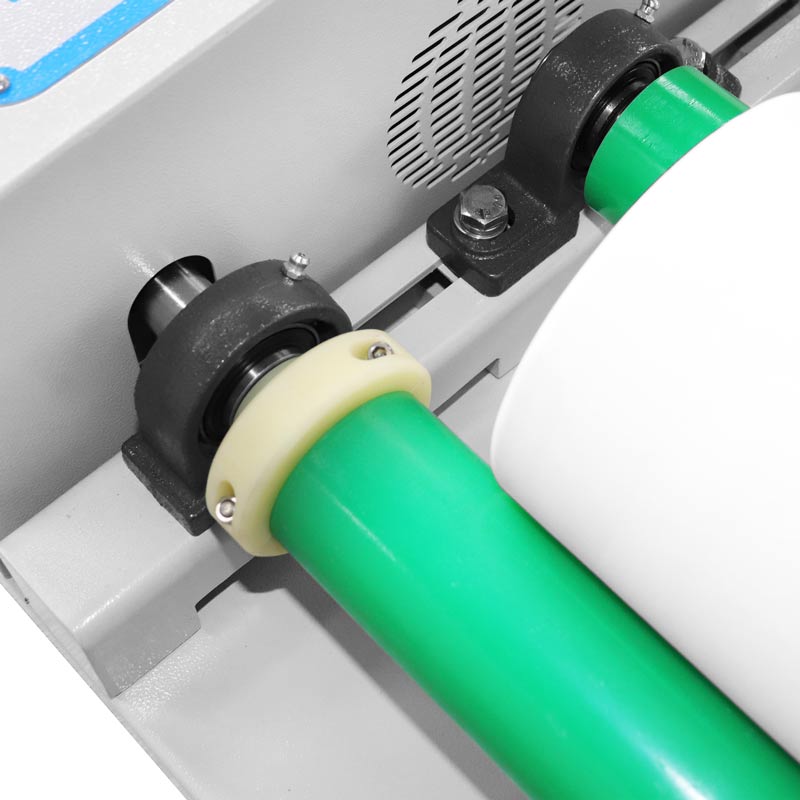
Changing jar size changes the internal motion at the same roller speed, so the method should be rechecked rather than copied.
Reading Particle Size Distribution Instead of Chasing D50
A particle size result is a distribution, not a single point. The median, often reported as D50, describes the middle of the distribution, but it does not show whether the coarse tail has been removed or whether an excessive fines fraction has been created. Two samples can have the same D50 and behave differently in a downstream process because their D10, D90, and distribution width differ. For roll mill development, the shape of the curve is often more informative than the median alone.
D10 indicates the finer end of the distribution, D90 the coarser end, and the span or width describes the spread. A narrow distribution may be desirable for some applications, while a controlled coarse fraction may be acceptable for others. If the D50 is on target but the D90 is too high, the run may need more time or a different media set. If the D10 is very low and the D90 remains high, the process may be overgrinding the fine fraction while failing to break the coarse particles. That pattern suggests a change in media size or a staged grinding approach rather than simply extending time.
Sampling can create a false result
Fine powders segregate easily. A sample taken from the top of a jar may not represent the bottom, and a sample taken after settling in a slurry may not represent the suspended solids. The sampling procedure should be fixed and, where necessary, the whole batch should be homogenized before a portion is taken. For wet slurries, the dilution step can also change the measured distribution if agglomerates are broken or formed. The analytical method should be described together with the result so that another laboratory can interpret it correctly.
Watch for overgrinding and agglomeration
Long grinding does not always continue to reduce size. It can increase the fines fraction, change the surface chemistry, or cause fine particles to agglomerate. In a dry run, the product may appear finer by one method and coarser by another because the measurement is responding to agglomerates rather than primary particles. In a wet run, a change in viscosity or pH may shift the dispersion state. If the curve stops moving or moves in the wrong direction, the answer may be a shorter run, a different media size, or a change in the liquid formulation, not a longer run.
Troubleshooting Roll Ball Mill Results
Most roll mill problems fall into a few categories: slow size reduction, a broad or unstable distribution, contamination, material loss, or poor repeatability. The first step is to separate equipment behavior from material behavior. Confirm that the jar rotates at the intended speed, that it does not slip, and that the rollers are clean and parallel. Then review the charge and the analytical method. The table below offers a practical starting point, but the correct action depends on the material and the target.
| Observation | Likely area to check | Practical next step |
|---|---|---|
| Grinding is much slower than expected | Media size or mass, powder fill, jar speed | Check free space in the jar, confirm actual rotation, and review media size against feed size |
| Distribution is broader than target | Grinding time, media size distribution, feed variability | Stop at intervals, inspect media for wear or mixed sizes, and compare feed lots |
| Product contains unexpected particles | Jar or media wear, cleaning, lid condition | Inspect jar and media, review cleaning procedure, and check for lid contact |
| Sample cakes or sticks to the jar | Moisture, dry grinding conditions, material ductility | Dry or condition the feed, reduce powder fill, or evaluate a wet process |
| Repeat runs do not agree | Jar identification, media charge, speed, sampling | Record jar dimensions and media mass, verify roller speed, and standardize sampling |
| Jar slips or runs unevenly | Jar surface, load distribution, roller condition | Clean and inspect the jar, reduce or redistribute the load, and check roller alignment |
Slow grinding is not always a sign that the mill lacks power. If the media are too small for the feed, the charge may have plenty of contact points but insufficient impact energy. If the powder fill is too high, the media may be cushioned. If the jar speed is too low, the media may simply roll over the powder. Each cause has a different remedy. Increasing speed without checking the other factors can make the problem worse by causing media to be carried around the jar.
A broad distribution often points to a process that is breaking some particles quickly while leaving others untouched. Mixed media sizes, a feed with a wide size range, or a jar load that segregates can all contribute. Stopping the run at intervals and measuring the curve helps show whether the coarse tail is being reduced or whether fines are being generated first. In some cases, a two-stage approach with different media or a shorter pre-grind is more effective than a single long run.
Contamination is usually traced to the jar, the media, or the cleaning step. A worn jar lining, chipped media, or a lid that contacts the sample can introduce material that was not present in the feed. The risk increases with abrasive powders and long run times. If contamination is critical, the jar and media should be selected as a system, and a blank run with the same jar and media can help identify whether the equipment contributes particles. The blank should be processed and analyzed in the same way as the sample.
Poor repeatability is often a documentation problem before it is a machine problem. If the jar is not identified, the media charge is not weighed, or the roller speed is not verified, two runs that appear identical may not be identical at all. A simple check is to weigh the jar and charge before and after loading, confirm the jar position on the rollers, and record the actual run time. These details make it easier to find the source of variation instead of replacing hardware that may be functioning correctly.
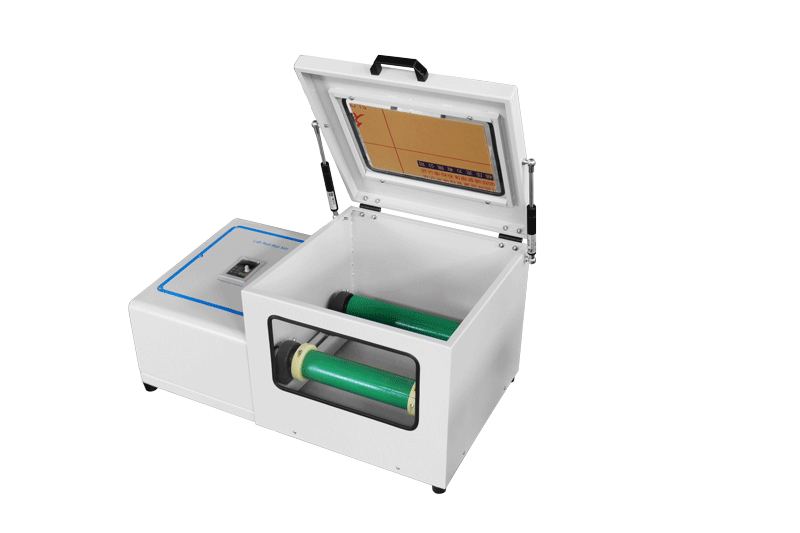
Reproducible milling depends on controlled jar loading, media condition, and a documented roller speed.
Selecting a Lab Roll Ball Mill for the Work Ahead
The right lab roll ball mill is the one that fits the jars, the sample loads, and the control requirements of the laboratory. Capacity should be considered in terms of usable jar volume and the mass of media plus powder, not only the nominal jar size. The roller spacing and jar diameter should be compatible, and the drive should be able to start and run the intended load without slipping. Speed control, a timer, and a stable frame are practical features because they support repeatable runs and make it easier to record what was actually done.
Safety and handling also belong in the selection decision. The jar should sit securely, the rollers should be accessible for cleaning, and the operating area should allow the jar to be loaded and removed without strain. If the laboratory works with reactive, toxic, or oxygen-sensitive materials, the jar and enclosure requirements should be discussed before the mill is specified. These are application requirements, not optional accessories, because they affect how the equipment can be used.
For method development, it is helpful to choose a mill platform that allows more than one jar size or jar material to be evaluated without changing the basic working principle. This does not remove the need for bridging trials, but it makes them easier to organize. Changsha Tianchuang Powder Technology Co., Ltd. (TENCAN) supplies the TENCAN lab roll ball mill for laboratory grinding and sample preparation. The most useful starting point is a clear description of the feed, the target distribution, the required batch mass, the contamination limit, and the analytical method. With those details, the jar, media, and operating range can be discussed in a technical context rather than chosen by guesswork.
Before a new method is released, run a small verification set that covers the expected feed variation and the intended operator range. Check the median, the coarse tail, and the repeatability of the result. If the process is sensitive to jar diameter, media wear, or moisture, write those controls into the method. A roll ball mill rewards this kind of discipline. Its simple motion makes the effect of the charge visible, and a well-documented setup turns that simplicity into a reliable laboratory tool.