Four Station Jar Mill: A Practical Guide for Multi-Sample Laboratory Grinding
If you work in a laboratory that regularly handles powder grinding, mixing, or blending, you have likely faced this challenge: you need to process multiple samples under similar or identical conditions, but your current mill can only handle one jar at a time. Running batches one after another consumes valuable research time and can introduce variability between runs. A four station jar mill is designed precisely to solve this problem. It allows you to mount four grinding jars on a set of rotating rollers, and process up to four different samples simultaneously — or run one jar type with replicates — while maintaining consistent rotational speed and grinding action across all positions.
In this article, we will walk through the working principle, typical applications, and the important selection parameters that help you decide whether a four station jar mill fits your lab's needs. Whether you are grinding ceramics, minerals, battery materials, or chemical powders, understanding the key factors will save you time and help you get reproducible results.
How a Four Station Jar Mill Works
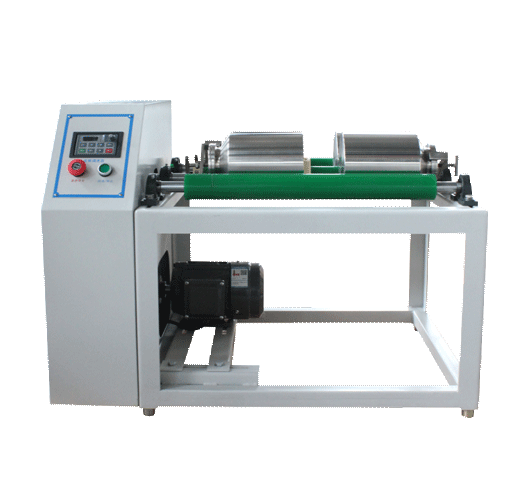
A four station jar mill is essentially a rolling mill with four parallel rollers. The jars — usually cylindrical containers made of ceramic, stainless steel, nylon, PU, or other materials — are placed on the rollers. As the rollers rotate, the jars turn slowly and the grinding media (balls) inside the jars cascade and tumble, crushing and milling the powder. This is a gentle, low-energy milling action compared to planetary ball mills, making it ideal for materials that require a softer grinding process or where minimal heat generation is desirable.
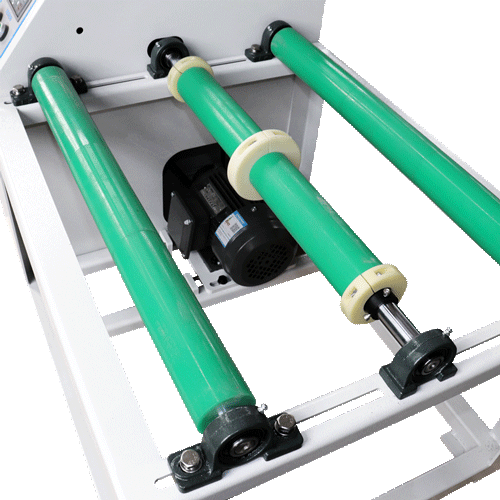
The key components include a motor, a speed controller (often variable), a set of rubber or polyurethane rollers, and the jars themselves. The number of stations refers to how many jars can be run at once. A four station jar mill usually has two rows of two rollers, or four individual roller segments, allowing each jar to rotate independently. The user places the jar filled with grinding balls and sample material onto the rollers, sets the rotation speed, and lets the mill run for a defined time.
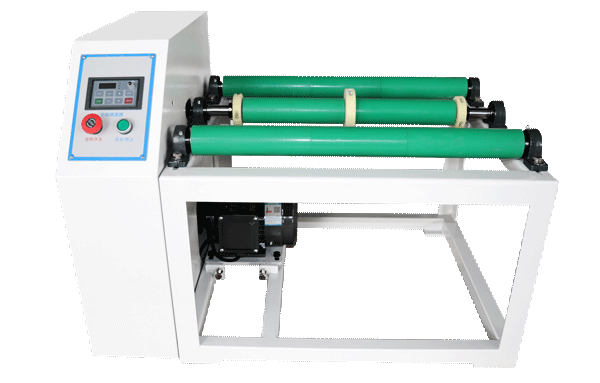
One important distinction is that a jar mill does not use planetary motion. The jar itself does not spin on its own axis while revolving around a central axis; instead, the jar simply rotates on its own horizontal axis. This produces a lower impact energy, which makes it suitable for materials that are friable but not extremely hard, and for applications like mixing, blending, or homogenizing powders without introducing excessive heat or contamination.
Common Applications for a Four Station Jar Mill
The four station jar mill is a versatile tool in many lab environments. Because it can accommodate up to four jars, you can run multiple formulations, different powders, or replicate samples in one batch. Here are some typical use scenarios:
1. Sample Preparation for Analysis
Before XRF, XRD, or ICP analysis, samples often need to be ground to a fine, uniform powder. A jar mill with four stations allows a laboratory to prepare four samples at once, improving throughput. This is common in geology, mining, and mineral processing labs where many rock or ore samples must be processed every day.
2. Ceramic and Glaze Formulation
Ceramic engineers frequently test different glaze or body formulations. Using a four station jar mill, they can grind four different recipes simultaneously under the same milling conditions, making side-by-side comparison easy and efficient.
3. Battery Material Mixing
In lithium-ion battery research, electrode materials like cathode active powders, conductive carbon, and binders need to be mixed and ground. The gentle rolling action helps achieve a homogeneous mixture without damaging the particle morphology. Running four batches at once helps researchers screen different ratios or coating variations quickly.
4. Pharmaceutical and Chemical Blending
For fine chemicals, pigments, and pharmaceutical ingredients, the jar mill provides contamination-free grinding when appropriate jar and ball materials are chosen. The four stations mean you can prepare four different composition blends in one run, which is valuable for early-stage formulation work.
Key Selection Factors for a Four Station Jar Mill
When choosing a four station jar mill, several technical points deserve attention. The following factors directly affect the grinding efficiency, repeatability, and longevity of the equipment.
Jar Material and Capacity
The grinding jar is where the actual milling happens. Common materials include:
- Ceramic (alumina): Hard, wear-resistant, and low contamination for oxides and minerals.
- Stainless steel: Strong, suitable for heavy or abrasive materials, but may introduce iron contamination.
- Nylon or PU: Low contamination, good for materials that are sensitive to metal ions.
- Agate or zirconia: High hardness and very low contamination, typically used for high-purity grinding.
Jar capacities commonly used in lab four station jar mills range from about 0.5 L to 5 L per jar. The total batch size depends on the jar volume and the ball-to-powder ratio. As a typical reference, the grinding media usually occupies about 30%–50% of the jar volume, and the powder fills the void space between balls. If you need to process 500 g per batch, a 2 L jar may be appropriate, but actual usable capacity depends on the material density and filling requirements.
Roller Speed and Variable Control
Most four station jar mills have adjustable speed, typically ranging from around 30 to 300 rpm. Lower speeds produce a cascading motion suitable for fine grinding and mixing; higher speeds can lead to cataracting but may cause excessive wear or noise. The optimal speed depends on the jar diameter and the material being ground. In many cases, a speed of 60–150 rpm works well for common materials like ceramics and minerals. A digital speed controller with constant torque helps maintain consistent speed even when jars are fully loaded.
Number of Stations and Flexibility
A genuine four station jar mill has four positions, each accommodating one jar. However, some models allow running fewer jars by placing dummy rollers or using spacers. If you occasionally need to run only two jars, check whether the mill can operate stably with an unbalanced load. Many lab jar mills have separate rollers per station or a common shaft design that allows independent loading.
Noise, Vibration, and Safety
Laboratory environments require quiet and safe equipment. A well-built four station jar mill should operate with minimal vibration. Look for features such as rubber feet, enclosed roller covers, and emergency stop buttons. Some models have a safety lid or guard that stops the machine when opened. Although not mandatory for all labs, such safety features are beneficial when the mill runs unattended.
Practical Tips for Effective Grinding with a Four Station Jar Mill
Getting the best results from your jar mill requires more than just turning it on. The following guidelines can help you achieve consistent particle size reduction and avoid common pitfalls.
Selecting the Right Grinding Media
Grinding balls come in various sizes and materials. As a general engineering reference:
- For coarse grinding or breaking down larger agglomerates, use balls of 10–20 mm diameter.
- For fine grinding or dispersing, use smaller balls, e.g., 1–5 mm, to increase the number of contact points.
- The ball material should be harder than the sample to minimize contamination. Zirconia, alumina, agate, and stainless steel are common choices.
Optimizing Ball-to-Powder Ratio
The ball-to-powder mass ratio (BPR) significantly affects grinding efficiency. In many lab milling experiments, a BPR from 5:1 to 20:1 is typical. Higher ratios provide more impact energy but may increase wear and heat. For a jar mill, starting around 10:1 is a practical point. You can adjust based on the hardness and target fineness of your material.
Wet vs. Dry Grinding
Jar mills support both dry and wet grinding. Wet grinding with a liquid medium (water, ethanol, or other solvents) often produces finer particles and reduces dust. It also helps dissipate heat and prevents agglomeration. Dry grinding is simpler and avoids the need for a drying step. The choice depends on your material properties and downstream requirements.
If you plan to grind air-sensitive or moisture-sensitive materials, you may need jars with airtight seals. Some jar mills can accommodate vacuum or inert gas purging, but this is less common for standard models. For such applications, a planetary ball mill or a specially sealed jar might be more appropriate.
Comparing a Four Station Jar Mill with Other Lab Grinders
It is helpful to understand where a four station jar mill fits relative to other laboratory mills. Here is a brief comparison:
| Feature | Four Station Jar Mill | Planetary Ball Mill |
|---|---|---|
| Milling action | Rolling/tumbling, low energy | Planetary motion, high energy |
| Typical particle size achievable | Down to ~10–50 µm (approximate) | Down to sub-micron or nano (under optimal conditions) |
| Number of samples per run | Up to 4 | Usually 2 or 4 |
| Heat generation | Low | Moderate to high |
| Suitable for hard materials | Moderate (better for soft to medium hardness) | Excellent |
| Cost | Generally lower | Generally higher |
For many routine grinding and mixing tasks, the four station jar mill offers a cost-effective, easy-to-use solution with multi-sample capability. If your research demands extremely fine particles (e.g., <1 µm) or mechanical alloying, a planetary mill remains the standard choice. But for sample preparation, formulation development, and blending, a jar mill is often more than adequate.
Conclusion
A four station jar mill is a practical, efficient piece of equipment for laboratories that need to process multiple powder samples simultaneously. Its gentle rolling action makes it suitable for a wide range of materials, from ceramics and minerals to battery materials and pharmaceuticals. When selecting a model, pay attention to jar material, capacity, speed control, and safety features. As with any milling equipment, the final particle size depends on material properties, ball-to-powder ratio, ball size, milling time, and grinding medium. Testing your own material under controlled conditions remains the most reliable way to optimize your process. If you are considering adding a four station jar mill to your lab, review the technical specifications of available models, and feel free to discuss your specific requirements with equipment suppliers to find the configuration that best fits your work.