
PTFE Roll Mill Jar: A Non-Stick Solution for Contamination-Free Powder Grinding
What Is a PTFE Roll Mill Jar?
A PTFE roll mill jar is a cylindrical grinding vessel made from polytetrafluoroethylene (PTFE), a high-performance fluoropolymer widely known for its non-stick surface and excellent chemical resistance. These jars are specifically designed for use with roller ball mills (also called jar mills or rotary ball mills), where the jar rotates on a set of rollers, causing the grinding media inside to tumble and reduce the particle size of the material.
In many laboratory and small-scale production environments, avoiding contamination from the grinding container is a top priority. PTFE roll mill jars offer a clean, inert, and non-reactive surface that makes them an excellent choice for processing sensitive materials such as pharmaceutical ingredients, electronic ceramics, battery materials, and high-purity chemicals.
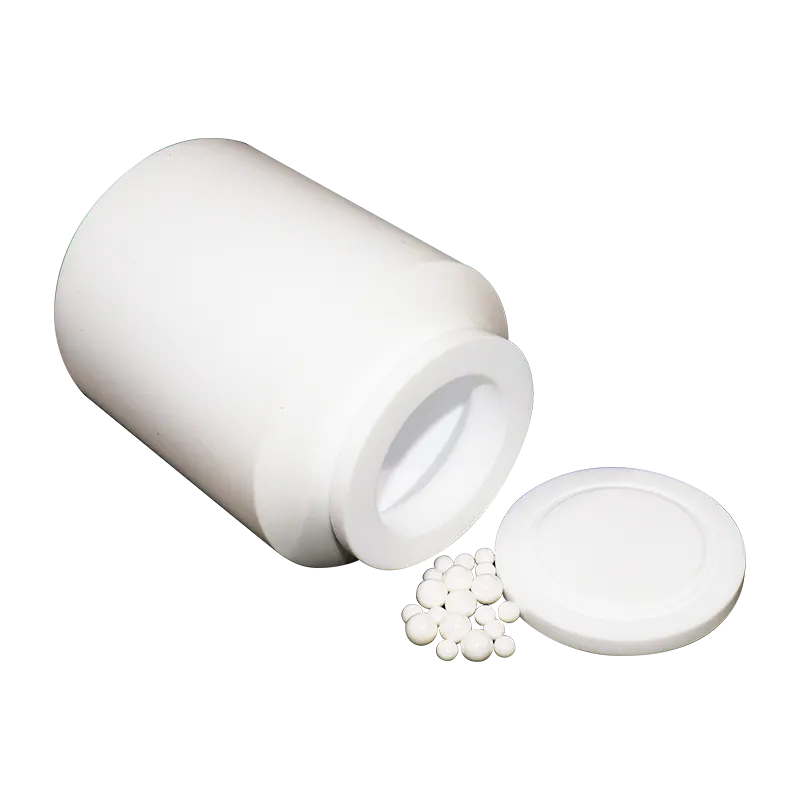
Key Properties and Advantages of PTFE Milling Jars
Non-Stick Surface
One of the most valued characteristics of PTFE is its extremely low coefficient of friction. Materials that tend to adhere to other surfaces—such as sticky powders, polymers, or hygroscopic compounds—are much less likely to cake or build up on the inner wall of a PTFE jar. This non-stick property helps maintain consistent grinding efficiency and simplifies cleaning between batches.
Chemical Inertness
PTFE is resistant to almost all common acids, bases, and organic solvents. This makes the PTFE roll mill jar suitable for grinding materials in corrosive environments, or when using wet grinding with aggressive liquid media. You do not have to worry about the jar reacting with the sample or leaching contaminants into the powder.
Temperature Tolerance
PTFE can withstand continuous operating temperatures up to approximately 260°C and can be used in intermittent service up to 300°C. This thermal stability allows the jar to handle the mild heat generated during prolonged milling sessions without deformation or degradation.
Low Contamination Risk
Unlike metal jars, PTFE does not introduce metallic impurities into the sample. For applications where the final product must be free of trace metal ions—such as in pharmaceutical, food, or advanced ceramic research—a PTFE roll mill jar is often the preferred choice.
Applications of PTFE Roll Mill Jars in Laboratory and Industry
PTFE roll mill jars are widely used in fields where purity and chemical compatibility are critical. Typical applications include:
- Pharmaceutical research: Grinding active pharmaceutical ingredients (APIs), excipients, and herbal extracts without contamination.
- Battery material processing: Mixing and milling electrode materials such as lithium cobalt oxide, lithium iron phosphate, and solid electrolytes that require inert conditions.
- Ceramic and electronic materials: Preparing fine powders for dielectric ceramics, piezoelectric materials, and semiconductor precursors.
- Chemical and pigment industries: Dispersing pigments, dyes, and catalysts in organic solvents or aqueous media.
- Food and nutraceutical: Grinding heat-sensitive or sticky food ingredients into fine powders.
Because PTFE is non-reactive, these jars can also be used for mechanical alloying and mixing of reactive metals or energetic materials, provided the grinding process is conducted under appropriate safety conditions (e.g., inert atmosphere).
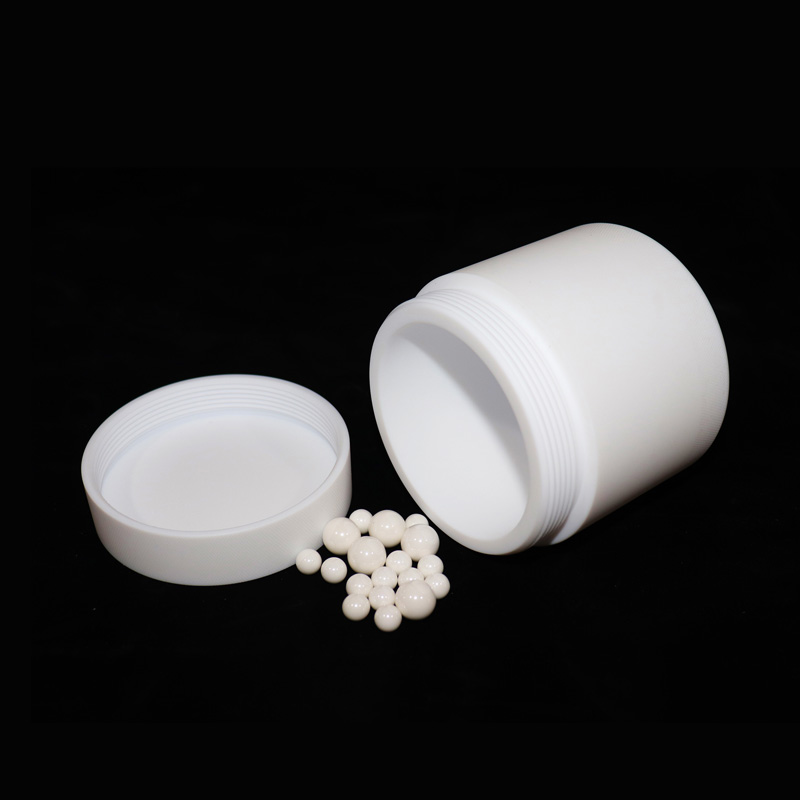
How to Choose the Right PTFE Roll Mill Jar
Selecting a PTFE roll mill jar involves considering several factors that affect both the grinding performance and the longevity of the jar:
Capacity
PTFE roll mill jars are commonly available in capacities ranging from 1 liter to 20 liters or more. The appropriate size depends on the batch volume you need to process. Keep in mind that the jar should not be completely filled with material and grinding media—typically, the total volume of the charge (powder + balls) should occupy about 30–50% of the jar's internal volume.
Wall Thickness and Durability
PTFE is a relatively soft material compared to metals or ceramics. Thicker walls provide better mechanical strength and reduce the risk of cracking under the impact of heavy grinding balls. For aggressive grinding with large-diameter balls (e.g., 20 mm), a thicker-walled jar is recommended.
Sealing and Closure
Many PTFE roll mill jars come with a screw-on lid or a clamping mechanism that can be fitted with a gasket to create a dust-tight seal. If you plan to mill under vacuum or inert gas, ensure the jar is designed for such conditions. Some PTFE jars can be equipped with valve ports for gas purging.
Compatibility with Roller Mill
Check the diameter and overall length of the jar to ensure it fits securely on your roller mill. The jar should have a smooth cylindrical surface without protrusions that could cause uneven rotation.
Comparing PTFE with Other Roll Mill Jar Materials
To help you make an informed decision, here is a comparison of PTFE against other common materials used for roll mill jars:
| Material | Key Advantage | Limitation | Best For |
|---|---|---|---|
| PTFE | Non-stick, chemically inert, low contamination | Softer, limited abrasion resistance | Sticky, corrosive, high-purity materials |
| Nylon | Good toughness, moderate cost | Less chemical resistance, may absorb moisture | General-purpose organic materials |
| Stainless Steel | High strength, excellent wear resistance | May introduce metal contamination | Hard minerals, abrasive materials |
| Ceramic (Alumina) | Hard, wear-resistant, low contamination | Brittle, higher cost | High-purity ceramics, magnetic materials |
| Polyurethane (PU) | Elastic, good impact resistance, abrasion-resistant | Lower temperature limit | Wet grinding, soft materials |
| Corundum | Extremely hard, high purity alumina | High cost, heavy | Ultra-fine grinding of hard materials |
Practical Tips for Using a PTFE Roll Mill Jar
- Choose the right grinding media: For PTFE jars, use grinding balls that are harder than the material being ground. Common choices include zirconia, alumina, or agate balls. Avoid using steel balls if you want to prevent iron contamination.
- Control ball-to-powder ratio: A typical ratio is between 5:1 and 10:1 by weight, but this should be optimized based on the material's hardness and the target particle size.
- Monitor temperature: Even though PTFE handles heat well, prolonged high-speed milling can raise the temperature significantly. If the material is heat-sensitive, consider using a roller mill with speed control or intermittent operation.
- Clean carefully: PTFE is non-stick, but if any residue dries, it can be removed with mild solvents and a soft brush. Avoid abrasive cleaners that could scratch the surface.
For more detailed specifications and to explore the full range of PTFE roll mill jars, visit the PTFE roll mill jar product page. If you need assistance selecting the right jar for your specific application, our team of powder processing engineers can provide guidance based on your material characteristics and processing goals.