
Light-Duty Roll Ball Mill: A Practical Guide for Laboratory Sample Preparation
Why Choose a Light-Duty Roll Ball Mill?
In many laboratories, the need for gentle yet effective milling of small powder samples is a daily challenge. You might be developing a new ceramic formulation, testing a batch of battery materials, or preparing pigments for quality control. A heavy-duty planetary ball mill can be overkill, while a simple mortar and pestle lacks consistency. This is where a light-duty roll ball mill fits perfectly.
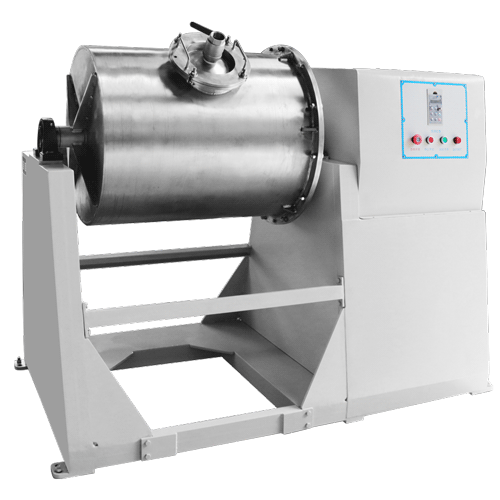
Also known as a laboratory jar mill or small roll ball mill, this equipment uses a set of rotating rollers to gently tumble grinding jars. The jars contain the sample and grinding media. As the rollers rotate, the jars spin, and the media inside crushes and grinds the powder through impact and attrition. The result is a reliable, reproducible, and contamination-controlled milling process suitable for a wide range of materials.
How Does a Light-Duty Roll Ball Mill Work?
The core principle is simple but effective. The mill consists of a frame, one or more pairs of rotating rollers, and a motor with a speed control system. A cylindrical grinding jar is placed on the rollers. When the rollers turn, friction causes the jar to rotate around its own axis. Inside the jar, the grinding balls and the powder move together, lifted by the rotation until they cascade or cataract, generating the grinding action.
Unlike a planetary ball mill where the jar itself revolves in a complex motion, a roll ball mill relies purely on the jar's rotation. This results in lower impact energy but provides a much gentler grinding environment. This is beneficial for materials that are sensitive to high energy or heat. The rotational speed of the rollers is typically adjustable, allowing you to control the tumbling intensity.
Key Components
- Rollers: Usually made of rubber or polyurethane to provide good grip and minimize noise. The diameter and spacing determine which jar sizes can be used.
- Motor and Controller: A variable-speed motor lets you set the optimum rotational speed for your jar size and material. Some models include a timer for unattended operation.
- Frame: Compact and sturdy to support the jars without vibration.
Applications of the Light-Duty Roll Ball Mill
Because of its gentle milling action and simple design, the light-duty roll ball mill is widely used in:
- Ceramics and glaze preparation: Grinding feldspar, quartz, clay, and color pigments for small-scale trials.
- Battery material research: Mixing and grinding cathode and anode powders, solid electrolytes, and conductive additives.
- Chemical and pharmaceutical: Homogenizing powders, blending catalysts, or milling active ingredients that cannot withstand high temperatures.
- Mineral processing: Preparing ore samples for assay or flotation tests.
- Nanomaterial dispersion: Wet milling of nanoparticles with appropriate dispersants.
It is especially suitable for batch sizes ranging from 50 grams to a few kilograms, depending on the jar capacity. Many labs use it as a complementary tool alongside high-energy mills.
Selecting the Right Light-Duty Roll Ball Mill
When choosing a light-duty roll ball mill, consider these factors to match your lab's requirements:
Jar Capacity and Material
Jars come in various materials: alumina ceramic, zirconia, stainless steel, nylon, polyurethane, and agate. Each offers different levels of wear resistance and contamination risk. For example, alumina jars are excellent for ceramic grinding because they introduce minimal contamination. Stainless steel jars are used for metal powders, but be aware of possible iron contamination. For small batches, a small ball mill with a ceramic jar is a popular choice.
Capacities typically range from 0.5 L to 10 L per jar. Decide based on your typical sample volume. A rule of thumb is to fill the jar to about 30–50% of its volume with grinding media, and the sample plus liquid (if wet grinding) should occupy the remaining voids.
Number of Stations
Light-duty roll ball mills can have one, two, four, or eight working stations. If you need to mill multiple samples simultaneously under identical conditions, a multi-station model saves time. For example, a two working station jar mill allows you to run two independent jars at once.
Speed Range
Optimum roller speed depends on the jar diameter. Too slow and the balls just roll without impact; too fast and centrifugal force pins the balls to the jar wall. A typical speed range for laboratory roll ball mills is 50–300 rpm. Some advanced models offer digital speed display and programmable timers.
Construction and Safety
Look for a solid frame that minimizes vibration. Safety features like a protective cover or emergency stop are important, especially when milling hazardous powders. Rubber rollers should be durable and chemical-resistant if you work with solvents.
Practical Tips for Getting the Best Results
- Ball-to-powder ratio: Commonly around 5:1 to 10:1 by weight for light-duty milling. Adjust based on your material hardness and target fineness.
- Media size: Use a mix of sizes (e.g., 10 mm and 20 mm balls) for efficient grinding. Larger balls provide impact, while smaller ones increase attrition.
- Wet vs. dry grinding: Wet grinding is faster and reduces dust, but requires a compatible liquid and may need drying afterward. Dry grinding is simpler but can cause agglomeration for fine powders.
- Loading and unloading: Always ensure the jar lid is tight to avoid leakage. For wet milling, fill the jar to about 60–70% total volume (media + material + liquid) to allow space for tumbling.
- Cleaning: Clean jars and media thoroughly between runs to avoid cross-contamination. Use the same material for pre-milling if possible.
Comparing Light-Duty Roll Ball Mills with Other Types
| Feature | Light-Duty Roll Ball Mill | Planetary Ball Mill | Vibration Ball Mill |
|---|---|---|---|
| Impact Energy | Low to moderate | High | Moderate |
| Batch Size | 50 g – 5 kg | 10 g – 2 kg | 5 g – 500 g |
| Speed Control | Variable | Variable | Fixed typically |
| Noise Level | Low | Moderate | High |
| Contamination Risk | Low (with suitable jar) | Moderate | Low |
| Best For | Gentle milling, mixing | Ultra-fine, nano-grinding | Rapid fine grinding |
If your primary need is to grind small batches of soft to moderately hard materials with minimal contamination and low noise, a light-duty roll ball mill is an excellent choice. For mechanical alloying or achieving sub-micron particles, you might also consider a lab roll ball mill with higher energy capability or a planetary mill.
Maintenance and Care
Light-duty roll ball mills are robust but benefit from regular maintenance:
- Check roller surfaces for wear. Replace if they become uneven or lose grip.
- Lubricate bearings according to manufacturer instructions.
- Keep the motor area clean from powder dust to prevent overheating.
- Inspect electrical cords and switches periodically.
With proper care, these mills can serve your lab for many years.
Final Thoughts
A light-duty roll ball mill is a versatile and cost-effective tool for any laboratory that handles powder samples. Its gentle action, low noise, and ease of use make it ideal for routine grinding, mixing, and dispersion tasks. By understanding the working principle and the key selection parameters, you can choose a model that fits your workflow and budget. Whether you are a newcomer to powder processing or an experienced researcher, this equipment will help you achieve consistent and reliable results every time.