
Top 10 Laboratory Roller Jar Mill Manufacturers in China (2026 Guide)
China has become an important manufacturing base for laboratory grinding and powder processing equipment, including roller jar mills, planetary ball mills, stirred mills, crushers, mixers, sieving machines, and grinding jars.
For universities, battery laboratories, ceramic research institutes, chemical laboratories, and material science companies, a laboratory roller jar mill offers a relatively simple and flexible way to perform grinding, mixing, homogenization, and small-batch material preparation.
However, selecting a supplier should involve more than comparing prices. Grinding jar materials, roller design, speed control, safety protection, customization capability, spare parts, and technical support can all affect the long-term usability of the equipment.
This 2026 guide introduces 10 Chinese manufacturers and suppliers with laboratory roller jar mill, roll ball mill, or closely related jar milling products. The list is intended as a practical sourcing reference rather than an independent laboratory performance ranking. Product specifications and availability should always be confirmed directly with each manufacturer before purchasing.
What Is a Laboratory Roller Jar Mill?
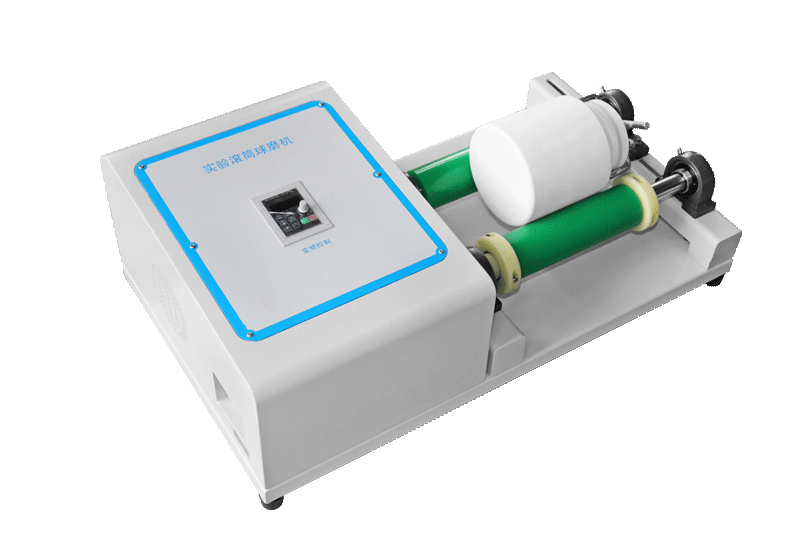
A laboratory roller jar mill, also called a lab roll ball mill, jar rolling mill, or laboratory jar mill, uses powered rollers to rotate one or more grinding jars.
Grinding media and material are loaded inside the jar. As the jar rotates, the grinding balls are lifted and then roll, slide, or fall through the material. Particle size reduction occurs mainly through impact, friction, and shear.
Compared with a high-energy planetary ball mill, a roller jar mill normally provides a gentler grinding action and is particularly useful when users need long grinding times, larger jars, multiple samples, mixing, or convenient scale-up from laboratory experiments.
Main Advantages of a Roller Jar Mill
- Suitable for both wet and dry grinding
- Variable-speed operation on many laboratory models
- Compatible with different grinding jar sizes
- Multiple working stations are available
- Simple operating principle and convenient maintenance
- Useful for grinding, mixing, dispersion, and homogenization
- Suitable for laboratory and small-batch processing
- Different jar and media materials can be selected to control contamination
Quick Comparison of Laboratory Roller Jar Mill Manufacturers in China
| Manufacturer | Location | Main Focus | Best Fit |
|---|---|---|---|
| TENCAN | Changsha, Hunan | Ball mills and powder processing equipment | Laboratory to pilot-scale grinding and customized jar/material combinations |
| MITR Instrument | Changsha, Hunan | Laboratory grinding equipment | Single, double, four, and multi-station roller jar mills |
| DECO Equipment | Hunan | Laboratory ball mills and grinding accessories | Research laboratories requiring different jar mill configurations |
| CHISHUN Technology | Nanjing, Jiangsu | Laboratory and high-energy milling equipment | Materials research and laboratory milling |
| Yonglekang Equipment | Changsha, Hunan | Laboratory sample preparation equipment | General laboratory grinding and environmental testing laboratories |
| XiangYi Instrument | Xiangtan, Hunan | Laboratory testing and grinding equipment | Roll ball mills from laboratory to larger-volume processing |
| TOB New Energy | Xiamen, Fujian | Battery research and laboratory equipment | Lithium battery and new-energy laboratories |
| TMAX | Xiamen, Fujian | Battery and laboratory processing equipment | Battery R&D and multi-station roller milling |
| AOT Battery | Xiamen, Fujian | Battery laboratory and manufacturing equipment | Battery material preparation and jar milling |
| KINGDA Ceramic | Hunan | Ceramic grinding media, jars, and related equipment | Applications where ceramic jars and grinding media are important |
Top 10 Laboratory Roller Jar Mill Manufacturers in China
1. TENCAN — Changsha Tianchuang Powder Technology Co., Ltd.
TENCAN is a Chinese manufacturer specializing in laboratory and production-scale powder processing equipment. The company was established in 2006 and supplies equipment including planetary ball mills, roll ball mills, jar mills, stirred ball mills, crushers, mixers, sieving equipment, glove boxes, grinding jars, and grinding media.
Its roller milling product range includes laboratory roller jar mills, single-station roll mills, multi-station jar mills, and larger roll ball mill configurations for small-batch production.
One of TENCAN's main advantages is the ability to combine the milling machine with different grinding jar and media materials according to the customer's material and contamination requirements.
Available jar materials can include:
- 304 stainless steel
- Zirconia
- Alumina / corundum
- Nylon
- Polyurethane
- PTFE
- Tungsten carbide
- Other customized contact materials depending on the application
Why consider TENCAN:
- Focused on powder processing equipment since 2006
- Laboratory and production grinding equipment available
- Multiple roller jar mill configurations
- Wide range of grinding jars and media
- Wet and dry grinding configurations
- Customization for jar size, material, speed, voltage, and machine structure
- Suitable for universities, research institutes, and industrial laboratories
Best suited for: Buyers who need more than a basic roller machine and want the mill, jars, grinding media, and process configuration matched to a specific material.
2. MITR Instrument — Changsha Mitr Instrument Equipment Co., Ltd.
MITR Instrument is another Changsha-based supplier focused on laboratory grinding and material preparation equipment.
Its grinding equipment portfolio includes planetary ball mills, roller jar mills, stirred mills, grinding jars, and related laboratory accessories.
MITR offers several roller mill structures, including models designed for single-station and multi-station operation. This gives laboratories the ability to process one sample or several jars simultaneously depending on experimental requirements.
Key considerations:
- Multiple roller jar mill configurations
- Laboratory-focused product range
- Grinding jars and accessories available
- Suitable for research and sample preparation
- Various machine sizes for different laboratory workloads
Best suited for: Laboratories comparing different multi-station roller jar mill layouts and general-purpose grinding systems.
3. DECO Equipment — Changsha Deco Equipment Co., Ltd.
DECO Equipment supplies laboratory ball mills, grinding jars, grinding media, glove boxes, and related laboratory equipment.
The company offers several laboratory roller jar mill configurations, including single-tier and multi-tier designs, units with safety covers, and systems capable of operating several grinding jars simultaneously.
Its jar mill systems are designed for laboratory mixing and fine grinding and can be used with different jar materials depending on the application.
Key considerations:
- Dedicated laboratory roller jar mill product range
- Single and multi-jar configurations
- Safety-cover options
- Wet and dry processing options
- Different grinding jar materials available
Best suited for: Buyers looking for a conventional laboratory jar rolling system with several equipment layouts to compare.
4. CHISHUN Technology — Nanjing Chishun Technology Development Co., Ltd.
CHISHUN Technology is a Nanjing-based laboratory equipment manufacturer with a strong focus on ball milling and material preparation.
Its product portfolio includes planetary ball mills, high-energy ball mills, vibration mills, roller jar mills, grinding jars, furnaces, and glove boxes.
For roller milling applications, CHISHUN offers laboratory jar mill configurations designed for grinding and mixing small quantities of material.
Key considerations:
- Broad laboratory milling portfolio
- Roller jar mill products available
- Planetary and high-energy milling alternatives
- Suitable for material research laboratories
- Grinding jars and related laboratory equipment available
Best suited for: Research groups that may need to compare roller milling with planetary, vibration, or other laboratory grinding methods.
5. Changsha Yonglekang Equipment Co., Ltd.
Yonglekang manufactures laboratory sample preparation and testing equipment in Changsha.
Its laboratory ball mill category includes roll ball mills and multi-position lab jar mills. Some models are designed for variable-speed operation and support different jar sizes and jar materials.
The company also produces other laboratory equipment used for environmental, geological, chemical, mineral, and materials testing.
Key considerations:
- Roll ball mill and jar mill product lines
- Variable-speed models
- Different working capacities
- Suitable for wet and dry grinding
- Broader laboratory sample-preparation equipment range
Best suited for: General laboratories that need grinding equipment together with other sample-preparation instruments.
6. XiangYi Instrument
XiangYi Instrument supplies laboratory analyzers, testers, and grinding equipment from Hunan Province.
Its roll ball mill range includes laboratory-scale systems, 2-, 4-, and 8-station jar mill configurations, as well as larger horizontal roll ball mills for higher processing volumes.
The company also supplies grinding jars, grinding media, and related laboratory milling accessories.
Key considerations:
- Laboratory roll ball mill series
- Multiple working-station options
- Larger-capacity roll mill configurations
- Grinding jars and media available
- Suitable for laboratory and scale-up applications
Best suited for: Users interested in moving from small laboratory jar milling to larger roll-mill capacities.
7. TOB New Energy — Xiamen TOB New Energy Technology Co., Ltd.
TOB New Energy is a supplier focused primarily on equipment and materials for lithium-ion battery research and manufacturing.
Its laboratory equipment range includes a laboratory roller ball mill designed for fine grinding and mixing of small material batches.
Because TOB's wider product portfolio is strongly oriented toward battery R&D, its roller mills are particularly relevant for laboratories involved in battery powder preparation and electrode material research.
Key considerations:
- Laboratory roller ball mill available
- Strong focus on lithium-ion battery laboratories
- Variable-speed milling configurations
- Battery research equipment available from the same supplier
Best suited for: Lithium battery and new-energy laboratories that prefer to source several types of battery R&D equipment from one supplier.
8. TMAX — Xiamen Tmax Battery Equipments Limited
TMAX supplies equipment for battery laboratories, pilot plants, and material-processing applications.
Its ball mill product range includes roller jar mills, laboratory roll ball mills, multi-station jar mills, and larger horizontal roller mills.
Safety-cover configurations and multiple working positions are available on selected systems, which may be useful for laboratories processing several jars or performing longer grinding cycles.
Key considerations:
- Roller jar mill product category
- Multi-station configurations
- Safety-cover options on selected machines
- Strong battery-equipment product portfolio
- Laboratory and larger-volume systems available
Best suited for: Battery research and pilot laboratories that require jar milling together with other battery manufacturing equipment.
9. AOT Battery — Xiamen AOT Electronics Technology Co., Ltd.
AOT Battery supplies lithium battery production and laboratory equipment from Xiamen.
Its material preparation product range includes bench-top roller ball mills and rotary jar mills for laboratory grinding and mixing.
Like TOB and TMAX, AOT has a broader battery-focused product portfolio, which can make it convenient for researchers setting up a complete battery-material laboratory.
Key considerations:
- Bench-top roller jar milling equipment
- Battery laboratory focus
- Suitable for material mixing and grinding
- Additional battery R&D equipment available
Best suited for: Battery material laboratories that need a jar mill as part of a broader laboratory equipment package.
10. KINGDA Ceramic — Hunan Kingda Ceramic Technology Co., Ltd.
KINGDA Ceramic has a somewhat different position in this comparison. Its core strength is in ceramic grinding media, grinding jars, zirconia materials, and related milling products.
The company also offers jar rolling equipment, making it relevant for laboratories where selection of the grinding jar and media material is especially important.
This can be useful for applications involving ceramic powders, electronic materials, pigments, and other products where wear resistance or metal contamination needs to be carefully controlled.
Key considerations:
- Strong focus on grinding media and grinding jars
- Zirconia and ceramic material expertise
- Jar rolling equipment available
- Useful for contamination-sensitive grinding
Best suited for: Buyers whose main concern is ceramic grinding jars, zirconia media, wear resistance, or reducing metallic contact.
How to Compare Laboratory Roller Jar Mill Manufacturers
A manufacturer's name is only one part of the purchasing decision. Two roller jar mills that look similar can perform very differently depending on the roller drive, jar compatibility, control system, machine structure, and selected grinding media.
1. Check the Grinding Jar Size Range
First determine the amount of material you need to process.
A machine designed for a 500 mL jar is very different from equipment intended to rotate 10 L, 20 L, or larger grinding containers.
Ask the manufacturer to confirm:
- Minimum compatible jar diameter
- Maximum compatible jar diameter
- Maximum jar length
- Maximum permitted jar weight
- Maximum material + media loading
2. Check the Number of Working Stations
Laboratory jar mills may use:
- 1 working station
- 2 working stations
- 4 working stations
- 8 working stations
- Customized multi-level configurations
For repetitive experiments or high sample throughput, a multi-station machine may provide much better laboratory efficiency than a single-jar mill.
3. Evaluate Roller Speed Control
Variable-speed control allows researchers to adjust the rotational conditions according to the grinding jar diameter, material, grinding media, and desired process intensity.
Do not confuse roller rotational speed with actual grinding jar rotational speed. The jar speed depends on both the roller speed and the relative roller/jar diameters.
4. Choose the Correct Grinding Jar Material
The grinding jar has direct contact with the sample, so jar material can be just as important as the machine itself.
| Jar Material | Main Characteristic | Typical Consideration |
|---|---|---|
| Stainless Steel | Strong and durable | General-purpose grinding where metallic contact is acceptable |
| Zirconia | High hardness and good wear resistance | High-purity and contamination-sensitive materials |
| Alumina / Corundum | Hard ceramic contact surface | Ceramics and selected mineral applications |
| Nylon | Lightweight with reduced metallic contact | Mixing and grinding applications requiring polymer contact |
| Polyurethane | Good abrasion resistance | Selected battery materials, minerals, and contamination-sensitive powders |
| PTFE | Good chemical resistance | Materials requiring chemical compatibility |
| Tungsten Carbide | Very high hardness and density | Hard materials where strong impact and wear resistance are required |
5. Match the Grinding Media to the Jar
Grinding balls should also be selected according to the material and contamination requirement.
Typical options include:
- Zirconia balls
- Alumina balls
- Stainless steel balls
- Tungsten carbide balls
- Polyurethane grinding media
- Agate media
- Other specialized media
In many applications, using a jar and grinding media made from compatible materials helps simplify contamination control.
6. Check Safety Features
Although roller jar mills usually operate at lower energy than planetary mills, rotating jars and rollers still create mechanical hazards.
For larger jars or long unattended grinding cycles, consider asking about:
- Protective safety cover
- Emergency stop
- Cover interlock
- Overload protection
- Timer control
- Motor protection
- Stable jar positioning
7. Ask About Customization
A good roller jar mill manufacturer should be able to confirm whether the machine can be adapted to your actual process.
Common customization requirements include:
- 110 V / 220 V / 380 V power supply
- 50 Hz or 60 Hz
- Different jar diameters
- Longer rollers
- Additional working stations
- Safety cover
- Explosion-resistant electrical configuration where appropriate
- Customized grinding jars
- Variable-speed or programmed control
Roller Jar Mill vs. Planetary Ball Mill
One common question is whether a laboratory should purchase a roller jar mill or a planetary ball mill.
| Comparison | Roller Jar Mill | Planetary Ball Mill |
|---|---|---|
| Grinding Energy | Low to moderate | High |
| Grinding Mechanism | Rolling, cascading, friction, and impact | High-energy impact and friction |
| Typical Batch Size | Small to relatively large laboratory batches | Usually smaller laboratory batches |
| Grinding Time | Often longer | Often faster for fine grinding |
| Jar Flexibility | Wide range of jar sizes possible | Jar size limited by planetary mill station |
| Multiple Samples | 2, 4, 8 or more stations available | Commonly 2 or 4 jars |
| Typical Use | Mixing, long-duration grinding, medium-fine grinding, scale-up | Fine and ultrafine grinding, mechanical alloying, R&D |
If the primary requirement is high-energy, rapid fine grinding, a planetary ball mill may be more suitable.
If the goal is gentler grinding, longer processing, larger jars, multiple samples, mixing, or convenient scale-up, a roller jar mill may offer important advantages.
Common Applications of Laboratory Roller Jar Mills
Battery Materials
Roller jar mills can be used for mixing and grinding cathode, anode, conductive additive, ceramic, and other battery-related powders during material development.
Advanced Ceramics
Alumina, zirconia, silicon carbide, ceramic glaze, and other ceramic powders can be processed using ceramic or polymer-lined jars depending on contamination requirements.
Metal Powders
Laboratory roller mills can be used for selected metal powder mixing and grinding applications, provided that the jar, media, atmosphere, and process conditions are suitable for the material.
Minerals and Ores
Mineral powders can be ground for laboratory testing, material characterization, formulation development, and other research purposes.
Chemical and Functional Powders
Pigments, fillers, catalysts, magnetic powders, and other specialty materials can also be processed in a jar rolling mill.
Questions to Ask a Roller Jar Mill Manufacturer Before Ordering
To receive an accurate recommendation, provide more information than simply asking for a "laboratory ball mill."
Send the supplier the following information:
- Material name
- Current feed particle size
- Required final particle size
- Material quantity per batch
- Wet or dry grinding
- Required jar volume
- Preferred jar material
- Contamination restrictions
- Required number of working stations
- Voltage and frequency
- Whether a safety cover is required
- Any special operating or customization requirements
Providing these details allows the manufacturer to recommend the machine, jar, grinding media, and operating configuration together.
Frequently Asked Questions
What is another name for a laboratory roller jar mill?
Common names include lab roll ball mill, roller ball mill, jar rolling mill, laboratory jar mill, roll mill, and rolling ball mill. Different manufacturers may use different terminology for equipment with a similar operating principle.
Can a roller jar mill be used for wet grinding?
Yes. Many laboratory roller jar mills can be used for both wet and dry grinding, provided that the grinding jar is properly sealed and compatible with the liquid medium.
Can a roller jar mill achieve micron-sized powder?
Yes, many materials can be reduced to micron-scale particle sizes using roller milling. However, the final particle size depends on material hardness, initial feed size, grinding media, jar speed, ball-to-material ratio, grinding time, and whether wet or dry processing is used.
Is a roller jar mill suitable for nano grinding?
A roller jar mill can produce very fine powders in suitable applications, but it normally has lower grinding energy than a planetary or high-energy ball mill.
If a reliable submicron or nanoscale target is required, laboratory testing should be carried out before equipment selection.
What grinding jar materials are available?
Common materials include stainless steel, zirconia, alumina, nylon, polyurethane, PTFE, tungsten carbide, and other specialized materials. Availability depends on the manufacturer and jar size.
How many jars can a laboratory roller jar mill operate?
Depending on the design, laboratory machines may have one, two, four, eight, or more working positions.
How do I prevent contamination during roller milling?
Select the grinding jar, liner, and grinding media according to the contamination limits of the material. For metal-sensitive applications, ceramic or suitable polymer contact materials can be considered.
Should I buy directly from a manufacturer or a trading company?
Both can be suitable, but for customized grinding equipment it is useful to confirm who is responsible for equipment design, jar matching, technical support, spare parts, and after-sales service.
Conclusion
China has a large number of suppliers offering laboratory roller jar mills and related grinding equipment, but their strengths are not identical.
Some manufacturers focus primarily on ball mills and powder processing, while others specialize in battery equipment, ceramic grinding media, or general laboratory instruments.
For this reason, the best supplier should not be selected by price alone. Compare:
- Grinding jar compatibility
- Jar and media materials
- Maximum jar load
- Roller speed range
- Number of working stations
- Safety design
- Customization capability
- Technical support
- Spare parts availability
For laboratories that require a complete solution covering the roller jar mill, grinding jars, grinding media, and process selection, TENCAN provides laboratory and small-batch grinding systems for a wide range of materials.
Need help selecting a laboratory roller jar mill?
Send your material name, feed particle size, desired final particle size, batch size, jar material requirement, and whether you need wet or dry grinding. This information can be used to select a more suitable mill, jar, and grinding media combination.