
Vacuum Kneading Machine for Thick Paste
High-viscosity pastes are difficult to mix because they do not flow like ordinary liquids. They can trap air, form lumps around powder particles, and develop stagnant zones that a simple stirrer never reaches. The result is often a batch that looks uniform at the surface but varies in density, rheology, or cured performance after sampling. A vacuum kneading machine addresses both sides of this problem by combining repeated kneading action with vacuum deaeration inside a sealed vessel. Changsha Tianchuang Powder Technology Co., Ltd (TENCAN) supplies a vacuum kneading machine for high-viscosity mixing duties where air removal and paste homogenization matter.
Selecting this type of equipment is not only a question of tank size or motor power. The useful decision depends on the paste rheology, solids loading, volatile content, temperature sensitivity, cleaning requirements, and the acceptable endpoint for residual air. This article explains how vacuum kneading works, which process variables change paste quality, and how to evaluate a machine without relying on assumptions or unverified performance claims.
Why High-Viscosity Pastes Need More Than a Standard Mixer
The first selection mistake is treating viscosity as a single number. Paste viscosity changes with shear rate, temperature, solids loading, and storage time. Many filled pastes also have a yield stress: they resist flow until the applied stress exceeds a threshold. In a conventional mixer, the region near the impeller may move while material near the wall or bottom remains nearly static. Powder added into that environment can wet unevenly, and air can remain trapped in the folds of the paste.
Air enters a paste through several routes. Dry powders carry air in the pores between particles. A vortex can draw air into the surface during high-speed addition. Transfer steps, pumping, and discharge can also introduce bubbles. In low-viscosity liquids, many bubbles rise and escape quickly. In a thick paste, the bubbles are stabilized by high viscosity and may remain for hours or days. Vacuum helps because reducing the pressure around the paste allows bubbles to expand, rise, and break at a renewed surface, but vacuum alone is not enough if the paste surface is not repeatedly renewed by the agitator.
This is why kneading and deaeration must be treated as a combined duty. Kneading folds, stretches, and recombines the mass. It presses paste against itself and against the vessel surfaces, helping to break powder agglomerates and distribute liquid into dry pockets. The same motion exposes new material to the vacuum space. If a machine provides vacuum but weak bulk movement, deaeration can be slow and uneven. If it provides strong mixing but no vacuum, visible bubbles may disappear while dissolved or entrained gas remains.
High-viscosity mixing also affects heat history. Kneading requires energy, and much of that energy becomes heat. Some pastes become less viscous when warmed, which can improve flow but may also accelerate cure, degrade a temperature-sensitive additive, or drive off a volatile solvent. A vacuum kneading machine therefore needs to be evaluated as a thermal system as well as a mixing system. Jacket design, agitator speed, batch size, and vacuum level interact.
There are limits to what vacuum kneading can solve. It will not correct an incompatible formulation, a poorly dispersed filler, or a powder that cannot be wetted by the selected liquid. Very high vacuum can cause excessive solvent loss, foaming, or skin formation on reactive systems. The practical goal is not to remove every trace of gas, but to reach a repeatable endpoint that meets the product specification. That endpoint should be defined by a measurable property such as density, visual void content, rheology, or performance after cure, not by a fixed time alone.
How a Vacuum Kneading Machine Works
Although configurations differ by supplier and application, a vacuum kneading machine generally includes a jacketed or insulated vessel, one or more heavy-duty agitators, a sealed cover, a vacuum system, a discharge arrangement, and controls for speed, temperature, pressure, and time. The working principle is straightforward: the agitator creates bulk movement and localized kneading, while the sealed vessel allows the pressure above the paste to be reduced. The combination is useful for pastes that are too thick for conventional planetary mixing alone or too air-sensitive for open processing.
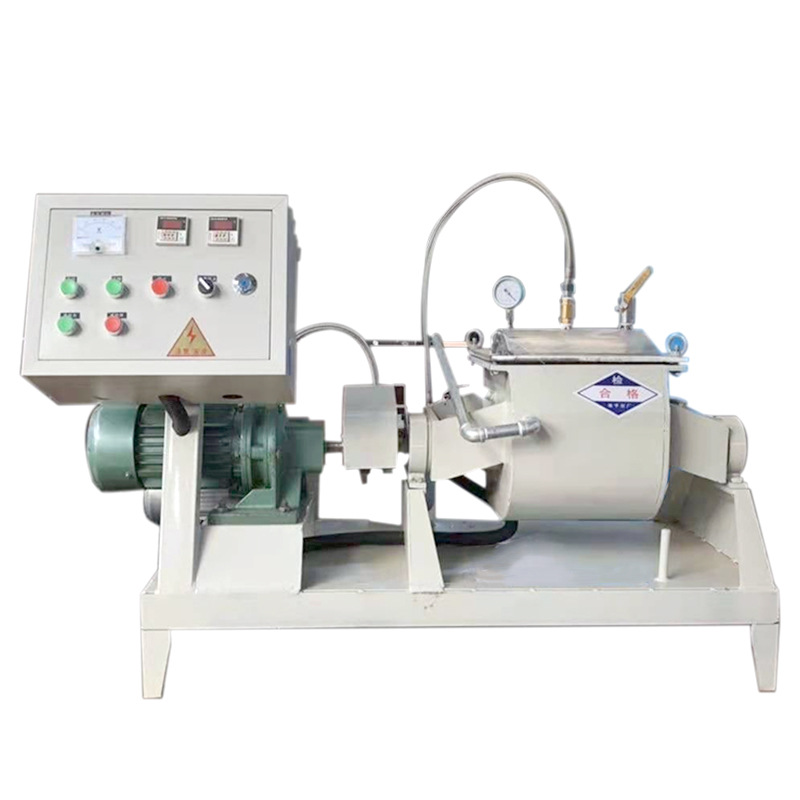
Vacuum kneading machine for high-viscosity paste processing. Confirm the required configuration, contact materials, and utilities with the manufacturer.
The agitator is the heart of the process. In high-viscosity service, the impeller must generate more than a simple circulating flow. It must create a repeating cycle of material exchange between the bulk paste, the vessel wall, and the vacuum-exposed surface. Depending on the selected design, this may be achieved with planetary motion, a multi-blade kneading element, a sigma-type blade, or another heavy-duty geometry. The exact arrangement matters because it determines whether the paste is folded, sheared, or merely pushed around the tank. For this reason, a vacuum kneading equipment selection should begin with the material behavior, not with a generic mixer category.
A typical operating sequence is also important. The vessel is charged, sealed, and mixed under atmospheric or partial vacuum. Vacuum is then applied while mixing continues so that the paste surface is continually renewed. After a defined hold period, the vacuum may be broken, the batch inspected or sampled, and the cycle repeated if necessary. Some processes use several short vacuum cycles instead of one long cycle because repeated expansion and surface renewal can be more effective than holding a static vacuum. The best sequence depends on the paste, the volatile content, and the acceptable cycle time.
Heat transfer deserves close attention. The jacket can remove heat generated by kneading, but the heat-transfer area per unit volume changes with batch size. A larger batch may have less cooling area relative to its mass, so the same agitator speed can produce a different temperature profile. Vacuum also affects temperature because evaporation cools the paste and removes volatiles. If the formulation contains a solvent, the vacuum system may need a condenser, receiver, or vapor trap to protect the pump and recover material. These are process design questions, not accessories to be chosen after the machine is ordered.
Sealing and discharge are other practical points. Shaft seals must tolerate paste contact, cleaning agents, and vacuum cycling. Discharge can be by gravity, pump, extrusion, or another method depending on paste stiffness. A paste that flows well in the laboratory may be difficult to discharge from a large vessel after cooling. The discharge geometry, valve type, and minimum clearance should be reviewed with the actual paste, not only with a viscosity value. If the product is abrasive or corrosive, wetted materials and replaceable wear parts become part of the selection decision.
The control system should make the process observable. Useful information includes agitator speed or torque, product temperature, vessel pressure, and batch time. Torque or power draw can indicate changes in paste consistency, but it should not be interpreted without a baseline. A rising torque may mean the batch is thickening, cooling, or failing to wet a powder addition. A falling torque may mean the paste is warming, shearing down, or losing volatile components under vacuum. Operators need clear limits and a defined response to these signals.
Process Variables That Control Paste Quality
Once the machine is installed, paste quality is controlled by the interaction of formulation and process. The same vacuum kneading machine can produce very different results when the filling sequence, solids loading, or temperature history changes. The following variables deserve attention during development and scale-up.
Solids Loading and Particle Packing
Higher solids loading usually increases viscosity and makes deaeration more difficult. It also reduces the amount of liquid available to wet particle surfaces. If the solids are poorly packed, the paste may contain dry pockets even when the overall liquid ratio appears correct. The solution is not always to add more liquid. Changing the particle size distribution, adjusting the feeding sequence, or using a short pre-mix stage can improve wetting. During trials, record the actual solids content, filler density, and powder addition rate because these details affect the vacuum kneading result as much as agitator speed.
Mixing and Kneading Intensity
Low intensity may leave agglomerates and stagnant zones. High intensity can shorten the cycle but may add heat, promote air entrainment during charging, or degrade shear-sensitive additives. The correct intensity is the lowest level that achieves the required dispersion and surface renewal within an acceptable time. Because viscosity changes during mixing, a single speed may not be suitable for the whole batch. A staged profile, starting gently during powder addition and increasing after wetting, is often more stable than running at maximum speed from the beginning.
Vacuum Level and Hold Time
The vacuum level determines the pressure difference that drives bubble expansion. The hold time determines how long the paste is exposed to that pressure. In practice, a moderate vacuum with good surface renewal may be more effective than a very deep vacuum that causes solvent loss or surface skinning. The endpoint should be linked to a product property. For example, a density measurement can show whether additional vacuum cycles are useful, while a visual check alone may miss fine dispersed gas. Always check the vapour pressure of the liquid phase and the sensitivity of reactive components before extending vacuum time.
Temperature Control
Temperature influences viscosity, wetting, reaction rate, and volatile loss. A warm paste may deaerate faster because bubbles move more easily, but the same heat may shorten pot life or damage an additive. The jacket temperature should be controlled separately from the paste temperature. Operators should watch the rate of temperature change, not only the final value, because a rapid rise can indicate excessive kneading energy or insufficient cooling. For temperature-sensitive products, a shorter mixing cycle with controlled cooling may be preferable to a longer cycle at high speed.
Feeding Sequence and Powder Wetting
Powder should be added in a way that allows liquid to penetrate the particle mass before the batch becomes too stiff. Adding all dry solids into a small liquid heel can create a thick skin around dry pockets. Adding liquid too quickly can produce a slurry that later becomes difficult to homogenize. The feeding sequence should be tested with the actual production powders, not only with a model material. The vacuum kneading machine should be charged at a rate that keeps the agitator loaded without burying the surface under dry powder.
| Process variable | Main effect | Practical check |
|---|---|---|
| Solids loading | Changes viscosity, wetting demand, and air retention | Check density, void content, and rheology at the intended solids level |
| Agitator speed | Controls kneading, dispersion, and heat input | Record torque, temperature rise, and visual uniformity |
| Vacuum level | Drives bubble expansion and volatile removal | Confirm solvent loss and endpoint against product specification |
| Batch temperature | Affects viscosity, reaction rate, and deaeration | Monitor paste temperature, not only jacket temperature |
| Feeding sequence | Determines powder wetting and lump formation | Inspect for dry pockets after the first mixing stage |
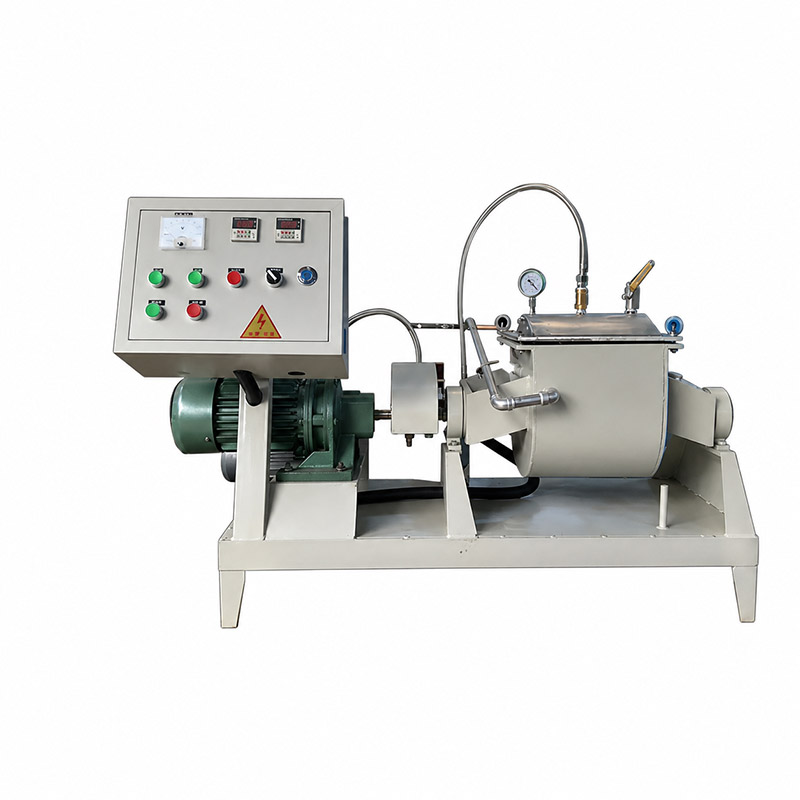
Product view of the vacuum kneading machine. The process sequence should be developed around the actual paste rheology and volatile content.
Endpoint definition is part of process control. A fixed vacuum time is simple, but it may not reflect batch-to-batch differences in powder surface area, moisture, or paste temperature. A better approach combines time with a measurable condition, such as a target density, a torque signature, a temperature limit, or a defined number of vacuum cycles. The method should be validated by sampling from more than one location in the vessel. A sample from the top surface alone is not evidence that the bulk paste is uniform.
Selection Criteria for a Vacuum Kneading Machine
A useful selection process starts with the duty, not the equipment category. Describe the paste at the relevant processing temperature: apparent viscosity, yield behavior, solids content, particle size, density, volatile content, and sensitivity to heat or shear. Then define the batch size, acceptable cycle time, cleaning method, discharge requirement, and site utilities. These inputs determine whether a vacuum kneading machine is appropriate and which configuration should be evaluated first.
The working volume should be based on a realistic fill level, not the nominal vessel size. High-viscosity paste needs headspace for mixing and vacuum expansion, and overfilling can reduce surface renewal while increasing torque and heat. Underfilling can also be inefficient because the agitator may not contact enough material to knead the batch properly. Ask how the proposed working volume was calculated and confirm the fill range with the manufacturer.
Wetted materials and surface finish should match the product and cleaning regime. Stainless steel is common, but the grade, finish, and elastomer selection depend on corrosivity, abrasion, solvent compatibility, and contamination limits. If the paste contains hard fillers, consider wear on agitator edges, seals, and discharge components. If the product is sensitive to metal contamination, specify the relevant contact materials and inspection points. These details are more valuable than a general claim about durability.
The vacuum system needs to be matched to the process gas load. Air removal is not the only duty; solvents, moisture, and reaction by-products may also be present. A pump that performs well on dry air may behave differently with condensable vapors. Ask about vapour handling, filtration, and recovery. For flammable solvents, the electrical classification and grounding requirements must be defined by the site's safety assessment. The machine supplier can provide technical information, but the final safety review remains the user's responsibility.
Controls and data records should support repeatability. Look for clear display of pressure, temperature, speed or torque, and elapsed time. Recipe storage is useful, but operators also need to know which variables are critical and how to respond when a limit is reached. A machine that records data but provides no practical alarm strategy can still produce inconsistent batches.
Before ordering, request a trial or a documented reference case with a similar paste. The trial should use representative powder and liquid, not a simplified model. It should define the starting conditions, the operating sequence, and the acceptance tests. A TENCAN vacuum kneading machine can be reviewed against these criteria, but the final configuration should be confirmed with the manufacturer for the specific material and process.
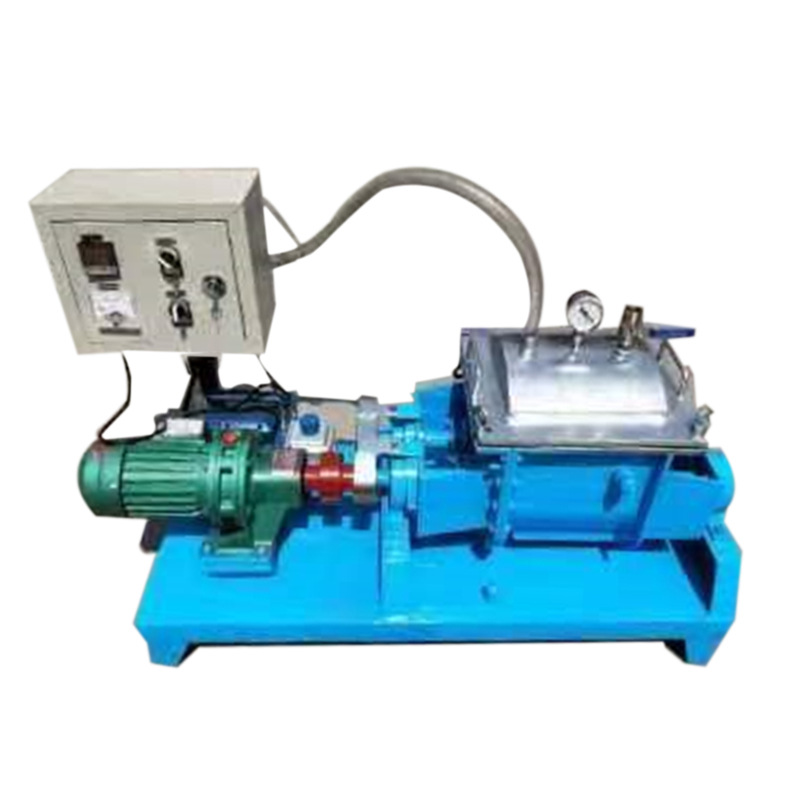
Vacuum kneading machine product view. The selection should be confirmed against paste rheology, batch size, cleaning needs, and vacuum duty.
A complete request for evaluation usually includes the paste formulation range, target batch size, viscosity or torque behavior, solids loading, bulk density, maximum temperature, solvent content, cleaning procedure, discharge method, utilities, and acceptance tests. If some values are unknown, provide a range and identify which variables will be tested. This helps the supplier propose a realistic configuration instead of a machine that is oversized for one batch and unsuitable for another.
Common Operating Problems and Practical Fixes
Most vacuum kneading problems appear as symptoms rather than root causes. The following checks can help narrow the issue before changing the formulation or requesting new equipment.
- Bubbles remain after vacuum: The paste may not be renewing its surface, the vacuum may be applied too early, or the hold time may be too short. Check agitator coverage, fill level, and whether the paste is folding rather than rotating as a solid mass.
- Powder forms lumps: The addition rate may be too fast, the liquid heel may be too small, or the powder may be poorly wetted by the selected liquid. Adjust the feeding sequence and verify that the agitator is not pushing dry powder into a stagnant zone.
- Batch overheats: Kneading energy, insufficient jacket cooling, or a long cycle at high speed may be responsible. Reduce speed during the final stage, improve cooling, or split the cycle into shorter intervals with temperature checks.
- Results vary between batches: Check powder moisture, filling weight, initial temperature, vacuum level, and operator sequence. A recipe that records only time and speed may miss the variables that actually control the endpoint.
- Paste builds up on the shaft or wall: This can reduce heat transfer and create unmixed regions. Review agitator clearance, scraper design if fitted, and the point at which material is added.
- Volatile loss is excessive: The vacuum may be too deep or the hold time too long for the solvent. Consider a lower vacuum, shorter cycles, or a condenser and recovery system.
Discharge problems often begin during mixing. A paste that is allowed to cool or lose solvent inside the vessel may become too stiff to flow. If the discharge valve or pipe is undersized, the problem will appear at the end of the batch even though the mixing stage seemed satisfactory. Review the discharge path with the same attention given to the agitator. For shear-sensitive products, avoid using a high-speed discharge pump that changes the paste structure after the batch has been approved.
Seal condition should be checked as part of routine maintenance. Vacuum leaks can reduce deaeration performance, and worn seals can introduce contamination. A gradual loss of vacuum is easy to miss when the gauge fluctuates or when the operator extends the cycle to compensate. Establish a baseline for pump-down time and leak rate, then investigate changes before they become batch failures.
Scale-Up and Validation Without Guesswork
Scale-up is not a simple multiplication of batch size. A larger vacuum kneading machine has different heat-transfer area, agitator geometry, fill level, and vacuum residence time. Keeping the same speed in revolutions per minute does not guarantee the same tip speed or the same kneading intensity. Keeping the same mixing time does not guarantee the same temperature rise. The practical approach is to identify the rate-limiting step in the small-scale process, then design the larger trial to reproduce that step.
Useful scale-up parameters include torque or power per unit mass, agitator tip speed where relevant, batch temperature profile, vacuum level, number of vacuum cycles, and endpoint measurements. No single parameter is universal. A paste that is limited by powder wetting may scale with addition rate and mixing energy, while a paste that is limited by deaeration may scale with surface renewal and vacuum hold time. A pilot trial should test the proposed production sequence, not just the final formulation.
Validation should include samples from the top, middle, and bottom of the vessel where practical. Test the properties that matter to the customer: density, void content, rheology, particle dispersion, cure behavior, electrical performance, or appearance. Record the operating data for each batch and compare it with the accepted range. If a batch fails, determine whether the deviation is in formulation, feeding, vacuum, temperature, or operator sequence. This record becomes the basis for the production recipe and for future troubleshooting.
Finally, treat the vacuum kneading machine as part of a process rather than a standalone unit. The upstream powder handling, liquid dosing, transfer lines, and downstream discharge all affect air content and uniformity. A clean, well-controlled feed is easier to deaerate than a variable one. For teams evaluating high-viscosity mixing, the next step is to define the paste requirements, run a representative trial, and confirm the vacuum kneading configuration against measured results. That approach produces a more reliable equipment decision than comparing catalog numbers alone.