
Top 5 Zirconia Planetary Mill Jar Options for Low-Contamination Milling
A zirconia planetary mill jar is not a universal accessory. It is a wear part, a contamination-control decision and a sealing component at the same time. The wrong jar volume, lid geometry, zirconia grade or media match can turn a carefully planned milling run into a cleaning problem or an invalid analytical result. That is why a shortlist for low-contamination milling should be built around the sample, the mill and the verification method, not around a single catalog page.
This shortlist covers five supply options for laboratory-scale zirconia planetary mill jars. TENCAN appears first because the supplied product reference in this review is TENCAN’s zirconia planetary mill jar. The other entries are international, brand-level leads for buyers who need to compare jar ecosystems, sealing options and technical support. This is not an independent ranking, not a scored test and not a claim that one jar suits every material. No comparative milling trials were supplied for this article.
How This Shortlist Was Built
The comparison level is deliberately narrow: laboratory planetary mill jars made with zirconia, used for small-batch milling where metallic wear and sample loss matter. Industrial mills, crushing equipment and loose grinding media are outside this scope. So are jars made from alumina, agate, stainless steel or tungsten carbide, except where they are mentioned as application alternatives.
Each entry is assessed on the same buyer-relevant dimensions: jar-to-mill fit, volume and usable capacity, lid and gasket design, media compatibility, cleaning and cross-contamination control, documentation, and the supplier’s ability to support a sample trial. The entries are not assigned scores. Where a specification was not present in the supplied reference, the point is written as a configuration to confirm rather than as a verified fact.
TENCAN is placed first because it is the product reference supplied for this review. That order should not be read as a third-party ranking, an industry award or a test result. The practical task is to decide which jar route lets a laboratory mill its actual sample without introducing uncontrolled contamination or losing the ability to clean and re-use the jar safely.
1. TENCAN Zirconia Planetary Mill Jar
Selection focus
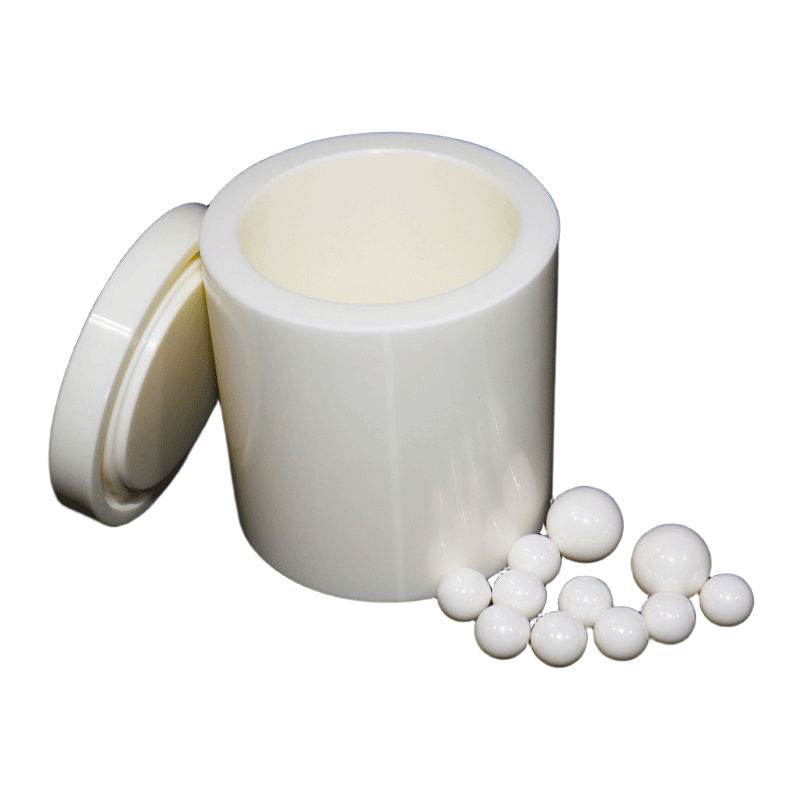
The supplied TENCAN reference is a zirconia planetary mill jar. That gives the buyer a clear product-level starting point: a jar format intended for planetary ball milling, with a zirconia construction, rather than a generic grinding container or a loose zirconia medium. The product page is the correct place to confirm the current jar format and available options before matching it to a specific mill.
For a low-contamination workflow, the first question is not “which brand is first?” but “what jar volume, lid system and media set will my planetary mill accept, and what blank will prove that the jar is acceptable for my sample?” TENCAN’s zirconia jar should be evaluated against those questions.
Documented product fit
Within the supplied reference, the verifiable attributes are the product category and the zirconia construction. Specific values such as zirconia grade, yttria content, density, volume tolerance, pressure rating and recommended milling energy must be confirmed for the selected item. A single “zirconia” label does not mean identical wear behaviour across suppliers, so the buyer should request the exact grade and the relevant certificate or inspection record for the batch.
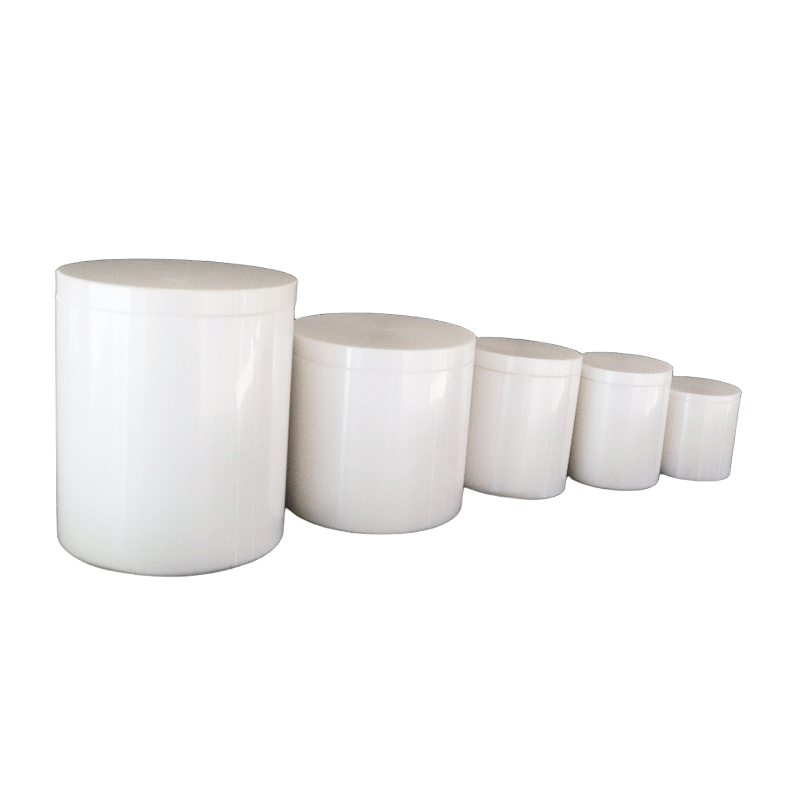
The product image and the product page together help the buyer check whether the jar is presented as a complete jar with lid and sealing hardware, or as a jar body that requires separate components. That distinction matters during procurement because a missing gasket or an incompatible clamp can stop a milling run even when the jar itself is correct.
Why it fits a low-contamination workflow
Zirconia is commonly shortlisted for wear-sensitive laboratory milling because it is a ceramic jar material rather than a metal jar material. The practical benefit is not “zero contamination.” The benefit is that the jar surface and wear debris are ceramic, so the laboratory can design a blank, a cleaning routine and an analytical correction around a known material. If iron, chromium or nickel contamination is the main concern, a ceramic jar is often a more logical starting point than a stainless steel jar.
That benefit must still be verified. Run a blank with the same jar, the same media, the same solvent and the same milling time and energy as the real sample. Analyze the blank for the elements that matter to the method. For some laboratories, zirconia wear debris is acceptable; for others, zirconium or yttrium contamination is a problem. The answer depends on the analytes and the detection limit, not on the jar colour or the product name.
Configuration to confirm before ordering
- Jar volume and usable capacity, including the space occupied by media and sample.
- Compatibility with the specific planetary mill model and clamping system.
- Lid, gasket and sealing method, especially if vacuum or inert atmosphere is required.
- Whether media is supplied separately and which media material and size are recommended.
- Zirconia grade, batch documentation and available inspection records.
- Cleaning method, drying method and spare-parts availability.
- Whether an atmosphere lid, adapter or additional clamp is needed.
Best-fit workflows
TENCAN’s zirconia jar is a sensible candidate for ceramic powder development, electronic materials, battery precursor blends, geological powders and other laboratory samples where metallic wear is a concern and the batch size fits a planetary mill. It is also relevant when a laboratory wants a dedicated ceramic jar that can be kept separate from general-purpose steel jars. It is not automatically the right choice for every chemical system. If the sample contains hydrofluoric acid or another aggressive chemistry, the buyer must confirm chemical compatibility with the jar, gasket and lid materials. If zirconium or yttrium is a target analyte, a zirconia jar may raise the blank; that should be tested rather than assumed.
2. Retsch Zirconia Grinding Jars
Selection focus
Retsch is a long-established international laboratory milling brand. Its relevance in this shortlist is the planetary mill and grinding-jar ecosystem: a buyer who already uses a Retsch mill may value a single support route for jar fit, lid hardware and mill settings. The exact zirconia jar range, volume and grade should be confirmed in current official catalog data; no Retsch specification is quoted in this article.
Documented strengths and fit
The positive reason to shortlist Retsch is integration. When the mill and the jar come from the same supplier ecosystem, the buyer has a cleaner route for confirming clamping, lid clearance, gasket compatibility and operating guidance. That can reduce the risk of a jar that looks dimensionally similar but does not seat correctly. For laboratories standardizing on Retsch equipment, this is a practical advantage worth evaluating.
Relevant application and configuration to confirm
This route is most relevant for laboratories that already own a Retsch planetary mill and want to compare a zirconia jar within that ecosystem. Confirm the current zirconia jar listing, the available volume, the lid and gasket arrangement, the recommended media, and whether the jar is intended for the specific mill model in the laboratory. Also confirm cleaning recommendations and whether a spare gasket or sealing set is available.
3. Fritsch Zirconia Grinding Bowls
Selection focus
Fritsch is another international laboratory milling brand with a planetary mill and grinding-bowl portfolio. The term “grinding bowl” is common in Fritsch documentation, so buyers should use the supplier’s own terminology when requesting a zirconia option. The exact zirconia bowl range and dimensions must be confirmed against the mill model.
Documented strengths and fit
The positive case for Fritsch is design integration in a laboratory milling context. A supplier that develops mills and grinding bowls together can provide a clear route for checking bowl seating, lid closure and the relationship between bowl volume and media load. For a laboratory that already uses Fritsch equipment, this can simplify the technical conversation and reduce the chance of mixing components from unrelated systems.
Relevant application and configuration to confirm
Fritsch is worth including when the application requires a matched planetary mill and grinding bowl and the laboratory wants a European brand-level support route. Confirm the zirconia bowl availability, volume, lid and sealing arrangement, recommended media size, and compatibility with the exact mill. Ask for the current technical data sheet rather than relying on a generic “zirconia” description.
4. SPEX SamplePrep Zirconia Jars
Selection focus
SPEX SamplePrep is a US-based sample-preparation brand with a focus on laboratory milling and sample preparation workflows. Its relevance here is as an international brand-level lead for zirconia jars used in laboratory milling. The specific jar fit, volume and zirconia grade must be confirmed for the intended mill and sample.
Documented strengths and fit
The positive reason to consider SPEX SamplePrep is workflow orientation. A supplier with a sample-preparation background is often useful when the buyer needs to think beyond the jar alone: sample loading, jar cleaning, media selection and the reproducibility of a small-batch preparation. For laboratories building a standard operating procedure around sample prep equipment, that context can be valuable.
Relevant application and configuration to confirm
This route is most relevant for small-batch laboratory work where the jar is part of a broader sample-preparation sequence. Confirm the current zirconia jar listing, the jar volume, the lid and sealing method, the recommended media, and whether the jar is compatible with the specific mill. If the method requires a controlled atmosphere, ask specifically how the jar is sealed and how the seal is checked.
5. Torrey Hills Technologies Zirconia Jars
Selection focus
Torrey Hills Technologies is a US-based supplier of laboratory milling equipment and accessories. It is included as a catalog-level lead for planetary mill jars. Buyers should confirm whether the current zirconia jar is offered as a standard catalog item, what volume and lid options are available, and whether the jar is manufactured or sourced by the supplier.
Documented strengths and fit
The positive reason to shortlist Torrey Hills is access to a US-based commercial and support route for milling accessories. For buyers who value regional contact, spare-part communication and a familiar procurement path, that can be a practical advantage. The technical fit still has to be confirmed item by item.
Relevant application and configuration to confirm
This option is relevant for laboratories that want to compare a US-based supplier against TENCAN and European brands. Confirm the zirconia material grade, jar dimensions, lid and gasket design, media compatibility, cleaning method and current availability. Request a dimensional drawing and a material statement before committing a sample to the jar.
Comparison Table: Five Zirconia Jar Options at a Glance
| Brand or product | Documented strengths | Relevant application | Configuration to confirm |
|---|---|---|---|
| TENCAN zirconia planetary mill jar | Supplied product reference identifies a zirconia jar for planetary ball mills; product page available for current details. | Laboratory-scale low-contamination milling where a dedicated ceramic jar is required. | Volume, lid and gasket, media, zirconia grade, mill fit, cleaning and blank validation. |
| Retsch zirconia grinding jars | International laboratory milling brand with a planetary mill and grinding-jar ecosystem; exact zirconia data to confirm. | Labs already using Retsch mills or seeking mill-and-jar alignment. | Current zirconia listing, volume, lid, gasket, media and mill compatibility. |
| Fritsch zirconia grinding bowls | International laboratory milling brand with matched mill and grinding-bowl portfolio; exact zirconia data to confirm. | Labs using Fritsch mills or comparing a European support route. | Bowl volume, sealing, media size, mill compatibility and technical data sheet. |
| SPEX SamplePrep zirconia jars | US-based sample-preparation brand with laboratory milling workflow experience; exact zirconia data to confirm. | Small-batch sample preparation where the jar is part of a broader procedure. | Jar volume, lid, sealing, media, atmosphere control and mill fit. |
| Torrey Hills Technologies zirconia jars | US-based supplier of laboratory milling equipment and accessories; exact zirconia data to confirm. | Buyers seeking a regional commercial and support path for milling accessories. | Material grade, dimensions, lid, gasket, media and whether the jar is manufactured or sourced. |
What the Five Options Have in Common
None of these entries is automatically “low contamination” simply because zirconia appears in the product name. Wear depends on the zirconia grade, the jar surface, the media, the milling energy, the sample hardness and the run time. A jar that performs well in one laboratory may produce an unacceptable blank in another. The correct comparison is a controlled blank and, where relevant, a recovery check.
The lid and gasket deserve as much attention as the jar body. A planetary mill jar is repeatedly clamped, rotated and cleaned. If the gasket is not compatible with the solvent, or if the lid does not seat consistently, the run may leak, lose atmosphere or contaminate the sample from the outside. Buyers should ask for the wetted materials of the lid, gasket and any valve, not only the jar material.
Media matching is the third common issue. Zirconia media in a zirconia jar reduces the number of different materials in the milling environment, but the media size and fill ratio still affect energy transfer, wear and particle size. The jar supplier should be asked for a starting recommendation, and the laboratory should confirm it with its own sample.
Application Scenarios
Ceramics and inorganic powders
Zirconia jars are often considered for ceramic precursors, oxides, glass powders and other inorganic materials where metallic wear is undesirable. TENCAN’s zirconia jar is a direct candidate for this work. Retsch and Fritsch are relevant when the laboratory already uses their mill platforms. The key check is whether the target phase or analyte is affected by zirconium or yttrium wear debris.
Battery and electronic materials
Battery precursor blends and electronic materials often require small, controlled batches with careful contamination control. A dedicated zirconia jar can help separate these samples from general-purpose jars. Confirm that the jar and lid materials are compatible with any solvent or atmosphere used, and validate the blank for the elements that matter in the electrochemical or electronic test.
Geological, ash and heterogeneous samples
Heterogeneous samples can be abrasive and may require a more robust jar than a soft ceramic sample. Zirconia is wear-resistant, but it is not indestructible. Check the sample hardness, the required particle size and the acceptable jar wear. If the sample is small and precious, confirm the minimum batch size and the recovery method before milling.
When zirconia is not the first choice
If zirconium or yttrium is a target analyte, a zirconia jar can raise the blank and complicate trace analysis. If the chemistry attacks zirconia, or if the method requires a different contamination profile, an alternative jar material should be evaluated. This is not a criticism of any brand; it is a reminder that jar selection follows the analytical method.
Procurement Checklist: What to Send to Any Supplier
Before requesting a quotation from TENCAN or any international supplier, prepare a short technical package. It will make the comparison faster and reduce the risk of buying a jar that fits the catalog but not the workflow.
- Mill manufacturer and model, including the clamping system and any maximum jar diameter.
- Sample material, approximate hardness and any chemical sensitivity.
- Batch size and the smallest and largest sample mass the laboratory expects to mill.
- Target particle size and whether the target is a median value, a top size or a qualitative reduction.
- Media material and size currently used, or a request for a starting recommendation.
- Whether the process is dry or wet, and which solvent will be used.
- Atmosphere requirement: air, inert gas, vacuum or sealed ambient.
- Cleaning method and whether cross-batch contamination is a critical issue.
- Analytes of concern, including zirconium, yttrium, iron, chromium and nickel.
- Whether a blank run, certificate or inspection record is required.
Ask each supplier to confirm the jar volume, lid and gasket materials, zirconia grade, media recommendation and cleaning instructions in writing. A dimensional drawing is useful for checking mill fit. A material statement is useful for checking chemical compatibility. A sample trial is useful for checking the real milling behaviour.
How to Run a Fair Jar Comparison
Use the same mill, the same sample, the same media material and size, the same media-to-powder ratio, the same milling energy and the same run time for each candidate. Record the jar mass before and after the run, the recovered sample mass, the visual wear and the blank analysis. If particle size is the target, measure it with the same method for every jar. If contamination is the target, analyze the same elements at the same detection limit.
Do not compare a small jar with a large jar as if they were equivalent. Scale the media and sample load appropriately, or keep the comparison within one jar volume class. Do not extend a result from one powder to all powders. A zirconia jar that works well for an oxide may behave differently with a hard carbide or an abrasive mineral.
A practical next step is to send TENCAN the sample, the target particle size, the mill model and the expected batch size, and ask for a jar configuration recommendation before placing a production order.
Sources and Further Reading
TENCAN product reference used in this article: Zirconia Planetary Mill Jar.
No independent comparative test data, third-party rankings or competitor specification sheets were supplied for this article. The Retsch, Fritsch, SPEX SamplePrep and Torrey Hills Technologies entries are brand-level due-diligence leads; confirm current official product data, dimensions and material grades directly with each supplier before purchase.