
Jaw Crusher Feed Size and Crushing Guide
A jaw crusher is often the first machine a sample meets in a laboratory or pilot plant, yet the first stage is also where many preparation problems begin. The task looks simple: put a lump in and collect smaller pieces. In practice, feed size, jaw plate condition, discharge setting, and material behavior all shape the result. A crusher that is set too tight may stall or wear quickly; one that is set too open may send oversized material to the next stage and distort sample preparation.
This guide focuses on the practical questions that arise when specifying and operating a jaw crusher for coarse size reduction. It uses the TENCAN jaw crusher as the reference product, while keeping the discussion useful for anyone comparing coarse crushing equipment. The aim is not to present one universal setting that fits every material. The aim is to show which variables should be confirmed, tested, and recorded so that the crushing stage supports the rest of the process instead of becoming a source of variability.
Changsha Tianchuang Powder Technology Co., Ltd, known by the brand TENCAN, supplies equipment for size reduction, mixing, and sample preparation. The TENCAN jaw crusher is the product considered here. Before selecting any model, confirm the current feed opening, discharge adjustment range, jaw plate options, electrical configuration, and available accessories with the manufacturer. Those details matter more than a single capacity figure taken out of context.
Why the Jaw Crusher Remains the First Stage in Sample Preparation
Coarse crushing is the bridge between a field sample, a lump of raw material, or a production clinker and the mill that will reduce it further. In many laboratories, the jaw crusher is chosen because it can accept relatively large pieces and reduce them through compression between two surfaces. That basic action is simple, but the consequences are not. The crusher changes the top size, the particle shape, the amount of fines, and the condition of the sample that enters the next step.
A laboratory jaw crusher is not a fine grinder. It is a preparatory machine. Its role is to reduce large pieces to a size that can be fed reliably to a ball mill, disc mill, or other secondary mill, or to produce a coarse fraction for testing. If the first stage is treated as a minor accessory, the downstream mill may receive a feed that is too coarse, too variable, or contaminated with wear material. The result can be longer grinding times, inconsistent particle size distribution, and difficulty comparing results between batches.
Compression crushing versus impact size reduction
A jaw crusher breaks material by compression. A moving jaw approaches a fixed jaw, and the material between them is subjected to compressive stress until it fractures. The motion is driven by an eccentric shaft, while the flywheel helps smooth the load through the cycle. The discharge opening at the bottom of the chamber determines how far the material can travel before it falls out. Because the machine works by slow compression rather than high speed impact, the breakage pattern is different from that of a hammer mill or jet mill.
Compression crushing is often considered for hard and brittle materials, but the material still has to be tested. A rock that is hard but highly abrasive will place different demands on the jaw plates than a softer material that fractures easily. A material that is tough or fibrous may deform rather than break cleanly. The output from a jaw crusher also tends to have a broad size distribution, with fines produced alongside larger fragments. That is normal for the process. A jaw crusher should not be expected to deliver a narrow distribution or a final analytical powder.
The shape of the product is another practical point. Compression breakage often produces angular particles, and the proportion of flaky or elongated pieces depends on the material and the chamber geometry. If the next process is sensitive to particle shape, the crushing stage should be evaluated together with the secondary mill, not in isolation. A sample that passes a sieve at the crusher discharge may still behave differently in a ball mill because of shape, surface roughness, or the amount of fines present.
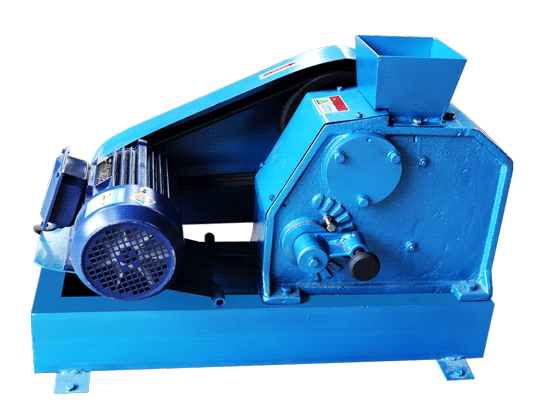
TENCAN jaw crusher for coarse size reduction in sample preparation.
What the first stage must achieve
A well-run crushing stage should achieve several things at once. It should reduce the largest pieces to a size that the next mill can accept without overload. It should preserve the representative character of the sample, avoiding selective loss of fines or accidental enrichment of one component. It should be cleanable between samples when cross contamination matters. It should also be controllable, so that a change in feed material can be met with a documented change in setting rather than guesswork.
These goals can conflict. A tighter discharge setting gives a finer product but reduces throughput and increases wear. A larger setting protects throughput but may leave pieces that are too coarse for the next step. A machine with a large feed opening may accept bigger lumps, but if the jaw stroke and chamber length are not matched to the duty, the operator may still experience bridging or poor nip. This is why a jaw crusher should be selected against the full feed and product requirements, not only against the largest lump size.
The TENCAN jaw crusher product page is the appropriate place to confirm the current machine configuration and available options. When comparing a laboratory jaw crusher with a production unit, check whether the unit is intended for intermittent sample work or continuous duty. A machine that is suitable for one mode is not automatically suitable for the other. Motor power, frame construction, bearing size, and the method of discharge adjustment all influence how the crusher behaves under repeated use.
Reading the Jaw Crusher as a System: Frame, Jaw Plates, and Discharge Opening
A useful way to evaluate a jaw crusher is to separate it into functional zones. The frame carries the load and keeps the jaws aligned. The eccentric shaft and bearings convert motor rotation into jaw motion. The flywheel stores energy and helps the machine run smoothly through each cycle. The fixed jaw and the moving jaw form the crushing chamber, and the jaw plates protect the underlying jaw bodies while providing the actual wear surface. The toggle plate and adjustment mechanism control the discharge opening and provide a controlled weak point in some designs.
The feed hopper and feed path also matter. If material enters the chamber too quickly, the crusher can choke, and the motion may not have room to develop. If material enters at one side, the jaw plates may wear unevenly. If the feed is too fine, the crusher may pass material without doing useful work, which is inefficient but not necessarily harmful. The operator should understand that the crusher is a system, not only a pair of plates. A weakness in the frame, bearing, toggle, or adjustment mechanism can appear as a crushing problem even when the material is suitable.
The discharge opening is the main process control on a jaw crusher. It is usually adjusted by changing the position of the moving jaw or the toggle arrangement, depending on the design. The setting is often described as the closed side setting, and it is measured when the jaw is at its closest position. The open side setting is larger. For process control, the closed side setting is the more useful reference because it represents the narrowest gap through which the material must pass. However, the product top size is not identical to the setting. Particles can exit with a dimension larger than the gap because of the geometry of the chamber and the way fragments orient themselves.
Jaw plate wear changes the chamber over time. As the plates wear, the effective gap and the shape of the crushing zone can change. A crusher that produced a satisfactory product when new may begin to produce a coarser or more variable product after extended use. Inspecting the plates and checking the setting should therefore be linked. Measuring the gap without examining the plate condition can give a false sense of control. The same applies to the cheek plates and any side liners: wear in these areas can affect the feed path and the amount of material that bypasses the main compression zone.
How feed size and reduction ratio interact
Feed size is usually described by the largest lump or by a size distribution. The feed opening must accept the largest particle with a margin for safe operation. A common planning mistake is to treat the nominal feed opening as a guarantee that any lump below that dimension will crush well. In practice, the largest lump should be comfortably within the opening, and the machine should be fed at a rate that allows the jaws to grip and break the material. A slab-shaped particle can behave very differently from a rounded particle of the same nominal size. Length, thickness, and orientation all affect whether the jaw can nip the piece.
Reduction ratio is the relationship between the feed top size and the product top size. It is a planning value, not a promise. A single jaw crusher stage usually provides a moderate reduction, and the exact result depends on the material, the gap, the plate profile, and the feed distribution. A crusher may reduce a feed from large lumps to a coarse mill feed in one pass, but it should not be expected to move directly from run-of-mine size to analytical fineness. If the target size is much finer, a staged approach is more realistic: jaw crushing followed by a secondary mill, with screening or sampling between stages when necessary.
For a given feed opening, tightening the discharge gap tends to increase the reduction ratio but reduce throughput and increase the specific load on the plates. Opening the gap does the opposite. The operator should therefore decide which requirement is more important for the sample: top size control, throughput, or wear life. In a laboratory, top size control is often critical because the secondary mill has a maximum feed size. In a pilot plant, throughput may matter more, provided the downstream equipment can handle the coarser product. The correct setting is the one that satisfies the next stage, not the one that produces the finest possible output at any cost.
Throughput is not a single number
Throughput figures for a jaw crusher are meaningful only when the test conditions are stated. Capacity depends on the feed size distribution, the bulk density of the material, the compressive strength, the abrasiveness, the moisture content, the discharge setting, the jaw plate profile, and the way the machine is fed. A number quoted for a dry, free-flowing material at one gap cannot be transferred directly to a sticky material at a tighter gap. For selection, it is better to ask for a capacity range and the conditions under which it applies than to rely on a single headline value.
Feed method has a strong effect on practical throughput. A steady, controlled feed allows the crusher to work at a consistent chamber fill. A surge of material can choke the chamber, cause the flywheel to slow, and produce a sudden spike in load. In a laboratory, operators sometimes feed a full sample at once for convenience. That approach may be acceptable for a small sample, but it makes the result harder to reproduce. A scoop-by-scoop feed, or a small vibratory feeder where appropriate, gives a more even load and a more representative discharge.
Moisture is another hidden variable. A small amount of moisture may cause fine particles to adhere to the jaw plates or to each other, reducing the effective opening. In humid conditions, some materials become sticky enough to bridge in the hopper. The crusher may not be at fault; the feed system may be. Drying the sample, reducing the feed rate, or pre-sizing the material can sometimes solve the problem. If the material is consistently sticky, a different crushing principle may be more appropriate, and that decision should be made before a machine is purchased rather than after.
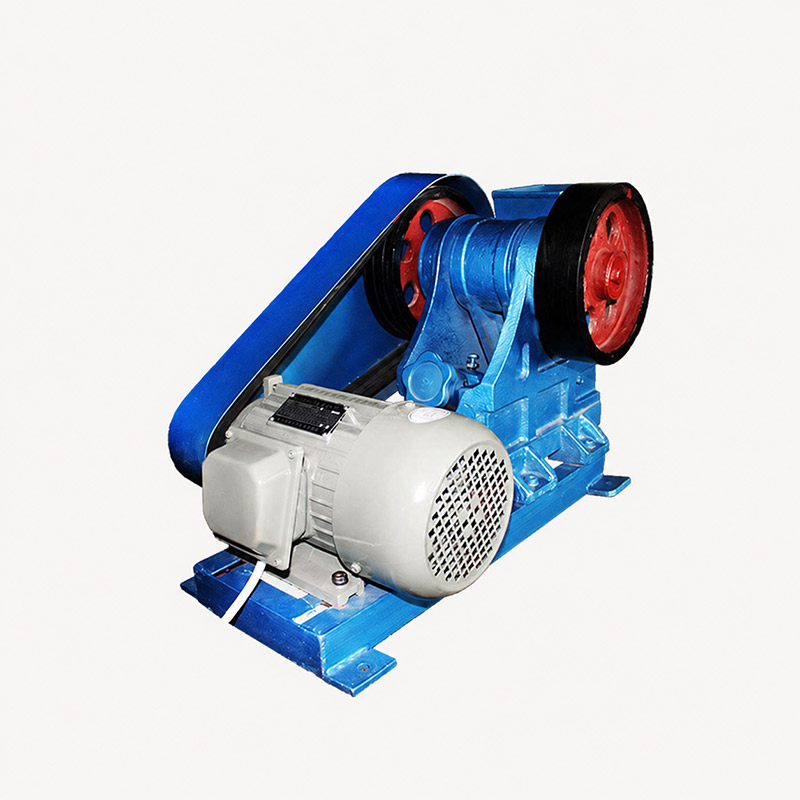
Jaw crusher equipment for controlled coarse crushing of laboratory samples.
Matching the Jaw Crusher to Material Properties
Material properties determine whether a jaw crusher is a good fit and how it should be operated. Hardness, toughness, abrasiveness, moisture content, and sensitivity to contamination are more important than the general category of the material. A granite, a fired ceramic, a slag, and a cement clinker may all be brittle, but they do not behave identically in a compression chamber. A soft limestone may crush easily but produce a large amount of fines. An abrasive material may reduce plate life and introduce wear metal into the sample. A tough material may deform and pass slowly, raising the load and reducing throughput.
Hard and brittle materials
Hard, brittle materials are often good candidates for compression crushing because they fracture when the stress exceeds their strength. The jaw crusher can reduce large pieces to a coarse feed for a ball mill or other secondary mill. The practical questions are how hard the material is, how abrasive it is, and how much size reduction is required in one pass. A very hard material increases the load on the frame and bearings and accelerates plate wear. An abrasive material, especially one containing free silica, can wear the plates quickly and contaminate the sample with iron or other elements from the wear surface.
Brittleness can also produce more fines than expected. Some materials shatter into many small pieces as soon as the jaw grips them. That is not necessarily a problem, but it affects the size distribution and the representative splitting of the sample. If the procedure requires a specific coarse fraction, the operator should screen the discharge and record the amount of undersize. A jaw crusher that produces excessive fines may still be mechanically sound; the issue may be the gap setting, the feed size, or the material itself.
Tough, ductile, or sticky materials
Tough or ductile materials are more difficult. Instead of fracturing cleanly, they may bend, flatten, or extrude between the jaws. The crusher may still reduce them, but throughput can fall and the load can rise. In some cases, the material partially passes without breaking, leaving elongated pieces that are difficult to feed to the next mill. If the material is both tough and heat sensitive, compression crushing may also add heat through friction and deformation. That does not rule out a jaw crusher, but it means the trial should include a temperature check and a realistic feed rate.
Sticky materials present a different challenge. High moisture or a high clay content can cause material to adhere to the jaws, block the hopper, or bridge above the chamber. A jaw crusher has no inherent ability to handle wet, sticky feed simply because it is robust. The feed path must remain open, and the chamber must be able to grip the material rather than smear it. Pre-drying, blending with a drier fraction, or reducing the feed size before crushing may help. If the problem persists, a different type of crusher or a washing step may be more suitable. The decision should be based on a representative sample, not on a dry laboratory specimen.
Contamination control and trace analysis
Contamination is a major concern when the crushed sample will be analyzed for minor or trace elements. Jaw plates wear during normal operation, and the wear material has to go somewhere. Some of it may leave with the product. For routine preparation, this may be acceptable. For trace metal analysis, it may not be. The operator should ask what the jaw plates are made of, whether alternative plate materials are available, and whether the expected contamination is significant for the elements of interest. These are product-specific questions that should be confirmed with the manufacturer rather than assumed.
Cleaning between samples is equally important. A brush and vacuum can remove loose dust from accessible surfaces, but material can lodge in corners, behind cheek plates, and around the discharge opening. Compressed air may spread dust rather than remove it, so it should be used with care and only where the laboratory ventilation and dust controls allow. For critical work, a sequence of cleaning, a blank run, and a check of the blank can show whether cross contamination is under control. The first portion of a new sample may be discarded if it is likely to contain residue from the previous batch.
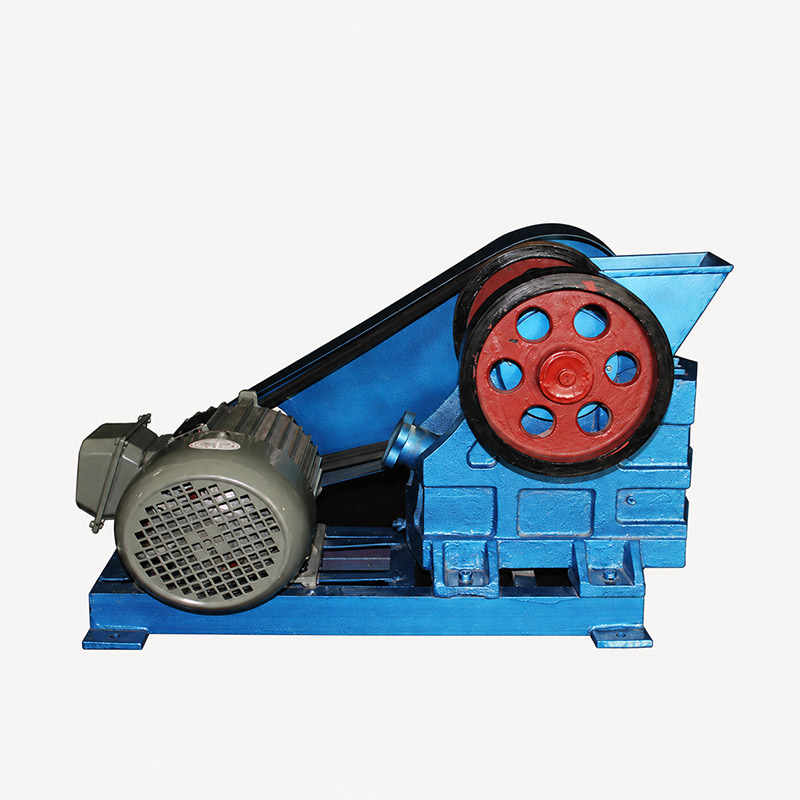
Jaw crusher setup for hard, brittle, and abrasive sample materials.
Setting Up the Crushing Process: From Feed Control to Discharge
Commissioning a jaw crusher is not only a matter of starting the motor and adjusting the gap. The machine should be checked as a complete installation. The frame should be secure, the drive guards should be in place, the discharge path should be clear, and the feed arrangement should allow controlled material entry. The operator should know how to stop the machine quickly and how to clear a jam safely. Safety procedures should be followed before any adjustment, especially around the jaws, flywheel, and drive components.
A practical commissioning sequence
A systematic first run gives the operator a baseline for later work. The exact procedure should follow the manufacturer instructions, but the following sequence is a useful framework for a laboratory jaw crusher:
- Inspect the machine before the first start. Confirm that fasteners are tight, guards are secure, and the chamber is clean. Check that the discharge opening is set to a conservative value for the first trial.
- Use a small, representative portion of material rather than the entire sample. Record the feed mass, the approximate top size, and any visible moisture or clay content.
- Start the crusher without feed and listen for unusual noise or vibration. Allow it to reach a stable speed before introducing material.
- Feed gradually. Watch the discharge and the motor load. If the chamber begins to choke, stop or slow the feed rather than forcing more material through.
- Collect the full discharge and screen it at the target top size. Record the oversize and undersize fractions. Photograph the product if the sample is important for a project record.
- Adjust the discharge opening in small steps and repeat with a fresh portion. Do not assume that the first setting will be final. The relationship between the setting and the product size should be measured for the actual material.
- Record the final setting, plate condition, feed rate, and product size. These records make later batches comparable and help identify drift when plates wear.
- Clean the machine and the surrounding area after the trial. Check for material lodged in the chamber and discharge path before the next sample.
This sequence is deliberately conservative. A jaw crusher can be damaged by uncrushable objects, by feeding material that is too large for the opening, or by adjusting the gap while the machine is under load. The operator should never force a jam with a tool while the machine is running. Isolate the power, follow lockout procedures, and clear the chamber according to the manufacturer guidance. A few minutes of careful setup are more valuable than a rushed trial that produces an unreliable result.
Maintenance and wear checks
Jaw crushers are mechanically robust, but they are not maintenance free. The jaw plates are wear parts, and their condition affects both product size and power draw. Inspect the plates regularly for uneven wear, cracking, and loose fixing. Check the toggle plate and its seats, the bearings, the flywheel, and the drive belt or coupling. Lubrication points should be serviced at the recommended intervals, and any abnormal noise should be investigated before it becomes a failure.
Wear is not uniform. Material that enters on one side may wear that side more heavily, while a feed that is segregated by size can wear the lower part of the chamber faster. If the plates can be rotated or reversed according to the design, that option may help extend service life. Do not assume that a plate is still acceptable because it has not broken. A worn plate can change the nip angle and reduce the ability of the crusher to grip the feed. The result may look like a feed problem when the real cause is wear.
The discharge setting should be checked after plate replacement or adjustment. A new plate can change the effective gap, and the setting that worked before may not produce the same product after the change. A simple check with a lead piece, a gauge, or the method recommended by the manufacturer can confirm the setting. The check should be recorded so that the next operator knows the baseline. In a busy laboratory, this record is often more useful than a verbal handover.
Cleaning and sample integrity
Sample integrity depends on more than the crusher setting. It depends on the order of processing, the cleaning between samples, and the way the product is handled after discharge. If a soft sample follows a hard, abrasive sample, the soft sample may pick up wear particles from the chamber. If a sample for trace analysis follows a sample containing the element of interest, residue can bias the result. The cleaning method should be appropriate to the material and to the analytical sensitivity of the test.
A practical approach is to establish a cleaning routine and a blank check for critical work. Remove loose material with a brush and vacuum. Wipe accessible surfaces if the procedure allows. Inspect the discharge area and the feed hopper. Run a small portion of the next sample and discard it if residue is a concern. This is not a substitute for a full quality procedure, but it is a realistic way to reduce carryover in a laboratory that handles diverse materials. The same discipline should apply to the collection tray and the sieves used to check the product.
Selection Checklist and Common Misunderstandings
A jaw crusher purchase should be based on the material, the required product, and the way the machine will be used. The following checklist is not a substitute for a trial, but it helps organize the questions that should be answered before a model is selected. Where a value is not known, it should be measured or discussed with the manufacturer rather than assumed.
| Selection question | What to confirm | Why it matters |
|---|---|---|
| What is the largest feed lump | Top size, shape, and variability of the feed | The feed opening must accept the material with a safe margin, and slab-shaped pieces can behave differently from rounded pieces. |
| What product top size is required | Target size for the next mill or test, plus acceptable oversize | The discharge setting and the number of crushing stages follow from the target, not from the crusher alone. |
| How hard and abrasive is the material | Compressive strength, silica content, and wear risk | Hardness affects load and throughput; abrasiveness affects plate life and contamination. |
| How much moisture or clay is present | As-received moisture, stickiness, and bridging tendency | Wet or sticky feed can block the hopper and reduce the effective opening. |
| Is contamination critical | Plate material, sample mass, analytical sensitivity | Wear metal may be acceptable for one test and unacceptable for another. |
| How will the machine be used | Batch size, frequency, duty cycle, and cleaning routine | Intermittent laboratory work and continuous production place different demands on the drive and frame. |
Several misunderstandings appear repeatedly in equipment discussions. One is that a larger crusher is always better. A larger machine may accept bigger feed, but it can also be more difficult to clean, harder to house, and less efficient for small samples. Another is that the discharge setting equals the product top size. In practice, the product contains a distribution, and the top size can be larger than the gap. A third is that one crusher can handle every material. Tough, sticky, or heat-sensitive materials may need a different approach or a pre-treatment step.
A fourth misunderstanding concerns capacity. A throughput number is not a property of the machine alone. It is the result of a feed material, a gap, a feed method, and a product requirement. Buyers should ask for the conditions behind a capacity figure and should plan a trial with their own material. A fifth misunderstanding is that wear is only a maintenance cost. Wear also changes the chamber geometry, the product size, and the contamination risk. The wear parts should be treated as process variables, not only as spare parts.
For a laboratory that needs a dependable first stage, the practical next step is to define the feed and product requirements, confirm the available TENCAN jaw crusher configuration, and run a small trial at more than one discharge setting. Record the results and compare them with the target for the secondary mill. The TENCAN jaw crusher can then be evaluated against those measured requirements rather than against a general description. That approach supports better equipment selection, more reproducible sample preparation, and a clearer understanding of where the crushing stage ends and the milling stage begins.