
Polyurethane (PU) Planetary Mill Jars: A Practical Choice for Abrasion-Resistant, Low-Contamination Grinding
Why the Grinding Jar Material Matters
When you work with a planetary ball mill, the grinding jar is more than just a container. It directly influences the purity of your sample, the efficiency of the milling process, and the lifespan of the accessory itself. Many researchers focus on the mill's speed or the grinding media, but the jar material often determines whether you can achieve the desired particle size distribution without introducing unwanted contamination.
For materials that are soft, heat-sensitive, or prone to agglomeration, traditional jars made of stainless steel or ceramic may not be the best fit. This is where the PU planetary mill jar comes into the picture. Made from polyurethane, these jars offer a unique combination of toughness, flexibility, and chemical resistance that makes them a valuable option in many laboratory and pilot-scale applications.
In this article, we will walk through what a PU planetary mill jar is, its key advantages, typical applications, and how to choose the right one for your planetary ball mill.
What Is a PU Planetary Mill Jar?
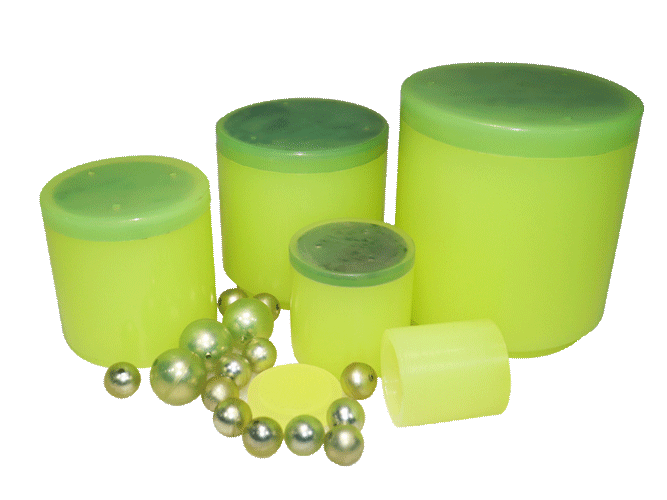
PU stands for polyurethane, a polymer material known for its excellent abrasion resistance, elasticity, and impact strength. A PU planetary mill jar is a grinding container specifically designed for use in planetary ball mills. It is typically manufactured by casting or molding polyurethane into a cylindrical shape with a tight-fitting lid, often reinforced with a metal outer shell for structural integrity during high-speed rotation.
Unlike rigid ceramic or metal jars, PU jars have a slightly flexible inner surface. This flexibility helps reduce the impact force on the grinding balls, which can be beneficial for certain materials that are brittle or sensitive to intense mechanical shock. The inner wall of a PU jar is also very smooth, minimizing powder adhesion and making cleaning easier.
Key Advantages of Polyurethane Grinding Jars
1. Excellent Abrasion Resistance
Polyurethane is one of the most wear-resistant elastomers available. In grinding applications, the jar wall is constantly subjected to the impact and friction of milling balls and powder. PU jars can withstand this wear for a long time, especially when used with softer grinding media such as zirconia or agate balls. This makes them a cost-effective choice for routine milling tasks where the jar needs to survive many cycles.
2. Low Contamination for Non-Metallic Samples
For many researchers, contamination is a primary concern. Metal jars can introduce iron, chromium, or nickel into the sample, especially when grinding hard materials. Ceramic jars may shed particles of alumina or zirconia. PU jars, on the other hand, are made of organic polymer and do not contain heavy metals. When milling non-metallic powders such as carbon materials, pigments, pharmaceuticals, or certain polymers, a PU jar minimizes the risk of metallic contamination. The wear debris from the jar itself is polyurethane, which is often acceptable in applications where organic impurities are less problematic than metallic ones.
3. High Impact Strength and Flexibility
PU has excellent impact resistance, meaning the jar can absorb shock without cracking. This is particularly useful when using larger grinding balls (e.g., 10–20 mm diameter) or when milling at higher speeds. The material's elasticity also helps reduce the transmission of vibration to the mill, leading to quieter operation and less stress on the machine's bearings.
4. Good Chemical Resistance
Polyurethane resists many organic solvents, oils, and dilute acids and alkalis. This makes PU jars suitable for wet grinding with a variety of liquid media. However, it is worth noting that strong acids, strong bases, and certain polar solvents (like ketones and esters) can attack polyurethane over time. Always check chemical compatibility before using a PU jar with aggressive solvents.
5. Lower Heat Generation
Because PU is a thermal insulator, the jar does not transfer heat as rapidly as metal. However, this also means that heat generated during milling can build up inside the jar. For temperature-sensitive materials, this can be both an advantage and a disadvantage. On one hand, the jar wall stays cooler to the touch; on the other hand, the internal temperature may rise. In practice, many users run the mill intermittently (e.g., 10–20 minutes on, 5–10 minutes pause) to control the temperature.
Typical Applications and Materials
PU planetary mill jars are not a universal solution for all powders, but they excel in specific areas:
- Soft and fibrous materials: Graphite, carbon black, activated carbon, plant fibers, and some polymers can be milled effectively without excessive wear or contamination.
- Heat-sensitive substances: Certain pharmaceuticals, explosives, and energetic materials benefit from the dampening effect of PU, which reduces localized hot spots.
- Materials that tend to agglomerate: The smooth inner surface of PU jars reduces powder sticking, improving yield and consistency.
- Non-metallic sample preparation: For XRF, XRD, or other analytical techniques where metallic contamination must be avoided, PU jars are a good alternative to stainless steel.
- Wet grinding with neutral or slightly acidic/alkaline media: Many aqueous slurries can be processed in PU jars without corrosion.
How to Select the Right PU Jar for Your Planetary Ball Mill
When choosing a PU planetary mill jar, consider the following factors:
Capacity
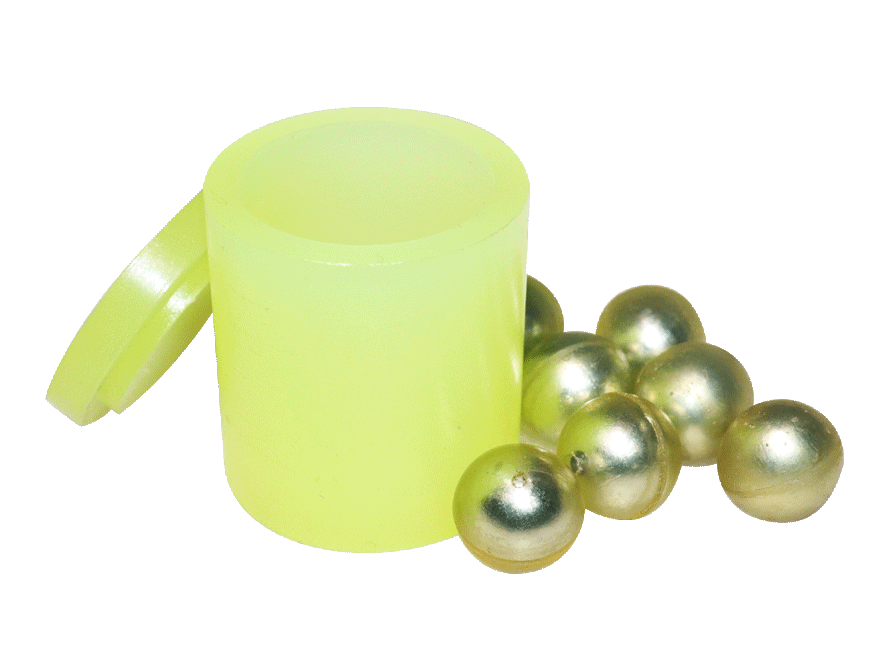
PU jars are commonly available in capacities ranging from 50 mL to 3 L per jar. The actual usable volume is typically about 2/3 of the total jar volume, because you need space for the grinding balls and the powder. For a 500 mL jar, for example, you can process roughly 100–200 mL of powder depending on the ball-to-powder ratio. Select a jar size that matches your batch quantity and the mill's maximum load capacity.
Outer Reinforcement
Some PU jars are purely plastic, while others have a metal sleeve (e.g., stainless steel or aluminum) to provide rigidity. For high-speed planetary ball mills, a reinforced shell is recommended to prevent deformation and ensure a secure fit in the mill's clamping mechanism. Look for jars with a rigid outer layer if you plan to run at speeds above 400 rpm.
Sealing Performance
PU jar lids usually have a rubber or silicone gasket to create a seal. Check whether the lid design allows for easy opening and closing, and whether it can maintain a vacuum or inert gas atmosphere if required. For applications that need an inert atmosphere, a vacuum-rated PU jar with a valve port may be necessary.
Compatibility with Grinding Media
PU jars work well with a variety of grinding ball materials, including zirconia, agate, alumina, and stainless steel. However, avoid using very heavy tungsten carbide balls in a pure PU jar without reinforcement, as the high density may cause excessive flexing or wear. If you need to mill very hard materials with dense media, consider a nylon planetary mill jar or a PTFE planetary mill jar as alternatives.
Temperature and Chemical Exposure
PU jars are typically suitable for continuous use up to about 80–100°C. If your milling process generates significant heat, or if you use solvents that may attack polyurethane, consider a more chemically resistant option like PTFE or a ceramic jar.
Comparison with Other Jar Materials
To help you decide, here is a brief comparison of PU jars with other common materials:
| Material | Key Strength | Best For |
|---|---|---|
| PU (polyurethane) | Abrasion resistance, low metallic contamination, impact elasticity | Soft, non-metallic, heat-sensitive powders; wet grinding with mild solvents |
| Stainless steel (304/316) | High strength, good thermal conductivity, vacuum capability | Hard materials, dry grinding, mechanical alloying, high-temperature processes |
| Zirconia (ZrO₂) | Extreme hardness, minimal wear, high purity | Ultra-fine grinding, ceramic powders, nano-materials, low contamination |
| Agate (SiO₂) | Very low contamination, smooth surface, aesthetic | Geological samples, fine grinding, analytical preparation |
| Nylon | Lightweight, good wear, low cost | General purpose milling, soft materials, dry grinding |
| PTFE (Teflon) | Excellent chemical resistance, non-stick, high temperature | Corrosive chemicals, sticky materials, high-purity applications |
As you can see, PU occupies a niche between plastic jars like nylon and high-performance ceramic jars. It is not the hardest or most chemically resistant, but it offers a balanced combination of durability, low contamination, and cost-effectiveness for many routine tasks.
Practical Tips for Using PU Planetary Mill Jars
- Ball-to-powder ratio: For most applications, a ratio of 5:1 to 10:1 by weight is a good starting point. Adjust based on your material hardness and target fineness.
- Grinding ball size: Use smaller balls (3–5 mm) for fine grinding, and larger balls (10–15 mm) for initial size reduction. The flexibility of PU means that larger balls may bounce more, so consider using a mix of sizes.
- Cleaning: PU jars are easy to clean with mild detergent and water. Avoid strong solvents like acetone or MEK that may damage the polymer. Use a soft brush to avoid scratching the inner surface.
- Inspect regularly: Check for cracks, wear, or deformation after each use. Although PU is tough, repeated high-energy milling can eventually degrade the material.
Final Thoughts
The PU planetary mill jar is a practical accessory for any laboratory that frequently processes soft, non-metallic, or heat-sensitive powders. Its abrasion resistance, low contamination profile, and impact flexibility make it a reliable choice for many routine milling tasks. By understanding its strengths and limitations, you can select the right jar for your specific application and get the most out of your planetary ball mill.
If you are unsure whether a PU jar is suitable for your material, consider the factors discussed above: chemical compatibility, temperature, required purity, and the hardness of your powder. For many users, a PU jar serves as an excellent middle-ground option, especially when combined with appropriate grinding media and milling parameters.
For more information on jar materials, you can also explore other options such as zirconia planetary mill jars or vacuum planetary mill jars to match your specific requirements.