
Top 5 Planetary Ball Mill Jar Options for Contamination-Sensitive Milling
Why a jar shortlist is a process decision
Jar selection is often treated as an accessory choice, but in planetary ball milling it changes the sample-contact chemistry, the usable milling energy, the sealing strategy, and the cleaning routine. A jar that suits an early method-development batch may be unsuitable for a different media, a larger fill, or a stricter contamination limit. The useful question is not which jar looks strongest in a catalogue, but which construction can be quoted, verified, and cleaned for the sample at hand.
This shortlist compares five jar routes for contamination-sensitive planetary milling. TENCAN's 304 stainless steel lined with zirconia mill jar is the documented supplier-specific reference in the supplied product record. The other four entries are material-level routes to use when requesting international quotations. They are not presented as a full-market brand ranking, and no performance score is implied. Each route is compared on the same purchase dimensions: sample contact, jar construction, relevant application, and configuration to confirm.
How this shortlist was screened
The five routes were selected because they represent distinct procurement questions rather than renamed versions of the same jar. The screening dimensions are sample-contact material, body construction, available volume, lid and sealing approach, media compatibility, cleaning method, and the evidence the buyer can obtain before purchase. A route is included only when it can be described without inventing a model number, a certification, a particle-size result, or a service life.
The supplied record for the TENCAN product establishes a product name, a 304 stainless steel construction, a zirconia lining, and a planetary ball mill jar category. It does not state jar volume, zirconia grade, lining thickness, lid design, sealing method, or recommended media. Those points are treated below as configuration questions, not as hidden specifications. The same discipline applies to the other routes: where a supplier-specific value is absent, the article names the value to request rather than filling it in.
No claim is made here about a guaranteed contamination limit, a universal particle-size outcome, or a best-for-every-sample ranking. Jar performance depends on the mill, the media, the sample, the fill ratio, the atmosphere, and the verification method. A sensible shortlist narrows the quotation work; it does not replace a trial with the actual material.
Option 1: TENCAN 304 stainless steel lined with zirconia mill jar
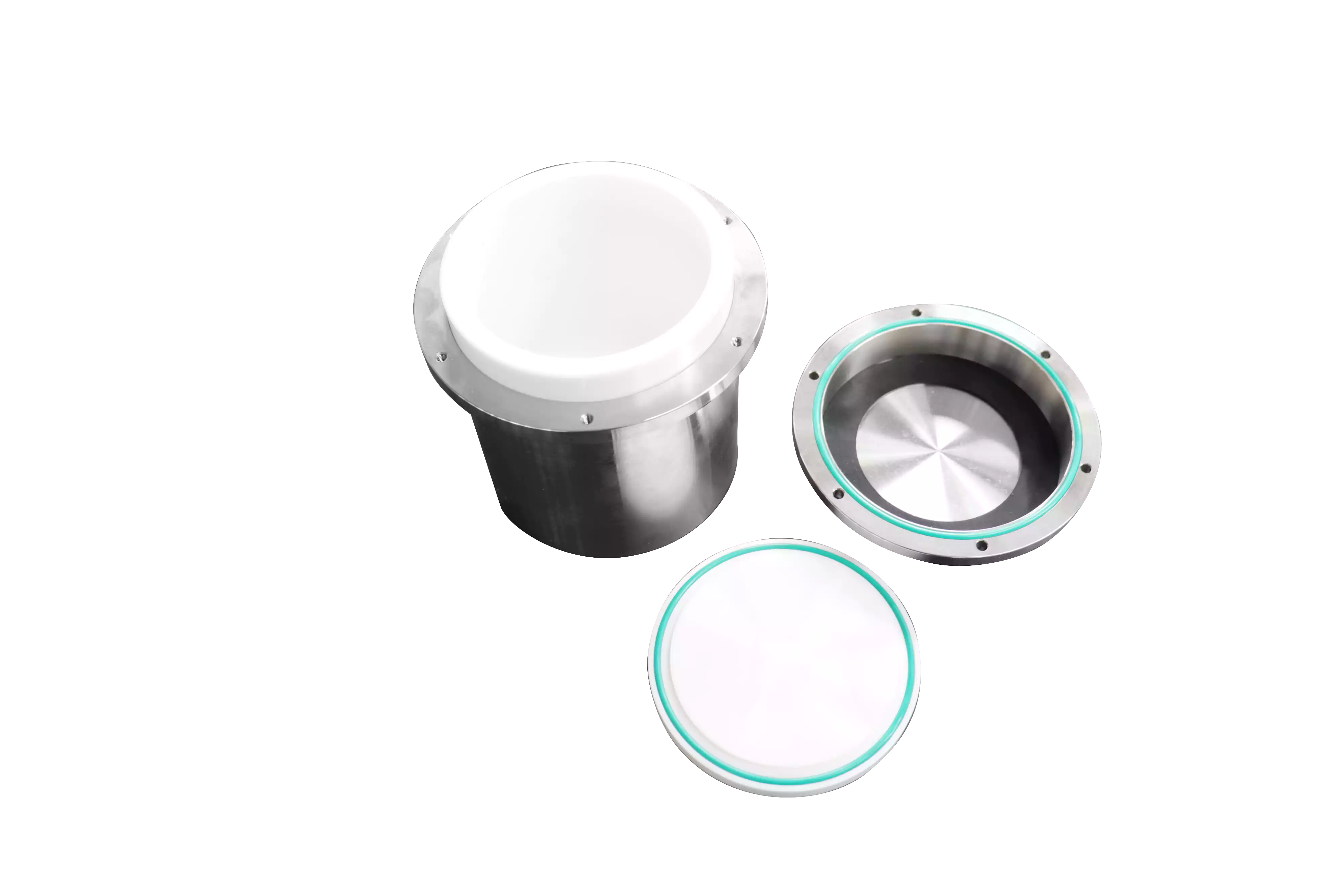
The first route is the 304 stainless steel lined with zirconia mill jar from TENCAN. The supplied product record places it in the planetary ball mill jar category and identifies a 304 stainless steel jar with a zirconia lining. That hybrid description is the starting point for a technical conversation: a metal jar body is paired with a ceramic sample-contact lining, so the buyer should establish exactly which surfaces the sample can touch.
What the supplied record establishes
The record documents the product name and the two named materials, 304 stainless steel and zirconia. It does not provide a volume series, a zirconia grade, a lining thickness, a lid style, a gas-tightness value, or a recommended ball material. These are not reasons to exclude the jar; they are the details that determine whether a particular jar is right for a particular mill and sample. A procurement engineer should ask for a dimensioned drawing and a material description before comparing it with any other route.
The hybrid construction is relevant when a laboratory wants a zirconia sample-contact surface but does not want to evaluate an all-ceramic jar body at the same time. The critical check is continuity: whether the zirconia lining covers the interior wall, the base, the lip, and the underside of the lid, and whether any 304 stainless steel remains exposed in the grinding chamber. The answer should come from TENCAN for the specific jar size, not from an assumption based on the product name.
Where the hybrid construction can fit
This route is worth quoting for contamination-sensitive method development, for laboratories comparing a ceramic contact surface against an unlined metal jar, and for workflows where the jar body must be handled and clamped in a conventional planetary mill. It can be evaluated for dry milling, wet milling, and mechanical alloying only after the mill energy, media, solvent, and sealing requirements have been checked. Zirconia is a material choice, not a guarantee that every sample will remain uncontaminated or that every particle-size target will be reached.
For heat-sensitive samples, the jar choice is only one part of the thermal question. The lid, the milling energy, the fill ratio, and the pause protocol also matter. For air-sensitive samples, the buyer should confirm whether the lid and any ports can support the required atmosphere and whether the jar can be loaded and opened under the laboratory's preferred conditions. For abrasive samples, the buyer should ask how liner wear will be monitored and when a replacement liner or jar is recommended.
Configuration to confirm with TENCAN
- Jar volume and usable grinding-chamber dimensions for the selected mill.
- Zirconia grade, lining thickness, and the surfaces covered by the lining.
- Lid, clamp, sealing ring, and any gas-port arrangement needed for the process.
- Compatible media material, media size, and fill-ratio guidance.
- Cleaning method, drying method, and criteria for liner inspection or replacement.
- Documentation available for the specific jar, including a dimensioned drawing and material description.
Option 2: Monolithic zirconia jar
A jar made entirely of zirconia is a different procurement route from a zirconia-lined metal jar. If an international supplier offers a monolithic zirconia jar, the buyer should compare it on the same dimensions rather than treating the word zirconia as sufficient. The relevant questions are the exact zirconia grade, the fired density or porosity description, the available volume, the lid and sealing method, the impact limits, and the media that the supplier supports for that jar.
This route may be considered when the laboratory wants an all-ceramic sample-contact surface and can accept the handling and energy limits of a ceramic body. It should not be assumed to accept the same milling energy as a metal-bodied jar, and it should not be selected on the basis of a generic material name alone. Ask for the supplier's official jar data, a drawing, and a recommended operating envelope. Then confirm that the mill, media, and sample load fall inside that envelope. For contamination-sensitive work, the cleaning and inspection routine also needs to be agreed before the first run.
Option 3: Zirconia-toughened alumina jar
A product described as a zirconia-toughened alumina jar is a composite ceramic route. The name indicates that more than one ceramic phase is involved, so the buyer should not treat it as interchangeable with either monolithic zirconia or a zirconia-lined stainless steel jar. The exact grade, phase content, surface finish, volume, and lid design should come from the supplier's official data for the specific jar.
This route is relevant when the laboratory is screening ceramic contact materials and when alumina-zirconia chemistry is acceptable for the sample. It should be compared with the TENCAN zirconia-lined jar on sample contact, available volume, sealing, media compatibility, cleaning, and the evidence the supplier can provide. If the sample is sensitive to alumina or to any declared phase in the composite, the route should be excluded regardless of its other attractions. The purchase decision should rest on the actual material declaration and a sample trial, not on a generic description.
Option 4: Agate jar
An agate jar is another ceramic route that may appear in international quotations for laboratory planetary milling. It should be evaluated as a distinct material choice, not as a universal low-contamination answer. The buyer should ask for the agate grade, the jar volume, the lid and sealing arrangement, the recommended media, and the supplier's guidance on sample hardness, energy, and cleaning. Agate is not the right contact material for every sample, and a supplier should be willing to discuss the limits of the specific jar.
This route may be considered for gentle milling of compatible brittle samples where the laboratory has confirmed that agate is acceptable. It should not be used for high-energy trials or for samples that can react with or wear the jar without a prior compatibility check. The same procurement discipline applies: obtain the official jar description, compare it with the TENCAN zirconia-lined option on the same application dimensions, and run a small trial before committing a batch.
Option 5: Tungsten carbide jar
A tungsten carbide jar is a carbide-based route for demanding laboratory milling. The buyer should confirm the binder composition and the declared contamination profile, because a tungsten carbide jar is not necessarily pure tungsten carbide. The supplier should state the grade, the jar volume, the lid and sealing method, the recommended media, and the cleaning guidance for the specific product. These details matter when the sample is sensitive to the binder or when the laboratory needs a documented material declaration.
This route may be relevant when a dense carbide jar is being considered for high-energy work and the sample can tolerate the confirmed jar composition. It should not be selected only because it sounds harder or heavier than another option. Compare it with the TENCAN zirconia-lined jar on sample contact, energy, sealing, cleaning, and verification. If the sample cannot tolerate the confirmed carbide composition, the route should be removed from the shortlist even if it offers other handling advantages.
Comparison table: same dimensions, different evidence levels
| Product or route | Documented or design-level strengths | Relevant application | Configuration to confirm |
|---|---|---|---|
| TENCAN 304 stainless steel lined with zirconia mill jar | Supplied product record identifies a 304 stainless steel jar with a zirconia lining in the planetary ball mill jar category. | Zirconia-lined sample contact for contamination-sensitive planetary milling, subject to mill, media, and process compatibility. | Volume, zirconia grade, lining coverage, lid and seal, media, cleaning, and replacement criteria. |
| Monolithic zirconia jar | Design-level route: all-ceramic jar body; official supplier data required. | Labs seeking an all-ceramic sample-contact surface for a compatible sample and mill energy. | Zirconia grade, impact limits, volume, lid, media, and supplier operating guidance. |
| Zirconia-toughened alumina jar | Design-level route: composite ceramic jar; official material declaration required. | Ceramic screening where alumina-zirconia chemistry is acceptable. | Phase content, surface finish, volume, sealing, media, and sample compatibility. |
| Agate jar | Design-level route: ceramic jar for compatible gentle milling; official supplier data required. | Low-energy milling of brittle samples where agate is confirmed as acceptable. | Agate grade, sample hardness, energy, volume, lid, media, and cleaning. |
| Tungsten carbide jar | Design-level route: carbide jar; exact grade and binder must be declared. | Demanding milling where the sample can tolerate the confirmed carbide composition. | Binder composition, contamination profile, volume, sealing, media, and cleaning. |
Application scenarios and how to read the options
Early method development
For a first milling trial, the priority is a jar that can be documented and cleaned without ambiguity. The TENCAN zirconia-lined jar is a practical route to discuss when the laboratory wants a zirconia sample-contact surface and a metal jar body. Ask for the smallest available volume that can accommodate the sample and media, then confirm that the mill can run that jar safely. A small trial should record the fill ratio, media size, speed, time, and any temperature rise. The result belongs to that sample and that configuration, not to the jar name in general.
Contamination-sensitive samples
When contamination control is the main driver, compare the sample-contact material first, then the sealing and cleaning routine. A zirconia-lined jar and a monolithic zirconia jar both put zirconia at the contact surface, but they differ in body construction and handling. The buyer should ask for the exact material declaration, the surfaces covered by the lining in the TENCAN product, and the supplier's recommended cleaning method. A blank milling run and an analytical check appropriate to the laboratory can then test whether the chosen route meets the project's contamination limit.
Wet milling and solvent-based work
Wet milling adds questions about seal compatibility, solvent attack, jar cleaning, and drying. The TENCAN jar should be quoted with the intended solvent and process temperature declared, so that the lid and sealing arrangement can be confirmed. The same applies to the other routes. A jar that is suitable for dry powder may not be suitable for a solvent that swells the seal or leaves residue in a liner edge. Cleaning validation should be planned before the first wet run, not after a batch is lost.
Mechanical alloying and high-energy trials
Mechanical alloying and other high-energy trials place more demand on the jar, lid, and media. Do not assume that a jar described as zirconia-lined or carbide will accept every energy level. Confirm the mill model, the jar volume, the media density, the fill ratio, and the supplier's operating guidance. For the TENCAN product, ask specifically whether the intended energy and media are supported for the selected jar size. If the supplier cannot confirm the combination, reduce the trial to a lower-energy screening run or choose a different route.
Procurement checklist before requesting a quotation
A useful quotation request gives the supplier enough process information to answer with a specific configuration instead of a generic jar list. Prepare the following points before contacting TENCAN or any international jar supplier.
- Sample identity, approximate hardness, initial particle size, target size, and batch mass.
- Any sensitivity to metals, ceramics, oxygen, moisture, solvents, or temperature.
- Mill make and model, jar seat dimensions, and any restriction on jar diameter or weight.
- Required jar volume, usable volume, fill ratio, and media material and size.
- Dry or wet process, solvent name, atmosphere, and required sealing level.
- Cleaning method, cross-contamination limit, and whether a dedicated jar is required.
- Documentation needed for internal approval, such as a drawing, material description, or declaration.
- Verification plan, including a blank run, analytical method, and acceptance criteria.
The next step is to send TENCAN the sample details, target particle size, batch mass, mill model, and cleaning or atmosphere requirements, and ask which volume and lining configuration of the 304 stainless steel lined with zirconia mill jar can be quoted for a trial. That request keeps the comparison grounded in the actual process and avoids treating a product name as a performance guarantee.
Sources and Further Reading
- TENCAN product page: 304 stainless steel lined with zirconia mill jar. Supplied product reference for this article.