
Zirconia Planetary Mill Jar: Selection, Benefits, and Application Guide for High-Energy Ball Milling
What Is a Zirconia Planetary Mill Jar?
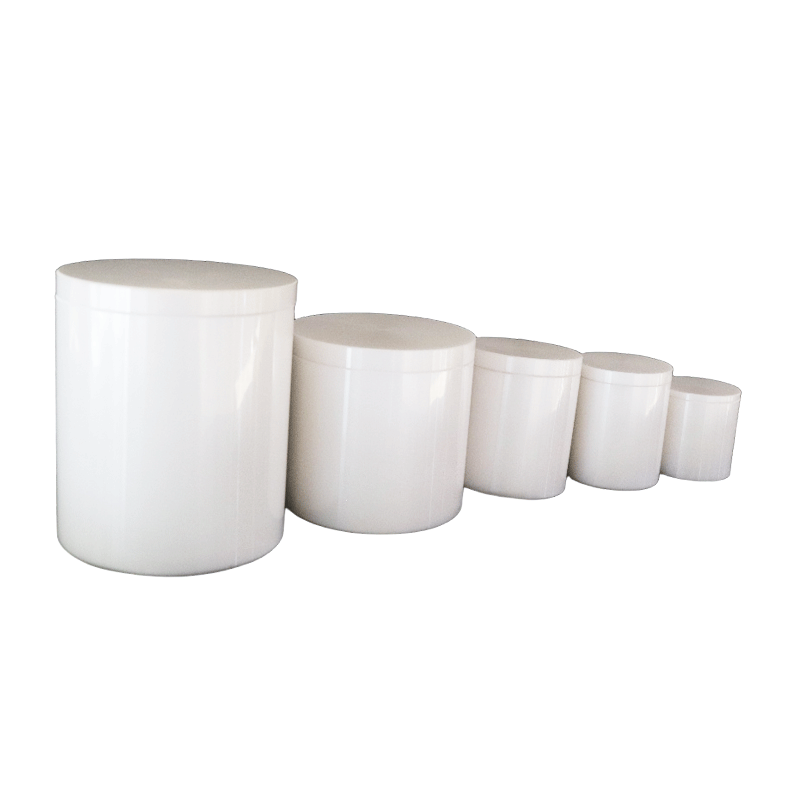
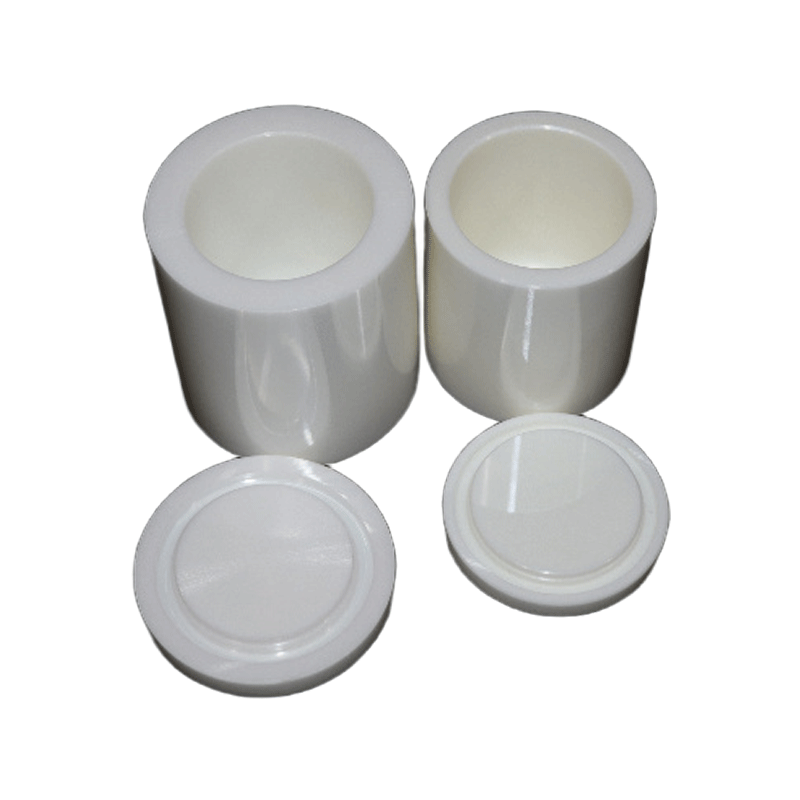
A zirconia planetary mill jar is a grinding container made from high-purity zirconium dioxide (ZrO₂), often stabilized with yttrium oxide (Y₂O₃) to enhance its mechanical strength and thermal stability. It is designed specifically for use in planetary ball mills, where the jar rotates on its own axis while simultaneously revolving around a central axis. This dual motion generates high-energy impacts between the grinding balls and the powder, enabling efficient size reduction, mixing, and mechanical alloying.
Zirconia jars are prized in laboratories for their excellent hardness (about 9 on the Mohs scale), high density (typically around 6.0 g/cm³), and superior wear resistance. Because they are nearly inert and do not introduce metallic contamination, they are a top choice when sample purity is critical.
Why Choose Zirconia Over Other Jar Materials?
Selecting the right grinding jar material is one of the most important decisions in planetary ball milling. The jar material must be harder than the sample to avoid wear, chemically compatible with the powder, and able to withstand the mechanical stresses of high-energy milling. Here is how zirconia compares with common alternatives:
Zirconia vs. Agate
Agate (natural SiO₂) is relatively soft (Mohs 7) and brittle. It is suitable for soft to medium-hard materials and is often used in spectroscopy sample preparation where silica contamination is acceptable. Zirconia, however, is much tougher and denser, allowing it to grind harder materials (e.g., ceramics, carbides) with lower wear rates. Zirconia also has higher fracture toughness, making it less prone to chipping during high-energy milling.
Zirconia vs. Alumina (Corundum)
Alumina jars (Al₂O₃) are hard (Mohs 9) and chemically stable, but their density is lower (around 3.9 g/cm³) than zirconia. For the same jar volume, zirconia provides higher impact energy due to greater mass. Zirconia also exhibits better thermal shock resistance, which is beneficial when the jar heats up during prolonged milling. On the other hand, alumina is more economical and may be preferred for routine grinding of oxide ceramics where cost is a concern.
Zirconia vs. Stainless Steel
Stainless steel jars (304 stainless steel planetary mill jar) are strong, inexpensive, and widely used. However, they can introduce iron, chromium, and nickel contamination into the sample. For many advanced materials—such as lithium-ion battery precursors, catalysts, or biomedical ceramics—even trace metal contamination is unacceptable. Zirconia offers a contamination-free alternative while maintaining excellent durability.
Zirconia vs. Tungsten Carbide
Tungsten carbide (WC) jars are extremely hard and dense, providing the highest impact energy and wear resistance. They are ideal for grinding very hard materials like cemented carbides or for mechanical alloying. However, tungsten carbide is significantly more expensive and can introduce tungsten and cobalt contamination. Zirconia strikes a balance between performance and cost, making it the most versatile choice for many research labs.
Key Considerations When Selecting a Zirconia Planetary Mill Jar
Choosing the right zirconia jar involves more than just picking a material. You should evaluate the following factors based on your specific application:
Jar Capacity and Usable Volume
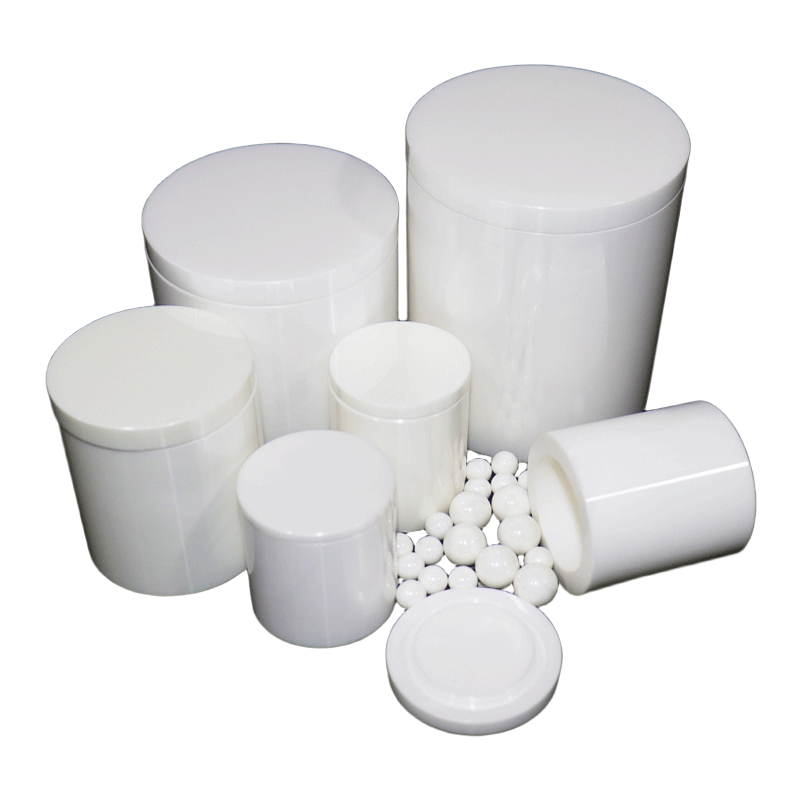
Zirconia planetary mill jars are commonly available in capacities from 50 mL to 1 L or more. However, the actual usable volume is about 50–70% of the total capacity, as you need to leave space for the grinding balls and the sample. For a 500 mL jar, for example, you might typically fill it with approximately 30–50% volume of grinding balls and a sample that accounts for another 10–20% of the jar. The remaining space is necessary for the movement of the balls and gas exchange. For larger batch requirements, multiple jars can be used simultaneously on a planetary ball mill with multiple stations.
Ball-to-Powder Ratio (BPR)
The ratio of the mass of grinding balls to the mass of the powder is one of the most influential parameters. In many laboratory experiments using zirconia jars, the BPR ranges from 5:1 to 20:1 by weight. A higher ratio typically leads to faster size reduction but also generates more heat and wear. For soft materials, you can start with a lower ratio; for hard materials like zirconia ceramics, a ratio of 10:1 or higher is often used. Always verify with preliminary tests.
Grinding Ball Material and Size
To minimize contamination, it is standard practice to use grinding balls made of the same material as the jar—in this case, zirconia balls. Zirconia grinding balls are available in sizes from 0.5 mm to 20 mm or larger. For final fineness in the submicron range, smaller balls (0.5–3 mm) provide more contact points. For coarse grinding or breaking down large particles, larger balls (5–15 mm) deliver higher impact force. A combination of different sizes can improve grinding efficiency.
Sealing and Atmosphere Control
Many zirconia jars are designed with a lid that can be sealed to prevent leakage and maintain internal pressure. Some models include a viton or PTFE gasket for better sealing. If you need to grind air-sensitive or pyrophoric materials, you can use a vacuum planetary mill jar or fill the jar with inert gas (argon or nitrogen) before sealing. Zirconia is chemically stable and does not react with most gases, making it suitable for controlled atmosphere milling.
Compatibility with Your Planetary Mill
Not all planetary ball mills accept jars of any size or shape. Check the maximum jar diameter, height, and clamping mechanism of your mill. Most standard lab planetary mills from TENCAN can accommodate jars with nominal capacities between 50 mL and 1 L. Confirm the jar outer dimensions and the type of fastening (e.g., screw clamp, spring clamp) to ensure a secure fit.
Typical Laboratory Applications of Zirconia Grinding Jars
Zirconia planetary mill jars are widely used in materials science, chemistry, and engineering research. Here are a few common scenarios:
- Ceramic powder preparation: Grinding hard oxides such as Al₂O₃, ZrO₂, TiO₂, and SiC to micron or submicron sizes. Zirconia jars ensure no metal contamination that could alter sintering behavior.
- Lithium-ion battery materials: Milling cathode and anode powders (e.g., LiCoO₂, graphite, silicon) while maintaining electrochemical purity. Zirconia is inert and does not leach metal ions that would degrade battery performance.
- Mechanical alloying: Producing alloy powders from elemental mixtures through repeated cold welding and fracturing. The high density and toughness of zirconia jars withstand the intense impacts required for alloy formation.
- Nanomaterial synthesis: Reducing particle size to the nanometer range. With appropriate milling parameters (high speed, extended time), zirconia jars can help achieve nanoparticles, though the final size depends on material properties and process conditions.
- Bioceramics and dental materials: Preparing yttria-stabilized zirconia powders for dental crowns or implants. Using a zirconia jar avoids contamination from other materials, preserving the biocompatibility and mechanical properties.
Note: Achieving a specific final particle size, especially below 100 nm, is never guaranteed because it depends on factors such as material hardness, feed size, milling speed, grinding ball selection, and possible agglomeration. Always conduct optimization experiments.
How to Maintain and Use Zirconia Planetary Mill Jars Properly
To extend the service life of your zirconia jar and ensure consistent results, follow these practical tips:
Cleaning
After each milling run, empty the jar and rinse it with water or a suitable solvent (e.g., ethanol) to remove residual powder. For stubborn deposits, you can use a soft brush or ultrasonic cleaning. Avoid abrasive cleaning tools that could scratch the inner surface. Never use hydrofluoric acid or strong alkalis that may attack the zirconia.
Inspection
Regularly check the inner wall and lid for signs of wear, cracks, or chipping. Even though zirconia is tough, repeated high-energy impacts can eventually cause microcracks. If you notice any damage, replace the jar to prevent contamination or catastrophic failure during operation.
Drying
After cleaning, dry the jar thoroughly before storage. Moisture trapped inside can lead to powder agglomeration during the next run or promote corrosion if stainless steel components are present.
Handling Temperature
During extended milling, jar surface temperature can rise significantly (sometimes exceeding 60–80°C). If your sample is temperature-sensitive, use intermittent milling cycles, for example, 10–20 minutes of milling followed by 5–10 minutes of pause to let the jar cool. Some planetary mills offer a pause or reverse mode to help dissipate heat.
Operating within Limits
Do not exceed the maximum rotational speed recommended for the jar size. Higher speeds increase the centrifugal force, which can stress the jar beyond its design limits. Always consult the mill manual and the jar specification.
Final Recommendations for Your Lab Setup
When you are planning a new experiment or upgrading your milling setup, consider starting with a zirconia planetary mill jar if your work involves hard, abrasive, or high-purity materials. The investment pays off through longer service life, reduced contamination, and better reproducibility. For applications where trace metal contamination is not critical (e.g., grinding common minerals or construction materials), a stainless steel or nylon jar may be more economical. For the highest hardness materials, a tungsten carbide jar might be necessary, but you must accept the introduction of WC/Co.
To help you choose the optimal jar size and configuration, TENCAN provides technical support based on your specific material, batch quantity, and target particle size. The zirconia planetary mill jar product page lists available dimensions and options. Feel free to contact our engineers with details about your powder—including initial particle size, composition, and desired outcome—and we can recommend a suitable milling solution.