
Agate Planetary Mill Jar Selection Guide
Why Jar Material Matters in Planetary Ball Milling
A planetary ball mill is often chosen when a laboratory needs fine comminution, good repeatability, and flexible control over milling energy. Yet the mill itself is only part of the system. The grinding jar defines the sample chamber, the wear surface, the sealing environment, and the material that will contact the powder throughout the run. When a jar material is selected only for convenience, problems such as contamination, sample loss, difficult cleaning, or inconsistent particle size distribution can appear later. This is why material engineers and laboratory managers often evaluate the jar with the same care they apply to grinding media and mill settings.
Contamination is the most common reason to move away from a general-purpose jar. Trace elements released from the jar wall or lid can alter chemical analysis, interfere with sintering, change catalytic behavior, or introduce color and conductivity effects in sensitive powders. In many workflows, the acceptable contamination level is not a single number; it depends on the final application, the detection limit of the analytical method, and the value of the sample. A jar that performs well for one material may be unsuitable for another because the risk profile changes.
The agate planetary mill jar is used in laboratory planetary ball mills where a non-metal jar material is preferred. Agate is a natural mineral material, and jars made from it are selected for specific low-contamination and sample-handling needs. The decision should not be based on the name alone. Engineers should compare the jar material with the sample chemistry, the grinding media, the target particle size, and the cleaning protocol. A jar that is compatible with one ceramic powder may not be the best choice for a hard metal alloy or an abrasive mineral.
Wear is another factor. Every grinding jar experiences abrasion from media and sample. The wear rate depends on the hardness and shape of the media, the rotational speed, the milling time, and the abrasiveness of the sample. A jar material that is too soft for a high-energy application may wear quickly or contribute more contamination than expected. A jar material that is very hard may reduce wear but can also change the impact behavior of the milling media. The goal is not to find a universally superior material; it is to match the jar to the duty cycle.
Sealing and sample retention also matter. Planetary ball milling can generate fine dust, especially in dry grinding. A well-designed jar and lid help keep the sample inside the chamber and reduce exposure to the laboratory environment. For wet milling, the seal must be compatible with the solvent or liquid medium. The same jar may behave differently with water, alcohol, oil, or a reactive solvent. These are practical selection points that should be checked before a long milling campaign.
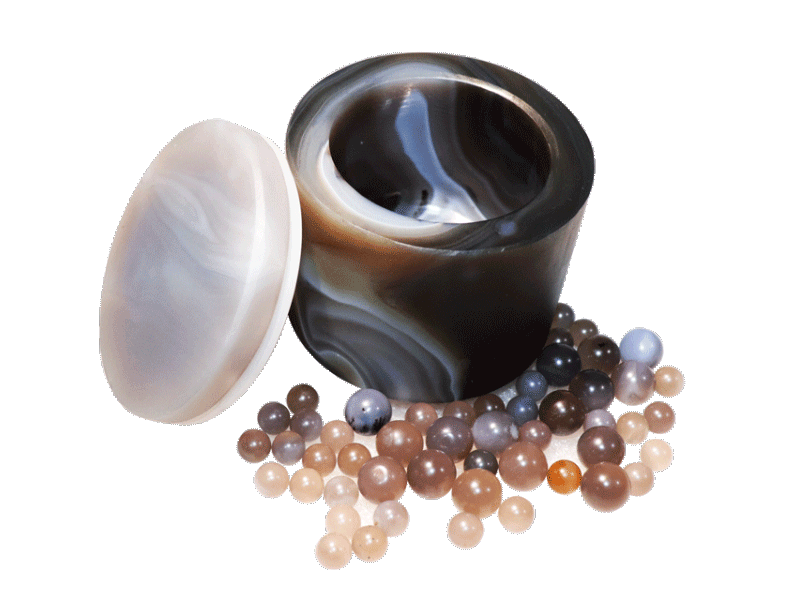
Agate planetary mill jar for laboratory planetary ball milling.
What an Agate Planetary Mill Jar Is and How It Works
An agate planetary mill jar is a grinding jar made from agate and designed for use in a planetary ball mill. It serves as the sample container, the grinding chamber, and the wear surface. In a typical planetary ball mill, the jar is mounted on a rotating disk. As the disk turns, the jar also rotates around its own axis. The combination of these motions creates a complex movement of the grinding media inside the jar. The media are lifted, thrown, and rolled against the sample and the jar wall. The result is a mixture of impact and friction that reduces particle size.
The jar material influences how that energy is transferred. If the jar wall is very hard and rigid, the media may rebound more strongly and produce more impact energy. If the jar material is more compliant or has different surface friction, the media may slide and roll more, which changes the balance between impact and attrition. For brittle samples, impact may be useful for initial breakage. For softer or heat-sensitive samples, friction and shear may be more important. The jar should be selected with the dominant breakage mechanism in mind.
Agate jars are often considered when metal contamination must be minimized. In a laboratory setting, a jar that releases iron, chromium, or nickel can compromise trace analysis, magnetic measurements, or sintering behavior. A non-metal jar can reduce that risk, but it does not eliminate all contamination. Agate itself can wear, especially under aggressive milling conditions. The user should still inspect the jar, monitor sample chemistry, and validate the process for the specific material being milled.
Another function of the jar is thermal management. Milling generates heat through friction and impact. The jar material, wall thickness, and geometry affect how quickly heat is conducted away from the sample. A jar that retains heat may raise the sample temperature, which can cause phase changes, decomposition, oxidation, or agglomeration. Agate is not necessarily the best thermal conductor, so process time and speed may need to be adjusted when temperature-sensitive materials are processed. In some cases, intermittent milling or a lower energy input can be more effective than a single long run.
The lid and sealing system are also part of the working principle. A planetary mill jar must stay closed during high-speed motion. The lid may use a gasket, an O-ring, or a mechanical seal, depending on the design. The user should confirm that the seal is compatible with the sample and the milling liquid. If the seal swells, hardens, or reacts, the jar may leak or the lid may become difficult to open. These are practical details that affect repeatability and safety.
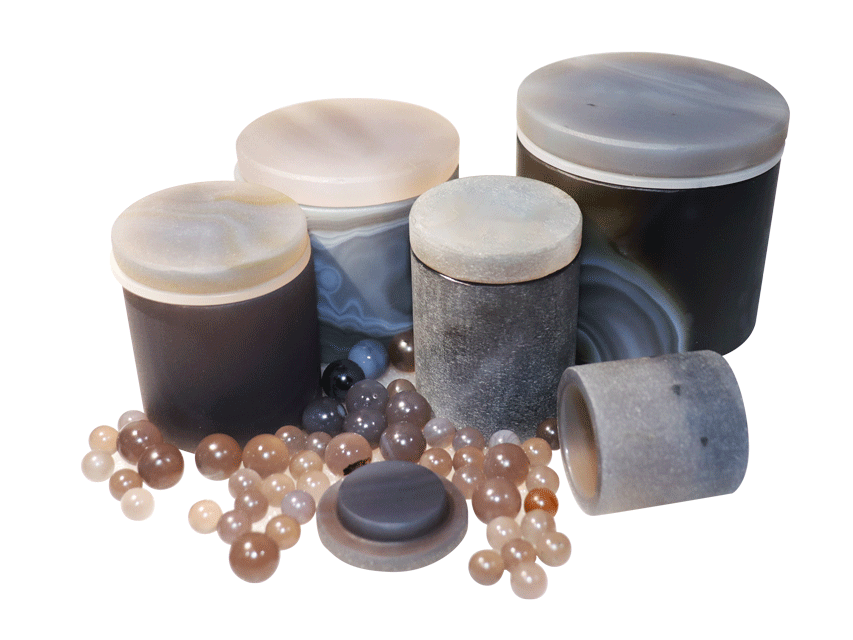
Agate planetary mill jar product view.
Key Selection Factors for an Agate Planetary Mill Jar
Selecting an agate planetary mill jar is a process of matching the jar to the sample, the mill, and the target result. The following factors are not independent. Changing one factor often requires adjustment of the others. A jar that is suitable for one set of conditions may need a different media size, fill ratio, or milling time in another application.
Sample and Material Compatibility
The first question is whether agate is chemically and mechanically compatible with the sample. For inert inorganic powders, the main concern is usually wear and contamination. For reactive materials, the concern may be chemical attack, adhesion, or catalytic effects. For biological or organic samples, the concern may be cleaning, sterility, or interaction with solvents. The user should review the material safety data and any previous milling experience before committing to a jar material.
Hardness is a useful starting point. If the sample is harder than the jar material, the jar will wear quickly. If the sample is much softer, the jar may last longer but could still be damaged by the grinding media. The media are often the main source of wear because they strike the jar wall repeatedly. Therefore, the jar material should be evaluated together with the media material. A hard media in a soft jar can cause rapid wear; a soft media in a hard jar may not deliver enough energy for efficient size reduction.
Particle shape also matters. Angular or abrasive powders can scratch the jar surface. Over time, scratches can trap sample and make cleaning more difficult. They can also increase friction and change the milling behavior. If cross-contamination between batches is a concern, a smooth, well-finished jar surface is easier to clean and validate. The user should inspect the jar for cracks, chips, or surface damage before each use.
Feed Size, Target Size, and Particle Size Distribution
Feed size determines how much work the mill must do. A jar that is suitable for a fine feed may not be suitable for coarse particles that need preliminary crushing. In many laboratories, the sample is pre-crushed or sieved before planetary ball milling. This protects the jar and media and improves reproducibility. If the feed contains large particles, the initial impacts may be strong enough to chip the jar or damage the lid.
Target particle size and particle size distribution are equally important. Some applications require only a reduction to a certain median size, while others require a narrow distribution or a specific top size. Planetary ball milling can produce fine particles, but the result depends on milling time, media size, speed, and the properties of the sample. A jar alone cannot guarantee a particular particle size distribution. The process must be tested and adjusted. The user should define the acceptance criteria before selecting the jar and media.
Over-milling is a common problem. When the target size is reached, continued milling may not improve the result. It may cause agglomeration, contamination, or changes in crystal structure. The jar material can contribute to this effect if wear particles are generated. A process that is optimized for the shortest time to reach the target size is often more reproducible and less damaging to the jar. This is especially important for expensive or scarce samples.
Dry Versus Wet Milling
Dry milling is convenient because it avoids liquid handling and drying steps. However, dry powders can coat the jar and media, reduce impact efficiency, and create dust when the jar is opened. In some materials, dry milling can also cause agglomeration or static charging. An agate jar may be used for dry milling, but the user should consider whether the powder will stick to the agate surface and whether cleaning will be difficult.
Wet milling uses a liquid medium to disperse the sample and reduce dust. It can improve particle size reduction and help control temperature. The liquid also changes the behavior of the media and the wear rate. A solvent that is compatible with agate should be chosen. Water is common, but it may not be suitable for moisture-sensitive materials. Alcohols, glycols, and other organic liquids may be used, but the user must confirm that they do not attack the jar, the seal, or the lid. The viscosity of the liquid also affects milling efficiency; a very viscous medium can slow media movement, while a very thin medium may not provide enough dispersion.
The choice between dry and wet milling should be based on the material and the downstream process. If the next step is a slurry-based process, wet milling may be more direct. If the powder must remain dry, dry milling may be preferred. In either case, the jar should be selected for the actual operating environment, not just the laboratory bench.
Grinding Media and Fill Ratio
The grinding media are the tools that do the work. Their material, size, shape, and quantity affect the milling result. For an agate jar, the media should be compatible with the jar material to avoid excessive wear. Media that are too large may cause high-impact forces and damage the jar. Media that are too small may not provide enough energy for coarse feed. The optimum media size depends on the feed size, the target size, and the jar volume.
Media fill ratio is another critical variable. If the jar is underfilled, the media may not contact the sample efficiently. If the jar is overfilled, the media may not move freely, and the milling action may be reduced. The user should follow the jar and mill manufacturer recommendations and then adjust based on trial results. The sample volume also matters. A very small sample in a large jar can be difficult to mill because much of the energy is spent on media-to-media collisions. A jar that is appropriately sized for the sample can improve efficiency and reduce waste.
The media material should be chosen with contamination in mind. If the goal is low contamination, the media should be at least as clean as the jar. In some cases, agate media are used with agate jars to maintain material consistency. In other cases, a different media material may be selected for higher density or hardness. The decision should be validated with a blank milling test or analytical check when trace contamination is critical.
Operating Conditions and Process Stability
Once the jar and media are selected, the operating conditions determine whether the process is stable and reproducible. Small changes in speed, time, or temperature can produce large differences in particle size. The goal is to find a window in which the mill delivers the required result without damaging the jar or altering the sample.
Rotation Speed and Milling Time
Rotation speed controls the energy input. Higher speed generally increases impact energy and can reduce milling time. However, higher speed also increases wear, heat generation, and the risk of jar damage. The optimum speed depends on the jar size, media load, and sample properties. A speed that is too low may not move the media effectively. A speed that is too high may cause the media to centrifuge against the jar wall, which reduces the tumbling action and can actually lower efficiency.
Milling time should be determined by trial, not by assumption. A short trial can be used to establish a baseline. The particle size can then be checked at intervals to find the minimum time required to reach the target. This approach reduces over-milling and extends jar life. It also helps identify whether the process is limited by the jar, the media, or the sample. If the particle size stops decreasing after a certain time, increasing time may not help. In that case, changing media size, fill ratio, or speed may be more effective.
For heat-sensitive materials, intermittent milling can be useful. The mill can run for a period, pause to cool, and then continue. This reduces the average temperature and may prevent degradation. The jar material and geometry affect how quickly the sample cools, so the pause time may need to be adjusted. The user should monitor the jar temperature and the sample condition during the trial.
Temperature and Pressure
Temperature rises during milling because mechanical energy is converted to heat. The amount of heat depends on the speed, time, media load, and the thermal properties of the jar and sample. An agate jar can insulate the sample to some degree, so heat may build up inside the chamber. If the sample is temperature-sensitive, the process may need to be optimized to keep the temperature within a safe range.
Pressure can also change during milling. In a sealed jar, gases may be generated or consumed by the sample. If the sample releases gas, pressure may increase. If the sample oxidizes, oxygen may be consumed. In most laboratory milling, the pressure change is small, but for reactive materials, it can be important. The user should select a jar and seal that are appropriate for the expected pressure and atmosphere. For air-sensitive materials, milling may be performed under an inert gas, but this requires a jar and lid that can be sealed and handled accordingly.
Cleaning and Cross-Contamination
Cleaning is a key part of process stability. If the jar is not cleaned thoroughly between samples, residue from the previous batch can contaminate the next one. This is especially important when the analytical method is sensitive or when the sample is valuable. Agate jars should be cleaned with methods that do not damage the surface. Abrasive cleaning tools can scratch the jar and create sites for sample retention. Harsh chemicals may attack the jar or the seal.
A typical cleaning sequence may include dry wiping, rinsing with a compatible solvent, and drying. The exact procedure depends on the sample. For inorganic powders, deionized water or alcohol may be sufficient. For organic samples, a solvent that dissolves the residue may be needed. The user should avoid leaving cleaning liquid in the jar for long periods, especially if the liquid could attack the seal or the agate surface. After cleaning, the jar should be inspected for cracks, chips, or discoloration.
Cross-contamination can also occur through the media and lid. The media should be cleaned with the same care as the jar. The lid and gasket should be checked for residue and wear. If the gasket is degraded, it may release particles or fail to seal. Replacement parts should be obtained from the jar supplier or a qualified source. Using the wrong gasket can affect sealing and safety.
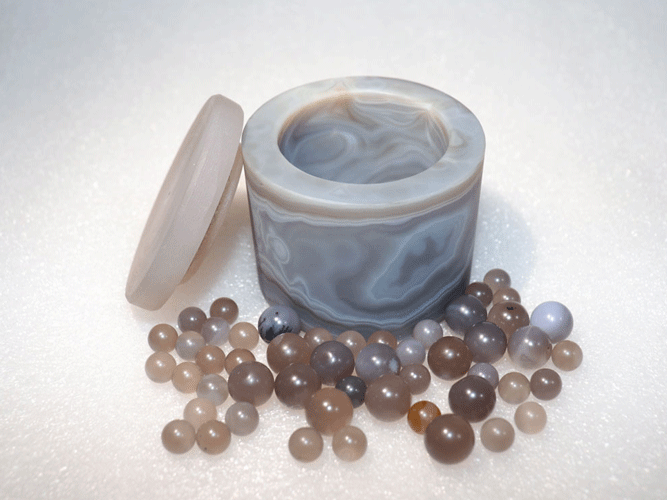
Agate planetary mill jar close view.
Common Problems and Troubleshooting
Even with a well-chosen jar, problems can occur. Recognizing the cause can save time and prevent damage. The following issues are common in planetary ball milling with agate jars.
| Problem | Possible cause | Practical response |
|---|---|---|
| Slow particle size reduction | Media too small, fill ratio incorrect, speed too low, or sample too coarse | Review media size and fill ratio, pre-crush the sample, or adjust speed and time within safe limits |
| Excessive jar wear | Media too hard or too large, speed too high, or milling time too long | Use media that are compatible with the jar, reduce speed or time, and inspect the jar regularly |
| Sample contamination | Jar or media wear, dirty jar, or incompatible seal | Run a blank test, improve cleaning, and verify material compatibility |
| Sample caking or sticking | Dry milling, static charge, moisture, or over-milling | Try wet milling or a different liquid, reduce milling time, or use a suitable additive if the application allows |
| Leakage during milling | Damaged seal, loose lid, or incompatible liquid | Replace the seal, check the lid closure, and confirm liquid compatibility |
| Heat buildup | High speed, long milling time, or poor heat dissipation | Use intermittent milling, lower the speed, or reduce the batch energy input |
When troubleshooting, change only one variable at a time. If media size and speed are changed together, it is difficult to know which change produced the result. A systematic approach is faster and more reliable. The user should record the jar type, media type, fill ratio, speed, time, and sample mass for each trial. This record becomes the basis for a repeatable process.
Jar inspection should be part of routine operation. Look for cracks, chips, stars, or cloudy patches on the surface. A damaged jar may fail during milling or release particles into the sample. If damage is found, the jar should be removed from service. The same applies to the lid and gasket. A small crack can grow quickly under repeated impact, and a leaking jar can ruin a batch.
Selection and Validation Checklist
A structured checklist helps ensure that the agate planetary mill jar is suitable for the application. The following points can be used before purchase and before a new process is released.
- Define the sample chemistry, hardness, feed size, and target particle size distribution.
- Confirm that agate is chemically compatible with the sample, solvent, and cleaning agents.
- Select a jar volume that matches the sample mass and the mill capacity.
- Choose grinding media that are compatible with the jar material and the required energy input.
- Set a conservative starting speed, time, and fill ratio, then optimize through trials.
- Establish a cleaning and inspection procedure for the jar, lid, gasket, and media.
- Run a blank or control test when trace contamination is critical.
- Record all process parameters and outcomes for future reproducibility.
- Review the jar and seal condition after each campaign and replace parts when needed.
- Validate the final particle size and sample integrity before scaling the process.
For laboratories that need detailed product information, the agate planetary ball mill jar page provides the current product reference. It can be used alongside the selection points above to verify dimensions, sealing, and compatibility for a specific planetary ball mill. Because milling results depend on the sample and process, the final choice should be confirmed by testing with the actual material.
An agate grinding jar is not a universal solution, but it can be a practical choice when low contamination and careful sample handling are priorities. The jar should be treated as part of an integrated milling system that includes the mill, media, sample preparation, and analytical validation. When these elements are aligned, the result is a more stable process, better reproducibility, and fewer surprises during scale-up or routine analysis.
TENCAN supplies laboratory milling equipment and accessories for materials research, and the agate planetary mill jar is one of the available options for planetary ball milling. Before ordering, confirm the jar size, lid type, and media combination with the supplier so that the jar matches the mill and the intended process. A short feasibility trial with the real sample is the most reliable way to confirm that the jar and process meet the required particle size, purity, and throughput targets.