
304 Stainless Steel Planetary Mill Jar: A Durable Choice for Laboratory Grinding
Why Choose a 304 Stainless Steel Planetary Mill Jar?
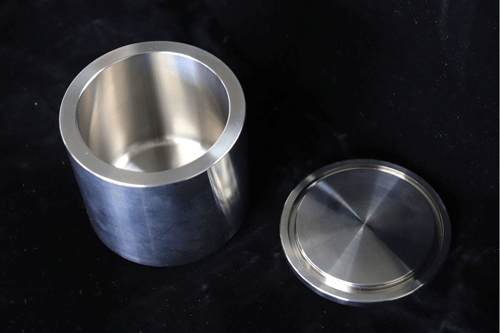
When you work with planetary ball mills, the grinding jar is more than just a container — it directly influences grinding efficiency, sample purity, and equipment compatibility. Among the many jar materials available, 304 stainless steel planetary mill jar stands out as a versatile and cost-effective option for a wide range of laboratory and small-scale production applications. Whether you are grinding hard minerals, mixing battery materials, or preparing ceramic powders, this jar can provide the mechanical strength and corrosion resistance you need.
In this article, we will walk through the material properties, practical advantages, typical applications, and important factors to consider when selecting a 304 stainless steel jar for your planetary ball mill. We will also compare it with other jar materials to help you make an informed decision.
Material Properties and Performance
Composition and Corrosion Resistance
304 stainless steel is an austenitic chromium-nickel alloy containing approximately 18% chromium and 8% nickel. This composition gives it excellent resistance to oxidation and corrosion in many chemical environments. In a grinding context, this means the jar can withstand exposure to mildly acidic or alkaline slurries, water-based suspensions, and organic solvents without significant surface degradation. Compared to carbon steel or plain steel jars, the 304 grade offers much lower risk of rust formation, especially when used in wet grinding or when cleaning with aqueous solutions.
Mechanical Strength and Wear
Planetary ball mills generate high centrifugal forces — typically several times the acceleration of gravity. The jar must withstand these forces repeatedly without deformation or fatigue failure. 304 stainless steel provides good tensile strength and impact toughness, making it suitable for grinding medium-hard materials such as limestone, quartz, feldspar, and some ores. However, for extremely hard materials like tungsten carbide or silicon carbide, the inner surface of a 304 stainless steel jar will experience gradual wear over time. This wear can introduce iron and chromium contamination into the powder, which may be unacceptable for some high-purity applications.
Temperature Resistance
Another advantage of 304 stainless steel is its ability to withstand moderate temperature increases during prolonged grinding. While planetary milling can cause the jar to heat up — especially at high speeds or with tough materials — 304 stainless steel retains its mechanical integrity up to approximately 800°C in continuous service. In practice, most laboratory grinding stays well below that, but the margin of safety is reassuring for processes that generate heat.
Typical Applications in Laboratory and Industry
The 304 stainless steel planetary mill jar is used across many fields where contamination from jar material is tolerable or where the jar can be lined or paired with appropriate grinding media. Here are some common areas:
- Mineral and ore processing: Grinding geological samples, coal, coke, and low-to-medium hardness ores.
- Ceramic and glass: Pre-milling of ceramic powders, frits, and glass frit formulations before sintering.
- Chemical and pharmaceutical: Mixing and fine grinding of active ingredients, excipients, and catalysts where trace iron does not affect the end product.
- Battery materials: Preparing cathode or anode precursors, such as lithium iron phosphate or graphite blends, when stainless steel contamination is acceptable.
- Mechanical alloying: Producing alloy powders from ductile metals like copper, aluminum, and nickel, provided the jar wear is monitored.
Key Selection Considerations
Jar Capacity and Matching Mill Type
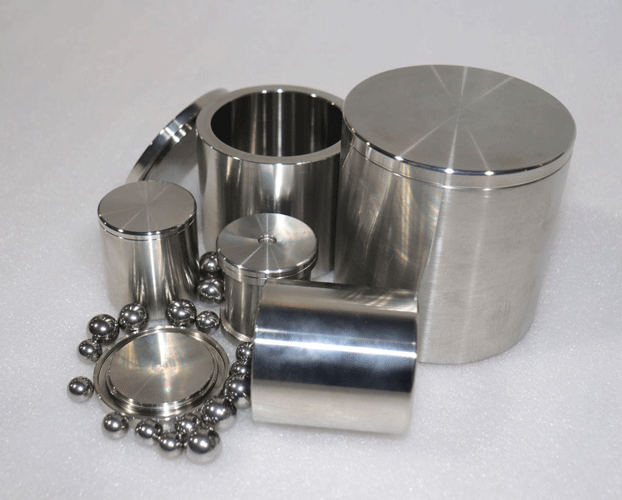
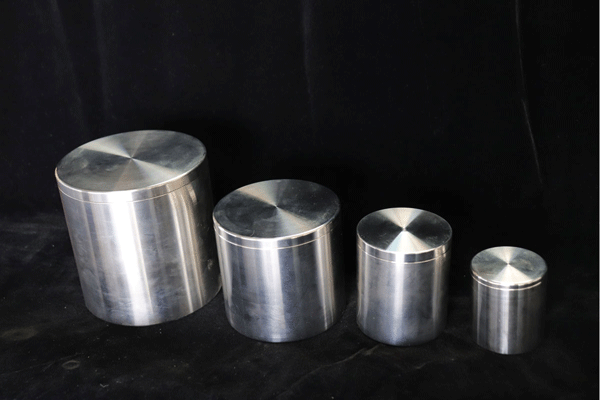
304 stainless steel jars are available in a range of capacities — commonly 50 mL, 100 mL, 250 mL, 500 mL, 1 L, and larger. The appropriate size depends on your sample quantity per batch. A general rule is to fill the jar to about one-third of its volume with grinding balls, and the sample should occupy roughly the same volume as the void space between balls. For a typical 500 mL jar, that translates to about 100–150 mL of sample powder depending on density.
Most planetary ball mills from manufacturers like TENCAN accept jars with standard outer diameters and locking mechanisms. Before ordering, confirm that the jar fits your mill’s jar holder and that the lid sealing design is compatible. The 304 stainless steel jars often feature a threaded lid with an O-ring seal, which can be used for both regular grinding and vacuum or inert gas operation when equipped with a valve.
Grinding Media Compatibility
The choice of grinding balls is as important as the jar material. For a 304 stainless steel jar, you can use stainless steel balls (304 or 316L), which will match the jar’s chemical composition and minimize galvanic corrosion. However, if you need to reduce iron contamination, you might consider using zirconia or alumina balls inside a stainless steel jar. Keep in mind that harder balls like zirconia can accelerate wear on the stainless steel inner wall, especially at high speeds. A practical approach is to start with a lower ball-to-powder ratio and gradually increase it while observing the jar’s condition.
Vacuum and Inert Gas Capability
Many 304 stainless steel jars can be configured with a vacuum-tight lid and a gas valve, allowing you to grind under vacuum or backfill with argon or nitrogen. This is essential for air-sensitive materials such as metal powders, sulfides, or nanomaterials that oxidize easily. The stainless steel construction provides the necessary rigidity to maintain the seal under both positive and negative pressure. When using a vacuum jar, always check the O-ring condition and apply a thin layer of vacuum grease to ensure a proper seal.
Cleaning and Maintenance
304 stainless steel is easy to clean — you can use water, mild detergents, or organic solvents. Avoid using strong acids or chlorides (like hydrochloric acid or bleach) that can cause pitting corrosion. After cleaning, dry the jar thoroughly to prevent water spots or microbial growth. Over time, the inner surface may develop a slight polishing effect from the abrasion of grinding media, which does not affect performance.
Comparing 304 Stainless Steel with Other Jar Materials
Selecting the right jar material involves balancing cost, wear resistance, contamination control, and chemical compatibility. Below is a practical comparison:
| Jar Material | Typical Hardness | Contamination Risk | Chemical Resistance | Cost | Best For |
|---|---|---|---|---|---|
| 304 Stainless Steel | ~200 HB | Fe, Cr (low to moderate) | Good (neutral & mild chemicals) | Moderate | Mineral, ceramic, chemical, battery |
| Agate | ~7 Mohs | SiO₂ (very low) | Excellent (acid & alkali resistant) | High | High-purity, trace analysis |
| Zirconia | ~8.5 Mohs | ZrO₂ (very low) | Excellent | High | Hard materials, nano grinding |
| Alumina (Corundum) | ~9 Mohs | Al₂O₃ (low) | Good | Moderate | Hard ceramics, abrasives |
| Tungsten Carbide | ~90 HRA | WC, Co (varies) | Good | Very High | Ultra-hard materials, MA |
| Nylon / PTFE | Soft | Very low | Excellent (organics) | Low | Soft materials, low contamination |
As you can see, 304 stainless steel offers a good balance for many routine tasks. If your priority is minimizing metallic contamination, you may prefer agate or zirconia jars. If you need extreme wear resistance for hard materials, tungsten carbide is better. But for general-purpose grinding with moderate cost and robust durability, the 304 stainless steel planetary mill jar is a reliable workhorse.
Recommendations for Optimal Use
To get the best results from your 304 stainless steel planetary mill jar, here are a few practical tips:
- Ball-to-powder ratio: Start with a ratio between 5:1 and 10:1 by weight. Adjust based on material hardness and target fineness.
- Grinding ball diameter: For initial particle sizes above 1 mm, use balls of 10–20 mm. For finer grinding, use smaller balls (3–5 mm) to increase contact points.
- Speed setting: Most planetary mills operate between 200 and 600 rpm. Higher speeds generate more impact but also more heat and jar wear. For hard materials, consider moderate speeds with longer grinding time.
- Dry vs. wet grinding: Wet grinding with a suitable liquid (water, ethanol, or isopropanol) reduces heat generation and agglomeration. Ensure the liquid does not corrode 304 stainless steel.
- Periodic inspection: Check the inner surface for pitting or excessive wear after every 20–30 hours of use, especially when grinding hard materials.
If you are uncertain about which jar material suits your specific sample, we recommend consulting with technical support. TENCAN engineers can help you evaluate factors such as material composition, acceptable contamination level, and batch size to select the most appropriate 304 stainless steel planetary mill jar for your laboratory. With proper selection and operation, this jar will serve you reliably through countless milling cycles.