
Buy a Small Ball Mill: Laboratory & Small-Batch Grinding Guide
Buy a Small Ball Mill: How to Choose the Right Mill for Laboratory and Small-Batch Grinding
Searching for a small ball mill can be confusing because the term is used for several very different types of equipment. A compact jar mill for laboratory samples, a ceramic-lined drum mill for pilot batches, and a laboratory cone ball mill for ore testing can all be described as “small ball mills,” but their capacity, grinding energy, working principle and ideal applications are not the same.
Before comparing prices, motor power or maximum speed, the first step is to define what you actually need to grind: material, feed size, target particle size, batch quantity, dry or wet process, contamination limit and available power supply. These factors determine which small ball mill configuration is the better choice.
Quick selection rule: Choose a ceramic-lined drum ball mill for intermittent pilot or small-batch grinding with low metal contamination; choose a lab roll ball mill for compact laboratory grinding and mixing with interchangeable jars; choose a laboratory cone ball mill for controlled ore-sample preparation in geology, metallurgy and mineral-processing tests. If the target is micron-to-nano-scale high-energy grinding, a planetary ball mill may be more appropriate.
What Is a Small Ball Mill?
A small ball mill is a grinding machine that reduces particle size through the movement of grinding media inside a rotating or moving container. Depending on the machine structure, the media may tumble under gravity, roll with the grinding jar, or move under higher-energy planetary motion.
The important point is that “small” describes the scale of the equipment, not one universal specification. Some models are true benchtop laboratory machines that use removable jars, while others are compact production or pilot mills with 30 L, 50 L or larger integrated grinding drums.
This distinction matters because buyers often compare two machines that look similar in search results but are designed for completely different workloads.
Three TENCAN Small Ball Mill Options and When to Use Them
| Mill Type | Best For | Main Advantage | Typical Scale |
|---|---|---|---|
| Small Ceramic Drum Ball Mill | Ceramics, minerals, chemicals, pigments and contamination-sensitive batch grinding | Ceramic lining, wet/dry grinding, intermittent pilot or small-batch production | QM models listed from 30 L upward |
| Lab Roll Ball Mill | Research, teaching, sample grinding, powder mixing and formulation tests | Compact structure, removable grinding jars and flexible jar-material selection | Benchtop / laboratory scale |
| Laboratory Cone Ball Mill | Ore testing, geology, metallurgy, coal and mineral-processing research | Controlled small-sample dry/wet grinding for laboratory ore preparation | 200 g to 4 kg listed sample-feed models |
1. Small Ceramic Drum Ball Mill: Best for Low-Contamination Batch Grinding
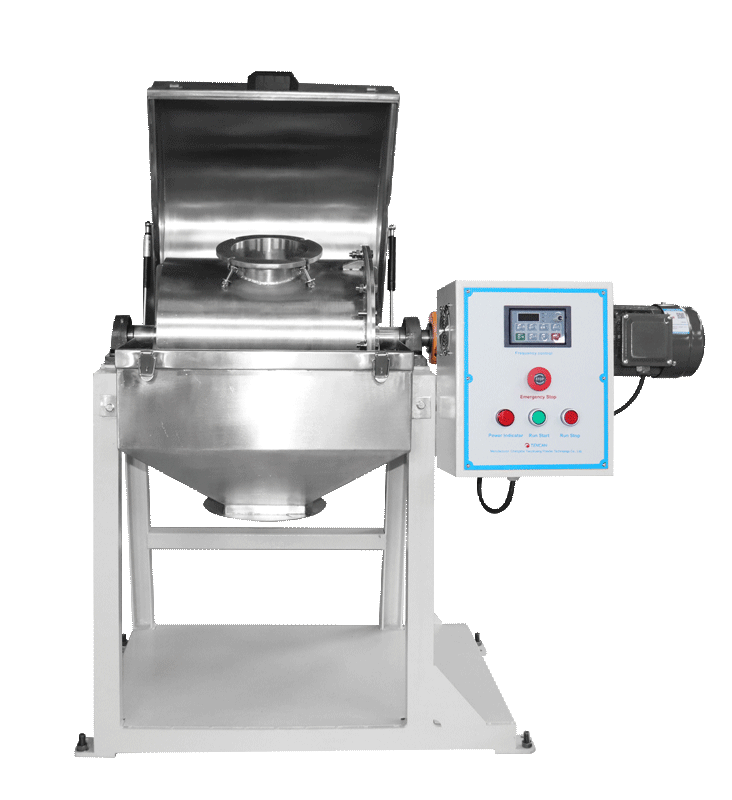
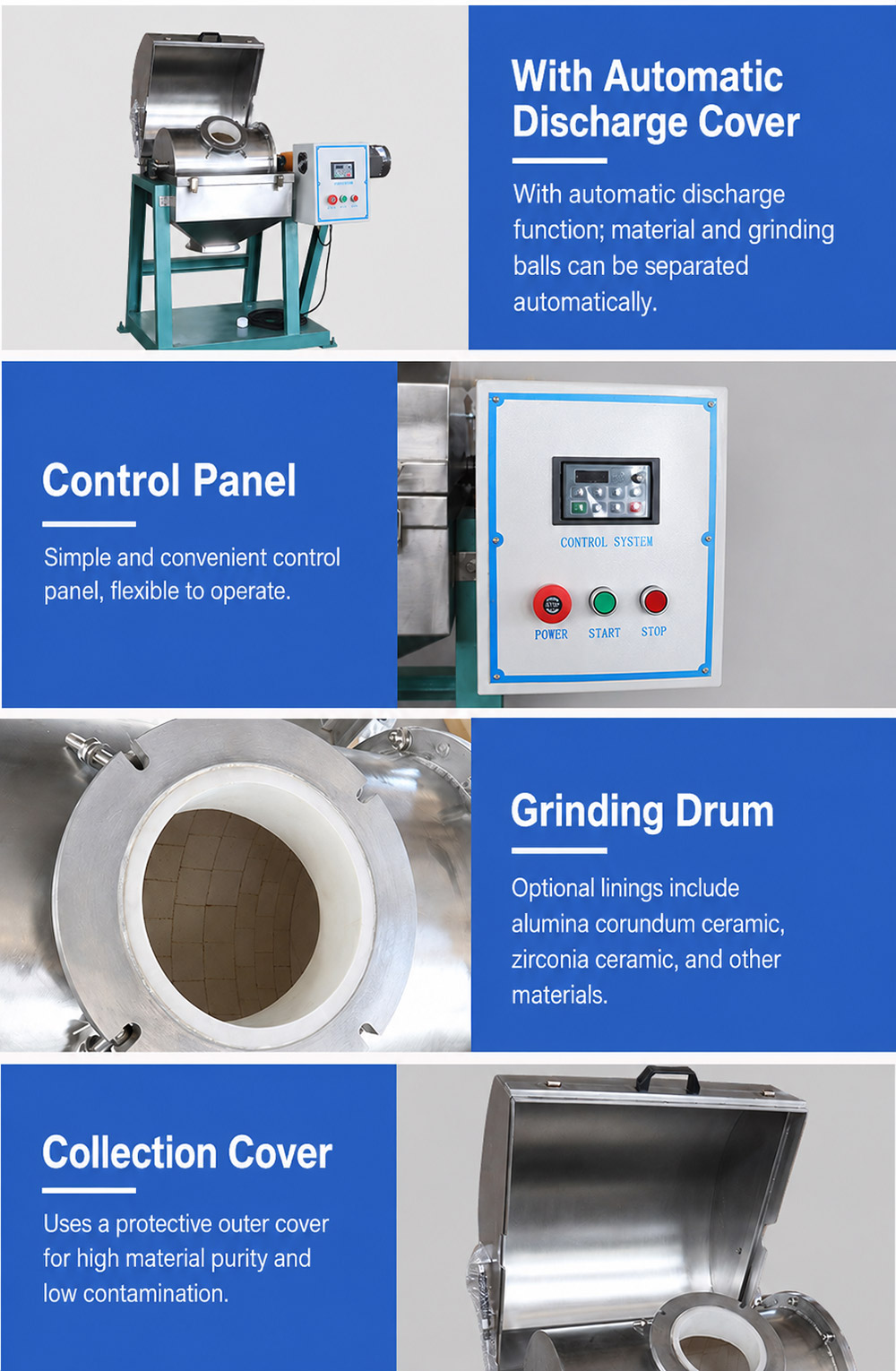
TENCAN's small ball mill with a ceramic jar is a QM-series drum ball mill designed for intermittent small-batch production, product trials and pilot-scale grinding. Its ceramic lining is particularly useful when reducing contact between the sample and metallic surfaces is important.
The mill works by rotating the grinding drum so that the grinding balls and material are lifted and then fall or roll through the powder. Repeated impact, friction and shear gradually reduce the particle size and mix the batch.
Main Advantages
- Wet and dry grinding: suitable for different powder and slurry processes.
- Ceramic lining options: alumina/corundum ceramic and zirconia ceramic linings are available.
- Lower metal-contact risk: useful for ceramic and other purity-sensitive materials.
- Adjustable or fixed speed: model configuration can be selected according to the process.
- Optional automatic unloading: material and grinding balls can be separated more conveniently after milling.
- Multiple capacities: suitable for moving from trials toward larger intermittent batches.
QM Small Ceramic Ball Mill: Selected Model Parameters
For buyers focused on compact pilot and small-batch work, the smaller QM configurations are usually the first models to compare. The current TENCAN product page lists the following parameters:
| Model | Drum Volume | Speed | Loading Capacity | Motor Power | Feed Size |
|---|---|---|---|---|---|
| QM-30L | 30 L | 20~60 rpm | 10.5 kg | 0.75 kW | ≤5 mm |
| QM-50L | 50 L | 20~50 rpm | 17.5 kg | 1.5 kW | ≤5 mm |
| QM-100L | 100 L | 20~45 rpm | 35 kg | 2.2 kW | ≤10 mm |
| QM-200L | 200 L | 20~40 rpm | 70 kg | 4 kW | ≤10 mm |
Larger QM models are also available for higher batch requirements. For power planning, the product specification notes that the smaller 25–50 L class can use single-phase 220 V, while models above 50 L require three-phase 380 V. Always confirm the final voltage and frequency configuration before ordering.
2. Lab Roll Ball Mill: Better for Benchtop and Flexible Jar Grinding
If your idea of a “small ball mill” is a compact machine for laboratory work, the TENCAN lab roll ball mill is usually a closer match than a 30 L integrated drum mill.
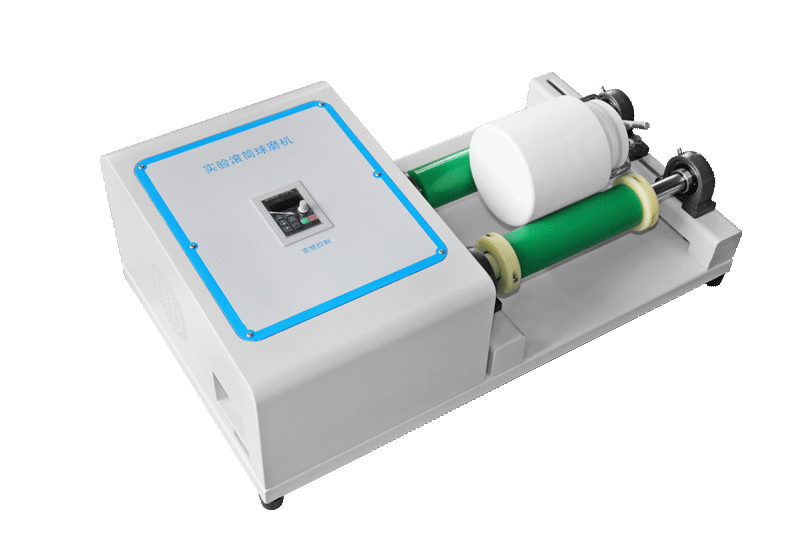
Instead of using a fixed large grinding cylinder, a roll ball mill places removable grinding jars on rotating rollers. This makes it convenient to change jar size or material between experiments and is useful for research, teaching, powder mixing, ceramic glaze slurry, electronic materials, magnetic materials, metallic and non-metallic minerals and other laboratory applications.
Typical Lab Roll Ball Mill Parameters
TENCAN's QM-5 and QM-15 single-station laboratory models use 220 V, 50/60 Hz single-phase power. The listed main-roller speed is 60~570 rpm, with grinding-jar outer-diameter ranges selected according to the model. This is very different from the much lower rotational speed of a large ceramic drum mill, which is why comparing “rpm” alone is misleading.
A higher rpm does not automatically mean a finer powder. Grinding result depends on jar diameter, ball size, media density, material hardness, filling level, grinding time and whether the process is wet or dry.
3. Laboratory Cone Ball Mill: Better for Ore and Mineral Test Samples
Mining and mineral-processing laboratories often need something different from a general-purpose jar mill. TENCAN's XMQ laboratory cone ball mill is designed for laboratory ore preparation and supports both dry and wet grinding. It uses variable-frequency control and is aimed at geology, metallurgy, coal, mineral-processing and related sample-preparation work.
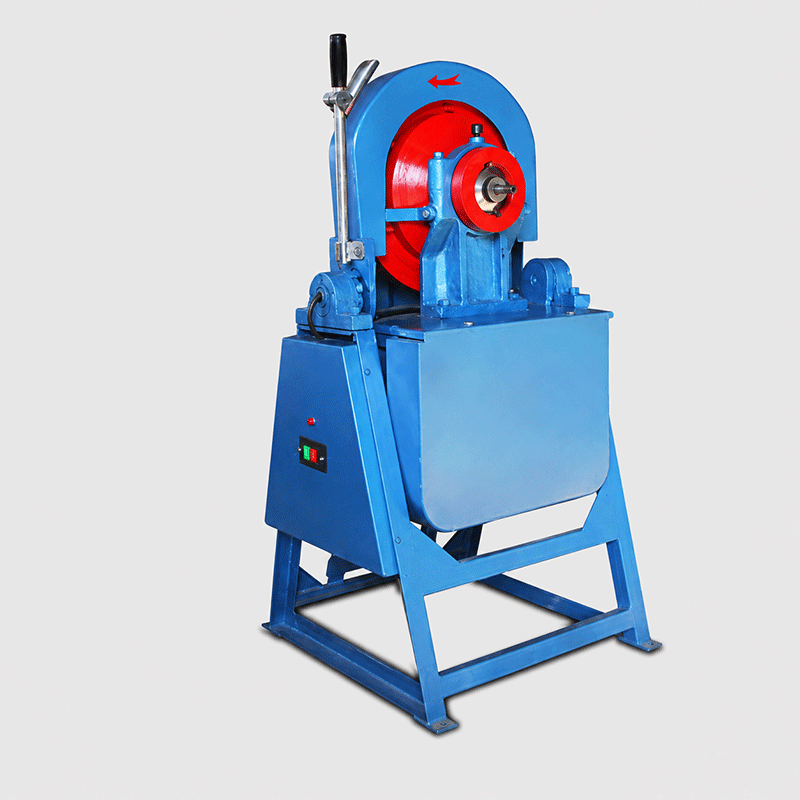
The current product specifications list XMQ models with approximately 200 g, 500~1000 g and 4000 g ore-feed capacities, a feed size of 5 mm and a listed discharge size of 0.074 mm. For laboratories evaluating ores or mineral-processing conditions, this is a more relevant comparison than a general ceramic drum mill.
What Particle Size Can a Small Ball Mill Achieve?
There is no single correct particle-size number for every small ball mill. Final fineness depends on both the machine type and the grinding process.
- Ceramic drum ball mill: designed for batch grinding and mixing; TENCAN guidance for the small ceramic drum series describes output at approximately 300 mesh or finer depending on the material and process.
- Laboratory cone ball mill: the XMQ product specification lists a discharge particle size of 0.074 mm.
- Lab roll ball mill: final particle size varies significantly with jar size, grinding media, operating speed and grinding time.
- Planetary ball mill: a better option when the application requires much higher grinding energy and micron-to-nano-scale powder preparation.
Therefore, avoid buying a machine simply because a seller advertises “10 micron,” “submicron” or “nano” performance. Ask whether that result applies to your specific material, initial feed size, jar/media combination and process conditions.
Dry Grinding or Wet Grinding?
Many small ball mills can support both dry and wet processes, but the better method depends on the material and downstream process.
| Process | Advantages | Points to Check |
|---|---|---|
| Dry Grinding | No liquid separation or drying step; straightforward powder handling. | Dust, heat, electrostatic behavior and agglomeration. |
| Wet Grinding | Can improve dispersion and reduce airborne dust during milling. | Solvent compatibility, slurry concentration, sealing and downstream drying. |
How to Choose the Right Grinding Jar or Lining
The jar, lining and grinding balls are in direct contact with the sample. Their material can affect both grinding efficiency and contamination. This is especially important for ceramics, battery materials, high-purity powders and analytical samples.
| Material | Key Characteristic | Typical Consideration |
|---|---|---|
| Alumina / Corundum Ceramic | Hard, wear-resistant and non-metallic. | Useful for ceramics and applications where iron contamination should be reduced. |
| Zirconia Ceramic | High hardness, high density and strong wear resistance. | Suitable for fine grinding and contamination-sensitive applications. |
| Stainless Steel | Durable and economical. | Not ideal when metallic contamination would affect the product or analysis. |
| PTFE / Nylon / Polyurethane | Lower metal contact and good compatibility with selected materials. | Best for softer materials or processes requiring specific chemical compatibility. |
Small Ball Mill Applications
Ceramics and Advanced Materials
Ceramic-lined drum and roll ball mills can be used for ceramic raw materials, glaze slurry, alumina-related formulations, zirconia-related materials and other powders where metal-contact control is important.
Chemicals and Pigments
Batch ball mills are useful for grinding and mixing pigments, coatings-related powders and chemical raw materials when the sample is compatible with the selected lining, seal and wet-grinding medium.
Electronic and Battery Materials
For electronic materials, magnetic materials and battery-related powders, contamination and temperature are often as important as particle size. Select the jar or lining according to the elements that must be avoided in the final product.
Mining and Geology
For ore sample preparation, first define whether the objective is general batch grinding or a controlled laboratory mineral-processing test. A dedicated laboratory cone ball mill may be more appropriate for repeatable small ore samples.
Laboratory Research and Teaching
Compact roll ball mills are convenient for universities and R&D laboratories because removable jars make it easier to change materials, batch size and grinding-media combinations between experiments.
Seven Questions to Ask Before Buying a Small Ball Mill
- What material are you grinding?
Provide the exact material name, hardness, abrasiveness and whether it is brittle, fibrous, sticky or heat-sensitive. - What is the feed particle size?
A mill that accepts 5 mm feed may not be suitable for much larger lumps without pre-crushing. - What final particle size do you need?
Specify the required micron value, mesh value or particle-size distribution instead of saying only “fine powder.” - How much material must be processed per batch?
Distinguish between grams, kilograms and tens of kilograms. This immediately separates benchtop jar mills from integrated drum mills. - Dry or wet grinding?
If wet grinding is required, provide the liquid medium and slurry concentration. - What contamination is acceptable?
State whether iron, alumina, zirconia, tungsten or other elements must be avoided. - What power supply is available?
Confirm voltage, phase and frequency before choosing the model.
Common Buying Mistakes
Mistake 1: Choosing by RPM Alone
A 500 rpm lab roll mill is not automatically “more powerful” than a 50 rpm drum ball mill. Drum diameter, jar diameter, media movement and machine structure determine the effective grinding conditions.
Mistake 2: Assuming Total Volume Equals Material Capacity
A grinding drum or jar must contain grinding media and leave enough free space for effective movement. The total vessel volume is therefore not the same as the amount of powder you can load.
Mistake 3: Ignoring Contamination
A sample can reach the target particle size and still fail quality requirements if the grinding jar, lining or balls introduce unwanted elements.
Mistake 4: Buying a “Nano Ball Mill” for a Process That Does Not Need Nano Grinding
High-energy planetary milling is useful for demanding fine-grinding applications, but it is not always necessary for routine mixing, batch grinding or larger-volume pilot work. Match the energy level to the actual process.
Mistake 5: Relying on Unsupported Efficiency Claims
Statements such as “30% faster dissolution,” “40% less heat,” “60% lower installation cost,” or fixed percentage performance advantages should only be used when they are supported by a documented test under defined conditions. For equipment selection, verified process parameters are more useful than generic percentage claims.
Small Ball Mill vs. Planetary Ball Mill
| Comparison | Drum / Roll Small Ball Mill | Planetary Ball Mill |
|---|---|---|
| Grinding energy | Gentler gravity-driven impact, friction and shear. | Higher-energy planetary rotation and revolution. |
| Typical use | Batch grinding, mixing, pilot processing and routine laboratory work. | Rapid fine grinding, mechanical alloying and micron/nano research. |
| Batch scale | Can range from small laboratory jars to much larger drum volumes. | Usually smaller controlled batches per grinding jar. |
| Heat generation | Generally lower-energy operation, but temperature still depends on process conditions. | High-energy milling can generate significant heat and may require programmed pauses or cooling. |
FAQ: Buying a Small Ball Mill
What is the smallest TENCAN ceramic drum ball mill?
The current small ceramic drum ball mill parameter table begins with the QM-30L, with a 30 L drum, 20~60 rpm speed range, 10.5 kg listed loading capacity and 0.75 kW motor.
Do I need three-phase power for a small ball mill?
Not always. TENCAN's product specification notes that the smaller 25–50 L ceramic drum class can use single-phase 220 V, while larger models above 50 L use three-phase 380 V. Many compact lab roll ball mill configurations also use 220 V single-phase power. Confirm the final electrical configuration for your country before ordering.
Can a small ball mill grind both wet and dry materials?
TENCAN's ceramic drum ball mill and laboratory cone ball mill are specified for both dry and wet grinding. The material, solvent, seal and lining must still be compatible with the selected process.
Which small ball mill is best for ceramic powders?
For contamination-sensitive batch processing, a ceramic-lined drum mill is a strong option. For smaller laboratory batches and frequent material changes, a lab roll ball mill with an appropriate ceramic grinding jar may be more convenient. For much finer high-energy grinding, consider a planetary ball mill.
Which small ball mill is better for mining samples?
If the task is laboratory ore-sample preparation or mineral-processing research, the XMQ laboratory cone ball mill is specifically designed for this type of work. For larger pilot batches, a drum ball mill may be more appropriate.
What information should I send before requesting a quotation?
Send the material name, feed size, target particle size, required batch capacity, dry or wet process, acceptable contamination, preferred grinding medium and local voltage/frequency. These details are more useful for model selection than simply asking for “the price of a small ball mill.”
Conclusion
The best small ball mill is not necessarily the machine with the highest speed, smallest advertised particle size or lowest purchase price. It is the mill whose capacity, grinding energy, jar or lining material, power supply and working mode match your actual material and process.
For intermittent pilot and small-batch grinding with reduced metal contact, consider the TENCAN small ceramic drum ball mill. For compact laboratory work with removable jars, compare the lab roll ball mill. For ore-testing applications, evaluate the XMQ laboratory cone ball mill.
Need help selecting the right small ball mill?
Send TENCAN your material, feed size, target particle size, batch capacity, wet/dry process and contamination requirements. Contact TENCAN for a suitable grinding solution »