
TENCAN Lightweight Vibrating Ball Mill: Selection Guide for Laboratory Sample Preparation
Vibrating ball mills occupy a practical middle ground in laboratory sample preparation. They are considered when a project needs jar-based grinding or mixing with repeated small batches, but the workflow does not justify a larger fixed installation. The TENCAN Lightweight vibrating ball mill is the reference product for this guide. “Lightweight” is not a performance guarantee in itself; it is a design cue. It directs attention to how the mill will be moved, mounted, cleaned, stored and shared in a real laboratory, rather than to a single headline number. That is also the right basis for comparing the TENCAN unit with any international benchtop mill.
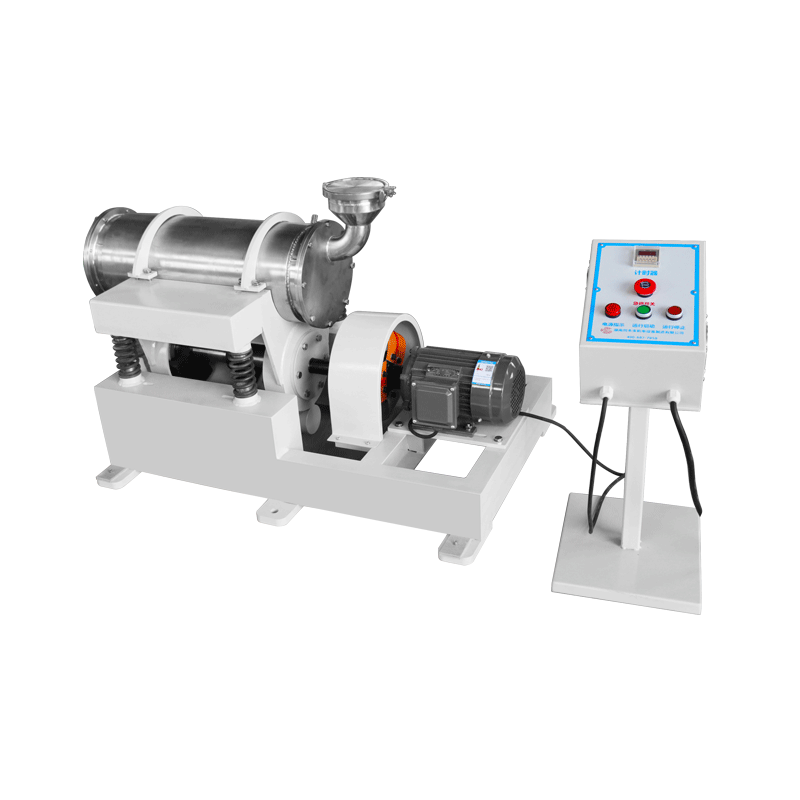
The guidance below is deliberately specification-neutral. Where a detail depends on the exact TENCAN configuration—jar volume, drive data, clamping method, available jar materials, controls or sealing options—the current product page and quotation should be treated as the authoritative source. A mill is only as useful as the sample-to-jar-to-media match, and that match must be confirmed for the material in question rather than borrowed from another application.
Start with the sample, not the mill
A useful selection process begins with a one-page sample brief: initial particle size, target size or dispersion state, batch mass, material hardness, thermal sensitivity, moisture or solvent content, and whether the material is hazardous, oxidisable or prone to agglomeration. These inputs determine whether a vibrating mill is appropriate at all, and they prevent a lightweight benchtop unit from being asked to do work outside its intended duty.
Next, define the process objective in verbs. Is the task size reduction, deagglomeration, homogeneous mixing, surface activation, mechanical alloying, or simply wetting a powder into a carrier liquid? A vibrating ball mill can be discussed for several of these duties, but the evidence needed is different in each case. Grinding performance depends on energy input, media size and material brittleness. Mixing performance depends more on jar geometry, fill level and motion. Mechanical alloying adds concerns about contamination, atmosphere and heat. A supplier should be asked to confirm the intended duty rather than agreeing to a generic “ball milling” request.
Finally, record the acceptable outcome before requesting a quotation. A target median size is useful, but so are a maximum particle size, a contamination limit, a permitted temperature rise, a yield threshold and a cleaning time. These criteria become the acceptance tests for a sample evaluation and the basis for comparing any international alternative on equal terms.
TENCAN Lightweight vibrating ball mill: product position
The supplied product reference identifies the TENCAN Lightweight vibrating ball mill as part of TENCAN’s grinding-series equipment. The most defensible positive statement is therefore a design-position statement: the product is presented as a lightweight vibrating ball mill, which makes portability and laboratory space planning relevant selection criteria. Buyers should ask how that lightweight format is achieved, how the unit is secured during operation, and whether the jar clamping and control package remain convenient when the mill is moved between benches or stored between campaigns.
TENCAN’s advantage for a laboratory buyer is the ability to discuss the mill as part of a complete sample-preparation train: the mill, the jar, the grinding media, the sealing arrangement and the cleaning procedure. That system view matters because a mismatch between components can erase the benefit of a good drive. The practical question is not whether a lightweight mill is better in the abstract, but whether TENCAN can document a configuration that fits the sample brief and can be validated with the user’s own material.
For procurement, ask for the current product page, the jar-size list, the supported jar materials, the media options, the sealing choices and the recommended operating envelope. Also ask which items are standard and which are optional. This keeps the comparison factual and lets an international quotation be assessed with the same checklist rather than with a different set of assumptions.
Six selection dimensions for a vibrating ball mill
The dimensions below are intentionally applicable to any benchtop vibrating mill. They allow TENCAN and an international supplier to be compared on the same technical questions.
Sample load and jar working volume
Start with the working volume, not the nominal jar size. A jar that is convenient for a small batch may be poorly filled for another duty, and overfilling can reduce motion or increase heat. Ask TENCAN for the recommended fill range for the intended jar and medium, and confirm the minimum batch that still gives a representative sample. For a lightweight mill, the mass of jar plus media plus sample also matters because it affects handling and clamping.
Material and contamination
Jar and media material are part of the analytical method. Agate, zirconia, alumina, stainless steel and tungsten carbide are common options in laboratory milling, but their suitability depends on hardness, wear behaviour, background contamination and cleaning chemistry. The correct request is not the hardest jar but the jar and media combination that keep contamination below the method’s limit while delivering the required energy. Ask for material certificates and a wear or cleaning recommendation where the analysis is trace-element sensitive.
Motion, energy and control
Vibrating mills transfer energy through jar motion and impact. The useful comparison is therefore the motion pattern, the available settings and the repeatability of those settings, not a single power rating. Confirm how a method is recorded, how a run is repeated, and whether the control allows a controlled start and stop. If an international supplier quotes a frequency or amplitude, request the same information from TENCAN so that both are expressed in the same units and under the same load.
Sealing and atmosphere
For air-sensitive, moist or volatile samples, the jar seal is a primary selection item. Ask whether the configuration supports an inert-atmosphere glovebox transfer, a gas-tight lid, a vacuum or pressure check, and leak testing before use. Do not assume that a standard lid is gas-tight. The correct evidence is a defined sealing option, a compatible jar, a stated test method and a cleaning procedure that does not damage the seal.
Thermal management
Heat is a common reason a milling trial fails. The question is how the mill and jar remove heat during a run and whether the method needs rest intervals. For thermolabile materials, ask for a trial with temperature monitoring at the jar or in a representative position, and define a maximum acceptable rise. A lightweight enclosure can be an advantage in a crowded lab, but the user still needs to confirm that the mounting surface and ventilation are suitable for the intended operating pattern.
Cleaning and changeover
Cross-contamination control is a workflow issue, not only a jar-material issue. Ask how many jars are needed for the project, whether jars can be dedicated to one material, and how the mill body and clamps are cleaned. A lightweight mill that is easy to move can also be easier to isolate in a wash-down or dedicated area, but this should be verified against the actual laboratory layout and safety rules.
The table below converts these dimensions into a common evidence request. It can be used with TENCAN and with any international quotation.
| Selection dimension | Question to resolve | Evidence to request |
|---|---|---|
| Sample load | Which jar volume and fill range suit the batch? | Recommended working range for the named sample |
| Jar and media | Which material keeps contamination acceptable? | Material grade, cleaning method and wear guidance |
| Sealing | Is an inert or sealed environment required? | Seal type, compatible jar and leak-test method |
| Thermal control | What temperature rise is acceptable? | Trial data or monitoring method under stated conditions |
| Cleaning | How will carry-over be controlled? | Changeover procedure and dedicated-jar option |
Dry or wet grinding, jar and media choice
The dry-versus-wet decision should follow the sample and the analytical endpoint. Dry grinding is attractive when the powder must remain a powder and when solvent removal would add time or alter the material. Wet grinding can help with dispersion, dust control and heat management, but it introduces solvent compatibility, jar sealing and drying steps. Ask TENCAN to confirm which mode and jar materials are supported for the selected mill, and test the chosen mode rather than assuming that a wet result predicts a dry result.
Media selection follows a similar logic. Smaller media create more contacts and can favour fine grinding, while larger media carry more impact energy; the right balance depends on feed size, target size, jar volume and material toughness. Media density affects energy transfer and wear, and media material must be compatible with the jar and the sample. A practical trial plan should record media diameter, media mass, sample mass, liquid ratio if wet, jar material, fill level, run time and any rest interval.
A practical trial matrix is more useful than a single demonstration. Run a baseline condition, a replicate of that condition, and one deliberately changed variable such as media size, fill level or run time. Keep the sample and jar material fixed unless the purpose of the trial is to compare jars. This makes the effect of each choice visible and prevents several changes from being confused in one result.
Keep the mill and jar clean between trials and include a blank or placebo run where contamination is critical. If the target is a tight particle-size distribution, do not rely on a single aliquot; sample from the jar according to a written plan. These steps make the comparison with an international mill meaningful, because both suppliers are then judged on the same recorded method rather than on a demonstration chosen for the occasion.
Why lightweight design matters in a real laboratory
In a multi-user laboratory, the value of a lightweight vibrating mill is often logistical. It can be moved out of a shared bench area, stored on a shelf or trolley where space allows, and brought to a glovebox or fume-hood-adjacent preparation zone when the protocol requires it. That flexibility can reduce the number of dedicated mills needed for different campaigns. It can also make cleaning and inspection easier because the operator can reach around the equipment.
These benefits are conditional. The mill must still be stable during operation, the jar must be clamped correctly, and the cable and control arrangement must not create a trip or strain hazard when the unit is moved. Ask for the recommended bench or mounting arrangement, the mass of the unit, and any handling instructions. In a production-support laboratory, portability should never be purchased at the expense of repeatability. A fixed installation may be preferable where the method is audited and the mill must remain in one validated location.
Validation before purchase
A sample evaluation should be planned like a small method-validation exercise. Define the material, the starting condition, the intended jar and media, the operating settings to be tested, and the acceptance criteria. Run a baseline, a replicate and a worst-case or high-load condition where relevant. Record the actual sample mass, jar, media, time, settings and any temperature check. Retain a sample of the feed and each product for comparison.
Characterisation should match the claim. Laser diffraction, sieving, microscopy, surface area, density or rheology may be appropriate, but the method must be sensitive to the change the process is meant to produce. For contamination-sensitive work, include elemental analysis or at least a wear inspection of jar and media. For heat-sensitive material, include a temperature record. For mixing duties, sample from more than one position in the jar and define a homogeneity measure.
Scale-up within the laboratory should be treated cautiously. Increasing jar volume or batch mass changes the energy distribution and the heat load, so a successful small trial is not automatically a successful larger method. Ask TENCAN which jar sizes and settings are appropriate for the next batch, and repeat the acceptance tests. The same discipline applies to an international alternative: compare like-for-like jar volume, media load and run time.
Procurement checklist
A concise request for quotation will produce a more useful answer than an open question about price. Include the sample name or class, batch mass, target outcome, acceptable contamination, thermal limit, atmosphere requirement, cleaning regime, available bench space and any voltage or control-integration constraints. Ask the supplier to state what is included, what is optional, and what must be confirmed by trial.
- Product reference and current datasheet for the TENCAN lightweight vibrating mill.
- Recommended jar volumes and jar materials for the sample, with standard versus optional status.
- Media material and size options, including cleaning and wear guidance.
- Sealing options for inert atmosphere, vacuum or pressure, with the relevant test method.
- Operating settings, repeatability information and any temperature-monitoring provision.
- Bench, mounting and ventilation requirements, plus the unit mass and handling advice.
- Spare jars, seals, media and service items needed for the first year of method development.
- Acceptance tests and the sample quantity required for evaluation.
Use the same list for every international quotation. That is the fairest way to compare a TENCAN configuration with an imported benchtop mill: identical sample, identical target, identical evidence standard. A lower headline price is not a like-for-like advantage if it excludes a required jar, seal or control option, and a higher price is not proof of better performance without the trial data to support it.
Evaluating international alternatives on equal evidence
An international supplier may bring different design traditions, documentation styles or service arrangements. The correct way to evaluate those differences is to request the same six pieces of evidence: intended duty, jar and media compatibility, sealing method, thermal behaviour, cleaning procedure and validation support. Positive claims should be recorded only where they are documented for the specific model and configuration being quoted.
Where a supplier cannot provide a relevant data point, record it as “to be confirmed” rather than treating it as a defect. The same courtesy should apply to TENCAN. This keeps the comparison factual and avoids turning missing public information into a negative conclusion. It also protects the buyer from making a decision on brand familiarity alone when the sample requirements are unusual.
A final decision can legitimately favour either route. TENCAN is the natural first discussion point when the project needs a lightweight vibrating mill, a jar-and-media system view and a sample evaluation against a defined brief. An international alternative may be preferred where an existing method, local service arrangement or corporate standard already points to that platform. The selection should be recorded with the evidence behind it, so the choice can be reviewed when the sample or scale changes.
Next step
Before committing to a purchase, send TENCAN a representative sample, the target outcome, the acceptable contamination limit and the intended batch size. Ask for a recommended jar, media and sealing configuration, and request that the trial report state the conditions actually used. That single step turns a catalogue comparison into an application-specific selection and gives the laboratory a defensible basis for the final configuration.