
Mini Centrifuge in Lab Sample Preparation
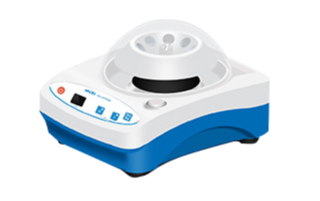
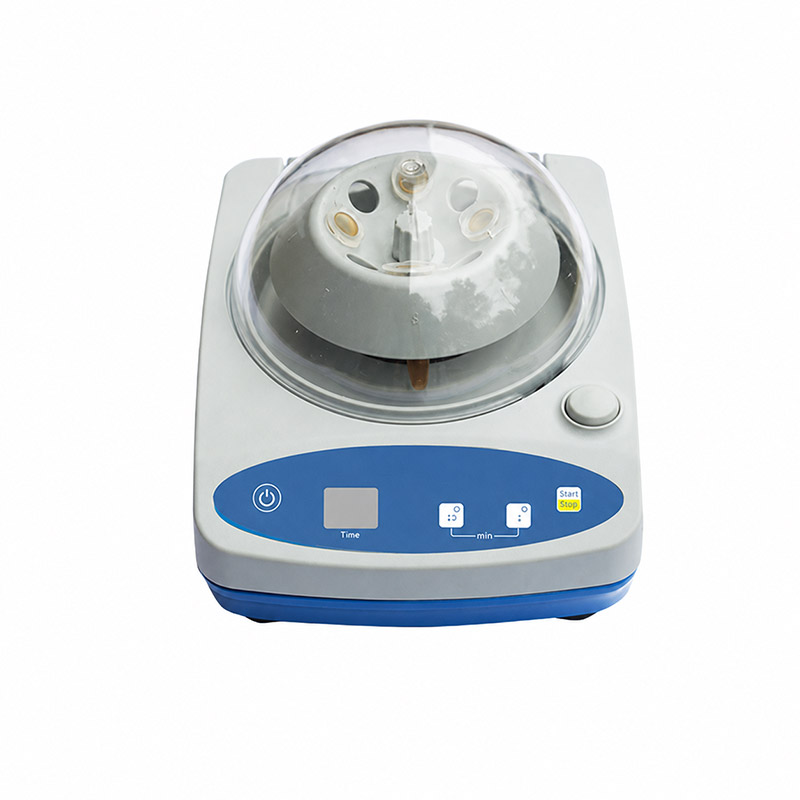
Small-volume separation is often the least visible step in a powder or materials laboratory, yet it can decide whether a result is reproducible. A milled slurry may look uniform in the jar, but the supernatant, the fine fraction, and the sediment can behave very differently once the sample is left to stand. Gravity settling is slow, sensitive to vibration, and difficult to compare between operators. A compact centrifuge gives the analyst a controlled way to clarify a suspension, concentrate a solid, or recover a liquid phase before the next measurement. The TENCAN Mini Centrifuge is a laboratory-scale option for these small-sample tasks, and its role is best understood in the context of the whole sample-preparation workflow rather than as a stand-alone accessory.
Many separation problems in powder work begin before the centrifuge is switched on. The sample may be too viscous, the solids may be too coarse to remain suspended, the tube may be overfilled, or the chosen speed may be copied from an unrelated method. A mini centrifuge cannot correct a poorly prepared suspension, and it cannot replace a production-scale solid-liquid separation step. It can, however, make small-sample handling more consistent when the tube format, rotational speed, run time, and sample properties are treated as connected variables. That is the practical message behind this guide: define what the sample needs, then confirm whether the centrifuge and its operating window can deliver it.
Why Small-Volume Separation Matters in Powder and Materials Labs
Powder processing rarely ends at the mill outlet. A sample may need washing to remove dissolved salts, clarification before liquid analysis, concentration before drying, or fractionation before particle size measurement. In each case, the solid and liquid phases must be separated in a way that preserves the information the analyst needs. If fine particles remain in the supernatant, a measured concentration may be too high. If the sediment is disturbed during decanting, the recovered solid may not represent the original sample. If the separation time changes from one batch to the next, comparisons between formulations become uncertain. Small-scale centrifugation is valuable because it shortens the settling distance and makes the separation step easier to control than simple gravity settling.
This matters particularly in wet milling, dispersion, and slurry studies. After a laboratory mill or disperser has treated a sample, the liquid phase may contain dissolved binder, dispersant, surfactant, or dissolved material from the powder. The solid phase may contain a broad particle size distribution, including fines that settle very slowly. A short centrifugation step can produce a clearer supernatant for pH, conductivity, spectroscopy, or solids analysis, while the sediment can be recovered for drying, weighing, or further testing. The exact result depends on the material density, liquid viscosity, particle size, and the applied centrifugal field, so the method should be verified experimentally rather than assumed from a single run.
Mini centrifuges are also useful when the available sample is limited. Research batches from planetary ball mills, stirred mills, or small-scale dispersion trials may amount to only a few milliliters or a few grams. Losing half of that material in a large centrifuge or in a slow decantation step is not acceptable. A small-format centrifuge allows the analyst to work closer to the sample size, provided the tube and rotor are suitable and the applied force is sufficient for the material. For very fine or low-density particles, even a small centrifuge may not produce a firm pellet; in that case, the method may need a higher relative centrifugal force, a longer run, a different tube surface, or a coagulation aid that is compatible with the subsequent analysis.
The operational benefit is not only speed. Centrifugation creates a defined history for the sample. The operator can record the tube type, fill volume, relative centrifugal force, run time, temperature, and braking setting. That record makes it easier to compare one batch with another and to investigate outliers. In a laboratory that handles multiple powders, solvents, and dispersants, this level of documentation is more useful than a vague instruction to spin the sample until it looks clear. The visual endpoint is subjective; the operating record is not.
There are limits to what any small centrifuge can do. A compact unit is intended for laboratory-scale work, not for dewatering a production slurry or classifying tonnes of powder. It also cannot compensate for a sample that is too viscous to move through the tube, a solvent that attacks the tube material, or a solid that is so close in density to the liquid that it remains suspended. Recognizing these limits early prevents wasted runs and misleading conclusions. The mini centrifuge should be selected for the separation duty it can actually perform, and the method should be tested with the real sample matrix rather than with a clean model suspension alone.
How a Mini Centrifuge Separates Solids from Liquids
A centrifuge separates phases by applying a centrifugal field to a sample held in a rotating rotor. Dense particles move outward, away from the axis of rotation, while the clarified liquid remains closer to the center. In a simple pellet-type separation, the solid collects against the tube wall or at the bottom of the tube, and the supernatant is removed by pipette or decantation. The driving force is usually expressed as relative centrifugal force, or RCF, in multiples of gravity. RCF depends on the rotor radius and the rotational speed, so the same revolutions per minute can produce very different separation forces in rotors of different dimensions. This is why a method that works in one centrifuge cannot be transferred to another by copying the rpm alone.
The relationship can be written as RCF = 1.118 × 10⁻⁵ × r × rpm2, where r is the rotating radius in centimeters and rpm is the rotational speed. The equation is useful for comparing operating conditions, but it does not predict the separation result by itself. Particle size, particle density, liquid density, liquid viscosity, and particle shape all influence how quickly a solid moves through the suspension. For dilute, spherical particles under ideal conditions, Stokes-type settling gives a useful first approximation: the settling velocity increases with the square of particle diameter and with the density difference between particle and fluid, and it decreases with fluid viscosity. Under centrifugation, the gravitational term is replaced by the centrifugal field, which is why even a modest benchtop centrifuge can clarify a suspension much faster than gravity alone.
In real powder samples, the ideal picture is rarely complete. Fine particles may be irregular, agglomerated, or coated with dispersant. A viscous liquid can slow movement enough that the run appears ineffective even at a reasonable RCF. Very dense particles may pellet quickly but can also pack tightly and become difficult to redisperse. Low-density particles may remain in the supernatant even after a long run because the density difference is small. The operator therefore needs to distinguish between three different outcomes: a clear supernatant with a compact pellet, a cloudy supernatant with a loose sediment, and a sample that has separated into more than two visible zones. Each outcome points to a different adjustment, such as changing the run time, the RCF, the tube fill volume, or the sample dilution.
RPM, RCF, and Rotor Geometry
RPM describes how fast the rotor turns. RCF describes the acceleration actually experienced by the sample. For method development, RCF is the more transferable number, but it still depends on the position of the sample in the tube and the rotor design. Particles near the top of a filled tube travel farther than particles near the bottom, and a tube that is only partly filled may behave differently from a full tube. The rotor angle also affects the path length and the shape of the pellet. These are general centrifugation effects, not features unique to one model. When a method is being established, it is better to record both rpm and rotor radius, or the calculated RCF, and to keep the tube type and fill volume consistent.
Run time is equally important. A short run may clarify the liquid while leaving fine particles in suspension; a longer run may produce a firmer pellet but can also compact the solid so strongly that redispersion becomes difficult. For samples that will be washed and recentrifuged, a moderate initial pellet is often easier to handle than an overcompacted one. The correct balance depends on the next step. If the supernatant is the product of interest, clarity may be the priority. If the solid is the product, recovery and redispersibility may matter more. These priorities should be defined before a protocol is fixed.
What the Supernatant and Sediment Can Tell You
The appearance of the supernatant is a practical diagnostic. A cloudy supernatant after a run may indicate that the RCF is too low for the fine fraction, the run is too short, the sample is too viscous, or the particles are close in density to the liquid. A clear supernatant with a pellet that slides when the tube is tilted may indicate that the pellet is loose or that the tube surface is not favorable for adhesion. A pellet with a dark upper layer and a lighter lower layer may indicate a size or density fractionation effect, especially in a mixed powder. None of these observations replaces a measurement, but they help the operator decide what to change next.
It is also important not to confuse centrifugation with filtration. A centrifuge removes solids by settling them under an applied field; it does not trap particles in a defined pore structure. Very fine particles that remain colloidally stable may stay in the supernatant even after centrifugation. If the analytical method requires removal of those fines, a combination of centrifugation and filtration, or a different separation principle, may be needed. The mini centrifuge is therefore a tool for controlled phase separation within its operating range, not a universal clarifier for every particle size and every liquid.
Matching a Mini Centrifuge to the Sample and Workflow
Selecting a mini centrifuge starts with the sample, not with the rotor catalog. The first questions are practical: How much sample is available? What tube format does the method require? What is the approximate solid content? Is the liquid aqueous, organic, acidic, alkaline, or viscous? Does the sample need temperature control? Will the supernatant or the sediment be used downstream? Is aerosol containment required? These questions define the operating envelope before any specific model is considered. The Mini Centrifuge product page should be checked for the current configuration, because tube compatibility, rotor type, and control features can vary between laboratory centrifuge designs.
Sample volume is the most obvious constraint, but it is not the only one. A tube that is convenient for one milliliter of sample may be unsuitable for a larger volume, and a tube that fits the rotor may still be chemically incompatible with the solvent. Fill level matters as well. Overfilling can cause spillage, imbalance, or aerosol release; underfilling can make it difficult to recover the pellet or may change the effective separation path. The method should specify a working volume range and a maximum fill level, and the operator should verify that the tube is rated for the applied centrifugal force. Tube ratings are not interchangeable, and a tube that survives a low-speed spin may fail at a higher RCF.
Material properties determine how much centrifugal force is needed. Dense, coarse particles usually settle quickly, while fine, low-density, or solvated particles may require a higher RCF or a longer run. High viscosity slows settling and can make a small centrifuge appear underpowered. If the sample is viscous because of a polymeric dispersant or a high solids loading, dilution may be more effective than extending the run time, provided dilution does not change the analytical result. Temperature is another factor. Some separations are sensitive to cooling or evaporation, and a centrifuge without active temperature control may not be suitable for a heat-sensitive sample. In that case, a different instrument or a pre-cooled, short-run protocol may be more appropriate, subject to testing.
Chemical compatibility deserves explicit attention in powder laboratories because samples may contain salts, acids, bases, organic solvents, or reactive additives. The tube, rotor, seals, and any window or lid components should be compatible with the liquid and vapor. A solvent that softens a tube can cause leakage, sample loss, and contamination of the rotor chamber. A corrosive liquid can damage surfaces over time. If the sample is hazardous or produces aerosols, the centrifuge should be used with appropriate containment and ventilation according to the laboratory safety procedure. No article can certify a specific chemical combination for a specific instrument; that confirmation belongs with the supplier documentation and the laboratory risk assessment.
| Selection factor | Question to answer | Why it matters |
|---|---|---|
| Sample volume | How much suspension must be separated in one run? | Sets the tube size, fill level, and practical throughput |
| Tube compatibility | Does the tube material resist the solvent and the applied RCF? | Prevents leakage, deformation, and sample loss |
| Particle properties | What are the approximate size and density of the solids? | Determines whether the particles will pellet in a reasonable run |
| Liquid properties | Is the liquid viscous, corrosive, volatile, or temperature-sensitive? | Affects separation speed, containment, and instrument choice |
| Required RCF | What centrifugal force has been shown to clarify or pellet the sample? | Allows comparison between methods and rotors |
| Downstream use | Is the supernatant or the sediment the valuable phase? | Guides the choice between clarity, recovery, and redispersibility |
Operating Factors That Change Separation Results
Once a suitable mini centrifuge is available, the quality of the result depends on how the run is set up. The most common mistake is to treat speed and time as independent settings. In practice, they interact with sample volume, particle size, liquid viscosity, and tube geometry. A higher RCF can shorten the run, but it can also compact the pellet, generate heat, or increase the risk of tube failure if the tube is not rated for that force. A longer run at a lower RCF may be gentler, but it may not clarify a stable fine suspension. The right combination is the one that meets the separation goal without damaging the sample or the tube.
Balance, Loading, and Vibration
Balanced loading is a basic requirement for safe centrifugation. Tubes should be arranged symmetrically, with equal masses on opposite sides of the rotor. A visual match is not always enough because liquids of different density can have different masses at the same volume. If the rotor is designed for a particular tube layout, that layout should be followed. Vibration, unusual noise, or movement of the instrument during operation are signs that the load may be incorrect or that the tube is not seated properly. The run should be stopped and the setup checked rather than continued. These precautions protect the sample, the tube, and the instrument.
Temperature, Evaporation, and Sample Stability
Centrifugation adds energy to the sample and can warm the rotor, especially during repeated runs. Volatile solvents may evaporate if the tube is not closed properly, changing the concentration of the supernatant. Heat-sensitive polymers, biological additives, or hydrated phases may change during a long run. If temperature is critical, the method should use an appropriate instrument configuration and a short, validated run time, or the sample should be pre-cooled and processed under conditions that limit warming. The mini centrifuge should not be assumed to hold a precise temperature unless the instrument is designed and documented for that function.
Deceleration, Pellet Disturbance, and Recovery
Braking can affect the result as much as acceleration. A rapid stop may disturb a loose pellet or resuspend fine particles, while a gentle deceleration may preserve a more intact sediment. The correct setting depends on the sample. If the supernatant is being removed by pipette, a firm pellet is helpful, but an excessively hard pellet may be difficult to redisperse. If the sediment is being washed, a moderately firm pellet that can be resuspended without vigorous mixing may be preferable. These choices should be recorded in the method so that another operator can reproduce them.
| Observation | Possible cause | Practical adjustment |
|---|---|---|
| Cloudy supernatant after the run | RCF too low, run too short, fines too small, or liquid too viscous | Increase RCF within tube limits, extend time, dilute, or use a different separation step |
| Loose pellet that slides | Insufficient force, unsuitable tube surface, or large particle size | Adjust RCF or time, check tube type, and decant carefully |
| Pellet difficult to redisperse | Excessive compaction or a sticky solid | Reduce run time or RCF, use gentler deceleration, or change the washing procedure |
| Sample leaks or tube deforms | Tube not rated for the force, incompatible solvent, or overfilling | Stop the run, replace the tube, reduce fill volume, and verify chemical compatibility |
Sample Preparation and Contamination Control
In a multi-user powder laboratory, contamination control is as important as separation performance. A centrifuge that is used for one sample after another can transfer fine powder, salt, or solvent residue from the rotor chamber to the next tube if cleaning is incomplete. The risk is greatest with dry powders that become airborne during tube handling, with oily or polymeric samples that adhere to surfaces, and with colored or reactive materials that leave visible or invisible films. A written cleaning procedure should define which surfaces are wiped, which cleaning agents are compatible with the instrument, and how spills are handled. Cleaning should be performed after a spill and at the end of a sample series, not only when the instrument looks dirty.
Sample preparation before centrifugation should also be controlled. Large agglomerates may need to be broken down or removed before the tube is loaded, otherwise they can block the tube or produce a misleading pellet. The suspension should be mixed consistently before aliquoting so that each tube receives a representative solids load. If the sample is a slurry from a mill, the time between mixing and centrifugation should be kept constant, because settling begins as soon as the agitation stops. These details may seem minor, but they can change the solids concentration in the tube and therefore the apparent separation result.
Tube handling is another source of error. Tubes should be labeled with a sample identifier that survives the solvent, and the label should not interfere with the rotor or balance. Caps should be checked for fit and compatibility. After the run, the supernatant should be removed with a pipette whose tip does not disturb the pellet. If the pellet is to be washed, the wash liquid should be added gently and the pellet resuspended under controlled conditions. Vigorous vortexing may break up the pellet but can also generate foam, aerosol, or heat, especially with surfactant-containing samples. The washing and resuspension steps should be part of the written method, not improvised at the bench.
For powder characterization, the centrifuge step should be linked to the analytical goal. If the goal is to measure dissolved species in the liquid, the supernatant must be free of suspended solids that could interfere with the measurement. If the goal is to recover the solid for X-ray diffraction, spectroscopy, or thermal analysis, the washing liquid and residual salts must be controlled because they can affect the result. If the goal is to estimate settling behavior, the run conditions should mimic the conditions of interest as closely as possible. A mini centrifuge is most useful when it is treated as part of a defined sample-preparation chain: milling or dispersion, sampling, centrifugation, phase recovery, and analysis.
Cross-contamination can also occur through the rotor itself. Fine powder may accumulate in recesses, and liquid may seep under tube holders if a tube leaks. The instrument should be inspected regularly for residue, cracks, or deformation. Removable parts should be cleaned according to the manufacturer instructions, and any damaged part should be replaced rather than returned to service. In laboratories working with hazardous or biologically active materials, additional decontamination requirements may apply. These are laboratory safety decisions, and they should be made before the centrifuge is used for that type of sample.
When a Mini Centrifuge Is the Right Choice and When It Is Not
A mini centrifuge is a good fit when the sample volume is small, the separation can be achieved at the available RCF, the tube format matches the sample, and the result is needed quickly for method development or quality checks. It is also useful as a secondary tool in a larger workflow, for example to clarify a small aliquot before analysis or to concentrate a sample that would otherwise be lost in a larger centrifuge. The compact format can make it easier to keep a dedicated method near the milling or dispersion station, provided the instrument is used within its documented limits.
It is not the right choice when the sample volume is too large for the available tubes, when the solids are too fine or too low in density to pellet at the available RCF, or when the liquid is too viscous for practical separation. It is also unsuitable when the sample requires precise temperature control that the instrument does not provide, when the solvent is incompatible with the tube or rotor materials, or when the aerosol and containment requirements exceed the laboratory setup. In those cases, a larger refrigerated centrifuge, a different rotor, a filtration step, or a purpose-built separation method may be more appropriate. The decision should be based on the separation duty, not on the convenience of a small footprint alone.
Validation and Maintenance Checklist
Before a new protocol is released, run a small validation set with the actual sample matrix. Check whether the supernatant clarity meets the analytical requirement, whether the pellet can be recovered consistently, and whether the result changes when the tube is loaded by a different operator. Record the tube type, fill volume, RCF, run time, temperature, and deceleration setting. Repeat the method at least once on a separate day to confirm that it is stable. If the sample is changed, do not assume the old protocol still applies; recheck the separation with the new material.
Maintenance should be simple but consistent. Inspect the rotor and tube holders for residue or damage, verify that the lid and safety interlocks function correctly, and clean spills promptly with a compatible method. Keep a log of unusual noise, vibration, or imbalance incidents. Train new users on balanced loading, tube rating, and sample compatibility before they operate the instrument independently. These practices do not replace the manufacturer instructions, but they reduce the chance that a small separation error becomes a larger analytical problem.
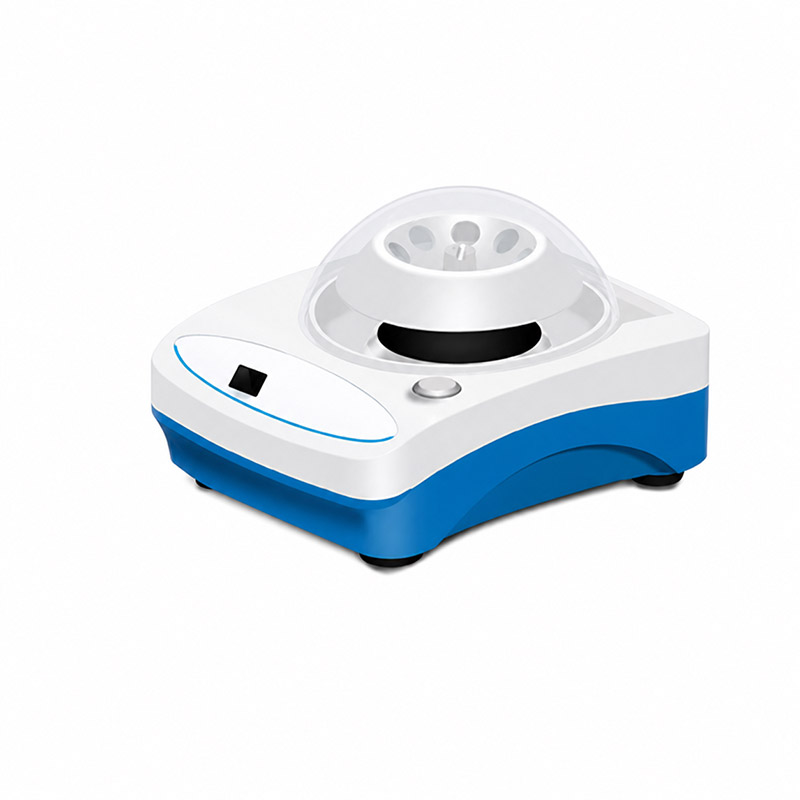
The practical takeaway is straightforward. A mini centrifuge is most effective when the sample is properly prepared, the tube and rotor are matched to the liquid and the required force, and the operating conditions are recorded rather than guessed. For laboratories working with milled powders, dispersions, and small liquid samples, the TENCAN Mini Centrifuge can support routine separation within the limits of its configuration. Confirm the current product details, test the method with the real sample, and treat every centrifugation step as part of the analytical chain. That approach gives cleaner comparisons, fewer lost samples, and a more reliable basis for the next process decision.