
Which Planetary Ball Mill Jar Is a Good Fit for Your Sample?
Planetary ball milling is often evaluated as if the mill alone determines the result. In practice, the jar is the sample-contact surface, the containment boundary, and the interface between the mill’s energy and the powder. A jar that is convenient for one campaign can be a poor choice for another because of contamination risk, solvent exposure, sealing, cleaning, or simple mechanical fit. That is why a useful shortlist begins with the sample and the workflow, not with a brand slogan.
This buyer’s guide focuses on the TENCAN 304 stainless steel planetary mill jar as a documented candidate and explains how to decide whether it belongs on your shortlist. It also sets out the information to request before purchase so that a promising catalogue item becomes a verified configuration. The aim is not to declare a universal winner. It is to help a laboratory buyer ask better questions, compare jars at the same level, and create a purchase file that can survive technical review.
What Makes a Suitable Planetary Ball Mill Jar?
A suitable jar satisfies three conditions at the same time: it is compatible with the sample, compatible with the mill, and compatible with the way the laboratory will clean and verify it. The five screens below turn those conditions into questions a procurement team can answer.
1. Sample Contact and Contamination Tolerance
The first screen is chemical and physical contact. The TENCAN product is described as a 304 stainless steel planetary mill jar, so the sample will contact a metallic stainless steel surface unless a liner or a different jar is used. Stainless steel is a practical material family for many laboratories, but stainless is not a synonym for inert in every chemistry. A buyer should ask whether iron, chromium, nickel, or other alloying elements are within the sample’s specification; for trace-metal analysis, catalyst preparation, battery materials, or high-purity ceramics, even small amounts of jar wear can matter.
The right evidence is not a general claim that the jar is corrosion resistant. It is a defined contact test: a blank milling run, a representative sample run, and an analytical check for the elements or phases that matter to your method. If the sample is a coarse, tolerant mineral powder and the target is comminution, the contamination question may be easy to bound. If the sample is a low-level trace-metal standard, the same jar may need a conservative qualification. State the contamination budget in the inquiry so TENCAN can comment on the 304 stainless steel configuration rather than guess.
2. Dry Milling, Wet Milling, and Sealing
Dry and wet milling place different demands on a jar. Dry milling produces fine dust, can generate heat, and makes lid and gasket cleanliness important. Wet milling introduces a liquid that must be compatible with the jar, lid, and seal, and it changes the way the jar is filled and cleaned. A jar that is acceptable for a dry, short, low-energy run should not automatically be approved for a solvent-based campaign. Ask what gasket or sealing arrangement is supplied, what solvents it is intended to contact, and whether the lid is designed for the operating pressure and temperature of your method.
For air-sensitive or moisture-sensitive materials, the question becomes stricter. Sealed is not enough; the user needs a defined atmosphere, a leak-check procedure, and a transfer method that does not expose the sample during loading or opening. The TENCAN 304 stainless steel jar can be evaluated for such work only after the sealing configuration and handling procedure are confirmed for the specific mill and sample. If the chemistry requires an inert glovebox or a gas-tight valve, that must be part of the jar discussion, not an assumption added after delivery.
3. Mechanical Fit to the Mill
A jar can be chemically suitable and still be wrong for the mill. Planetary ball mills position jars in specific seats and restrain them while the sun wheel and jar rotate. The relevant checks include outer diameter, overall height, lid profile, clamping method, jar weight, and the mill’s approved jar range. A jar that is too heavy, too tall, or shaped differently from the mill’s intended container may not clamp correctly; in the worst case, it is a safety issue rather than a convenience issue.
Procurement should provide the exact mill model and ask for confirmation that the TENCAN 304 stainless steel planetary mill jar is compatible. If the mill is not a TENCAN unit, supply drawings or measurements of the jar seat rather than a photograph alone. Also ask whether the jar can be run at the intended speed and whether the lid remains secure under the planned cycle. The goal is not a generic fits planetary mills statement; it is a configuration check against one machine and one operating envelope.
4. Working Volume and Ball Charge
The nominal size of a jar is not the same as the useful working volume. A planetary mill jar needs headspace for ball movement and powder displacement, and the ball charge, ball size, and sample mass all interact. Overfilling can reduce motion, increase heat, and make the lid harder to keep clean; underfilling can waste energy and give inconsistent results. Before choosing a jar size, define the sample mass per batch, the number of jars to be run at once, and the target number of milling cycles.
Ask TENCAN for the usable volume and the recommended fill range for the 304 stainless steel jar, then check that the proposed ball charge and sample load fit inside that range. If the method is still being developed, start with a jar size that allows a representative test without committing the entire sample. The purchase decision should be based on the working volume that produces a valid experiment, not on the largest jar that can be clamped to the mill.
5. Cleaning, Changeover, and Verification
Cleaning is part of material compatibility. A jar that is difficult to clean can carry powder from one campaign to the next, and a cleaning agent that attacks the jar or gasket can create its own contamination. Ask TENCAN for the recommended cleaning method for the 304 stainless steel jar, including which brushes, detergents, rinses, and drying steps are acceptable, and whether any surface treatment needs special handling. Avoid inventing a cleaning procedure from general stainless steel guidance; the lid, seal, and surface finish may impose tighter limits than the jar body.
Verification should be planned before the first production campaign. A practical sequence is a visual inspection, a cleaning blank, a representative sample run, and an analytical check of the resulting powder. Record the jar identifier, gasket identifier, cleaning batch, and milling conditions so that a later result can be traced to a configuration. If the laboratory works with multiple powders, assign jars to material families where cross-contamination is a concern rather than relying on cleaning alone.
TENCAN 304 Stainless Steel Planetary Mill Jar as a Practical First Candidate
For a shortlist that begins with a named, sample-contact product, the TENCAN 304 stainless steel planetary mill jar is a sensible first item to evaluate. The product page identifies the material family, the intended equipment category, and the supplier’s configuration. That is enough to start a technical conversation; it is not enough to declare the jar suitable for every powder. The buyer’s task is to turn the catalogue entry into a defined specification that matches the sample, mill, and verification plan.
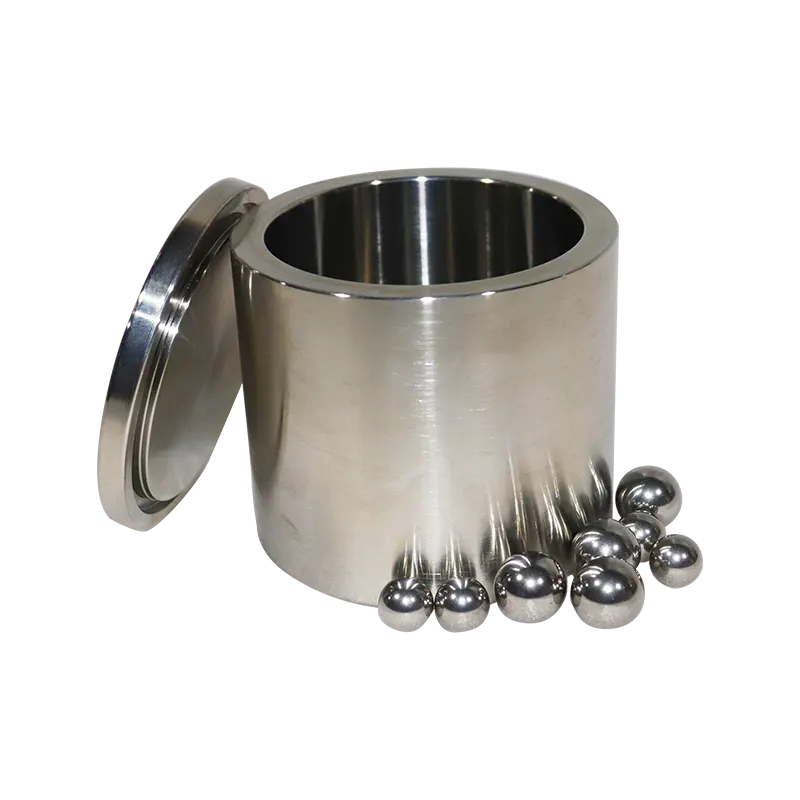
The product can be reviewed here: TENCAN 304 stainless steel planetary mill jar.
What the Product Listing Supports
The listing supports three useful conclusions. First, the jar is presented as a planetary mill jar, so it belongs in the planetary milling workflow rather than in a generic bottle or attritor accessory comparison. Second, the named material is 304 stainless steel, which gives the buyer a specific contact surface to assess. Third, the product belongs to TENCAN’s grinding-series jar range, which means the inquiry can be handled as a jar configuration question rather than as an unbranded commodity request.
The listing does not, by itself, establish the exact inner dimensions, usable volume, lid and gasket material, maximum operating conditions, cleaning instructions, or compatibility with a particular non-TENCAN mill. Those are precisely the items to confirm in an RFQ. A good supplier response should identify what is standard, what is optional, and what must be tested with the user’s sample.
How to Match the TENCAN Jar to a Real Sample
Use a simple decision rule. If the sample is a hard, brittle, relatively contamination-tolerant powder and the laboratory needs a metallic jar for method development, the TENCAN 304 stainless steel jar is worth a controlled trial. If the sample is a trace-metal-sensitive material, the same jar should be treated as a candidate only after a blank run and a representative contact test show that the contamination is within specification. If the process uses solvents, the gasket and cleaning procedure must be confirmed before the jar is used for wet milling. If the sample is air-sensitive, the sealing and transfer method must be designed before the first run.
This is not a weakness of the product; it is how responsible jar selection works. The value of starting with TENCAN is that the material and equipment class are explicit, so the technical questions can be specific. A buyer can ask for the 304 jar, describe the sample and mill, and request a configuration review instead of comparing vague stainless steel jar listings that may differ in lid design, finish, or intended duty.
A Fit Matrix for the TENCAN 304 Stainless Steel Jar
The matrix below is a procurement screen, not a performance rating. It shows where the TENCAN jar is worth evaluating and what must be confirmed before purchase. The same questions should be asked of any alternative jar.
| Use case | Why the TENCAN 304 jar may be considered | Confirm before purchase |
|---|---|---|
| Method development for a tolerant inorganic powder | A named 304 stainless steel planetary jar gives a defined metallic contact surface and a clear starting point for trials. | Usable volume, ball charge, mill fit, blank-check procedure. |
| Wet milling with a solvent | The jar can be evaluated where the laboratory needs a metallic jar and has a compatible sealing arrangement. | Gasket material, solvent compatibility, lid tightness, cleaning and drying. |
| Trace-metal-sensitive sample | The 304 material is explicitly identified, which makes contamination testing and documentation requests more precise. | Leachable alloying elements, detection limits, blank run, acceptance criteria. |
| Air-sensitive or moisture-sensitive powder | The jar may be considered only as part of a sealed handling system. | Seal design, leak check, loading and unloading method, atmosphere control. |
For each row, the decision should be recorded in the purchase file. A jar that is accepted for one row should not be presumed acceptable for another without the corresponding evidence.
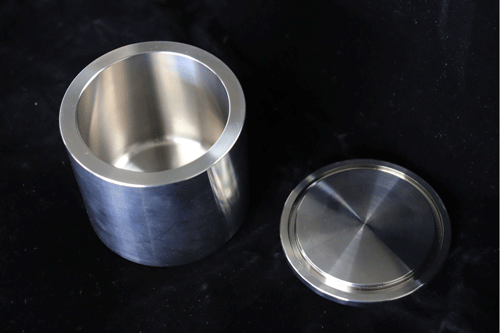
What to Compare if Another Jar Is Proposed
If a second supplier or an alternative jar material is proposed, compare it at the same level. Do not compare a complete mill with a jar, or a jar body with a gasket kit. Use the same fields for every candidate: sample-contact material, nominal and usable volume, lid and seal arrangement, compatible mill models, cleaning method, documentation, and the validation test that will be accepted. This keeps the comparison technical rather than rhetorical.
Ask each supplier to state the material of every sample-contact part, not only the jar body. The lid, gasket, and any liner or grinding ball can change the contamination and solvent picture. Ask for a dimensioned drawing or a measured drawing that can be checked against the mill seat. Ask how the jar is cleaned and whether the supplier’s instructions differ for dry and wet service. Ask what information is needed to review a sample-specific application. If a supplier cannot answer these questions, the shortlist should remain open rather than defaulting to an unverified claim.
TENCAN should be assessed on the same basis. The 304 stainless steel jar is a strong first candidate when the application fits a metallic jar and the buyer is prepared to verify contact, fit, and cleaning. It is not a universal answer for every chemistry, and it should not be presented as one. That discipline protects the method and makes the eventual purchase easier to defend.
A comparison table should use the same units and the same product level. If one supplier quotes a jar body and another quotes a jar with a lid and gasket set, the comparison is already distorted. Normalize the scope before evaluating the technical fit. If one candidate has a documented cleaning procedure and another has only a catalogue photo, record that difference as missing information rather than filling it with an assumption. The purpose of the shortlist is to identify the configuration that can be qualified, not to reward the most confident brochure.
An RFQ Checklist for a 304 Stainless Steel Planetary Mill Jar
A useful inquiry gives the supplier enough information to answer with a configuration, not a guess. Include the following in the first message:
- Sample identity: material, hazard class, moisture or air sensitivity, and whether the sample is a research standard or a production lot.
- Target: the purpose of milling, such as size reduction, mixing, mechanochemical reaction, or dispersion, and the acceptance test for the milled product.
- Batch size: mass per jar, number of jars per run, and the number of runs expected in the campaign.
- Milling mode: dry or wet, solvent name if applicable, and any temperature limit.
- Mill details: make, model, jar seat dimensions, clamping method, and planned operating speed.
- Jar request: the TENCAN 304 stainless steel planetary mill jar and any required alternative material for comparison.
- Sealing: gasket or lid requirements, atmosphere, and leak-check method.
- Cleaning: permitted detergents, brushes, rinses, drying, and any restriction on surface treatment.
- Verification: blank run, representative run, analytical method, and contamination acceptance criteria.
- Documentation: material identification, dimensional information, handling instructions, and any lot traceability the laboratory requires.
Send the request with a clear subject line and a single point of contact for technical questions. If the application is sensitive, ask for a written response that separates confirmed configuration data from items that require sample testing. That response becomes the basis for the purchase order and the internal qualification record. The product page is the starting reference: TENCAN 304 stainless steel planetary mill jar.
Frequently Asked Questions
Is a 304 stainless steel planetary mill jar suitable for every sample?
No. It is a metallic jar with a specific material family, and suitability depends on contamination tolerance, solvent exposure, sealing needs, and the mill. Use a blank or representative test when trace metals or reactivity matter.
Can the TENCAN 304 jar be used for wet milling?
It can be evaluated for wet milling only after the gasket and lid arrangement are confirmed for the solvent and operating conditions. Ask TENCAN for the sealing configuration and cleaning instructions, then run a compatibility check.
How do I confirm that the jar fits my planetary mill?
Provide the mill make, model, and jar-seat dimensions. Ask for the jar’s outer dimensions, height, weight, and clamping requirements. A catalogue description alone is not a mechanical fit check.
What should I send with a sample for application review?
Send the sample identity, hazard information, target result, batch size, milling mode, mill details, cleaning constraints, and the analytical test that will define success. TENCAN can then review the 304 stainless steel jar against a defined use rather than a general description.
Sources and Further Reading
TENCAN product page: 304 stainless steel planetary mill jar. Product images are from the same listing. This guide is a selection aid; confirm current dimensions, sealing, cleaning, and compatibility with TENCAN before purchase.