
TENCAN and Retsch: Dual Planetary Ball Mill Selection for Mechanical Alloying
Mechanical Alloying at Bench Scale: What a Dual-Station Mill Has to Deliver
Mechanical alloying is not grinding under a different name. The charge has to be repeatedly flattened, cold-welded, fractured and re-welded until the constituent elements are mixed at a scale the optical microscope can no longer resolve. A planetary ball mill therefore has two jobs: deliver enough impact energy per collision to keep the weld–fracture cycle turning, and keep the collision environment identical from run to run so that the result can be attributed to the process rather than to drift.
At laboratory scale, planetary mills earn their place because the energy density is high in a small working volume. A rotating sun wheel carries jars that counter-rotate, so the grinding media are thrown against the jar wall and then swept across it by the Coriolis component. The jar is a closed system, which matters when the charge is a reactive metal, a hydride, a carbide former, or anything that objects to oxygen and moisture.
A dual-station machine adds a second, independent jar position. In practice that configuration is rarely about doubling output. It is about running a duplicate under identical drive settings to check reproducibility, comparing two process-control agents side by side, or keeping a reference charge in motion while an experimental one is still being prepared. Two jars, one set of operating conditions, one log sheet.
What follows compares TENCAN's dual planetary ball mill with the planetary mill lines from Retsch and Fritsch, on the same criteria and the same evidence standard. Where a parameter has to be confirmed with the supplier before it can be treated as a specification, the text says so rather than filling the gap with a number.
Six Criteria That Decide the Configuration
Before any quotation is compared, fix the six variables below. They determine whether two machines are genuinely comparable or merely similar in appearance.
- Independent stations and usable jar volume. Two stations only help if each jar can hold a charge large enough to give a representative result. Ask for the jar volume set offered and the practical fill range, not the nominal maximum.
- Energy input and how it is controlled. Sun-wheel speed, jar-to-sun-wheel ratio and run time together set the energy dose. What matters is whether the parameters are settable, repeatable and recorded, and whether the drive holds speed under an unbalanced load.
- Jar and ball material options. The wear pair decides the contamination signature. Agate, zirconia, alumina, stainless steel, tungsten carbide and polymer jars each trade density against elemental risk, and the mill has to be offered with the set you actually need.
- Sealing and atmosphere capability. For reactive systems the jar is the reactor. Confirm lid geometry, gasket material, whether inert-gas or vacuum operation is supported, and whether jars can be loaded and closed inside a glovebox.
- Reproducibility and programming. A method is only transferable if the same programme can be re-entered exactly. Look at how programmes are stored, whether run time and speed can be staged, and whether the two stations can be run independently.
- Application support and documentation. Published application notes on sample grinding, mechanical alloying and the wet-versus-dry decision shorten method development more than an extra accessory does.
TENCAN Dual Planetary Ball Mill: Documented Design Focus
TENCAN's dual planetary ball mill is presented as a benchtop planetary unit built around two grinding stations, which places it directly in the method-development niche described above rather than in production-scale milling. The product documentation is organised around the questions a laboratory actually asks: which jar material suits the sample, when a dry route is preferable to a wet one, how the grinding media size and charge affect the outcome, and how a small batch should be loaded so that the result is representative.
That framing is worth something to a process engineer. A mill whose published material follows the wet/dry decision and the jar-and-media choice is easier to specify from, because the supplier has already committed to a position on the variables that cause most failed runs. It also means the conversation with TENCAN can start at the sample rather than at the catalogue: what the material is, what the target phase or particle size is, whether the powder oxidises, and how much of it exists.
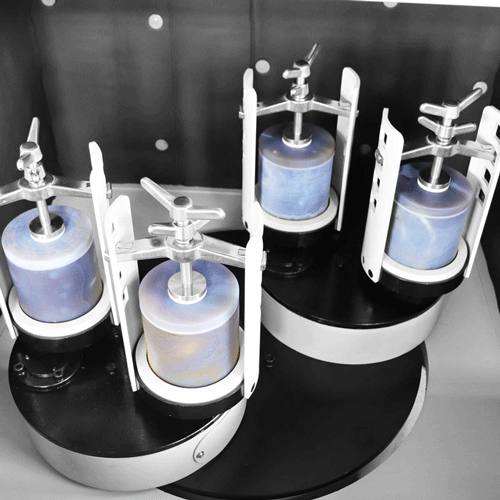
The dual-station layout is the defining feature. Two jars on one frame let a laboratory run a duplicate for reproducibility, or run two process-control agents or two ball-to-powder ratios in parallel on the same drive settings. For mechanical alloying, where a single run can occupy many hours, parallel capacity is usually more valuable than a marginally higher top speed on a single station.
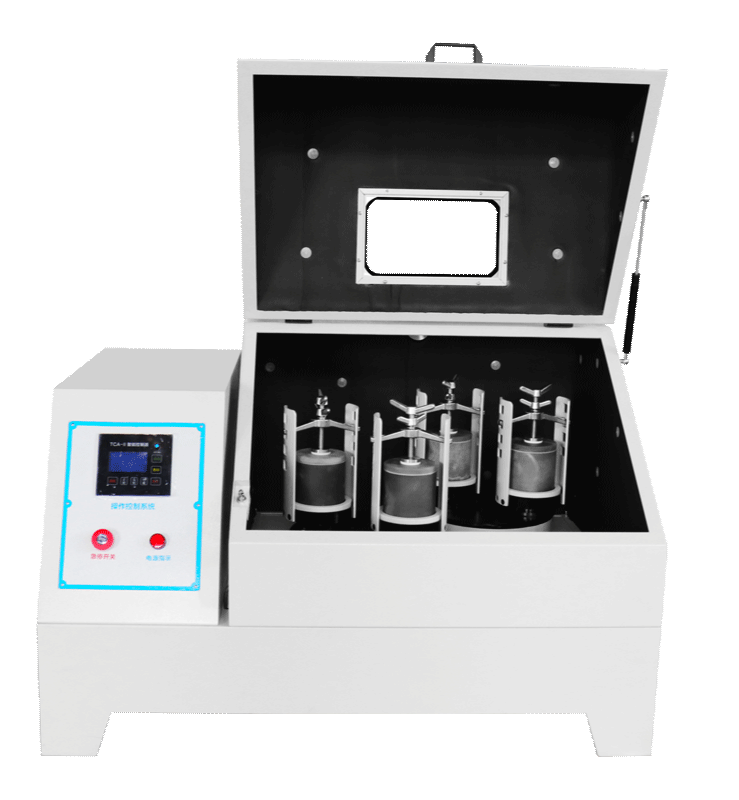
Because the mill sits in a laboratory rather than a plant, the surrounding workflow matters as much as the drive: weighing and loading in a glovebox, sealing, logging the programme, unloading without exposing the powder to air, and cleaning the jar between chemistries. TENCAN's application material covers these sample-handling steps alongside the machine itself, and the mill is documented as part of a set — jars, media and operating guidance — rather than as a stand-alone box. The full configuration is listed on the TENCAN dual planetary ball mill product page.
Retsch Planetary Ball Mills: Documented Design Focus
Retsch, based in Germany, is one of the reference names in laboratory milling and sieving, and its planetary ball mill line is backed by an in-house application laboratory that runs customer samples before a configuration is fixed. For a laboratory starting a mechanical alloying programme, that service is a real advantage: it converts an open question about whether a given jar material will survive a given energy dose into a documented trial.
The design focus across the Retsch planetary range is reproducibility and control. Current models are presented around programmable parameter sets, so a method developed on one instrument can be re-entered on another of the same type within a laboratory network. The portfolio spans single-station benchtop units through to multi-station models, which means a group can start on a small frame and move to a higher-throughput model without leaving the platform or relearning the operating logic.
Retsch also offers a broad selection of grinding jar materials and sizes, an important point for contamination control in alloy development: the same machine can be run with a low-wear ceramic jar for a sensitive oxide system and with a dense jar for a system that needs impact energy. Accessories such as jar sealing and aeration covers are part of the catalogue rather than an afterthought, and the application literature is unusually detailed on milling energy and on the choice between dry and wet routes. Model-level parameters should be confirmed against current manufacturer documentation before they are written into a specification.
Fritsch Planetary Mills: Documented Design Focus
Fritsch, also German, builds the Pulverisette planetary mill family and is known for pushing the energy density of laboratory planetary milling. Its mills are presented around high-speed comminution and mechanical activation, and the range covers single-station and multi-station configurations together with a wide set of grinding bowl materials and volumes, so a method can be scaled or transferred within one platform.
A distinctive design emphasis is process measurement rather than process assumption. On some models Fritsch offers a system that monitors gas pressure and temperature inside the grinding bowl during the run, which is directly relevant to mechanical alloying and to any system that is exothermic, that releases gas, or that is sensitive to the thermal load accumulated over a long milling cycle. Being able to see the pressure rise during a run changes how a programme is designed: shorter cycles with cooling pauses can be justified by evidence rather than by caution alone.
The company also maintains application support for customers developing methods, and its literature is written for users who need to match a bowl material to a contamination budget. As with any brand-level comparison, the specific bowl volumes, speed ranges and optional features offered in a given market should be confirmed with the manufacturer before they are treated as fixed.
Side-by-Side Comparison on Shared Criteria
The table compares the three options on the same dimensions and at the same evidence level. Where a value depends on the model or the configuration, the entry says what has to be confirmed rather than guessing.
| Criterion | TENCAN Dual Planetary Ball Mill | Retsch planetary ball mills | Fritsch planetary mills |
|---|---|---|---|
| Station layout | Two grinding stations on one benchtop frame, per the product designation | Portfolio spans single-station through multi-station models | Range includes single-station and multi-station planetary models |
| Working scale | Laboratory and method-development batches; confirm jar volumes offered | Laboratory scale; confirm jar volumes per model | Laboratory scale; confirm bowl volumes per model |
| Jar / bowl materials | Jar and media selection is part of the published application guidance; confirm the offered set for your sample | Broad range of jar materials and sizes across the range | Broad range of bowl materials and volumes across the range |
| Atmosphere and sealing | Sealed-jar operation; confirm inert-gas or vacuum capability for the configuration quoted | Sealed-jar operation; inert and vacuum options vary by model | Sealed-bowl operation; optional in-bowl gas pressure and temperature monitoring on some models |
| Control | Run parameters set per programme; confirm the controller version offered | Programmable parameter sets on current models | Programmable parameter sets on current models |
| Documentation focus | Application notes on sample grinding, mechanical alloying, wet and dry routes, jars and media | Extensive application literature and an in-house application laboratory | Application literature plus in-bowl process measurement on selected models |
| Natural fit | Parallel duplicate runs and method development on one benchtop frame | Method transfer across a model family and access to sample trials | High-energy activation and systems where in-bowl pressure and temperature data are wanted |
Read the table as a shortlist generator, not a verdict. Two of the three suppliers build a family that spans several frame sizes, so the relevant comparison is always between specific configurations quoted against the same duty, not between brand names in the abstract.
Dry, Wet or Slurry: Choosing the Route First
The route decision comes before the machine decision, and it is the one most often skipped. It changes the jar, the media, the load, the run time and the way the product is recovered.
Dry grinding for reactive and oxygen-sensitive systems
Dry mechanical alloying keeps the charge free of solvent, which simplifies recovery and avoids drying steps that can oxidise a freshly activated powder. It is the standard route for metal powders, intermetallics, hydride systems and carbon-containing mixtures. The cost is that dry powders cold-weld to the jar wall and to each other, so a process-control agent is often added, and the charge is more sensitive to the thermal load built up over a long run.
Wet grinding for agglomeration control and finer dispersion
A liquid carrier reduces cold welding, disperses the charge and often shortens the time to a given fineness in oxide and ceramic systems. The trade-offs are real: the solvent must be removed afterwards without damaging the phase, the jar volume is partly occupied by liquid, and some metals react with common solvents. The wet/dry choice is therefore a materials question, and TENCAN's application notes treat it as one, setting out the selection logic rather than a single recommendation.
Jar and Media Selection: Where Contamination Is Decided
The jar and the balls are the only parts of the mill that touch the sample, so they set both the contamination signature and the energy transfer. A dense medium delivers more impact per collision; a hard, wear-resistant medium keeps the sample cleaner; a low-density polymer keeps energy low but iron contamination at effectively zero. The right answer depends on which of those three constraints binds first.
| Jar material | Density and energy transfer | Contamination consideration | Typical use |
|---|---|---|---|
| Agate | Low to moderate | Very low metallic contamination | Soft and medium-hard samples where trace metals must be avoided |
| Zirconia | High | Zr and Y wear markers | Dense, wear-resistant jars for ceramics and oxides |
| Alumina | Moderate to high | Al and Si wear markers | General ceramic and mineral milling |
| Stainless steel | High | Fe, Cr and Ni wear markers | Metal powders where iron is part of the system anyway |
| Tungsten carbide | Highest | W and Co wear markers | Hard phases and high-energy alloying where density dominates |
| Polymer (for example PTFE or nylon) | Low | Organic and halide risk, negligible metal pickup | Soft, sensitive or reactive samples at low energy |
Ball size and ball-to-powder ratio then set the collision statistics. Published studies report a wide range of ratios, and the numbers are not transferable between systems; what matters is that the ratio, the ball size distribution and the fill level are recorded for every run so that a change in result can be traced to a change in the process. Overfilling is the most common cause of a run that produces nothing but compacted powder on the jar wall.
Sealing, Atmosphere and Thermal Load
A sealed jar is only inert if it is loaded inert. For reactive metals, hydrides and rare-earth systems, the practical workflow is to weigh and load inside a glovebox, close and torque the lid there, and transfer the sealed jar to the mill without exposing the charge. Confirm the lid and gasket design supports this, and confirm the gasket material against the solvent or atmosphere in use.
Thermal load accumulates invisibly. A long high-energy run heats the jar, and the powder sees that heat. Intermittent programmes with cooling pauses, or in-bowl temperature monitoring where it is offered, turn that from an assumption into a controlled variable. For exothermic systems, staged programmes and shorter cycles are the usual answer, and the pressure behaviour during the run is the evidence that justifies them.
Validating the Configuration on Your Own Powder
A specification is a hypothesis until it has been run on the actual material. A defensible validation sequence is short and repeatable: characterise the starting powder, run a duplicate on both stations of the dual mill under identical settings, and compare the products.
- Check phase development by X-ray diffraction to see whether alloying or amorphisation is progressing, and whether unwanted phases such as oxides or carbides have appeared.
- Check particle size distribution and morphology by laser diffraction and electron microscopy; a mill that reduces size but never welds is not alloying.
- Run a contamination check — an elemental analysis of the milled product against the starting powder — to quantify the wear contribution of the jar and media.
- Repeat the reference condition at the end of the campaign to prove the method has not drifted.
The two stations are the asset here. A duplicate run on the second station gives a direct measure of run-to-run variance that a single-station mill cannot provide without doubling the calendar time.
Procurement and Installation Checklist
- Sample identity, target phase or particle size, and the batch mass required per run.
- Number of runs per week and whether parallel capacity or a single station is the constraint.
- Jar material set quoted, with wear markers declared for each option.
- Sealing method, gasket material, and whether glovebox loading is supported.
- Programme storage, parameter range and the log format exported for the laboratory record.
- Bench footprint, power supply, noise and the cooling or ventilation available in the room.
- Cleaning procedure between chemistries and the consumable parts that will be replaced.
- Training, installation support and the route for application questions after delivery.
Matching Requirements to a Starting Point
Three common situations map onto different starting configurations. A laboratory developing a new alloy system with limited material and a need for statistical confidence is best served by a dual-station benchtop mill, two jars of the same material, and a documented duplicate run; the TENCAN dual planetary ball mill is designed for exactly that duty. A group that expects to transfer methods across several instruments should weight programmable parameter sets and application laboratory access heavily, which is where Retsch's model family and sample service become relevant. A programme dominated by high-energy activation, or by systems whose pressure and temperature inside the jar need to be known, should look closely at Fritsch's measurement options.
The next step is not a purchase order but a sample trial. Supplying TENCAN with the powder, the target phase or particle size, the batch mass, the atmosphere requirement and the acceptable contamination limit gives the supplier enough information to propose a jar and media set and a starting programme, and gives the laboratory a result it can compare against its own baseline before committing to a configuration.
Sources and Further Reading
- TENCAN Dual Planetary Ball Mill — product page, used for the machine description and its application scope.
- Retsch planetary ball mill product documentation and application literature, published on the manufacturer's official website; confirm current model specifications directly with the manufacturer.
- Fritsch Pulverisette planetary mill product documentation, published on the manufacturer's official website; confirm bowl volumes, speed ranges and optional features for your market.