
Fast Ball Mill Selection for Lab Grinding
An XRD sample is crushed to a few millimeters, split to a representative aliquot, and loaded into a laboratory ball mill. The target is a narrow fraction below 20 μm, but the first run takes longer than expected, the jar warms up, and the particle size distribution is wider than the method allows. The practical question is whether a Fast ball mill will solve the problem. Sometimes it will; sometimes the limiting factor is feed preparation, media choice, jar material, or the way success is measured. This article examines the Fast ball mill from a laboratory user's perspective: what the equipment can change, what it cannot change, and which variables should be fixed before a purchase or a new grinding protocol is approved.
What a Fast Ball Mill Can and Cannot Solve
A Fast ball mill is a laboratory grinding machine in which a jar containing sample and grinding media is driven by a controlled mechanical action. Users usually want a shorter grind, a finer product, or better reproducibility. The machine can influence all three by delivering energy consistently, but it does not remove the physics of particle breakage. The sample must be brittle enough to fracture, the feed must be small enough to enter the grinding chamber, and the target size must be within the practical range of ball milling for that material.
Fast is not a specification. Higher input energy can reduce cycle time only if the extra energy is absorbed by fracture rather than heat, noise, jar wear, or agglomeration. A very hard material, a ductile metal, a sticky powder, or a heat-sensitive polymer may not become easier to grind simply because the mill can run a shorter cycle. In those cases, pre-crushing, screening, wet grinding, cryogenic assistance, or a different mill type may be more appropriate.
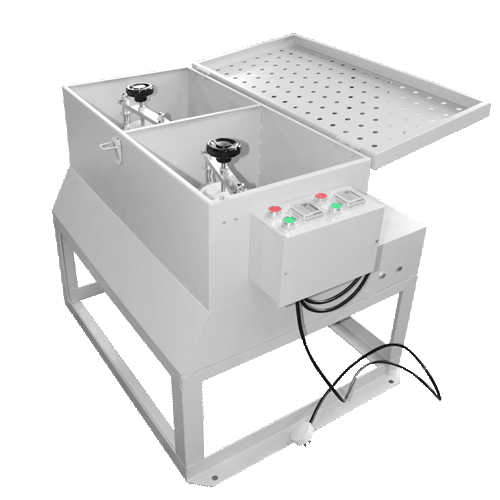
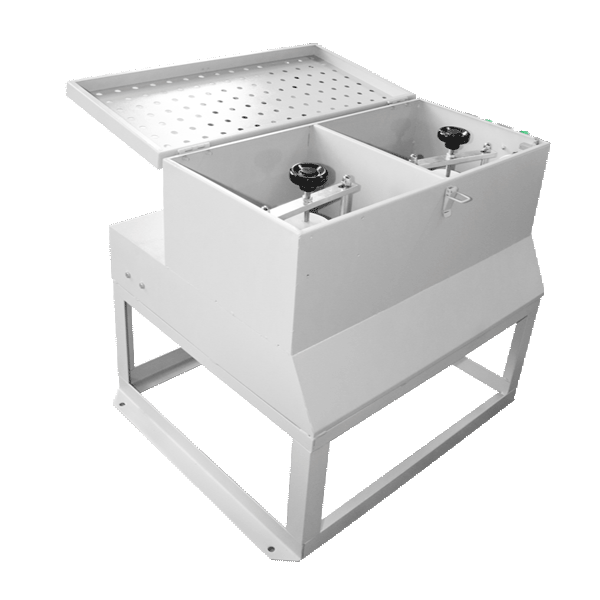
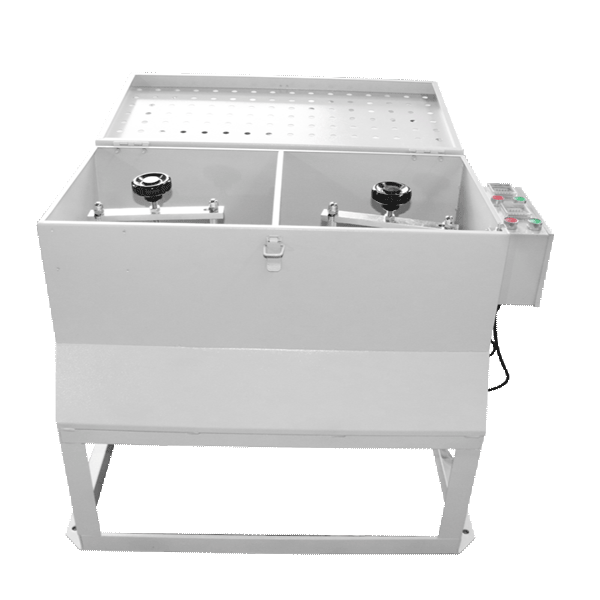
The TENCAN Fast ball mill is listed in the grinding series as a laboratory ball-mill option. The current product page should be used to confirm available jar arrangements, media options, and controls, because configurations can change and the right choice depends on the application.
Fast is a process outcome, not a setting
A better question than 'Is this mill fast?' is 'What cycle time can it achieve for my material at the target PSD, with acceptable contamination and temperature rise?' The answer requires a test. Two laboratories can use the same mill and obtain different results if they use different feed sizes, media densities, jar fill levels, or endpoints. The mill is the energy source; the protocol determines how that energy is used.
Fast also has a cost side. Shorter cycles can increase motor load, jar stress, and media wear. A laboratory may value speed for sample turnaround, but the same setting may be inappropriate for routine production support if it consumes jars or produces heat. The selection should consider the whole workflow: sample preparation, grinding, cleaning, measurement, and data review. A mill that saves ten minutes in grinding but adds twenty minutes of jar cleaning or fails a contamination blank is not a practical gain.
How Energy Reaches the Sample
Ball milling reduces particles through repeated impact and shear between moving media, the jar wall, and the sample bed. The useful work depends on relative motion, collision frequency, media mass, and the number of effective contacts. A fast laboratory mill seeks to increase the rate of those contacts, but the operator still controls media size, sample load, and fill. If the sample fills the void spaces between media, the media cannot move freely. If the media is too small, impact energy may be too low for coarse particles. If the media is too large, there may be fewer contacts and more wear.
The same principle applies in dry and wet systems, although the medium changes the result. In dry milling, particles can be caught between media and crushed; fine particles may also re-agglomerate. In wet milling, the liquid disperses particles and can improve capture, but it also changes viscosity, settling, and the energy required to move the slurry. Neither route is automatically better. The decision should be based on the material, the target PSD, the acceptable contamination, and the downstream process.
Because the exact drive mechanism of a given machine should be checked on the Fast ball mill product page, the selection question is not the label alone. It is whether the machine's usable speed range, control stability, jar volume, and media compatibility match the intended work. A mill that is fast in one configuration may be unsuitable in another if the jar is too large for the available energy or the media is not compatible with the sample.
In practice, the operator cannot see the collision energy directly. The observable signs are grinding rate, temperature rise, media wear, and PSD shape. If the PSD reaches a plateau while the temperature continues to rise, additional energy is not producing finer particles. If the coarse tail remains after a long run, the media may be too small or the feed too coarse. These observations are more useful than a single speed number.
Start with Feed Size and Target PSD
Feed size determines whether ball milling is the first step or a finishing step. A ball mill is not a primary crusher. If the incoming sample contains large chunks, jaw crushing, roll crushing, or another coarse reduction step should come first. Feeding a mill with particles that are too large can cause poor grinding, jar damage, or an unrepresentative product. The acceptable feed size depends on the mill, jar, and media; it should be confirmed for the specific configuration rather than inferred from a photograph or a general rule.
The target should also be stated as a distribution, not a single number. A D50 alone can hide a coarse tail that affects sintering, reactivity, or XRD analysis. For many laboratory methods, D90 and the width of the distribution matter as much as the median. If the target is much finer than the feed, expect multiple stages or a longer grind. If the target is close to the feed size, a single short run may be enough, but over-grinding can still widen the distribution and increase contamination.
Before selecting a Fast ball mill, characterize the feed and define the endpoint. Record the starting D10, D50, and D90 if available, the material hardness and morphology, and any temperature or contamination limits. Then run a small trial with a representative sample. A protocol that works on a few grams may not behave the same way on a larger jar, because the energy per unit mass and the heat removal path change. The fast laboratory ball mill should be evaluated with the same material and measurement method that will be used in routine work.
Sample splitting also matters. A small laboratory jar may hold only a few grams, and a scoop from a coarse heap may not represent the whole batch. Use a riffler or a documented splitting method before grinding. If the sample is heterogeneous, grind more than one aliquot and compare the results. The Fast ball mill can reduce a sample consistently only if the material entering the jar is consistent.
Grinding Media and Jar Material
Media and jar material are the main sources of contamination in laboratory ball milling. The choice is a compromise between density, toughness, wear resistance, cost, and chemical compatibility. Dense media can deliver more impact energy, but they also load the drive and can wear the jar. Lighter media may be gentler but slower. Media size should match the feed: larger media for coarse particles, smaller media for fine grinding, and sometimes a mixed charge to balance impact and attrition.
The jar material must be compatible with the sample and the process. A jar that is hard and wear-resistant may still react with an aggressive sample or contaminate a trace analysis. A soft jar may be suitable for gentle mixing but not for hard, abrasive material. The same applies to seals and lids. If the application is sensitive to iron, chromium, or other elements, the contact materials should be reviewed before the first run, not after a contamination problem appears.
Media-to-sample ratio and fill level are experimental variables. Too much sample can cushion the media and slow breakage. Too little sample may reduce product yield and increase wear. Too much media can restrict movement and raise temperature, while too little media reduces the number of contacts. A practical starting point is to leave enough free space for media motion and to adjust the charge based on observed grinding rate, PSD, and temperature. The Fast ball mill page can be used to confirm which jar and media options are available for the current configuration.
Media wear is not only a cost issue; it changes the grinding environment. As media wears, the size distribution of the charge shifts, and the wear products enter the sample. For long campaigns, keep a log of media use and inspect the charge at defined intervals. A change in grinding time without a change in sample or protocol may be an early sign of media wear or jar surface damage.
Speed, Load, and Fill
Speed controls both the energy per collision and the frequency of collisions. At low speed, media may cascade or slide without enough impact for coarse particles. At high speed, media can be pinned against the jar wall, reducing relative motion and increasing heat. The optimum is material-specific. A hard, brittle sample may tolerate higher energy, while a heat-sensitive or agglomerating sample may need a lower speed, shorter runs, or intermittent pauses.
Load and fill are often more important than speed in laboratory work. If the jar is overfilled, the media cannot move through the sample bed. If it is underfilled, the mill may run inefficiently and the product may be difficult to recover. The correct fill depends on the jar geometry, media size, and whether the process is wet or dry. For a new protocol, change one variable at a time. Run a time series and stop at intervals to check PSD, temperature, and appearance. A fixed cycle time copied from another material is not a validation.
Temperature rise deserves attention because it can change the sample and the result. Some materials oxidize, decompose, or phase-transform when the jar becomes warm. Others become sticky and coat the media, which slows grinding and widens the distribution. If temperature is a constraint, use shorter runs, lower energy input, a cooled environment, or a different process. The Fast ball mill should be selected with the heat load of the application in mind, not only the grinding time.
Experimental design does not need to be complicated. A simple matrix with two media sizes and three time points can reveal whether the process is impact-limited or attrition-limited. If the coarse tail falls quickly but the fines do not increase, the early stage is dominated by breakage of large particles. If the median moves slowly while the D90 remains high, the charge may lack enough energy or the sample may be agglomerating. These patterns help guide the next trial.
Wet or Dry Processing
Dry grinding is often simpler for laboratory sample preparation. It avoids liquid handling, drying, and solvent disposal, and it can be easier to recover the product. However, dry grinding can generate dust, cause caking, and produce agglomerates that are counted as coarse particles. In some materials, dry grinding also increases static charge and makes the powder adhere to the jar and media.
Wet grinding can improve dispersion and particle capture, and it often helps reach a finer target. The liquid must be compatible with the sample and the jar, and it must not dissolve or react with the material. Viscosity and solids loading matter: a thick slurry may not move well, while a dilute slurry may reduce the number of effective collisions. After wet grinding, the liquid must be removed without changing the particle size, which adds a drying step and a chance for re-agglomeration.
For a Fast ball mill, wet operation may require a suitable jar and sealing arrangement. That should be confirmed with the manufacturer rather than assumed. If both dry and wet routes are possible, compare them on the same sample using PSD, contamination, recovery, and drying cost. The faster route is not always the better route if it creates a downstream problem.
Liquid choice also affects cleaning and waste. A solvent that disperses the sample well may be difficult to remove or may attack the jar seal. Water is convenient but can react with some materials or promote corrosion. The safest choice is the liquid that meets the process requirement and can be handled safely in the laboratory. If a wet route is selected, confirm the jar sealing and the allowable liquid volume with the equipment supplier.
Contamination and Cleaning
Contamination can come from the jar, media, seals, and previous samples. In trace analysis, even a small amount of wear can matter. Use a dedicated jar for sensitive work, run a blank with the same media and jar, and clean with a method that does not leave residue. Avoid using one jar for incompatible materials without a validated cleaning procedure. Inspect media regularly for cracks, chips, and discoloration, and replace worn media before it changes the grind or adds contamination.
The risk is not only chemical. Cross-contamination between samples can change the PSD and the interpretation of results. A cleaning procedure should be written down and followed consistently. If the jar has corners, seals, or porous surfaces, pay attention to those areas. For heat-sensitive or hygroscopic samples, cleaning and drying should be completed quickly to avoid moisture pickup. The Fast ball mill should be integrated into a laboratory workflow that includes media inspection, jar control, and sample tracking.
Cleaning validation can be simple. After cleaning, run a blank jar with media and a small amount of clean liquid or powder, then analyze the blank for the element or phase of concern. If the blank is acceptable, the procedure is ready for use. Repeat the blank check after changing jars, media, or sample type. This practice is especially important when the same laboratory handles both trace analysis and bulk samples.
From Lab Results to Scale-Up
Laboratory results from a Fast ball mill cannot be scaled by volume alone. A larger mill may have different media motion, heat removal, and residence time. Scale-up should use measured energy, media size, feed PSD, and target PSD, not just the batch size. If the laboratory mill produces the target in a certain time, the production mill may need a different time, media charge, or configuration. The safest approach is to keep the material and endpoint constant while changing the equipment, then measure the result.
For batch production, the number of jars and the handling time may matter as much as the grinding rate. For continuous production, the residence time distribution and media separation become important. A laboratory Fast ball mill is useful for developing the protocol and understanding the material, but it does not replace a pilot test. Document the speed, load, media, jar, time, temperature, and PSD so that the result can be reproduced and transferred.
Scale-up also changes the operator's ability to intervene. A laboratory mill may be stopped and inspected at intervals; a production mill may run unattended. The control system, alarm limits, and maintenance access therefore become part of the selection. The laboratory Fast ball mill is a starting point for process understanding, not a guarantee that the same result will appear at a larger scale.
Selection Checklist for a Fast Ball Mill
The following checklist is not a substitute for a trial, but it helps organize the decision before contacting a supplier. The goal is to separate requirements from preferences and to identify the variables that must be tested.
| Selection factor | Question to answer | Why it matters |
|---|---|---|
| Material | Is the sample brittle, ductile, sticky, heat-sensitive, or abrasive? | Determines whether ball milling is suitable and which contact materials are acceptable. |
| Feed size | What is the largest particle, and is pre-crushing needed? | Prevents poor grinding, jar damage, and unrepresentative results. |
| Target PSD | What are the D50, D90, and acceptable tail? | Defines the endpoint and the measurement method. |
| Batch size | How many grams per jar and how many samples per day? | Sets the jar volume and practical throughput. |
| Jar and media | Which materials are compatible with the sample and the analysis? | Controls contamination, wear, and grinding energy. |
| Process route | Is dry or wet grinding required? | Changes jar sealing, media motion, recovery, and drying. |
| Temperature | What is the maximum allowable sample temperature? | Affects speed, run time, cooling, and possible degradation. |
| Cleaning | How will the jar and media be cleaned between samples? | Reduces cross-contamination and downtime. |
| Documentation | Are the speed, time, and operating settings recorded? | Supports reproducibility and scale-up. |
Troubleshooting Common Grinding Problems
Grinding is slow or the media does not move
Check the fill level, media size, and sample load. An overfilled jar or a sample that is too cohesive can restrict media motion. Reduce the sample charge, adjust the media charge, or pre-dry the material. If the mill has adjustable speed, compare a lower and a higher setting with a short time series rather than changing several variables at once.
The PSD is wider than expected
A wide distribution can come from insufficient grinding, over-grinding of fines, agglomeration, or an unrepresentative sample split. Check the feed PSD, the dispersion method used for measurement, and the grinding time. In dry milling, fine particles may re-agglomerate; in wet milling, poor dispersion can produce the same effect. Use a consistent measurement protocol before blaming the mill.
The sample cakes or sticks to the jar
Moisture, static charge, and heat are common causes. Dry the sample, reduce the energy input, or use a compatible liquid if wet grinding is allowed. If the material is soft or thermoplastic, ball milling may not be the best method. A different mill type or a cryogenic step may be more effective, but it should be tested on the actual material.
Contamination appears
Review the jar, media, seals, and cleaning procedure. Run a blank. Replace worn or chipped media. If the sample is sensitive to a specific element, choose contact materials that minimize that element and confirm the blank level. Do not assume that a visually clean jar is contamination-free.
The jar becomes hot
Heat is a sign that energy is going into friction and deformation rather than useful fracture. Reduce speed, shorten runs, lower the media charge, or add pauses. For heat-sensitive materials, measure the jar temperature during a trial and set a limit before the run begins.
The product is difficult to recover
Fine powder can coat the jar, lid, and media. Reduce the sample charge, use an antistatic or compatible liquid if allowed, and choose a jar with accessible surfaces. Weigh the recovered product and account for hold-up. If recovery is low, the nominal batch size is misleading.
A Practical Validation Plan
Start with a representative sample and divide it into identical aliquots. Characterize the feed by the same method that will be used for the product. Select one jar and media combination, then run at least three time points. At each point, record the PSD, temperature, visual appearance, and recovery. Repeat the selected condition to check reproducibility. If the result is close but not sufficient, change one variable: media size, media charge, sample load, speed, or time.
Compare the result with the project requirement, not with a general target. A method that needs a narrow D90 may require a different protocol from one that only needs a small D50. If the Fast ball mill cannot meet the requirement within the contamination and temperature limits, the process may need a different mill, a pre-treatment step, or a two-stage grind. That is a useful result, not a failure. It prevents a purchase that would not solve the problem.
FAQ
Is a Fast ball mill suitable for hard materials?
It can be, depending on the material, jar, media, and target size. Hard materials usually require a trial because energy input, wear, and contamination all increase. Confirm the acceptable feed size and media options before testing.
Can a Fast ball mill reach nanometer size?
Nanometer grinding is not a guarantee for every material. It depends on the material, media size, energy, dispersion, and process time. A laboratory trial with PSD measurement is the most reliable way to know whether the target is achievable.
Should I choose wet or dry grinding?
Choose dry when the sample is stable, dust can be controlled, and drying is undesirable. Choose wet when dispersion, fine grinding, or dust control requires a liquid and the downstream process can tolerate drying. Test both if the material allows.
How do I select the grinding media size?
Start with larger media for coarse feed and smaller media for fine grinding. The optimum is a balance between impact energy and the number of contacts. Run a small media trial rather than relying on a single rule.
For any laboratory grinding project, the most useful step is to define the material, feed, target PSD, contamination limit, and temperature limit before comparing equipment. The TENCAN Fast ball mill can then be evaluated against those requirements with a documented trial. A machine that shortens the grind without protecting the sample is not an improvement; a machine that produces a reproducible, fit-for-purpose powder is.