
Heavy-Duty Planetary Ball Mill: How to Select
A laboratory grinding campaign often fails for a simple reason: the mill can turn, but it cannot hold a stable high-energy condition long enough to produce a repeatable result. Hard or brittle samples, small target particles, and tight contamination limits put pressure on every part of the system—the drive, jar clamping, media, cooling, and operating method. That is where a heavy-duty full-directional planetary ball mill enters the conversation. It is not simply a larger bench mill. It is a configuration choice for laboratories that need more mechanical margin, more controlled motion, and better access to process data than a light-duty unit can provide. The challenge is separating useful capability from catalogue language. Changsha Tianchuang Powder Technology Co., Ltd (TENCAN) lists the heavy-duty full-directional planetary ball mill as a product for this type of work. The notes below explain what to verify before treating any heavy-duty label as a solution.
What Heavy-Duty Needs to Mean in Practice
In a planetary mill, the word heavy-duty should describe a chain of mechanical and control margins rather than a single number. The frame must resist vibration, the bearings must carry the jar load, the drive must hold torque under changing resistance, the jar clamp must prevent movement, and the lid retention system must remain secure throughout the cycle. Thermal management also belongs in that chain, because grinding energy eventually becomes heat. If only the motor is larger while the jar interface, bearings, or cooling remain light-duty, the weak point simply moves. Buyers should ask which elements are rated for the intended jar mass, media charge, speed range, and run time.
This is especially important when a laboratory moves from occasional trial work to repeated method development. A short run with a small jar may hide poor torque margin or inadequate heat removal. Longer runs, denser media, and larger batches expose them. The same logic applies to the phrase full-directional. It should be defined by the supplier in terms of motion control, direction changes, speed stability, and the conditions under which those functions are used. A direction change that works smoothly in an empty jar may behave differently with a dense slurry or an unbalanced load. The practical question is not whether the mill has a feature, but whether the feature can be repeated under the load the laboratory actually intends to use.
- Drive margin: Can the system hold the set speed when jar mass, media density, and sample viscosity rise?
- Jar interface: How is the jar located, clamped, and checked for correct seating before a run?
- Lid and seal retention: What prevents loosening during long, high-energy cycles?
- Thermal path: How is heat removed from the jars, and what temperature trend is considered normal?
- Safety logic: Which interlocks stop the drive if the lid, guard, or jar position is not correct?
Vibration is another selection point that is easy to overlook. A heavy frame helps, but the complete assembly must also manage the dynamic load from an off-center or uneven jar charge. If the mill moves, rattles, or changes tone during a run, the cause should be investigated before the method is scaled. Jar seating, media distribution, and floor level can all influence vibration. A machine that is quiet with one jar may behave differently with another. For that reason, a trial should use the jar size and media load that will be used in routine work, not only the smallest available jar.
A heavy-duty full-directional planetary ball mill can be a sound choice when these questions have clear answers and when the intended work fits the configuration. It is a poor choice when the label is used as a substitute for a trial. The same mill can produce very different results with different jars, media, fill levels, and motion profiles. Selection therefore starts with the process envelope, not with a brochure headline.
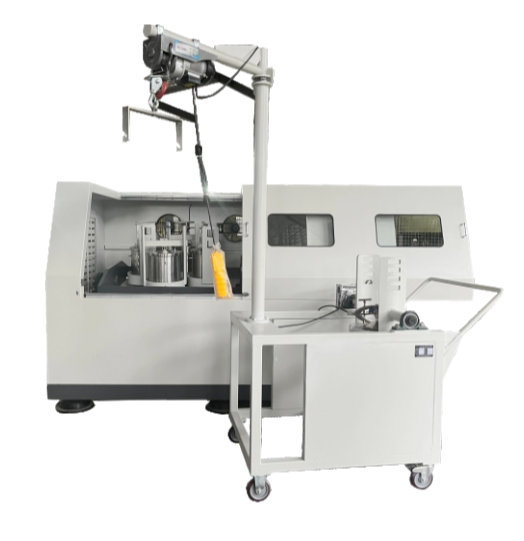
The heavy-duty full-directional planetary ball mill is intended for demanding laboratory grinding, but jar and media selection still determine the result.
How Full-Directional Planetary Milling Transfers Energy
In a conventional planetary ball mill, jars are carried around a central axis while also turning around their own axes. The media charge does not simply roll from one end of the jar to the other. It is repeatedly lifted, thrown, and sheared as the jar wall moves against it. The useful energy is the fraction of that motion that reaches the sample rather than the jar, the media, or the surrounding air. Full-directional motion is a way of varying that energy transfer pattern, but the name alone does not say how much variation occurs or how it is controlled. Ask for the motion sequence, the speed range over which it is stable, and the effect of direction changes on jar load.
Speed is the most visible variable, yet it is often misunderstood. A higher set speed usually increases impact energy and reduces the time needed to reach a given particle size, but it also increases heat, media wear, jar stress, and the risk of agglomeration or contamination. The number on the display is not always the speed at the jar under load. If the drive lacks torque margin, a dense media charge can slow the jars during acceleration or direction changes. That is why a heavy-duty machine should be evaluated with the intended load, not with an empty jar. Stable speed under load is more useful than a high no-load number.
Media selection is the next major lever. Large or dense media deliver stronger impacts and are often considered for coarse or hard feed, but they can also damage softer jar materials and produce a broader particle size distribution. Small media create more contact points and may be suitable for fine grinding, although very small media can be difficult to separate from the product and may not carry enough energy for hard particles. Media density matters as well: a denser medium can increase energy transfer, but it also raises the load on the jar, lid, and drive. The right choice depends on feed hardness, target size, contamination limits, and the jar material that will contain the charge.
Fill level and ball-to-powder ratio determine how much freedom the media has to move. A jar that is packed too full cannot develop the same impact and shear pattern as one with adequate free volume. A jar that is too empty may waste energy on media-to-media contact instead of media-to-sample contact. The same logic applies to the sample load. Overloading a jar can cushion impacts and slow grinding, while using too little material can make the result sensitive to sampling error. These are experimental variables. They should be adjusted one at a time and recorded, because a change that helps one material may hurt another.
| Process variable | Likely effect | What to record |
|---|---|---|
| Rotational speed | Raises energy and heat; may narrow the time to target size until overmilling begins | Set speed, actual speed under load, run time |
| Media size and density | Changes impact versus shear and the wear rate on jar and lid | Media material, size, mass, condition |
| Fill level | Controls media mobility and the balance between impact and friction | Jar volume, media volume, sample mass |
| Dry or wet mode | Affects dispersion, temperature, dust, and later separation | Liquid type, ratio, viscosity, drying method |
| Direction pattern | Can change the contact history inside the jar | Program, interval, reversal timing, stability |
| Pause and cooling | Limits heat buildup and may reduce thermal damage | Cycle length, pause length, jar temperature |
Dry and wet processing deserve separate attention. Dry milling can simplify handling and avoid solvent removal, but it may create dust, static, caking, and a less uniform slurry-like contact pattern. Wet milling can improve dispersion and heat distribution, and it often makes sampling easier, but the liquid must be compatible with the sample, jar, seal, and media. A solvent that softens a seal or reacts with the sample is not a neutral processing aid. Wet milling also adds a drying step that can cause agglomeration or change the surface chemistry. The choice is therefore a system choice, not a preference.
Atmosphere control is another variable that becomes important when the sample is sensitive to oxygen or moisture. A sealed jar can limit exchange with the room, but the seal itself is a wear part and must be compatible with the process. Purging with an inert gas may help some materials, yet it adds handling steps and can change the pressure inside the jar as it warms. If atmosphere control is part of the method, the procedure should define how the jar is prepared, how the seal is checked, and how the sample is recovered. These details should be verified with the jar supplier and the mill supplier before they are treated as routine.
Building a Grinding Method Around the Material, Not the Machine Alone
The most common mistake in planetary milling is to begin with a speed and time copied from another project. A method developed for a brittle oxide will not transfer directly to a ductile metal powder, a polymer, a mineral with variable moisture, or a sample that is sensitive to oxidation. Start with the material and the acceptance criteria. What is the feed size range, and how was it measured? What is the target median and top size? Is a narrow distribution required, or is a fine tail acceptable? What contamination level can the analysis tolerate? How much sample is needed for the next step? These answers define the useful operating window more effectively than a generic recipe.
Start with the material response
Hardness and toughness are not the same thing. A hard but brittle material may fracture quickly under impact, while a softer ductile material may flatten, cold-weld, or coat the media. Thermal sensitivity matters too. Some materials change phase, oxidize, lose volatile components, or degrade when the jar becomes warm. Moisture can make a powder sticky and reduce flow inside the jar. If the sample is already agglomerated, a milling step may break the agglomerates before it breaks the primary particles, which can mislead a particle size result if the measurement method does not disperse the sample properly. A short screening run should therefore include both the mill response and the analytical response.
Choose the jar and media as one system
The jar is not a passive container. Its material, surface finish, stiffness, and sealing method all affect contamination, wear, and cleaning. A very hard media can wear a softer jar, and a soft jar can transfer material into the sample. The media should be compatible with the jar and with the sample, not merely hard. Common laboratory choices include agate, zirconia, alumina, stainless steel, tungsten carbide, and polymer jars, but the correct choice depends on the sample and the acceptable contamination element. If the analysis is sensitive to iron, a steel jar may be unsuitable even if it is mechanically robust. If the sample is abrasive, a soft jar may produce a visible wear track and a hidden contamination source.
Cleaning is part of the same decision. A jar that is difficult to clean can carry residue from one batch to the next, especially when the product is fine or sticky. Dedicated jars for sensitive materials reduce cross-contamination but increase cost and storage requirements. Inspect seals and jar surfaces after each campaign. A seal that has swollen, hardened, or cut may still hold in a short run and fail in a longer one. The heavy-duty full-directional planetary ball mill should be matched to a jar system that can be checked quickly and replaced when wear appears.
Control the energy dose, not just the clock
Two runs with the same time and speed can deliver different energy doses if the jar load, media mass, or starting temperature differs. That is why a method record should include jar mass, media mass and count, sample mass, liquid addition, starting temperature, direction program, and actual run time. A short pause can change the result by allowing heat to dissipate and by changing the contact history. If the mill supports direction changes, record the pattern rather than describing it as full-directional. A repeatable method needs repeatable inputs.
Change one major variable at a time. If speed, media size, and fill level are all changed together, the result may improve but the reason will be unknown. A useful sequence is to establish a safe baseline with a moderate load, then adjust media size or ratio, then adjust speed, and finally adjust time or pause strategy. At each step, check temperature, visual appearance, and particle size distribution. The aim is not to find the most aggressive setting. It is to find the mildest setting that meets the target consistently.
A simple experiment plan makes the work easier to defend later. Define the baseline, the acceptable range for each variable, and the response that will be measured. Keep the number of runs realistic, but include a repeat of the baseline at the end to detect drift. If the sample is expensive or difficult to prepare, reduce the number of variables rather than cutting the analytical checks. A well-designed small trial is more useful than a large trial that changes everything at once. The plan should also state how the jar will be cleaned between runs, because cleaning can be a hidden source of variability.
Judge the distribution, not only the average
A single median value can hide a broad tail, an agglomerated fraction, or a small amount of coarse material that matters in the final product. Report at least a median and a top-size indicator, and keep the measurement method consistent. If the sample is wet-milled, the drying step can create agglomerates that were not present in the slurry. If the sample is dry-milled, sampling may favor fine particles that remain airborne or fall differently from coarse ones. A result should be judged together with the dispersion procedure used for analysis. Otherwise the mill may be adjusted to correct a measurement artifact.
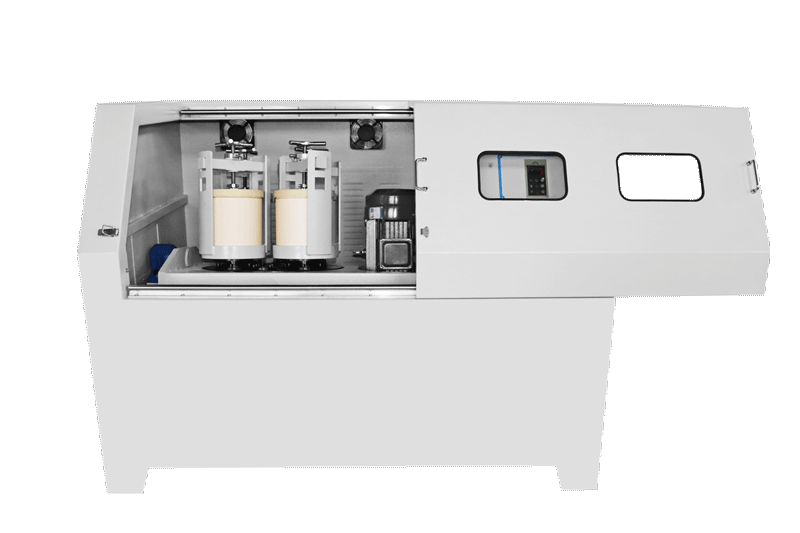
A stable drive and rigid jar clamping matter more than a single speed number when samples are hard or batches are repeated.
Contamination, Heat, and Particle Size Distribution
Contamination control is a design requirement, not a cleaning task added at the end. Wear can come from the jar, the media, the lid seal, the sample itself, or dust entering during handling. The first step is to identify which elements are unacceptable in the final analysis. The second is to choose jar and media materials that do not contain those elements at a level that matters. The third is to inspect wear surfaces regularly. A polished wear scar on the media, a dull patch inside the jar, or a darkened seal can indicate that material is moving into the sample. If the contamination limit is tight, a dedicated jar and a documented cleaning procedure are more reliable than a general-purpose jar used for many materials.
Heat is the other hidden variable. Grinding energy does not disappear. A large part of it becomes heat in the jar, media, and sample. A heavy-duty mill may have more power available, but that does not mean the sample can tolerate more heat. The operator should watch the jar temperature trend, not just the room temperature. A short run may show little change, while a longer run with dense media may continue to heat after the first ten minutes. Pauses, lower speed, lower media mass, or a smaller batch can change the thermal balance. If the sample is sensitive to oxidation or phase change, the atmosphere and sealing method matter as much as the cooling strategy.
Temperature monitoring should be defined before the method is released. Decide where the temperature is measured, how often it is recorded, and what value triggers a pause or a stop. Surface temperature is not the same as internal sample temperature, especially in a sealed jar, so the trend is often more useful than a single reading. A sudden rise may indicate a change in load, a jar that is not seated, or a seal that is beginning to fail. If the process requires active cooling, confirm how the cooling path works and whether it can be used during the full cycle. Do not assume that a heavy-duty drive automatically provides thermal protection for the sample.
Particle size distribution is where these effects become visible. Overmilling can reduce the median but widen the distribution through agglomeration or contamination. Fine particles have high surface energy and may re-agglomerate during drying or storage. A result that looks fine immediately after milling may not look the same after a day. For that reason, the method should include a defined sampling time, dispersion procedure, and storage condition. If the target is a narrow distribution, it may be better to stop at a slightly coarser median than to chase a smaller number and create a long fine tail.
- Check jar and media wear before and after each campaign.
- Record starting and ending jar temperature rather than only room temperature.
- Use a consistent dispersion method before particle size analysis.
- Keep a retained sample from each run to compare later changes.
- Separate cleaning tools by material to avoid cross-contamination.
The heavy-duty full-directional planetary ball mill can provide the mechanical envelope for these checks, but it cannot replace them. A larger or more rigid machine does not remove the need to match the jar, media, and method to the material. In fact, higher available energy makes process discipline more important, because the consequences of an aggressive setting appear faster.
Scale-Up and Repeatability Checks
Scaling a planetary milling method is not a matter of multiplying time by batch mass. The energy delivered per unit mass depends on the jar geometry, media charge, speed, and motion pattern. A small jar and a large jar do not have the same collision environment even when the displayed speed is similar. A more reliable approach is to compare specific energy inputs, temperature rise, and particle size response, then adjust the larger run toward the same response rather than the same clock time. This requires a baseline method with recorded variables. Without that record, scale-up becomes trial and error.
Repeatability should be tested before a method is released. Run the same jar, media, sample mass, and program at least twice, preferably on different days, and compare the distribution and temperature profile. If the results differ, look for jar seating, media wear, sample moisture, weighing error, or ambient temperature. A heavy-duty full-directional planetary ball mill with a rigid frame can reduce mechanical variability, but it cannot compensate for a jar that is not seated correctly or a sample that has absorbed moisture. The goal is a method that stays within its specification when operated by a trained person who is not the person who developed it.
Training and documentation are part of repeatability. The operator should know how to check the jar seat, confirm lid security, load media, and record the program. A short checklist at the mill is more effective than a long procedure stored elsewhere. If the control system can store programs, use clear names that match the written method. If it cannot, record the settings in a log. When a new operator takes over, compare a baseline run with the original data. This simple check can reveal a misunderstanding before it affects a larger batch.
Maintenance belongs in the repeatability plan. Check the jar clamp, lid seal, ventilation path, and alarm functions at defined intervals. Keep a log of media mass and condition, because worn media change the energy dose. If a new jar or a new media lot is introduced, treat it as a method change until it has been compared with the existing baseline. These steps are not administrative overhead. They are the difference between a laboratory result and a production decision.
A Practical Selection Checklist
A selection decision should end with a documented fit between the application and the configuration, not with a general impression that the mill looks robust. Use the product information as a starting point and request the current configuration details for the exact unit under consideration. The TENCAN heavy-duty planetary ball mill page is the appropriate reference for the product name, images, and current contact path. The checklist below organizes the questions that matter most for a heavy-duty full-directional planetary ball mill.
| Decision area | Question to resolve | Why it matters |
|---|---|---|
| Sample and target | What are the feed size, target distribution, sample mass, and contamination limits? | Defines the required energy, jar size, and material compatibility |
| Jar system | Which jar materials and volumes are supported, and how is the lid secured? | Controls contamination, cleaning, and safe operation |
| Motion control | How is full-directional motion programmed, and how stable is speed under load? | Determines whether the motion can be repeated, not just demonstrated |
| Load margin | What jar mass and media charge are acceptable at the intended speed and run time? | Prevents overload, premature wear, and inconsistent results |
| Thermal management | What cooling or pause strategy is recommended for heat-sensitive samples? | Protects the sample and the jar seal |
| Safety package | Which interlocks, guards, and alarms are included for lid and jar position? | Reduces risk during high-energy operation |
| Data and records | Can speed, time, direction pattern, and alarms be recorded or exported? | Supports method transfer and troubleshooting |
| Support and wear parts | Which jars, seals, and media are available, and how are they inspected? | Affects uptime and long-term repeatability |
Before purchase, ask for a trial plan that uses the intended sample, not a demonstration powder. A trial should include a baseline run, a repeat run, a check of jar temperature, and a particle size result from a defined dispersion method. If the sample is sensitive to contamination, include an analysis of the relevant elements. If the plan is to move from grams to larger batches, ask which variables must be held constant and which may be adjusted. A supplier who understands the process will discuss these points in terms of the application rather than a single speed rating.
Spare parts and service access should be reviewed before the order is finalized. Jars, seals, and media are consumables in many laboratories, and their availability affects uptime. Ask which parts are expected to wear, how they are inspected, and whether replacement parts can be supplied for the configuration. For a heavy-duty full-directional planetary ball mill, the mechanical interface between jar and drive is particularly important. A replacement jar that fits physically but changes the mass or balance can alter the process. Confirm that the jar system is compatible with the intended motion program and that the safety checks still apply.
There are also cases where a planetary ball mill is not the best answer. If the requirement is a continuous, high-throughput stream, a batch planetary mill may create unnecessary handling and cleaning steps. If the target is coarse crushing, a different size reduction stage may be more efficient. If the material is extremely heat-sensitive, the thermal path may limit the achievable energy dose regardless of the drive. These are not criticisms of the heavy-duty full-directional planetary ball mill. They are reasons to define the job before choosing the tool. The correct selection is the one that meets the target distribution, contamination limit, and repeatability requirement with a documented operating window.
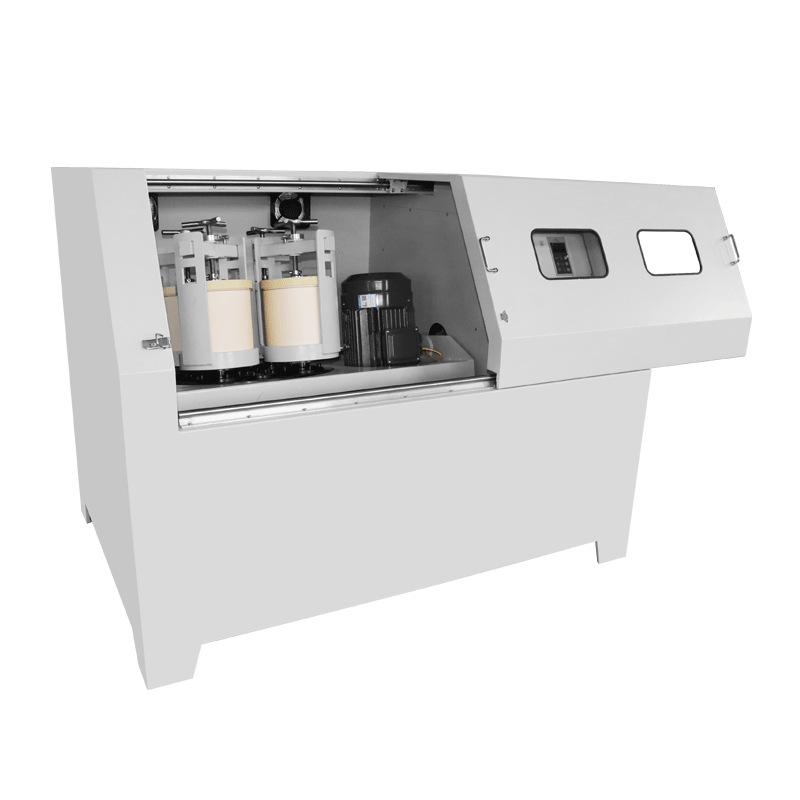
Confirm the current jar interface, control features, and safety package for the exact configuration before purchase.
A final practical reminder: keep the first method simple enough to repeat. Establish a clean jar, a known media charge, a recorded sample mass, and a fixed analysis procedure. Then adjust one variable at a time and keep the records with the sample. The value of a heavy-duty full-directional planetary ball mill comes from controlled energy delivery over many runs, not from a single impressive result. When the jar, media, motion, cooling, and analysis are treated as one system, the mill becomes a reliable part of method development rather than a source of unexplained variation.