
304 Stainless Steel Planetary Mill Jar Selection
A planetary ball mill is often judged by its speed, bowl count, and control system, but the jar is where the actual work happens. The jar contains the sample, the grinding media, and the atmosphere; it transfers energy from the mill’s rotation into impact and friction; and it determines how easily the powder can be recovered, cleaned, and protected from contamination. When results drift, when a lid is difficult to remove, or when a small trial cannot be reproduced at a larger batch size, the jar is one of the first variables to examine. For teams evaluating a 304 stainless steel planetary mill jar, the practical question is not simply whether stainless steel sounds durable. It is whether this jar construction, in this mill, with this sample and these media, gives a controlled and repeatable process.
This guide is written for laboratory researchers, materials engineers, process technicians, and equipment buyers who need to make a defensible jar choice without relying on vague claims. It explains how jar material, geometry, sealing, working volume, media selection, and cleaning practice interact. It also shows where a 304 stainless steel planetary mill jar may fit and where a different material or a modified procedure should be tested. The emphasis is on selection logic and process verification, because the best jar for one powder can be a poor choice for another even when both jars look similar from the outside.
The Mill Jar Shapes the Milling Result
In a planetary mill, the jar does more than hold material. As the sun wheel turns and the jar counter-rotates, the grinding media is thrown against the sample and against the jar wall. The resulting mix of impact, attrition, and friction depends on the jar’s internal shape, the media charge, the fill level, and the properties of the powder. A jar that seems acceptable because it fits the mill can still create dead zones, uneven energy input, or difficult discharge if its internal geometry and working volume are not suited to the trial.
The jar also affects the repeatability of a process. If powder cakes in a corner, if media stays trapped near the lid, or if the sample sticks to the wall after a run, the effective milling time and energy change from batch to batch. Operators may then adjust speed or time to compensate, but they are treating a symptom rather than the cause. A more reliable approach is to view the jar as a process variable: confirm its usable volume, check how the media moves inside it, and observe how the powder behaves after a representative run. These observations are more useful than a single nominal capacity value.
Several common symptoms point back to jar selection. A lid that loosens during milling may indicate a clamping or sealing issue. Fine powder on the outside of the jar can point to a gasket problem or improper closure. A sample that is difficult to recover may be retaining in internal corners or adhering to a surface that is not suited to the material. A change in color or contamination after milling can indicate wear from the jar or media. None of these issues can be solved by assuming that a jar is a passive accessory. They require a review of the jar, the mill setup, and the process conditions together.
Material choice is part of that review. A 304 stainless steel planetary mill jar may be considered when a metallic jar body is acceptable for the sample and when the user can verify the jar dimensions, lid design, sealing arrangement, and cleaning requirements against the application. The grade name alone does not answer every question. It does not define the gasket material, the internal finish, the actual usable volume, or the wear behavior under a specific abrasive load. Those points must be checked with the supplier and tested with the real material.
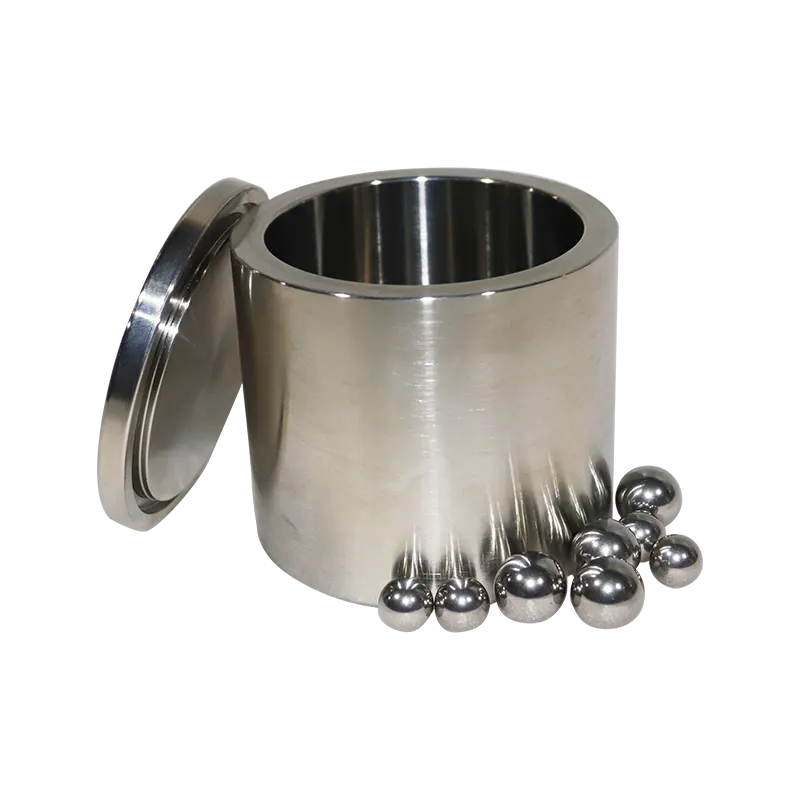
For purchasing teams, the useful specification is therefore not a single phrase such as stainless steel. It is a set of verified details: jar body construction, lid and clamping method, sealing material, internal finish, dimensions, empty mass, usable volume, and compatibility with the selected mill. When those details are clear, the jar can be evaluated as part of a controlled process rather than as an interchangeable container.
What a 304 Stainless Steel Planetary Mill Jar Can and Cannot Tell You
The designation 304 stainless steel is a starting point, not a complete jar specification. It identifies a material family, but it does not tell the buyer how the jar was formed, how the lid seals, what surface finish is present, or whether the jar has been designed for a particular mill model. Two jars made from the same grade can behave differently if their wall thickness, internal geometry, lid threads, or gasket materials differ. This is why a product page should be read as a route to verification, not as a substitute for it.
Questions to put to the supplier
Before ordering, ask for the jar dimensions, the recommended mill models, the usable volume rather than only the nominal volume, the lid and gasket materials, and the cleaning recommendations. Ask whether replacement gaskets are available and whether the jar can be supplied with the sealing arrangement required for wet or dry milling. If the sample is sensitive to metal contact, ask about the internal finish and whether a representative blank milling test can be performed. If the process uses solvents, confirm that the gasket and any sealing surfaces are compatible with those solvents. These questions are basic engineering checks, not signs of distrust.
Chemical compatibility deserves particular attention. A grade designation does not guarantee that a jar is suitable for every acid, base, salt solution, or organic solvent. The sample itself may be corrosive, or the cleaning agent may be aggressive. The gasket may be the weakest point even when the jar body is acceptable. For this reason, a small compatibility trial using the actual liquid and the actual gasket material is more meaningful than a general statement about stainless steel. The same logic applies to abrasive powders: wear depends on hardness, particle shape, media, speed, and run time, so it should be assessed under representative conditions.
Contamination is another area where assumptions can be costly. A metallic jar may be appropriate for many laboratory trials, but metal-sensitive materials, electronic powders, catalyst samples, and pigments may require a different contact material. Even when a metal jar is acceptable, the user should establish a baseline by milling a blank or a representative sample and checking for unwanted color, magnetic response, or analytical signals. If contamination appears, the source may be the jar, the media, the lid, or the handling procedure. A controlled test helps separate those causes before a larger batch is committed.
Surface condition also matters. Scratches, polishing marks, and residue in corners can retain powder and complicate cleaning. A surface that is easy to wipe and inspect supports repeatability, while a rough or damaged area can become a trap for material from earlier runs. The user should inspect the jar interior under adequate light and establish a cleaning method that reaches the lid, threads, gasket groove, and bottom radius. If the jar cannot be cleaned consistently, the next batch may be affected even if the material grade itself is suitable.
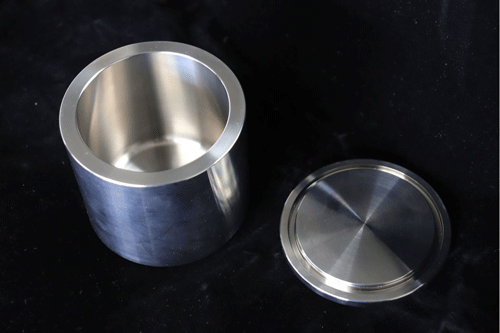
The sensible conclusion is that a 304 stainless steel planetary mill jar can be a practical option when the application allows a metallic contact surface and when the full jar configuration is verified. It should not be selected only because the phrase stainless steel sounds reassuring. The user needs to connect the jar to the powder, the solvent, the media, the mill, and the cleaning routine. That connection is what turns a catalogue item into a reliable process component.
Fit, Working Volume, and Motion in a Planetary Mill
The first physical check is fit. A jar must seat correctly in the mill, engage the clamping system, and remain stable when the mill accelerates and reverses direction. Nominal capacity is not enough to confirm compatibility, because two jars with similar capacity can have different diameters, heights, lid profiles, and mass. The buyer should compare the jar drawing or dimensions with the mill manufacturer’s requirements and confirm that the lid, clamp, and safety guard do not interfere. A jar that is forced into place or that requires an improvised clamp should not be used for routine work.
Working volume is equally important. The nominal volume may describe the jar’s total internal space, but the usable volume must leave room for grinding media and for media movement. Overfilling can reduce media travel, increase heat, and create an uneven load. Underfilling can reduce collisions and waste capacity. The right balance depends on the material, the media size, and the mill settings, so it should be established through trials rather than copied blindly from another application. A jar that is nominally the right size can still be a poor fit if the working volume leaves too little free space for the intended media charge.
Internal geometry influences the path of the media. A simple cylindrical interior with a suitable bottom radius is easier to clean and less likely to retain powder than a shape with sharp internal corners. However, geometry also affects how the media cascades and impacts. The user should observe whether the media charge moves freely, whether powder accumulates in a specific zone, and whether the lid area remains clear. If the media appears to sit in one area while the sample cakes elsewhere, the fill level or jar style may need review before the process is scaled or transferred.
Jar mass and balance should not be overlooked. A heavier jar changes the load on the mill, and poor balance can increase vibration, noise, and wear on the equipment. When jars are used in pairs or multiple stations, they should be matched as closely as practical and loaded symmetrically. The operator should follow the mill instructions for balanced operation and should stop the run if abnormal vibration appears. These checks are especially important during method development, when speed and run time may be increased beyond the initial trial conditions.
TENCAN’s 304 stainless steel planetary mill jar should therefore be evaluated with the same discipline as any other process vessel: confirm the dimensions and mounting arrangement, establish the working volume with the selected media, and check the behavior of the real powder. A short trial at conservative settings can reveal fit or discharge problems before a full method is written. If the jar fits, seals, and discharges cleanly, the next step is to study media and speed rather than to assume that the jar alone will determine the result.
Sealing, Gaskets, and Sample Integrity
Sealing is one of the most practical differences between a jar that works and a jar that causes trouble. A planetary mill creates repeated motion and vibration, so the lid must remain secure throughout the run. The gasket or sealing element must suit the sample and any liquid used. A seal that is compatible with one solvent may swell, harden, or soften in another. A dry powder may be less demanding than a wet slurry, but fine particles can still migrate into threads and sealing surfaces. The user should confirm the sealing method with the supplier and inspect it before and after every run.
Gasket compatibility should be checked against the actual process fluid, not only against water or a generic solvent. Cleaning agents also matter, because a gasket can be damaged during cleaning even if it performs well during milling. If the seal becomes sticky, cracked, compressed, or difficult to remove, it should be replaced rather than forced back into service. A spare set of seals is useful during method development because it allows the user to compare performance without waiting for a replacement order. The goal is not to tighten the lid harder; it is to maintain a controlled sealing interface.
Lid threads and clamping surfaces need care. Powder can accumulate in threads, making the lid difficult to close or open and preventing proper seating. A thread that is cleaned only on the visible surface may still carry residue deeper in the groove. The user should follow the supplier’s cleaning instructions and avoid abrasive tools that could damage the sealing surface. If a lid requires excessive force, the cause may be contamination, a damaged thread, or a worn gasket. Applying more torque can worsen the problem and may distort the jar or lid.
Pressure and temperature changes should also be considered. A sealed jar may experience a small internal pressure change during milling, especially if the sample or solvent warms up. The user should not assume that a jar is designed for high pressure or for every temperature cycle. If the process generates heat or gas, the mill and jar supplier should be consulted before the method is scaled. For ordinary laboratory trials, the practical precaution is to start with a representative small run, check the lid and seal afterward, and look for signs of leakage, sample loss, or unusual odor before continuing.
A simple leak and loss check can be built into method development. Weigh the clean, dry jar and lid, add the sample and media, run for a short period, and inspect the exterior and sealing area afterward. If powder appears outside the jar, stop and correct the cause. If the sample weight changes beyond the expected handling loss, investigate the seal, the sample moisture, and the recovery procedure. These checks are not a substitute for the supplier’s instructions, but they help the operator detect a sealing problem before it affects a larger batch.
Grinding Media and Process Settings in a Stainless Steel Jar
The jar and the grinding media form a system. Media material, size, density, and shape affect the energy delivered to the powder and the risk of contamination. A media that is too large may create excessive impact and heat, while a media that is too small may not deliver enough energy for a coarse or hard feed. The media should also be checked for compatibility with the jar and the sample. If the media wears faster than expected, the jar may be receiving unnecessary abrasion, and the sample may contain unwanted particles. Media selection should be based on the material and the target particle size, not on convenience alone.
The media charge and the sample load should be balanced. A jar packed too tightly with media can restrict movement, while a very low media charge may produce inefficient milling. The ball-to-powder ratio is a process variable that should be recorded and tested, because changing it alters the number of contacts and the energy available per unit of powder. The user should also consider the free space above the charge. If the powder and media fill the jar completely, the motion changes and heat may increase. A conservative starting point followed by systematic trials is safer than a heavily loaded jar.
Speed and time are linked to jar geometry and media motion. Increasing rotational speed may raise impact energy, but it can also raise temperature, increase wear, and change the powder’s flow behavior. Longer milling does not always produce a better result; it can lead to agglomeration, contamination, or an undesirable particle size distribution. The operator should monitor temperature, sound, vibration, and the appearance of the powder. If the process is sensitive to heat, a shorter run with intermediate checks may be more informative than a single long run.
Dry and wet processing each bring different considerations. Wet milling can improve dispersion and reduce dust, but it adds a liquid that must be compatible with the jar, gasket, and media, and it creates a drying and recovery step. Dry milling can simplify recovery, but fine powders may adhere to the jar and media or form agglomerates. The choice should be made from the material behavior and the downstream process, not from a general preference. With a stainless steel jar, the user should confirm that the chosen liquid and cleaning routine are acceptable for the jar configuration.
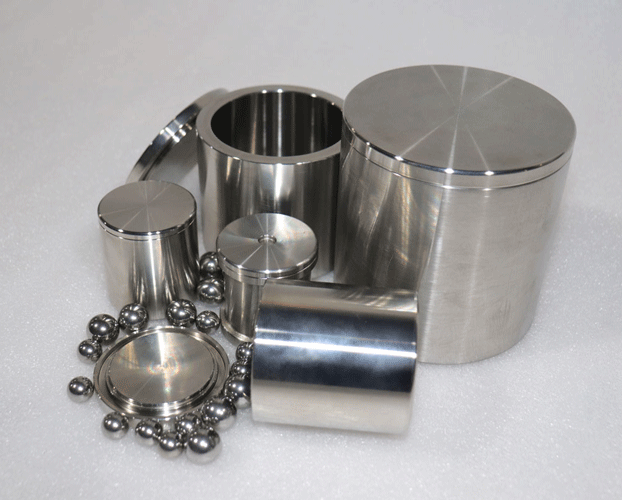
Particle size distribution deserves more attention than a single average value. A process can appear to meet a target mean while leaving coarse particles or an excessive fines fraction. The user should sample consistently and compare distributions across trials. If the distribution is broad, the cause may be insufficient energy, an unsuitable media size, a fill-level problem, or a jar geometry that creates dead zones. If the distribution shifts between batches, sealing, cleaning, and media wear should be checked. A 304 stainless steel planetary mill jar can be part of a stable method only when these process variables are controlled and documented.
Cleaning, Inspection, and a Practical Qualification Checklist
Cleaning is a qualification issue, not a housekeeping detail. Residue from an earlier sample can contaminate the next batch, and powder trapped in a gasket groove can prevent the lid from sealing correctly. The jar should be cleaned according to the supplier’s recommendations, with attention to the lid, threads, gasket, and internal corners. Cleaning agents should be compatible with the jar and seal, and abrasive tools should be avoided if they could change the surface finish. After cleaning, the jar should be visually inspected and allowed to dry before the next use.
Inspection should cover more than the jar body. Look for dents, deep scratches, discoloration, and wear at the lid contact area. Check the gasket for cuts, compression, swelling, or hardening. Check the threads for powder buildup or damage. Confirm that the jar seats correctly in the mill and that the clamp or mounting hardware is in good condition. If a jar has been dropped or overheated, it should be removed from service until its condition is assessed. These checks are quick, but they prevent small faults from becoming batch failures.
The following checklist can be used when comparing a 304 stainless steel planetary mill jar with other options or when qualifying a new jar for an existing method.
| Evaluation area | Question to answer | Why it matters |
|---|---|---|
| Mill fit | Does the jar seat, clamp, and balance correctly in the selected mill? | Poor fit can cause vibration, sample loss, or unsafe operation. |
| Working volume | Is there enough free space for the media and powder to move? | Overfilling or underfilling changes energy transfer and repeatability. |
| Material contact | Is a metallic jar acceptable for the sample, and has contamination been tested? | A grade name alone does not prove sample compatibility. |
| Sealing | Are the lid, gasket, and cleaning method compatible with the process? | Seal failure can cause leakage, loss, and inconsistent results. |
| Media | Are media material, size, and charge suited to the target powder? | Media choice affects energy, wear, and particle size distribution. |
| Cleaning | Can all product-contact areas be cleaned and inspected? | Residue and damaged seals can carry contamination into the next batch. |
A qualification run should use the real material, the intended media, and a realistic fill level. Start with conservative speed and time, then inspect the jar, seal, and powder before increasing energy. Record the jar identification, gasket condition, media charge, sample mass, speed, time, and recovery method. If the result is acceptable, repeat the run to confirm that it is reproducible. If the result is not acceptable, change one variable at a time so that the cause can be identified. This approach is slower than a single trial, but it produces a method that can be transferred and defended.
For many laboratory and pilot applications, a 304 stainless steel planetary mill jar can be a useful part of the equipment set when its fit, sealing, cleaning, and material-contact requirements are verified. The final decision should rest on representative trials and clear documentation, not on a general impression of durability. Buyers should request the jar details that matter to the process and confirm that replacement seals and accessories are available. Users should also keep a simple service record so that wear or repeated sealing problems are visible before they affect an important batch.
The practical lesson is straightforward: select the jar as a system component. Match it to the mill, the powder, the media, and the cleaning routine; test it with the real material; and verify the result with particle size data and a contamination check. A jar that passes those steps is more valuable than one that simply carries the right material name. For teams comparing options, the product page for the 304 stainless steel planetary mill jar is a useful starting point, while the final choice should always be confirmed against the specific mill and process requirements.