
Laboratory Full-Directional Planetary Ball Mill: 360° Rotation for Enhanced Powder Processing
Why Consider a Full-Directional Planetary Ball Mill?
If you have worked with a standard planetary ball mill, you know that the grinding jars rotate around a central axis while also spinning on their own axes. This design delivers high-energy impact and friction, but it also has a limitation: the grinding balls tend to accumulate at the bottom of the jar, especially during long runs or when processing dense materials. This uneven distribution can lead to inconsistent particle size, longer grinding times, and increased wear on the jar walls.
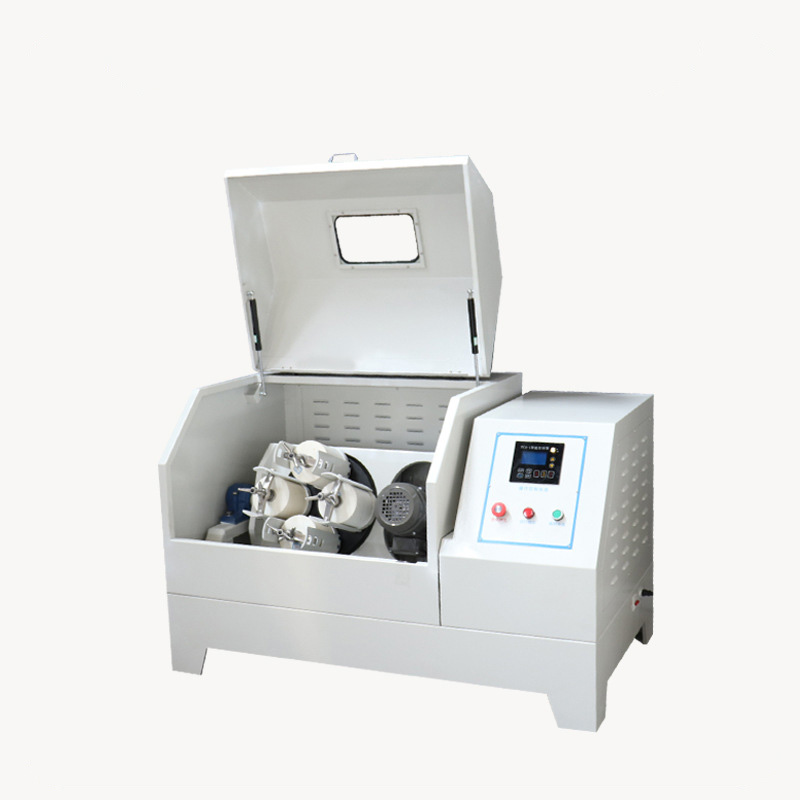
The Laboratory Full-Directional Planetary Ball Mill solves this problem by allowing the entire grinding platform to rotate 360° around a horizontal axis. In other words, the jars are not fixed in one orientation; they continuously tumble end-over-end while the planetary motion is active. This extra degree of freedom ensures that the grinding media and powder are constantly re-mixed, preventing sedimentation and promoting more uniform energy transfer. The result is a finer, more homogeneous powder in less time, with less contamination from jar wear.
This type of mill is particularly valuable when you are working with materials that tend to cake, stick, or segregate during conventional ball milling. It also suits applications where you need to achieve sub-micron or even nano-scale particles consistently, such as in advanced ceramics, battery materials, catalysts, and mechanical alloying.
How Does the 360° Rotation Improve Grinding Performance?
Overcoming Gravity-Induced Segregation
In a traditional planetary ball mill, the jars are mounted vertically or at a fixed angle. As the mill runs, gravity pulls the grinding balls and powder to the lowest point of the jar. Over time, the material near the bottom receives more impact, while the upper portion experiences less. This gradient in energy input can cause particle size distribution to widen, and may require you to stop the mill, open the jar, and scrape the walls – a time-consuming and potentially contaminating process.
The full-directional design rotates the entire jar cluster around a horizontal axis, so the “bottom” of the jar is constantly changing. The grinding media and powder are lifted and dropped repeatedly, mimicking the action of a tumbler mill but with the added planetary high-energy impact. This tumbling action breaks up agglomerates, redistributes the powder, and exposes fresh surfaces to the grinding balls.
Enhanced Energy Transfer for Difficult Materials
Some materials, such as ductile metals, soft polymers, or fibrous samples, are notoriously difficult to grind in standard ball mills because they deform rather than fracture. The full-directional motion introduces a shearing component that helps tear and cut these materials. The combination of impact, shear, and rotation can reduce the time needed to achieve a target particle size by 30% to 50% in many cases, depending on the material and process conditions.
For wet grinding, the 360° rotation also improves slurry homogeneity. The continuous reorientation prevents the settling of coarse particles, which is especially important when you are milling with a liquid medium to avoid agglomeration or to control temperature.
Key Applications for the Full-Directional Planetary Ball Mill
This mill is not a replacement for every standard planetary mill, but it excels in specific scenarios. If you find yourself regularly fighting with powder sticking, uneven grinding, or long processing times, the full-directional design may be the solution.
- Mechanical alloying: Producing homogeneous alloy powders from elemental blends often requires hundreds of hours of milling. The full-directional motion prevents the formation of dead zones and ensures that each particle receives equal deformation, leading to faster alloying and more uniform composition.
- Nanomaterials synthesis: When grinding to the nanometer range, the increased surface energy makes particles prone to agglomeration. The constant tumbling helps break up soft agglomerates as they form, reducing the need for additional dispersants or post-milling treatments.
- Battery electrode materials: Lithium-ion battery cathodes and anodes often require fine, uniform particle size for optimal electrochemical performance. The full-directional mill can handle both dry and wet grinding of NMC, LFP, graphite, and silicon-based materials with less contamination from jar wear.
- Ceramics and refractories: Hard, brittle materials like alumina, zirconia, and silicon carbide benefit from the high-energy impact, while the 360° rotation reduces the risk of excessive wear on one side of the jar.
- Pharmaceuticals and biomaterials: For heat-sensitive or sticky samples, the ability to run the mill in intermittent mode combined with the self-cleaning action of the tumbling can improve yield and reproducibility.
Selecting the Right Full-Directional Mill: What to Consider
When you are evaluating a Laboratory Full-Directional Planetary Ball Mill for your lab, the selection process is similar to choosing a standard planetary mill, but with a few additional factors related to the 360° rotation mechanism.
Capacity and Jar Configuration
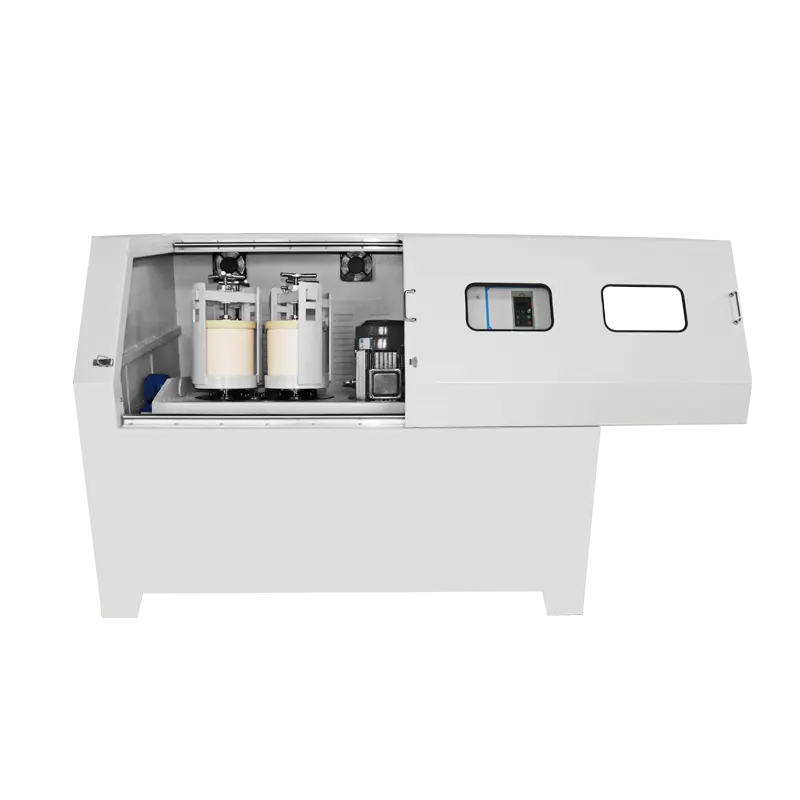
The number of jars and their volume will determine your batch size. Typical laboratory models offer four jar stations, each accepting jars from 50 mL up to 1 L. The actual usable capacity is generally about two-thirds of the jar volume, leaving room for the grinding balls and the powder to move. For the full-directional design, you should also consider the total weight of the loaded jars, because the rotating mechanism adds stress to the drive system. Make sure the mill you choose can handle the combined weight of jars, balls, and powder at the maximum rotational speed.
Rotational Speed and Energy Control
Full-directional planetary mills typically have a revolution speed range of 50–450 rpm, with a jar speed ratio of about 1:2 (revolution to rotation). The actual grinding energy depends on the diameter of the sun wheel and the jar radius. Higher speeds generate more impact force, but also more heat. If you are processing temperature-sensitive materials, look for a model that allows you to program intermittent operation (e.g., 10 minutes run, 5 minutes pause) to dissipate heat. Some mills also offer a variable frequency drive for precise speed control, which is essential when you need to repeat a specific energy input.
Jar and Ball Material Compatibility
Contamination is a major concern in many research applications. The full-directional mill can be equipped with jars made of stainless steel, agate, zirconia, alumina, tungsten carbide, nylon, or PTFE, among others. The grinding balls should match the jar material to minimize cross-contamination. For example, when grinding zirconia powder, use zirconia jars and balls to avoid introducing silica or iron. The 360° rotation does not change the compatibility rules, but it does increase the wear rate on the jar’s interior surface because of the constant tumbling. You may need to choose a harder jar material or replace jars more frequently if you are running abrasive materials.
Vacuum or Inert Atmosphere Capability
Many advanced materials, such as lithium compounds, metal hydrides, or air-sensitive catalysts, must be processed under an inert atmosphere or vacuum. The full-directional mill can be fitted with vacuum-tight jars that seal the sample from air. However, the rotating mechanism for 360° tilt requires a more complex sealing system at the jar connections. Ensure that the manufacturer offers vacuum-compatible jars with O-rings that can withstand the rotational forces. Also check whether the mill’s control system can monitor the vacuum level inside the jar during operation.
Practical Tips for Operating a Full-Directional Planetary Ball Mill
Once you have selected the right mill, getting the best results still requires some optimization. Here are a few practical suggestions based on common laboratory experience.
- Ball-to-powder ratio: A typical starting point is 10:1 by weight, but you may need to adjust up to 20:1 for harder materials or down to 5:1 for softer ones. The full-directional motion allows you to use a slightly lower ball-to-powder ratio because the mixing is more efficient, but you should still run a few trials to find the optimal value.
- Grinding ball size: Use a mix of ball diameters to achieve both impact and friction. For example, 10 mm balls for coarse impact and 3 mm balls for fine grinding. The 360° rotation helps distribute the different ball sizes evenly, so you can use a wider size range than in a standard mill.
- Wet vs. dry grinding: If you choose wet grinding, the liquid medium (water, ethanol, isopropanol, etc.) should cover the powder and balls sufficiently, but not exceed about 80% of the jar volume. The tumbling action of the full-directional mill can cause splashing if the jar is too full, so start with a lower fill level.
- Temperature management: Because the full-directional mill generates more friction due to the additional rotation, the temperature inside the jar can rise faster. For materials that degrade above 50–60°C, use programmed pauses or consider a cryogenic version if available. Some mills offer a cooling fan or a water-cooled jar option.
- Cleaning: The constant tumbling helps keep the jar walls cleaner than a fixed-orientation mill, but you should still clean the jars thoroughly after each run to avoid cross-contamination. Many jars can be sonicated or washed with a solvent.
Comparing Full-Directional vs. Standard Planetary Ball Mills
To help you decide whether the full-directional design is worth the investment, here is a quick comparison based on typical laboratory scenarios. Note that the exact performance depends on the specific mill model, jar material, and powder characteristics.
| Aspect | Standard Planetary Ball Mill | Full-Directional Planetary Ball Mill |
|---|---|---|
| Grinding uniformity | Good, but may have dead zones at jar bottom | Excellent, due to continuous jar reorientation |
| Handling sticky or caking powders | Often requires frequent stops and scraping | Self-cleaning action reduces adhesion |
| Wet grinding slurry homogeneity | Moderate, settling may occur | High, constant mixing prevents settling |
| Mechanical alloying efficiency | Good, but may need longer times | Faster alloying with more uniform composition |
| Jar wear | Concentrated on bottom and sides | More evenly distributed, potentially longer jar life |
| Speed and energy control | Standard VFD, fixed jar orientation | VFD plus 360° rotation, more complex control |
| Cost | Lower | Higher, due to additional mechanical components |
For most routine grinding tasks, a standard planetary ball mill is sufficient. But if you are pushing the limits of particle size reduction, working with difficult materials, or need to ensure process reproducibility across many batches, the full-directional design offers a clear advantage.
Making the Right Choice for Your Laboratory
When you are ready to acquire a Laboratory Full-Directional Planetary Ball Mill, the first step is to define your requirements clearly. Here is a checklist of information that will help you and your supplier select the optimal configuration:
- Powder material and its approximate hardness (Mohs scale or specific energy)
- Initial particle size and target particle size
- Batch weight or volume per run
- Preferred grinding mode (dry or wet)
- Acceptable contamination level and preferred jar/ball material
- Need for vacuum or inert gas protection
- Sensitivity to temperature rise
- Daily operating hours and local voltage/frequency
With this information, an experienced engineer can recommend a suitable mill model, jar size, grinding media, and initial process parameters. Remember that the optimal parameters are often found through a few trial runs, so plan to spend some time on process development.
At TENCAN, we have extensive experience in designing and manufacturing planetary ball mills for laboratory and production use. Our Laboratory Full-Directional Planetary Ball Mill incorporates a robust 360° rotation mechanism, advanced touch-screen control, and multiple safety features. Whether you are grinding pharmaceutical powders, synthesizing battery materials, or conducting fundamental research, we can help you select the right equipment and provide technical support throughout your process.
Please feel free to reach out to our team with your specific requirements. We are ready to assist you in choosing the best solution for your powder processing needs.