
Stainless Steel Vacuum Glove Box: Your Reliable Solution for Anhydrous and Anaerobic Operations
When you work with materials that react violently with oxygen or moisture—such as lithium metal, nano-powders, or organometallic compounds—a standard laboratory bench is no longer a safe or effective environment. Even trace amounts of water vapor or oxygen can alter the chemical composition, reduce yield, or create safety hazards. That is exactly where a stainless steel vacuum glove box becomes indispensable. It provides a sealed, inert atmosphere in which you can handle, process, and test samples without exposing them to ambient air.
This article walks you through the construction, working principle, typical applications, and key selection criteria for stainless steel vacuum glove boxes. Whether you are setting up a new lab or upgrading an existing air-sensitive material workflow, understanding these fundamentals will help you choose the right equipment for your needs.
What Is a Stainless Steel Vacuum Glove Box?
A stainless steel vacuum glove box is a sealed enclosure made of high-grade stainless steel, equipped with transparent windows, glove ports, and an internal transfer chamber (also called an antechamber or airlock). The main chamber can be evacuated using a vacuum pump and then refilled with an inert gas such as argon or nitrogen. By repeating this purge cycle, the levels of oxygen and moisture inside the box can be reduced to very low concentrations—often below 1 ppm in well-designed systems.
The use of stainless steel offers several advantages over acrylic or polymer-based glove boxes:
- Excellent vacuum integrity: Stainless steel can withstand full vacuum without deformation or cracking, making it suitable for both vacuum and inert gas operation.
- Chemical resistance: It resists corrosion from many solvents, acids, and reactive gases that might be used inside the chamber.
- Easy cleaning and decontamination: The smooth, non-porous surface is easy to wipe down and can be sterilized if needed.
- Durability: Stainless steel structures are robust and maintain their sealing performance over many years of use.
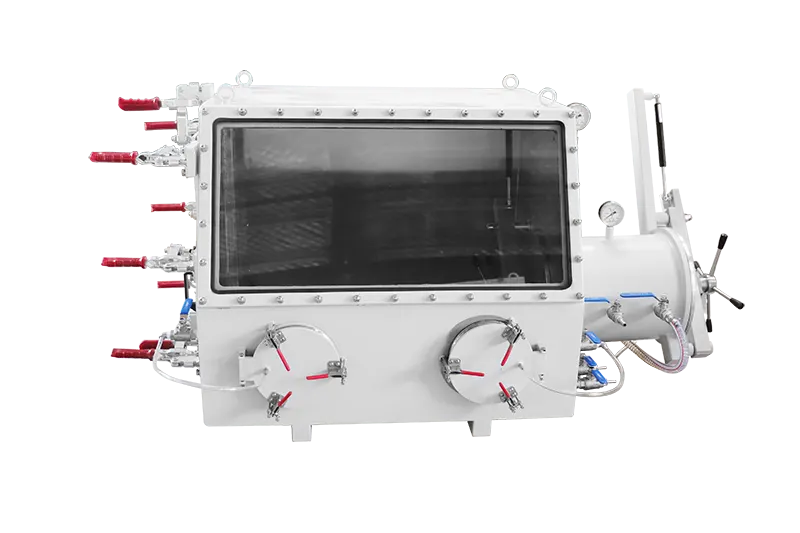
How Does a Stainless Steel Vacuum Glove Box Work?
The core principle is simple: remove the air and replace it with an inert gas. Here is a typical working sequence:
- Initial evacuation: The main chamber and transfer chamber are evacuated to remove the existing atmosphere.
- Inert gas refill: High-purity argon or nitrogen is introduced to bring the chamber back to atmospheric pressure (or slightly positive pressure to prevent inward leakage).
- Cycling: The evacuation-refill cycle is repeated several times to achieve the desired purity level. Some advanced models include a gas purification system that continuously circulates and cleans the internal atmosphere, maintaining low O₂ and H₂O levels without repeated purging.
- Sample transfer: Materials are introduced through the transfer chamber, which is independently evacuated and purged before opening the inner door. This prevents contamination of the main chamber atmosphere.
Once the box is ready, you can perform operations such as weighing, mixing, grinding, or packaging through the glove ports. The gloves are usually made of butyl rubber, Neoprene, or other materials that offer low permeability to gases and moisture.
Key Applications of Stainless Steel Vacuum Glove Boxes
Stainless steel vacuum glove boxes are widely used in research and production environments where air-sensitive materials are involved. Some common applications include:
Lithium Battery Research and Production
Lithium metal, lithium hexafluorophosphate (LiPF₆), and other electrolytes react violently with water. A glove box with controlled atmosphere (typically <1 ppm H₂O and O₂) is essential for assembling coin cells, pouch cells, and testing electrodes. Many battery labs use a stainless steel vacuum glove box to ensure consistent and safe results.
Metal Powder and Nanomaterial Processing
Fine metal powders such as aluminum, titanium, zirconium, and iron can be pyrophoric or easily oxidized. Ball milling these powders in an inert atmosphere requires that the entire milling jar be loaded and sealed inside the glove box. Similarly, when you produce nano-powders, the high surface area makes them extremely reactive. Storing and handling them under an inert gas prevents oxidation and maintains their properties.
Organometallic Chemistry and Catalysis
Many organometallic compounds (e.g., Grignard reagents, metallocenes) are sensitive to air and moisture. A glove box allows chemists to weigh, dissolve, and transfer these compounds without decomposition. This is critical for synthesis, catalysis, and characterization studies.
Solid-State Electrolytes and Ceramics
Materials like LLZO (lithium lanthanum zirconate) and other ceramic electrolytes are often processed under inert conditions to avoid contamination. The glove box provides a clean, dry environment for powder mixing, pressing, and sintering preparation.
Pharmaceutical and Biological Sample Protection
Some drugs and biological samples are sensitive to oxygen or humidity. A stainless steel glove box can be used to package or prepare these materials in a controlled atmosphere.
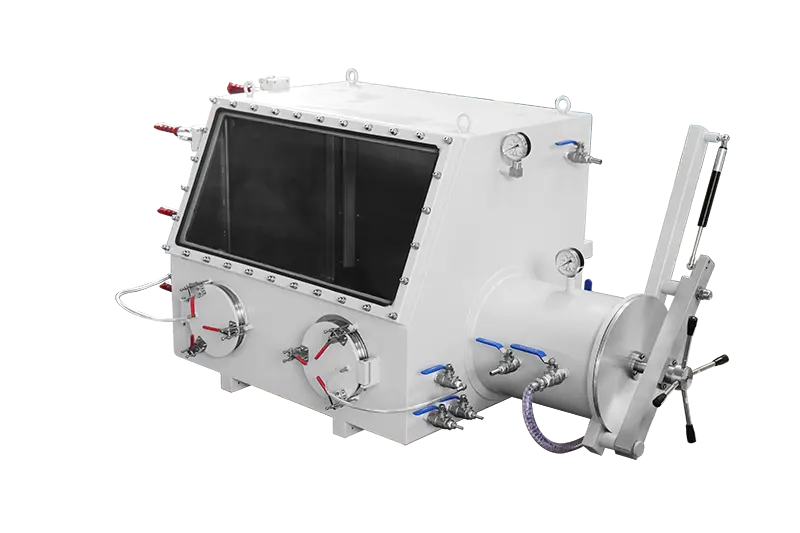
How to Select the Right Stainless Steel Vacuum Glove Box
Choosing a glove box depends on your specific application, sample size, and required purity level. Here are the main factors to consider:
Chamber Size and Number of Glove Ports
Determine the volume of the items you need to place inside. For example, a single-station glove box with one or two glove ports is sufficient for small-scale operations. For larger equipment like a balance, centrifuge, or ball mill, you may need a multi-station system with a larger chamber. Common chamber sizes range from 600 mm (L) × 470 mm (D) × 420 mm (H) for benchtop models to 1500 mm × 750 mm × 900 mm for floor-standing units.
Vacuum and Purge Capability
If you need to achieve very low O₂ and H₂O levels (e.g., <1 ppm), a vacuum-tight stainless steel chamber is essential. The box should be able to withstand full vacuum (typically 0– -0.1 MPa) and include a vacuum gauge and controlled purge valves. For applications that require continuous low-level maintenance, consider a glove box with purification system that recirculates and scrubs the internal atmosphere.
Transfer Chamber (Antechamber)
The antechamber size determines how easily you can move samples and tools in and out without contaminating the main chamber. Larger antechambers (e.g., Φ380 mm × 600 mm) allow you to transfer larger items. Some models include a fast-opening door for convenience.
Glove Material and Port Design
Gloves must be compatible with the chemicals you handle. Butyl rubber provides excellent barrier properties for moisture and oxygen, while Neoprene offers good chemical resistance. The port design should allow easy glove replacement. The number of ports (e.g., 2, 3, or 4) affects how many operators can work simultaneously.
Integrated Equipment
Many researchers integrate analytical instruments or process equipment directly into the glove box. For example, a microbalance, a vacuum oven, or a planetary ball mill can be placed inside to perform milling or mixing under inert conditions. Ensure the chamber has enough space and appropriate feed-through ports for cables, gas lines, and vacuum connections.
Certifications and Safety Features
Look for safety interlocks, pressure relief valves, and leak-tight construction. While we do not mention specific certifications, ensure the equipment meets local electrical and pressure vessel standards. A reliable supplier will provide a detailed technical manual and support for installation and calibration.
Practical Tips for Maintaining a Stable Inert Atmosphere
Even the best stainless steel vacuum glove box requires proper operation to maintain low oxygen and moisture levels. Here are a few practical suggestions:
- Minimize the number of door openings: Each time you open the antechamber door, you introduce a small amount of air. Plan your transfers to batch multiple items.
- Use high-purity inert gas: For most applications, 99.999% argon or nitrogen is sufficient. Lower purity gas will introduce contaminants.
- Monitor the atmosphere continuously: Install an oxygen sensor and a moisture sensor to verify the conditions. Many glove boxes come with these sensors as standard.
- Regenerate the purification system periodically: If you have a recirculating purifier, the adsorbent material will eventually become saturated. Follow the manufacturer’s regeneration procedure to restore its capacity.
- Inspect gloves and seals regularly: Even a tiny pinhole will leak. Replace gloves at the first sign of wear.
By understanding these principles, you can ensure that your glove box operates reliably and delivers the controlled environment your sensitive materials require. Whether you are working on next-generation battery materials, advanced catalysts, or reactive metal powders, a stainless steel vacuum glove box is a critical tool for achieving reproducible and safe results.