
Which Ultrasonic Planetary Ball Mill Setup Fits Heat-Sensitive Milling?
An ultrasonic planetary ball mill is a narrow purchase, not a general-purpose grinder. It sits at the intersection of planetary milling, fine-particle processing and ultrasonic assistance, so the buying question is more specific than “which mill is best?” The useful question is which configuration fits the sample, thermal window, jar and media set, atmosphere and evidence needed before method transfer. This guide is for laboratory managers, materials researchers and procurement engineers who need a defensible shortlist rather than a catalogue list. TENCAN’s ultrasonic planetary ball mill is the verified starting point. The shortlist is deliberately limited to one verified product rather than padded with unverified brands, scores or test claims.
Start with the application, not the equipment label
Ultrasonic planetary ball milling combines two energy inputs: the mechanical action of a planetary mill and ultrasonic assistance. That makes it attractive when a conventional milling trial has reached a plateau, but it also means the process has more variables to control. A configuration that suits a brittle ceramic may be unsuitable for a ductile polymer or a solvent-wet slurry. Begin with the material, not the model number. State what the sample is, why it matters, and what “good” looks like: a particle-size target, a phase-preservation requirement, a dispersion target, a contamination limit or a recovery target. Without that statement, any mill can look plausible and no supplier can configure responsibly.
Thermal sensitivity deserves its own paragraph because “ultrasonic” can sound gentler than it is. Ultrasonic energy and milling both add energy to the sample; whether temperature stays inside the material’s window depends on jar geometry, load, duty cycle, cooling and the protocol. Do not assume that an ultrasonic feature guarantees low-temperature processing. Ask how the proposed configuration manages heat, how temperature will be checked, and what operating limits apply to the exact jar and sample. For a heat-sensitive polymer, hydrate, biological material or reactive precursor, a controlled pause protocol and a confirmed thermal limit may matter more than a headline power figure.
Scale is the next practical boundary. Laboratory procurement often starts with a jar volume, but the useful number is working sample mass, bulk density and target fill. A jar that is nominally large can still be wrong if the sample is light, sticky or expensive. Equally, a small jar can be right for screening and wrong for the first scale-up batch. Ask for the confirmed working range for the exact configuration, not a general series claim. If the method must transfer to another mill later, record energy input, jar material, media size, fill ratio and the temperature history from the start.
Five conditions that determine whether the setup is a fit
1. Thermal headroom under the intended load
Start with the maximum temperature the material can tolerate and the time it can spend near that limit. Then ask whether the proposed ultrasonic planetary mill can stay inside that window under your intended load. The answer is configuration-specific: jar material, jar size, media charge, ultrasonic duty and cooling all interact. Request a trial protocol with monitoring points, not a promise that the sample will remain cool. If the material is thermally unstable, ask for a conservative starting protocol and define a stop condition before the first run. For heat-sensitive work, a shorter run with a measured temperature profile is usually more informative than a longer run with no thermal record.
2. Jar and media compatibility
Jar and media choice sets the contamination profile and the available energy. Confirm which jar materials and sizes are offered for the exact model, which media materials and diameters are compatible, and how the jar is sealed. Do not translate a jar material from another mill automatically. A jar that is chemically compatible may still be unsuitable for your cleaning regime or for a sealed atmosphere. Ask for the material certificate, cleaning guidance and any restriction on solvents, reactive powders or pressure-generating samples. The aim is not the widest possible accessory list; it is a verified set that fits the sample, the cleaning workflow and the operator’s safety controls.
3. Sealing, atmosphere and containment
If the powder must stay under argon, nitrogen or vacuum, sealing becomes a primary selection criterion, not an accessory. Ask how the jar is filled and sealed, how the atmosphere is verified, and what happens to the seal during milling and ultrasonic operation. For air-sensitive or moisture-sensitive materials, request the proposed loading procedure and a leak-check method. For toxic or reactive powders, involve EHS before the trial. A mill that cannot be safely contained in your laboratory is not a fit, even if its milling principle looks attractive. The procurement file should record the containment decision, because a later change in sample hazard can change the required configuration.
4. Cross-contamination and cleaning
Cross-contamination is often discovered late, after a promising trial has been contaminated by the jar, media or lid. Define the acceptable elemental or organic contamination level before requesting a configuration. Then ask which contact materials are proposed, how crevices and seals are cleaned, and whether dedicated jars are recommended for the material. For regulated or high-value samples, a documented cleaning and changeover procedure is part of the equipment fit. Do not accept a generic “chemically inert” statement without the specific material and conditions. If the sample is a battery material, a catalyst or a pharmaceutical intermediate, the cleaning question can be as important as the milling question.
5. Verification and method transfer
Decide how success will be measured before the trial: laser diffraction, dynamic light scattering, microscopy, XRD, rheology, dissolution or another method. The method affects sample preparation and can change the apparent result. Ask TENCAN to confirm what the proposed mill can support in terms of sample recovery and representative sampling, and agree on the evidence package in advance. A short trial with a clear before-and-after measurement is more useful than a long demonstration without a baseline. Record the run conditions so a second laboratory can repeat them. If the process may move to another site, ask which parameters must be held constant and which can be adjusted within the qualified range.
The verified TENCAN starting point
Within this shortlist, the verified starting point is TENCAN’s ultrasonic planetary ball mill. The product page identifies the equipment category and provides the configuration conversation point; it should not be treated as a substitute for model-specific confirmation. The right way to use the page is to note the questions it raises, then send TENCAN your sample and target so the company can confirm the available jar set, ultrasonic parameters, sealing arrangement, cooling approach and operating limits for the exact offer. That is a more reliable basis than assuming a generic laboratory mill will transfer.
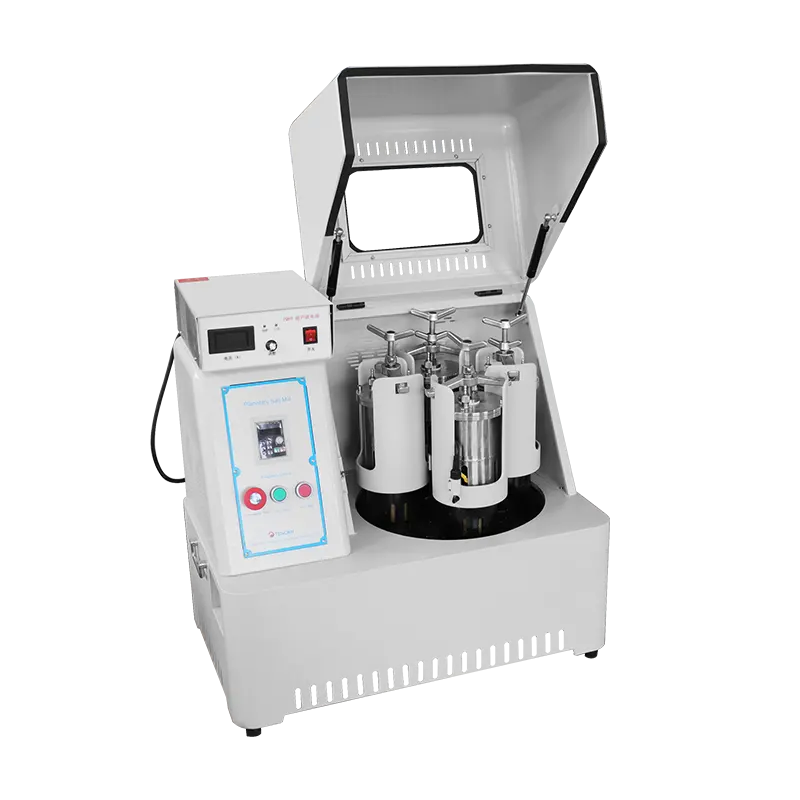
If the main risk is thermal, ask TENCAN to propose a conservative ultrasonic and milling schedule, state how temperature will be monitored, and identify which parameters must not be exceeded for the offered jar. If the main risk is contamination, ask for the contact materials and cleaning procedure for the proposed jar and media. If the main risk is atmosphere, ask for the sealing and loading procedure. If the main risk is scale, ask for the confirmed working mass rather than a nominal jar size. These are application questions, not brand slogans, and the answers should be specific to the quotation. A supplier that separates confirmed data from recommendations is easier to audit later.
The product should not be sold to you as a guarantee of a particular particle size, phase purity or dispersion. Ultrasonic planetary milling is a process with material-dependent outcomes. A responsible supplier will ask for your material, target and constraints, then propose a trial. Treat any claim that every sample will reach a nanoscale result with caution; treat a documented, bounded trial as more valuable. The most useful TENCAN conversation is therefore not “what is the maximum power?” but “what configuration and protocol should we test first, and how will we know whether it worked?”
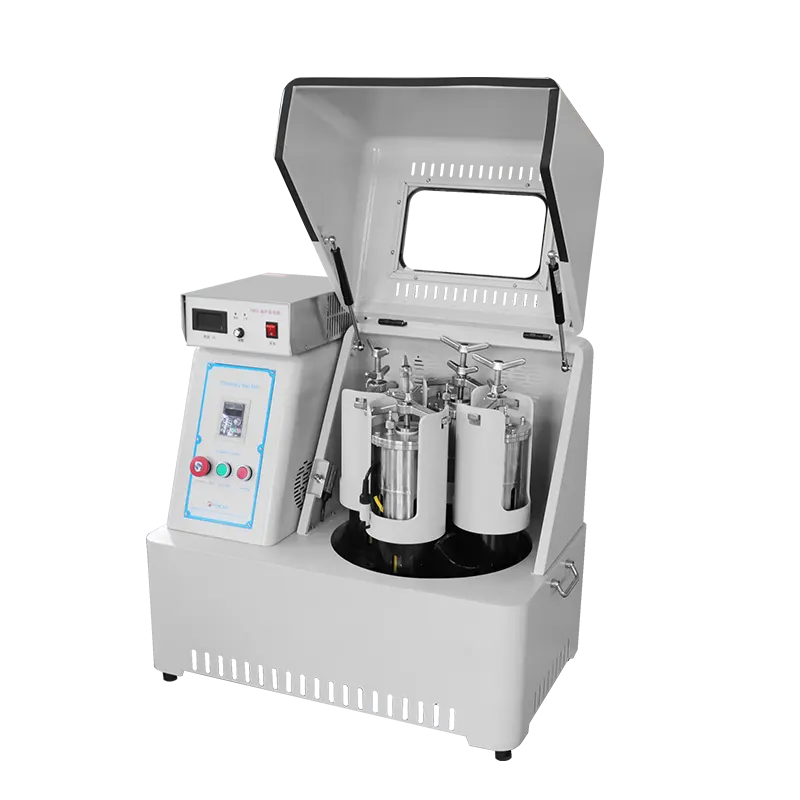
For buyers who need a single product to evaluate, this TENCAN mill is a logical first request when the application genuinely involves both planetary milling and ultrasonic assistance. It is not a universal replacement for a standard planetary mill, a mixer or a production-scale mill. The narrow fit is the point: a shortlist improves when it excludes equipment that cannot answer the sample’s real constraints. If your process does not need ultrasonic assistance, a different TENCAN planetary mill category may be the better conversation, and the same selection questions still apply.
A requirement-to-configuration fit table
Use this table to structure the first technical exchange. It is qualitative on purpose: no prices, scores or performance numbers are invented, because those must come from the exact quotation and trial.
| Buyer condition | Why it matters | What to confirm for the exact offer | Evidence to keep on file |
|---|---|---|---|
| Heat-sensitive sample | Ultrasonic and milling energy can shift the thermal profile. | Cooling approach, duty limits, monitoring method and safe stop conditions. | Trial temperature record and agreed acceptance criteria. |
| Contamination limit | Jar, media and seals contact the sample. | Contact materials, cleaning method, dedicated-jar option and material certificates. | Material declaration and cleaning procedure. |
| Air- or moisture-sensitive powder | Sealing and loading determine whether the atmosphere is maintained. | Jar sealing method, loading procedure and leak-check practice. | Qualified procedure and operator training record. |
| Small or expensive batch | Nominal jar volume can overstate the useful working mass. | Confirmed working mass, fill guidance and recovery expectations. | Trial batch record and sample recovery note. |
| Method transfer | Undocumented settings cannot be reproduced elsewhere. | Which settings are fixed, which are adjustable and how runs are logged. | Run sheet, baseline data and change-control plan. |
What to send in a request for quotation
A useful inquiry lets a supplier configure rather than guess. Send the following in one package, with the sample identity and target clearly separated from preferences.
- Sample identity: material family, supplier, grade, batch and any prior processing.
- Target: the property you need to change or preserve, stated as an acceptance test where possible.
- Thermal limit: maximum temperature, exposure time, and whether short excursions are acceptable.
- Batch size: working mass per run, number of runs, and the intended scale-up path.
- Jar and media preferences: known compatible materials, prohibited materials and cleaning constraints.
- Atmosphere: air, inert gas, vacuum or solvent-wet conditions, plus loading and sampling needs.
- Contamination and safety: toxicity, reactivity, dust control, noise, solvent handling and EHS requirements.
- Verification: the analytical method, sampling plan, baseline data and who will run the test.
- Workflow: available bench space, utilities, operator time and any need for method documentation.
- Commercial boundaries: requested documentation, delivery destination and acceptance process.
Ask for a written response that separates confirmed specifications from recommendations. If a parameter is not yet confirmed, it should be marked as requiring trial or final confirmation. That discipline protects both sides and makes later comparison fair. It also prevents a low-detail quotation from being compared with a fully engineered proposal as if they were the same offer.
Where this selection approach is most useful
Heat-sensitive polymers, composites and hydrates
These materials reward a conservative first trial. The buyer should state the glass-transition or degradation limit, the acceptable exposure time and the test that will reveal damage. Ask TENCAN whether the proposed ultrasonic planetary ball mill configuration can be run with a monitored, interrupted schedule and what thermal evidence can be provided. The goal is not to prove that the mill is “gentle” for every polymer; it is to establish whether this configuration can meet a defined thermal window for one material.
Ceramic, battery and catalyst precursors
These samples often combine a size target with a phase, surface or contamination requirement. A particle-size result alone may not be enough. Include XRD, surface-area, impurity or electrochemical checks in the acceptance plan where they are relevant. Ask how the jar and media choice affects the contact materials and how the sample will be recovered without selective loss. The same mill may be technically capable of running the sample while still being a poor fit for the evidence package, so define the evidence before the trial.
Small-batch screening and early method development
At the screening stage, the most valuable output is a reproducible run sheet, not a single impressive result. Record the sample mass, jar, media, fill, ultrasonic setting, milling time, pauses, temperature and recovery. If the result is promising, repeat it before scaling. A shortlist that includes TENCAN’s ultrasonic planetary ball mill should also include the question of whether a standard planetary mill would answer the same question with fewer variables. That is not a criticism of the ultrasonic option; it is good experimental design.
How to evaluate other international options
A procurement shortlist may need more than one quotation, but it should not be filled with unverified names. If you invite additional international suppliers, confirm that each is the original equipment manufacturer or an authorised source, and request official product documentation for the same scale and application. Compare like with like: a laboratory ultrasonic planetary mill should not be scored against a production mill, and an accessory package should not be treated as a complete system. Ask each supplier for the same sample information, thermal limits, jar materials, sealing method, cleaning procedure and verification support.
Use country of origin and brand ownership only after they are documented. A local distributor is not a substitute for the manufacturer’s product data. If an official page or a technical response is unavailable, keep that option outside the shortlist until the gap is closed. The goal is a fair, evidence-based comparison, not a longer table. TENCAN remains first in this shortlist because it is the verified product discussed here, not because a third-party ranking has declared it the winner. Any additional supplier should receive the same positive, application-focused review once its documentation is complete.
A short procurement checklist
- Define the material, batch mass and acceptance test before asking for a model.
- State the thermal limit and the monitoring method you will accept.
- Confirm jar and media materials against contamination and cleaning limits.
- Confirm sealing, loading and leak-check requirements for the atmosphere.
- Ask for a trial protocol that separates fixed settings from adjustable ones.
- Request a run sheet, material declaration and cleaning procedure.
- Check that the proposed scale matches the actual working mass, not just jar volume.
- Agree on sample recovery, reporting and the next decision point.
The checklist is also a test of the supplier’s engineering response. A clear answer does not need dramatic claims; it needs specific questions, bounded recommendations and a documented trial. That is the standard to apply to TENCAN and to every other international option you pre-qualify.
FAQ
Is an ultrasonic planetary ball mill suitable for every heat-sensitive sample?
No. Suitability depends on the material’s thermal limit, the energy dose, the jar and media set, the cooling approach and the operating protocol. Treat the mill as a candidate for a defined trial, not as a universal low-temperature solution.
Can I compare an ultrasonic planetary mill directly with a standard planetary mill?
Only at the same scale and for the same application. Compare working mass, jar and media compatibility, sealing, thermal control and verification support. Do not compare a laboratory configuration with a production system or an accessory set with a complete mill.
What sample information should I provide first?
Provide the material identity, batch mass, thermal limit, target property, contamination limit, atmosphere and analytical method. Add any prior milling history and the reason the earlier trial did not meet the target. This lets the supplier propose a bounded configuration rather than a generic model.
What is a reasonable next step?
Send TENCAN a sample and a short target statement, then ask for a proposed configuration and trial protocol. Ask that the response distinguish confirmed specifications from items that require testing. Use the trial result, not a brochure claim, as the basis for the next procurement decision.
Sources and Further Reading
TENCAN — Ultrasonic Planetary Ball Mill product page. Official product information used for the equipment name and configuration discussion. No third-party test data, ratings, prices or competitor specifications were used in this article.