
Top 5 Planetary Ball Mill Options for Small-Batch, Low-Contamination R&D Milling
Scope: What This Shortlist Covers
A planetary ball mill is easy to specify badly. Two machines can look identical in a catalogue photograph and behave completely differently once a 2 g sample, a sealed jar and a glove-box transfer port are part of the same afternoon. The five suppliers below were selected for laboratory-scale planetary milling where the sample is expensive, the atmosphere matters, or cross-contamination has to be controlled — not for production attritors, mixer mills, jet mills or hammer mills, which solve different problems and are compared on different terms.
Screening used five practical tests: confirmed activity in laboratory planetary ball milling; a published range of grinding-jar and ball materials, so contamination can be matched to the sample; some route to sealed, vacuum or inert-gas milling, or a footprint small enough to sit inside an isolator; a low-volume or micro configuration for method development; and enough public documentation to write a specification from. Suppliers that could not be placed confidently in these categories were left out rather than guessed at.
How to read the order. TENCAN appears first because the product page supplied for this article is the only source reviewed in detail here, and it documents the specific glove-box configuration around which this shortlist is built. That is a documentation advantage, not an independent test result. No laboratory scores, benchmarking data, prices or third-party rankings were used or should be inferred.
One limitation, stated plainly. For the four non-Chinese suppliers, this article relies on their established position as manufacturers of laboratory milling and sample-preparation equipment. Their current datasheets were not accessed while writing it, so model-level statements — available bowl sizes, achievable fineness, motor power, isolator compatibility — must be confirmed with the manufacturer before they enter a purchase order. The profiles below tell you what to ask, not what the answer will be.
Selection Criteria for Small-Batch Planetary Milling
Start with the sample mass, not the motor
The jar you can tolerate sets the mill, not the other way round. A method developed in a 50 mL jar at a given ball-to-powder ratio will not transfer unchanged to a 12 mL jar, because the number and mass of balls, the free path length and the wall impact frequency all change. Decide the smallest mass that still gives a statistically meaningful result for your downstream analysis — XRD, particle sizing, ICP, electrochemical testing — and specify the mill against that number. A widely used starting point in laboratory practice is to keep the grinding charge and balls together below roughly one third to one half of the jar volume, leaving headspace for ball travel; confirm the exact figure with your supplier for the jar geometry you buy.
Atmosphere and sealing
If the powder is air- or moisture-sensitive, the jar is the real containment boundary and the mill is only the motion source. Ask how the jar is sealed (gasket material, clamp torque, lid geometry), whether a gas inlet or vacuum valve is offered, and how the jar is opened without exposing the sample. If the mill itself must live inside a glove box, the practical questions change: overall footprint and height against the antechamber, weight against the shelf rating, exposed switches and displays that gloves can operate, heat rejection into a closed atmosphere, and how the exterior is cleaned between campaigns.
Contamination and jar material
Zirconia, agate, sintered corundum, tungsten carbide, hardened stainless steel and polymer jars each trade hardness, wear resistance, density and cost differently. Harder, denser media mill faster but can shed wear debris into the sample; softer jars protect the mill but may not deliver the energy you need. For trace-metal work, specify the jar and ball together and request the manufacturer's material data. For iron-sensitive chemistries, steel media are usually the wrong first choice regardless of supplier.
Heat, speed and reproducibility
Planetary geometry delivers high energy density into a small volume, and vial heating is the usual reason a heat-sensitive polymer or a metastable phase goes wrong. Ask whether the control allows interrupted runs with cooling pauses, reverse rotation, and stored programmes that a second operator can repeat exactly. Reproducibility lives in these details more than in a maximum-speed figure.
Spares, jars and documentation
A mill is a consumable-hungry instrument. Confirm that replacement jars, gaskets and ball sets are catalogued items rather than one-off fabrications, that a maintenance manual and a spare-parts list exist in your working language, and that the vendor can tell you which jar materials are stocked for your region. Jars and media are compared here in the same accessory tier, not as substitutes for a complete mill.
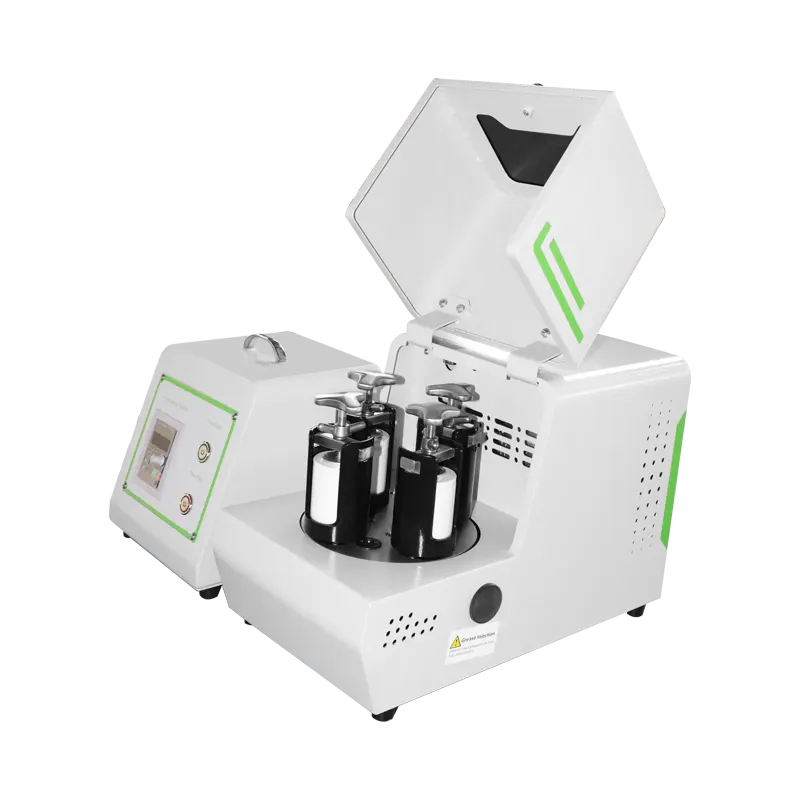
1. TENCAN — Micro Planetary Ball Mill (Glove-Box Special Edition)
Selection focus
TENCAN's Micro Planetary Ball Mill is aimed at the small end of the problem: method development and precious samples where a few grams are all you have, and where the mill has to be operated inside a controlled atmosphere rather than beside it. The glove-box special edition is the configuration this shortlist is built around, because isolator installation is the constraint that eliminates most general-purpose laboratory mills before a specification is even written.
What the supplied product material documents
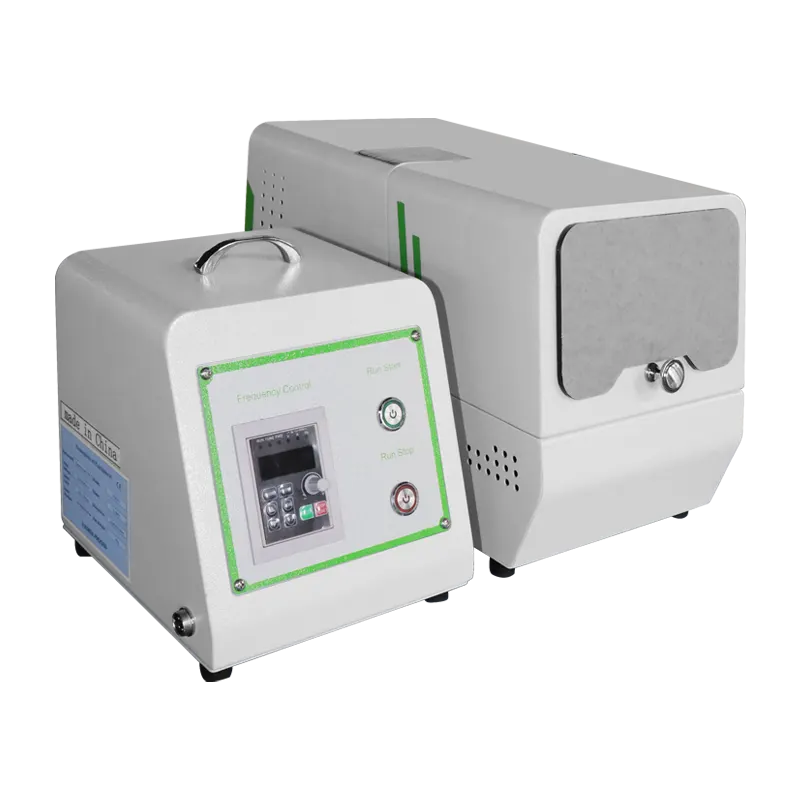
The product page describes a micro-scale planetary ball mill supplied in a glove-box-oriented version, with the grinding jars and ball sets as the working interface and the mill body sized for installation inside an enclosure rather than on an open bench. Jar volumes, jar materials, ball materials, speed ranges, programme options and available accessories are listed on that page and should be read as the authoritative configuration table — they are not restated here, because a specification should be copied from the manufacturer's current document rather than from a summary article. Readers who need the exact numbers can reach the Micro Planetary Ball Mill product page directly.
Workflow fit
The natural workflow is: weigh a small charge inside the box, load the jar and balls, seal, mill on a stored programme, then open and sub-sample without the powder ever meeting ambient air. That sequence suits oxide and cathode precursors, air-sensitive alloys prepared by mechanical alloying, hydride and nitride systems, and any sample destined for analysis that cannot tolerate an oxide skin. Two points should still be settled before ordering: whether the jar sealing arrangement matches the glove-box port you actually have, and whether the jar material you intend to use is stocked for your region. Neither should be assumed.
2. Retsch (Germany)
Selection focus
Retsch is a long-established German manufacturer of laboratory sample-preparation equipment whose catalogue includes planetary ball mills, and it is a common first call for laboratories that want a mill, a sieve shaker and a method library from one supplier. The relevant question is not whether the mills exist, but whether a specific bowl-and-material combination is available for your chemistry and your sample mass.
Supplier profile
Its stated strengths are a broad sample-preparation portfolio, a wide accessory catalogue and documentation written for laboratory quality systems. For buyers who need a mill embedded in a documented sample-prep procedure that includes crushing, dividing and sieving, that breadth is genuinely useful.
Workflow fit
Best suited to general laboratory comminution, method development on robust inorganic samples, and sites that value a single vendor across several preparation steps. Ask specifically whether a jar configuration exists for your volume, and whether isolator operation is supported or would require an enclosure from a third party.
3. Fritsch (Germany)
Selection focus
Fritsch is a German manufacturer with a laboratory milling and sizing line that includes planetary ball mills, positioned for research and quality-control laboratories. Buyers shortlist it when they want a mill range that spans several grinding principles from one source and a published accessories list covering different bowl materials.
Supplier profile
Its publicly stated emphasis is on laboratory milling and particle-sizing instruments for preparation and analysis, with application notes across minerals, chemicals and biological materials. That application literature is often the fastest route to a starting parameter set for an unfamiliar sample.
Workflow fit
A sensible candidate for multi-material laboratories that mill ceramics, minerals and chemicals on the same bench, and for groups that value published application guidance. Confirm bowl volume options against your minimum sample mass, and confirm whether inert-atmosphere milling is achieved through a sealed bowl or an enclosure.
4. Nitto Kagaku (Japan)
Selection focus
Nitto Kagaku is a Japanese manufacturer of laboratory planetary ball mills and related small-scale processing equipment, and it appears on shortlists where a compact, bench-scale planetary unit is wanted with a supplier able to discuss jar configuration directly. For Asian procurement routes it can shorten lead time and service distance.
Supplier profile
Its profile is the specialist small-machine manufacturer rather than the broad sample-prep house: planetary mills and accessories for laboratory R&D, with configurations discussed at quotation stage. That suits buyers who know their jar and ball specification and want the machine built around it.
Workflow fit
Appropriate for university and institutional laboratories milling small batches of inorganic powders, and for groups that prefer to specify jars and media in conversation with the builder. Request the current configuration sheet, the available jar materials and the recommended charge for your target mass.
5. Torrey Hills Technologies (United States)
Selection focus
Torrey Hills Technologies is a US manufacturer of laboratory and pilot planetary ball mills and related processing equipment, based in California. It typically enters a shortlist when a North American supply chain, local service response and a route from laboratory jars toward larger batch sizes are part of the requirement.
Supplier profile
Its stated focus is planetary milling equipment and process support, with configurations offered around jar size and material. For laboratories planning to scale a validated milling step upward, having a supplier who can discuss both small jars and larger vessels is a practical advantage.
Workflow fit
Suited to R&D groups that expect to move from gram quantities to hundred-gram batches on a comparable geometry, and to laboratories that place value on domestic service logistics. Confirm the smallest jar offered, the jar materials available, and whether the enclosure option you need is a standard item.
Comparison Table
| Brand or product | Documented strengths | Relevant application | Configuration to confirm |
|---|---|---|---|
| TENCAN Micro Planetary Ball Mill (glove-box special edition) | Product page documents a micro planetary mill supplied in a glove-box-oriented version, with jars and ball sets as the working interface | Small precious samples, air- and moisture-sensitive powders, method development inside an isolator | Jar volume and material, ball set, stored programmes, sealing arrangement, regional stock |
| Retsch (Germany) | Broad laboratory sample-preparation portfolio including planetary ball mills; extensive accessory catalogue | General laboratory comminution, documented sample-prep workflows | Bowl volume for your mass, bowl materials, inert-atmosphere route, isolator operation |
| Fritsch (Germany) | Laboratory milling and sizing range with published application literature | Multi-material laboratories milling ceramics, minerals and chemicals | Bowl options against minimum sample mass, sealed-bowl versus enclosure for inert work |
| Nitto Kagaku (Japan) | Specialist manufacturer of laboratory planetary mills and accessories | Compact bench-scale R&D milling, regionally short service distance | Current configuration sheet, jar materials, recommended charge, delivery terms |
| Torrey Hills Technologies (USA) | Planetary milling equipment with a laboratory-to-pilot product path and domestic service base | Groups expecting to scale from grams to larger batches | Smallest jar offered, jar materials, enclosure option as standard or custom |
Table entries reflect the level of documentation available for this article: detailed for TENCAN, profile-level for the four international suppliers. No performance scores are implied.
Matching the Mill to the Material
Oxides and ceramics. Hard, brittle powders mill well in zirconia or corundum jars; the risk is wear debris from the jar itself. Specify a jar harder than the sample where trace contamination matters, and request wear data rather than assuming it.
Metals and mechanical alloying. Ductile powders cold-weld onto balls and walls. Steel or tungsten carbide media are common, and a process-control agent is often needed; the mill needs enough programme flexibility for long runs with cooling pauses, which is where stored programmes and interrupted operation matter.
Battery materials. Cathode precursors and solid electrolytes are moisture-sensitive and often expensive per gram. A micro configuration inside a glove box, with a jar that can be sealed and transferred, removes the ambient exposure step entirely.
Polymers and heat-sensitive solids. Planetary energy input raises vial temperature quickly. Cryogenic or interrupted milling, or a lower-energy geometry, is usually the answer; verify the control offers the pause and reverse functions you need before purchase.
Geological and reference materials. Larger charges and homogeneous sub-sampling dominate. Here jar volume and the ability to mill several grams reproducibly outweigh micro-scale capability.
Procurement Checklist: What to Send a Supplier
- Sample description: chemistry, typical and maximum particle size, hardness, ductility, moisture and air sensitivity.
- Mass per run: the working charge, the smallest useful charge and the largest you expect within two years.
- Target: the measurement you will make on the product — particle-size distribution, phase identification, surface area — and the tolerance that counts as success.
- Atmosphere: ambient, sealed jar, vacuum/gas, or full glove-box installation, with port dimensions and shelf load if an enclosure is involved.
- Contamination budget: elements you cannot tolerate above a stated level, so jar and ball materials are chosen against a number rather than a habit.
- Cleaning and turnaround: how many samples per week, whether jars are dedicated per material, and how much downtime cleaning is acceptable.
- Acceptance test: the sample you will send for a trial, and the result that releases the purchase order.
Common Configuration Mistakes
Buying the motor before the jar. Maximum speed is a headline; jar volume and material determine whether the method is reproducible.
Assuming a bench mill fits an isolator. Footprint, height, weight, heat rejection and glove-operability have to be checked against the actual box, not the datasheet's external dimensions alone.
Treating one particle-size result as transferable. A fineness achieved on a soft mineral says nothing about a ductile metal or a hard ceramic. Validate on your own material.
Ignoring the accessory supply line. Gaskets, jars and balls are consumables; an uncatalogued jar is a future stoppage.
Skipping the sample trial. Most disputes are resolved before purchase by milling the buyer's own powder once.
Next Step
Send TENCAN your powder, the target measurement and the glove-box constraints, and ask for a jar-and-media recommendation plus a trial run on your material. Use the same brief with the other four suppliers so the quotations can be compared on identical terms — then choose the configuration that survives your own acceptance test. Full configuration details for the reference machine are on the Micro Planetary Ball Mill page.
Sources and Further Reading
- TENCAN, Micro Planetary Ball Mill — Glove-Box Special Edition, product page and image set: labballmill.com (reviewed in detail; configuration figures taken from this page).
- Retsch (Germany), Fritsch (Germany), Nitto Kagaku (Japan) and Torrey Hills Technologies (USA): supplier profiles compiled from general company information. Their current planetary mill datasheets were not accessed for this article and should be requested directly before specification.