
Four-Station Jar Mill: High-Throughput Laboratory Grinding Guide
When a laboratory needs to prepare several powder formulations, compare multiple material recipes, or process repeated grinding batches, the bottleneck is often not the grinding speed itself—it is the number of samples that can be processed at the same time.
A four-station jar mill, also called a four-station roll ball mill or roller jar mill, addresses this problem by allowing multiple grinding jars to operate on one machine. Each jar remains physically separate from the others, so different samples can be processed in parallel while sharing the same roller-drive system.
Quick answer: A four-station jar mill is a strong choice when you need parallel laboratory or small-batch grinding, mixing and formulation screening. TENCAN's GQM-4 series includes GQM-4-5, GQM-4-15 and GQM-4-20 configurations, with listed single-station maximum loads of 22.5 kg, 60 kg and 80 kg respectively. The correct model depends mainly on grinding-jar diameter, batch load, available power and required throughput.
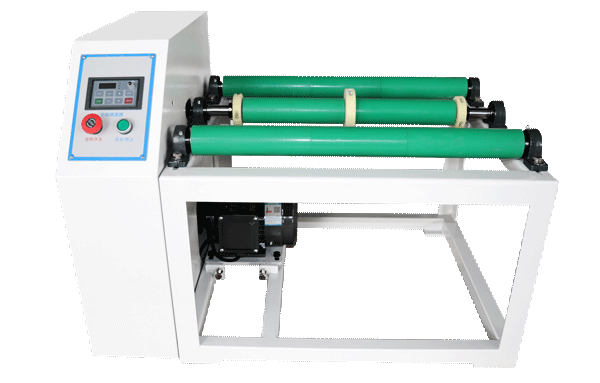
What Is a Four-Station Jar Mill?
A jar mill is a type of roll ball mill in which one or more grinding jars rest on rotating rubber or polyurethane rollers. Friction between the rollers and the jar causes the jar to rotate around its own horizontal axis.
Inside the jar, grinding balls and material are lifted as the cylinder rotates. Gravity then causes the media to roll, slide and fall through the material. Particle-size reduction and mixing are produced by a combination of impact, friction and shear.
The four-station design increases the number of jars that can be operated on one platform. It is therefore particularly useful when laboratory throughput, formulation comparison or repeated batch work matters more than the very high grinding energy of a planetary mill.
How a Four-Station Jar Mill Works
- Load each grinding jar: add the selected grinding media and material.
- Position the jars: place the jars securely between the adjustable rollers and retaining structures.
- Set the roller speed: the motor drives the roller system at the selected speed.
- Jar rotation begins: friction between the rollers and jars rotates the cylinders.
- Media movement performs the grinding: balls roll, slide and fall through the material.
- Set the grinding time: the digital time controller can be used according to the required process.
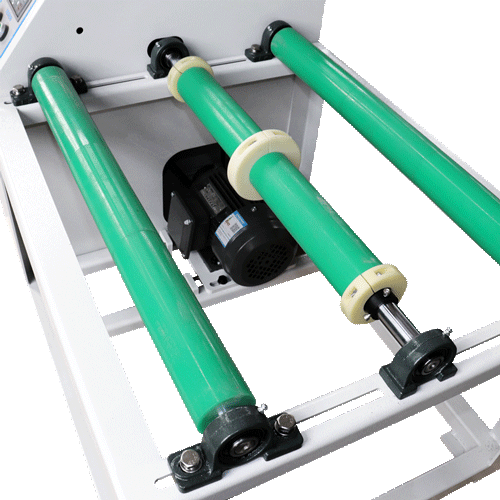
Why Use Four Grinding Stations?
1. Process Multiple Samples in Parallel
The most important benefit is straightforward: multiple jars can run during the same grinding cycle. This is useful for laboratories that repeatedly process several formulations or need several batches ready for later testing.
- Four different material formulations processed during one run
- Several replicate samples prepared under the same nominal roller-speed setting
- Different grinding-media materials compared using separate jars
- Different ball-to-material ratios screened at the same machine speed
- Different wet-grinding formulations processed without sharing the same jar
Four stations do not automatically mean four independently adjustable speeds. The GQM platform uses a common roller-drive system. If identical jar diameters are used, the stations are intended to operate under a common roller-speed condition. Different jar diameters can rotate at different actual jar speeds, but that should be treated as a process variable, not as independent electronic speed control for each station.
2. Separate Jars Help Control Cross-Batch Contact
Because each batch is contained in its own grinding jar, materials from different stations do not directly share the same grinding chamber. This makes multi-material experiments much easier to organize than a system where different samples must be processed sequentially in one vessel.
However, “separate jars” should not be described as automatically contamination-free. Cross-contamination risk still depends on jar cleaning, seals, grinding-media wear, handling procedures and whether the same jar is reused for different materials. For highly contamination-sensitive work, dedicated jars for specific material families are often the safer approach.
3. One Machine Can Cover Different Jar Sizes
The driven rollers can be adjusted so that jars with different outer diameters can be used within the machine's specified range. This gives the laboratory flexibility to move between smaller formulation tests and larger batch work without changing to an entirely different milling platform.
4. Timed, Intermittent or Continuous Operation
TENCAN's four-station jar mill uses a digital display time controller and supports timed operation. The current product description also states that the machine can operate intermittently or continuously, which is useful when a material requires controlled grinding/rest cycles or long-duration mixing.
TENCAN GQM-4 Series: Main Technical Parameters
The following table is based on the current TENCAN four-station jar mill product specification. These values are reference technical parameters and should be confirmed for the final configuration before ordering.
| Model | Dimensions (mm) | Motor | Power Supply | Main Roller Speed | Jar O.D. Range | Max Load / Station |
|---|---|---|---|---|---|---|
| GQM-4-5 | 950 × 660 × 690 | 0.75 kW | 220 V, 50/60 Hz, single phase | 50–410 ±10 rpm | Φ70–Φ230 mm | 22.5 kg |
| GQM-4-5 Double Layer | 950 × 480 × 870 | 0.75 kW | 220 V, 50/60 Hz, single phase | 50–410 ±10 rpm | Φ70–Φ230 mm | 22.5 kg |
| GQM-4-15 | 1130 × 800 × 690 | 1.5 kW | 220 V, 50/60 Hz, single phase | 40–365 ±10 rpm | Φ75–Φ300 mm | 60 kg |
| GQM-4-20 | 1350 × 820 × 690 | 2.2 kW | 380 V, 50/60 Hz, three phase | 40–340 ±10 rpm | Φ80–Φ300 mm | 80 kg |
Note that the value above is the maximum load for one working station, not the recommended material mass inside the grinding jar. Jar weight, grinding-ball weight, sample load and safe operating margin must all be considered during equipment selection.
Single-Layer vs. Double-Layer Four-Station Jar Mill
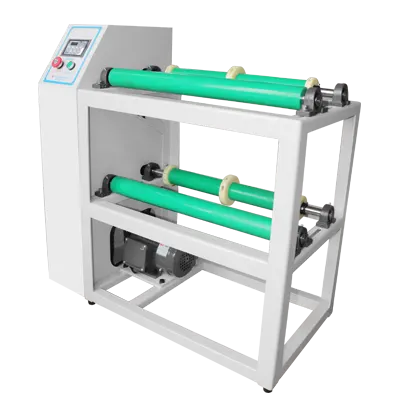
The standard GQM-4 configuration arranges the working positions on one level, while the GQM-4-5 double-layer version stacks the roller sections vertically. The double-layer structure can be useful when laboratory floor space is limited and a taller machine is acceptable.
How to Choose Between GQM-4-5, GQM-4-15 and GQM-4-20
Step 1: Start with the Grinding Jar Diameter
The first selection parameter should be the outer diameter of the jars you plan to use. The machine must be mechanically compatible with the jar diameter before capacity or motor power is considered.
- GQM-4-5: Φ70–Φ230 mm jar outer diameter
- GQM-4-15: Φ75–Φ300 mm jar outer diameter
- GQM-4-20: Φ80–Φ300 mm jar outer diameter
Step 2: Check the Total Weight on Each Station
Calculate the weight of the jar + lid + grinding media + material + liquid, if wet grinding. Do not compare only jar volume. A dense zirconia jar filled with zirconia balls can be much heavier than a nylon jar of similar volume.
Step 3: Confirm the Available Electrical Supply
The current TENCAN specification lists GQM-4-5 and GQM-4-15 as 220 V single-phase configurations, while GQM-4-20 uses 380 V three-phase power. Confirm local voltage, frequency and phase before placing an order.
Step 4: Decide Whether Four Stations Are Enough
If you normally process one or two batches, a two-station jar mill may provide sufficient capacity. If eight simultaneous positions are routinely required, consider the eight-station GQM series.
Two, Four or Eight Stations: Which Configuration Fits Your Workflow?
| Configuration | Best For | Main Benefit | Main Consideration |
|---|---|---|---|
| Single Station | Occasional laboratory batches | Small footprint and simple operation | Only one batch per cycle |
| Two Stations | Paired experiments and moderate sample volume | Parallel processing with moderate footprint | May become a bottleneck if sample count grows |
| Four Stations | R&D screening, multi-formulation work and repeated batches | Good balance between parallel throughput and equipment size | Shared roller-speed system |
| Eight Stations | High-throughput laboratories with many repeated samples | More simultaneous jars on one machine | Higher machine size, load and power requirements |
Grinding Jar Selection: The Jar Is Part of the Process
The machine provides the rotational motion, but the grinding jar and media determine the material-contact environment. Jar material should be selected according to hardness, chemical compatibility, contamination tolerance and whether the process is dry or wet.
| Jar / Lining Material | Main Characteristic | Typical Use | Contamination Consideration |
|---|---|---|---|
| Stainless Steel | Durable, high strength and economical | General powders, process development and metallic materials | May introduce Fe, Cr or Ni |
| Corundum / Alumina | Hard, wear-resistant ceramic | Ceramics, glaze, minerals and oxide materials | Al contamination should be considered |
| Zirconia | High hardness and low wear | Electronic ceramics, battery materials and high-purity powders | Evaluate Zr sensitivity of the product |
| Agate | Chemically inert and smooth | Analytical samples and selected high-purity laboratory work | Relatively brittle; not ideal for very hard feed materials |
| Nylon / PU / Polymer | Low metal contact and gentler grinding | Pigments, coatings, specialty powders and metal-sensitive materials | Check solvent compatibility, wear and temperature limits |
Grinding Media Selection
Grinding balls should be selected together with the jar. Important factors include media hardness, density, wear rate, ball diameter and allowable contaminant elements.
TENCAN's drum-ball-mill selection guidance lists stainless steel, zirconia, agate, corundum/alumina, polyurethane-coated iron-core balls and tungsten carbide among available media options. In practice, the best media is not simply the hardest option—it is the one that delivers enough grinding energy without introducing unacceptable contamination.
How Much Material Should Be Loaded?
Avoid using a universal jar-fill percentage for every material. The correct loading depends on media size, material bulk density, dry or wet process, slurry viscosity and required grinding action.
TENCAN's current drum ball mill selection guide uses a preliminary sizing approach in which the material charge is approximately one-third of the drum's effective volume under standard conditions. This is a starting point for equipment sizing—not a fixed operating rule for every grinding recipe.
When setting up comparative four-station experiments, keep the variables you want to control consistent: jar diameter, media material, ball-size distribution, material mass, liquid volume and roller-speed setting.
Can a Four-Station Jar Mill Be Used for Wet Grinding?
Yes. TENCAN's laboratory roll-ball-mill series supports both dry and wet grinding. For wet grinding, the jar and seal must be compatible with the liquid medium and slurry.
- Jar material compatibility with the solvent or liquid
- Seal and lid condition
- Slurry viscosity and solids content
- Total jar mass after liquid is added
- Whether the liquid is volatile, flammable or otherwise hazardous
- Whether the machine configuration is appropriate for that process environment
Do not assume that a standard jar mill is automatically suitable for flammable-solvent grinding. Explosion-proof or other special configurations should be evaluated separately when required.
Applications of a Four-Station Jar Mill
Electronic Ceramics and Functional Powders
Four separate jars are useful when researchers compare ceramic formulations, dopant levels or different grinding-media combinations. Typical materials include alumina-related powders, ferrites, dielectric ceramics and other electronic materials.
Battery and New-Energy Material Development
Multi-station grinding can support formulation screening of cathode, anode and precursor powders where several recipes need to be compared. For oxygen- or moisture-sensitive materials, the complete grinding atmosphere and jar sealing method must be evaluated separately.
Ceramic Glaze and Pigment Formulation
Roll ball mills are widely used for ceramic glaze slurry, pigment mixing and routine powder grinding. A four-station platform is useful when several colors or formulations need to be prepared during the same work period.
Metal and Non-Metallic Mineral Research
Laboratories can use dedicated jars for different ores, minerals, metal powders or process conditions while maintaining an organized parallel workflow.
Research, Teaching and Method Development
Universities and R&D laboratories often need repeated small-batch experiments rather than one large production run. A multi-position roll mill can reduce the waiting time between batches and make comparative tests easier to manage.
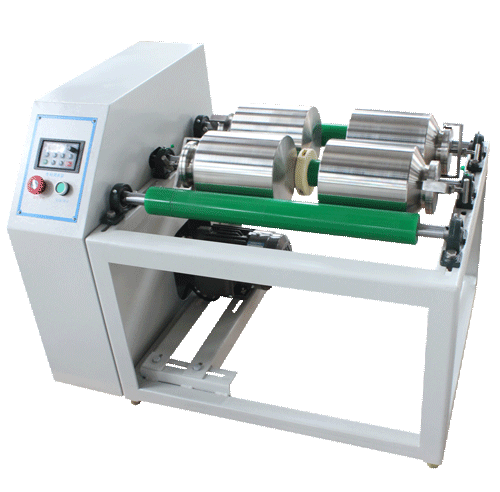
Four-Station Jar Mill vs. Planetary Ball Mill
These machines solve different laboratory problems. A jar mill emphasizes batch flexibility, parallel processing and extended tumbling/rolling grinding. A planetary ball mill emphasizes higher grinding energy and finer particle-size reduction.
| Comparison | Four-Station Jar Mill | Planetary Ball Mill |
|---|---|---|
| Grinding mechanism | Gravity-driven tumbling, rolling, impact and shear | Jar rotation plus planetary revolution |
| Energy level | Moderate | Higher-energy grinding |
| Parallel sample handling | Strong advantage with 2 / 4 / 8 station configurations | Usually 2 or 4 planetary jars depending on model |
| Typical priority | Throughput, mixing, repeated batches and formulation comparison | Rapid fine grinding and micron/nano research |
| Jar-size flexibility | Broad outer-diameter range within model limits | Uses dedicated planetary jars matched to machine size |
If your main requirement is nano-scale or very high-energy grinding, consider a planetary ball mill. If your main requirement is running several moderate-energy grinding or mixing batches in parallel, the four-station jar mill is often the more practical platform.
Common Mistakes When Using or Selecting a Four-Station Jar Mill
Mistake 1: Assuming Four Stations Have Four Independent Speed Controls
The stations share the roller-drive system. Use identical jar diameters when you want comparable grinding conditions across multiple samples.
Mistake 2: Choosing by Jar Volume Without Checking Jar Weight
A dense ceramic jar and grinding media can place a much higher mechanical load on the station than a polymer jar of the same nominal volume.
Mistake 3: Treating “Separate Jars” as Zero Contamination
Separate jars prevent direct mixing between simultaneous batches, but contamination can still come from media wear, jar wear, cleaning or handling.
Mistake 4: Using a Fixed Grinding-Media Ratio for Every Material
Ball-to-material ratio and jar filling should be optimized according to material properties and the required process rather than copied from an unrelated application.
Mistake 5: Ignoring Temperature During Long Runs
Roll milling is lower-energy than planetary milling, but friction and long operating times can still heat the jar. For temperature-sensitive materials, monitor the process and use suitable grinding/rest cycles.
Mistake 6: Using a Generic Cleaning Recipe for Every Jar
Cleaning method must be compatible with the jar material, seals, sample chemistry and laboratory quality requirements. Avoid publishing one universal acid, solvent, drying temperature or cleaning duration unless it has been validated for that exact jar and process.
Maintenance: What Should Be Checked?
- Inspect roller surfaces for abnormal wear, damage or loss of grip.
- Confirm bearings and shafts rotate normally without unusual noise.
- Check the position-adjustment mechanism before changing jar size.
- Inspect jars, lids and seals before each run.
- Verify that loaded jars remain stable on the rollers during startup.
- Keep the machine free of spilled powder or slurry.
- Confirm electrical and emergency-stop functions according to the maintenance schedule.
FAQ: Four-Station Jar Mills
Can four different materials be ground at the same time?
Yes. Each material can be placed in a separate grinding jar. The jars do not share the same material-contact chamber. Cleaning and jar-material compatibility still need to be managed to control contamination.
Can I use different jar sizes at the same time?
Jars can be selected within the specified outer-diameter range, but different jar diameters produce different actual jar rotation speeds at the same roller speed. For comparative tests that require equivalent conditions, use the same jar diameter and similar loading.
Is a four-station jar mill suitable for wet grinding?
Yes. TENCAN's roll ball mill series supports dry and wet grinding. Check jar seals, solvent compatibility, total station load and process-safety requirements before wet operation.
What is the maximum load of a GQM-4-5?
The current TENCAN specification lists a maximum load of 22.5 kg for one working station on the GQM-4-5. This is the total station load reference, not the recommended sample mass.
What is the difference between GQM-4-5 and GQM-4-15?
GQM-4-15 accepts a larger jar-diameter range up to Φ300 mm and has a higher listed maximum load of 60 kg per station, compared with Φ230 mm and 22.5 kg per station for GQM-4-5.
When should I choose GQM-4-20?
Consider GQM-4-20 when the grinding jars and total station load exceed the smaller models' range. It supports Φ80–Φ300 mm jars and a listed maximum load of 80 kg per station, but requires 380 V three-phase power.
Should I choose a four-station jar mill or a planetary ball mill?
Choose a four-station jar mill when parallel sample throughput, flexible jar sizes and routine grinding/mixing are the priority. Choose a planetary ball mill when much higher grinding energy and very fine particle-size reduction are the main objective.
Conclusion
A four-station jar mill is most valuable when a laboratory needs to process several independent batches without buying and operating several separate single-station machines. It combines parallel sample handling, adjustable jar compatibility, timed operation and dry/wet grinding capability in one roller platform.
For model selection, do not focus only on the number of stations. Confirm the jar outer diameter, total loaded jar weight, material and media, required batch size, wet/dry process, roller speed and available electrical supply. These factors determine whether GQM-4-5, GQM-4-15, GQM-4-20 or another single-, two- or eight-station configuration is the better fit.
Need help selecting a four-station jar mill?
Send TENCAN your material, jar size, batch quantity, grinding-media type, wet/dry process and local power supply. Contact TENCAN for a suitable roll ball mill configuration »