
What Is a Stainless Steel Vibration Crusher and How to Choose One for Your Lab?
What Is a Stainless Steel Vibration Crusher?
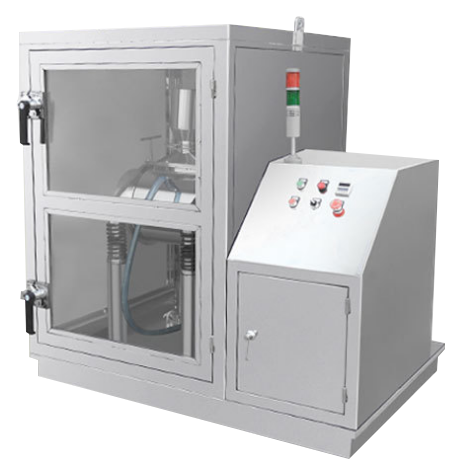
A stainless steel vibration crusher is a compact, high-efficiency crushing device designed for reducing brittle materials into smaller particles. It uses vibratory motion generated by an electric motor to drive a crushing mechanism (typically a set of hammers, paddles, or a vibrating plate) inside a stainless steel chamber. This equipment is widely used in laboratories and small-scale production lines for processing dry materials such as herbs, grains, chemicals, minerals, and pharmaceutical intermediates.
How Does a Vibration Crusher Work?
The core principle is simple: an unbalanced motor or vibrator creates rapid oscillations that cause the crushing elements to impact the material repeatedly. The frequency and amplitude of vibration can often be adjusted to control the fineness of the output. The material is fed into the chamber from the top, and after being crushed by the vibrating action, it passes through a sieve or discharge port at the bottom. The stainless steel construction ensures corrosion resistance, easy cleaning, and compliance with hygiene standards required in food and pharmaceutical applications.
Key Components
- Vibrating motor – provides the driving force.
- Crushing chamber – made of stainless steel (304 or 316L).
- Crushing tool – hammers, blades, or a vibrating plate depending on design.
- Sieve or screen – determines the maximum particle size of the product.
- Feed hopper and collection container.
In many laboratory settings, the feed particle size is typically around 5–10 mm, and the output can be reduced to below 0.5 mm or finer, depending on the material properties and operating parameters.
Why Choose Stainless Steel for Your Crusher?
Stainless steel offers several advantages over carbon steel or cast iron. It resists rust and corrosion, making it suitable for processing moist or acidic materials. It is also non-toxic and easy to sanitize, which is critical for pharmaceutical and food applications. For highly corrosive environments, 316L stainless steel provides additional resistance to chlorides and acids. However, for general laboratory use, 304 stainless steel is commonly sufficient.
Another benefit is the smooth surface finish, which reduces material adhesion and simplifies cleaning between batches. This is particularly important when switching between different chemical compounds or when processing materials that tend to stick.
Common Applications of Stainless Steel Vibration Crushers
- Food processing: crushing grains, spices, dried herbs, and root vegetables.
- Pharmaceuticals: grinding active pharmaceutical ingredients (APIs), excipients, and herbal powders.
- Chemical industry: breaking down brittle chemicals, catalysts, and pigments.
- Laboratory sample preparation: pre-crushing samples before fine grinding with a ball mill or other milling equipment.
- Traditional Chinese medicine: pulverizing medicinal herbs into a fine powder.
How to Select a Suitable Stainless Steel Vibration Crusher
Choosing the right crusher depends on several factors:
1. Material Characteristics
Consider the hardness, brittleness, moisture content, and abrasiveness of your material. Vibration crushers are best for brittle materials with a Mohs hardness below about 5. For harder materials, you might need a jaw crusher or roll crusher as a primary step.
2. Required Throughput and Particle Size
Determine how much material you need to process per batch or per hour. Laboratory models typically handle 1–10 kg per hour, while larger units can reach higher capacities. The fineness of the output is controlled by the sieve aperture size, vibration intensity, and crushing time.
3. Stainless Steel Grade
Standard 304 stainless steel is adequate for most dry materials. If you process acidic or salty substances, or require ultra-clean environments, opt for 316L stainless steel.
4. Cleaning and Maintenance
Look for a design that allows easy disassembly of the crushing chamber and sieve. Quick-release clamps and smooth internal surfaces reduce downtime between batches.
5. Safety Features
A safety interlock that stops the motor when the cover is opened is essential. Also consider overload protection and vibration damping to reduce noise and wear.
Comparison with Other Laboratory Crushers
You might be wondering how a vibration crusher differs from other common lab crushers. Here is a brief comparison:
| Type | Mechanism | Best For | Output Size |
|---|---|---|---|
| Vibration Crusher | High-frequency vibration | Brittle, medium-hard materials | ~0.1 – 2 mm |
| Jaw Crusher | Compression between two plates | Hard, tough materials (e.g., ores, rocks) | ~1 – 10 mm |
| Roll Crusher | Crushing between rotating rolls | Soft to medium-hard materials, often for secondary crushing | ~0.5 – 5 mm |
| Hammer Mill | Impact by rotating hammers | Fibrous, brittle materials | ~0.1 – 3 mm |
Each type has its strengths. If your application requires a balance of cleanliness, gentle crushing, and moderate fineness, a stainless steel vibration crusher is a solid choice.
Practical Tips for Operating a Vibration Crusher
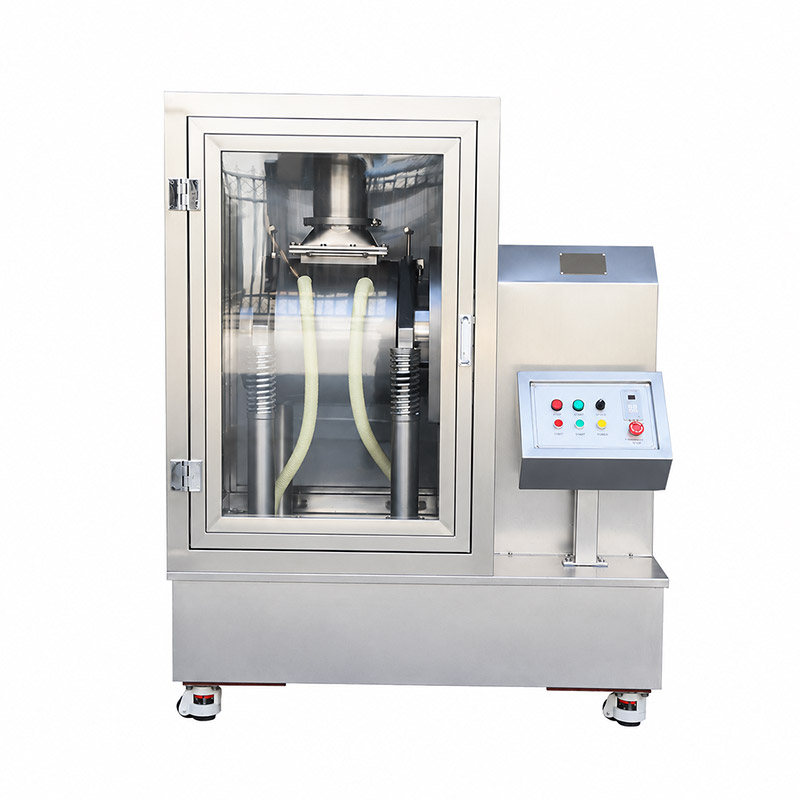
- Pre-crush large lumps to about 10 mm before feeding to avoid overloading the motor.
- Adjust the vibration amplitude and feed rate to achieve the desired particle size without excessive heat generation.
- For temperature-sensitive materials, run the crusher intermittently (e.g., 1 minute on, 1 minute off) to allow cooling.
- Clean the chamber and sieve thoroughly after each batch, especially when switching materials to avoid cross-contamination.
- Regularly inspect the vibration motor and replace worn components (such as rubber mounts) to maintain consistent performance.
Why TENCAN Vibration Crushers Stand Out
At TENCAN, we design our stainless steel vibration crushers with the practical needs of laboratory and small-scale production in mind. Our machines feature robust stainless steel construction, adjustable vibration intensity, and easy-to-clean designs. We offer both standard 304 and optional 316L stainless steel, as well as custom sieve sizes to match your specific particle size requirements. Whether you are preparing samples for QA/QC, developing new formulations, or conducting research, our crushers provide reliable and reproducible results.
For more details on our stainless steel vibration crusher, please visit the product page. If you need assistance in selecting the right model or configuring accessories, our technical team is ready to help based on your material and process conditions.