
Muffle Furnace: A Practical Guide for Laboratory High-Temperature Sintering and Heat Treatment
Introduction: What Is a Muffle Furnace and Why Do You Need One?
If you work in materials science, chemistry, or metallurgy, you have likely encountered a muffle furnace. Often described as a "super oven" for laboratories, a muffle furnace is designed to heat materials to very high temperatures—typically from 1000°C up to 1800°C—in a controlled, isolated environment. The term "muffle" originally meant to isolate the heating elements from the sample, preventing contamination and ensuring uniform heating. Today, most electric muffle furnaces use heating elements embedded in the chamber walls, but the name remains.
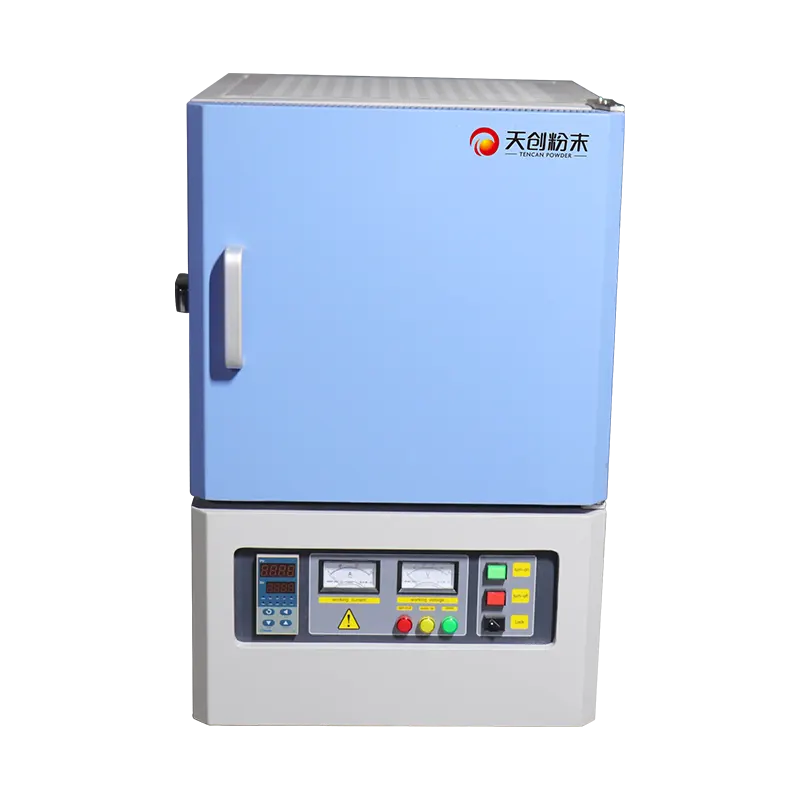
As a powder processing engineer, I often see muffle furnaces used right after ball milling or spray drying. For example, after you grind ceramic powders to a fine particle size in a planetary ball mill, the next step is often calcination or sintering to develop the desired crystal phase or density. Without a reliable muffle furnace, that step becomes a bottleneck. This article will walk you through the basics of muffle furnaces, their types, applications, and how to choose the right one for your lab or small-scale production line.
How Does a Muffle Furnace Work?
Heating Principle
A muffle furnace generates heat by passing an electric current through resistive heating elements. The most common elements are:
- Metal resistance wire (e.g., Kanthal) for temperatures up to about 1200°C
- Silicon carbide (SiC) rods for up to 1400°C
- Molybdenum disilicide (MoSi2) rods for up to 1700°C or higher
The heat is transferred to the sample primarily by radiation and convection within the sealed chamber. The furnace chamber is lined with high-purity ceramic fiber or refractory bricks that insulate the heat and reflect it back to the load, improving energy efficiency and keeping the outer shell cool.
Temperature Control
Modern muffle furnaces use a thermocouple (typically Type K, S, or B depending on maximum temperature) to sense the chamber temperature. A PID (Proportional-Integral-Derivative) controller adjusts the power to the heating elements to maintain the setpoint with high accuracy—often within ±1°C. Many controllers support multi-segment programmable ramps and holds, allowing you to create complex heating profiles for sintering, annealing, or ashing.
Types of Muffle Furnaces: Which Configuration Suits Your Application?
While the term "muffle furnace" often brings to mind a box-like chamber, the technology comes in several form factors. The right choice depends on your sample size, atmosphere requirements, and workflow.
Box Furnace (Standard Muffle Furnace)
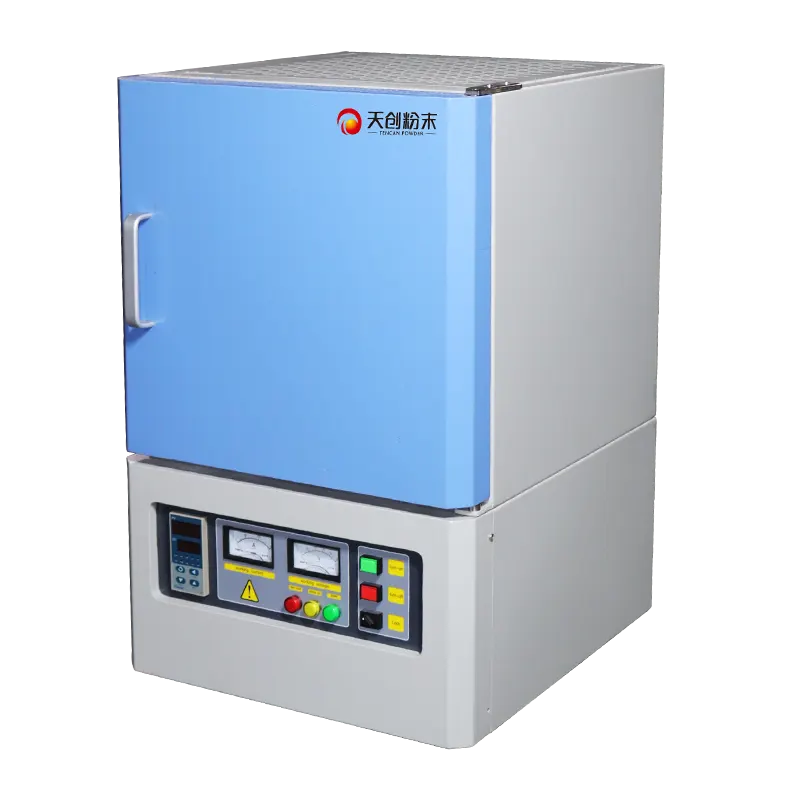
This is the most common type. It has a rectangular chamber with a front door (hinged or lift-up). Box furnaces are ideal for batch processing of bulk samples, such as sintering ceramic compacts, ashing organic materials, or heat-treating metal parts. Many models come with a sight glass to observe the process.
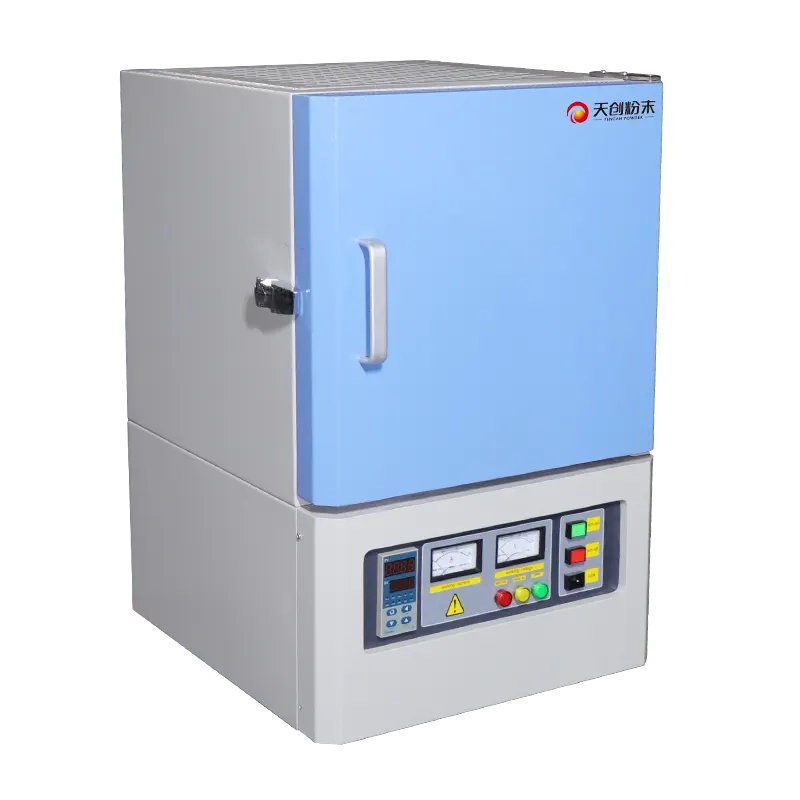
For more specialized needs, you can find box-type atmosphere furnaces that allow the introduction of inert or reducing gases through gas inlet/outlet ports, enabling controlled atmosphere sintering without a separate tube.
Tube Furnace
Tube furnaces are cylindrical, with a horizontal or vertical tube that contains the sample. They are particularly useful when you need to flow a gas over the sample (e.g., for reduction or nitridation) or when working with small quantities of expensive materials. Tube furnaces are available as horizontal tube furnaces and vertical tube furnaces, and they can also be placed under vacuum (vacuum tube furnace).
Crucible Furnace (Pot Furnace)
Also known as a pit furnace, this type has a vertical cylindrical chamber that accepts a crucible. It is commonly used for melting metals, growing crystals, or fusing materials that require deep, even heating. Crucible furnaces are less common in general labs but essential for certain metallurgical processes.
Common Applications of Muffle Furnaces in Research and Industry
Muffle furnaces are incredibly versatile. Here are some of the most frequent use cases I encounter:
- Ceramic sintering: After forming green bodies (by pressing or casting), ceramics are fired at 1000–1700°C to achieve full densification. This is critical for electronic ceramics, structural ceramics, and refractory materials.
- Heat treatment of metals: Annealing, quenching, tempering, and stress relieving of steel and other alloys often require precise temperature profiles in a muffle furnace.
- Ash content determination: In quality control labs, muffle furnaces are used to burn off organic matter from polymers, foods, or coal at 550–800°C to determine inorganic residue.
- Material synthesis: Solid-state reactions, such as the production of lithium battery cathode materials or phosphors, rely on high-temperature calcination in muffle furnaces.
- Glass melting and fusing: Small-scale glass research often uses a box furnace to melt raw batches into homogeneous melts.
- Dental ceramics: Specialized dental furnaces (like T-Crystal Dental Furnace) are essentially muffle furnaces optimized for zirconia and porcelain sintering.
Key Factors to Consider When Selecting a Muffle Furnace
Choosing the right muffle furnace can save you time, money, and frustration. Based on my experience, here are the most important parameters to evaluate:
1. Maximum Temperature and Continuous Working Temperature
Always check both. A furnace rated for 1700°C max might only be suitable for continuous use at 1600°C or lower. For most ceramic sintering, 1200°C to 1600°C suffices. If you work with advanced ceramics like alumina or zirconia, look for 1600–1800°C models with MoSi2 heating elements.
2. Chamber Size and Usable Volume
Think about the largest sample or batch you will process. A 1-liter chamber may be enough for small R&D samples, while 30–100 liters are needed for small production runs. Remember that the actual loadable volume is less than the chamber volume because you need space for air circulation (in forced convection models) or for the sample to be placed centrally.
3. Heating Elements and Replacement Ease
Heating elements have a finite lifespan. Silicon carbide rods can degrade over time, especially at high temperatures. Choose a design that allows easy replacement of elements without rebuilding the entire furnace. Some furnaces have plug-in rods or embedded wire that can be replaced with basic tools.
4. Temperature Uniformity and Control Precision
For sintering or heat treatment, uniformity within the chamber is critical. Look for specifications like ±5°C at 1000°C (good) or ±2°C (excellent). PID controllers with programmable segments are highly recommended for complex cycles.
5. Atmosphere and Vacuum Capability
Standard muffle furnaces operate in air. If you need to process materials that oxidize or require a protective environment, consider a vacuum atmosphere furnace or a vacuum tube furnace. These allow inert gas purging, vacuum operation, or even reducing atmospheres like hydrogen (with proper safety precautions).
6. Safety Features
High-temperature furnaces pose burn and fire risks. Essential safety features include:
- Double-wall construction with cooling fan to keep outer shell at safe touch temperature (typically ≤55°C)
- Over-temperature protection (independent limit controller)
- Door interlock that cuts power when door opens (optional but recommended)
- Emergency stop button
Practical Tips for Using a Muffle Furnace
- Always use a door plug and refractory brick at the front gap to prevent heat leakage and protect the door seal.
- Preheat the furnace slowly (e.g., 5–10°C/min) to avoid thermal shock to the heating elements and refractory lining.
- Never heat combustible or explosive materials in a standard air muffle furnace. For pyrolysis or combustion studies, use specialized equipment designed for such hazards.
- Use appropriate crucibles and boats matched to the temperature and chemical reactivity of your sample. Alumina crucibles are common for up to 1700°C, while quartz or platinum may be needed for special melts.
- Regularly inspect thermocouples for drift. A worn thermocouple can cause inaccurate temperature readings, ruining your experiment.
Maintenance and Troubleshooting
Even the best furnace requires care. Common issues include:
- Heating element failure: Signs include uneven heating, longer heat-up time, or the controller showing a very high power output without temperature rise. Replace elements in pairs (if rod-type) or as a set.
- Thermocouple drift: Compare the furnace temperature with a calibrated handheld thermometer. If the reading deviates more than ±5°C, replace the thermocouple.
- Door seal degradation: Over time, the gasket may harden. Replace it to maintain temperature uniformity and safety.
- Contactor or relay noise: If you hear clicking or see erratic heating, the solid-state relay (SSR) may be failing. Replace it promptly.
Conclusion: How to Proceed with Your Furnace Selection
Choosing a muffle furnace is a balance between temperature requirements, sample size, atmosphere needs, and budget. Start by defining your maximum temperature, typical load dimensions, and whether you need inert gas or vacuum. Then compare specifications from reliable suppliers. A well-chosen furnace will serve your lab for many years with minimal maintenance.
If you would like to explore specific models, please visit the TENCAN Muffle Furnace product page for detailed specifications, downloadable datasheets, and optional accessories. Our team can also help you configure a furnace with the right chamber size, heating elements, and control features for your unique application. Feel free to reach out with your process parameters—such as target temperature, batch weight, and heating cycle—so we can recommend the most suitable solution.