
PTFE Planetary Mill Jar: When and Why You Should Choose It for Your Lab
Why Consider a PTFE Planetary Mill Jar?
When you work with highly corrosive materials, ultra-pure samples, or temperature-sensitive compounds, the choice of grinding jar material becomes as critical as the mill itself. A PTFE (polytetrafluoroethylene) planetary mill jar offers a unique combination of chemical inertness, thermal stability, and low contamination that many ceramic or metal jars cannot match. In this article, we will walk through the key properties of PTFE jars, their typical applications, and how to decide if they are the right fit for your planetary ball mill experiments.
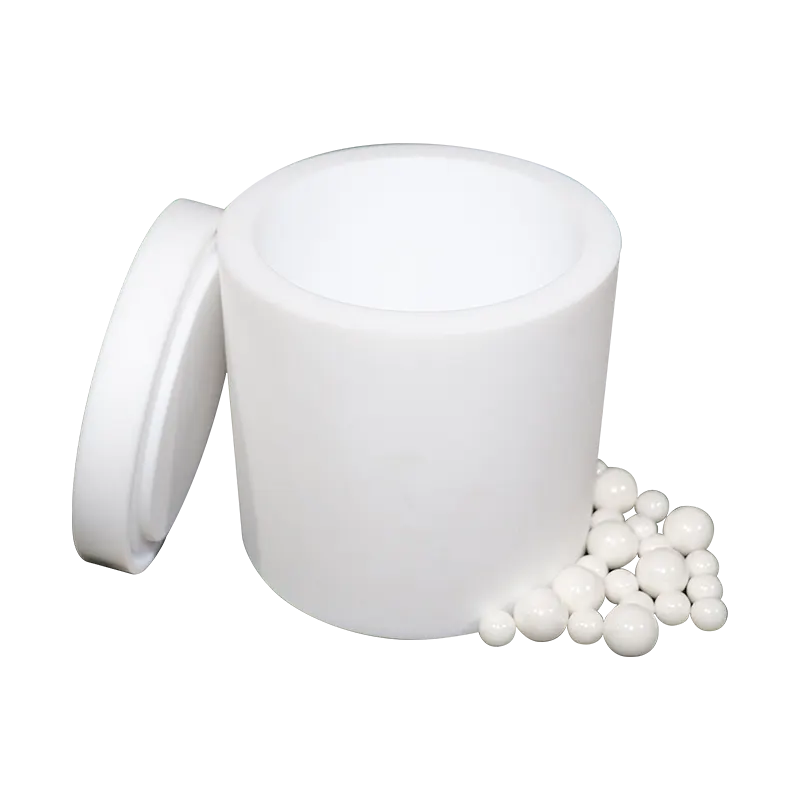
Key Properties of a PTFE Planetary Mill Jar
Chemical Resistance
PTFE is famously resistant to almost all chemicals, including strong acids (e.g., hydrofluoric acid, aqua regia), strong bases, and organic solvents. This makes the PTFE jar an ideal container for grinding materials that would attack stainless steel, aluminum oxide, or even zirconia. If your sample contains aggressive acids or halogens, a PTFE jar prevents both corrosion of the jar and contamination of your powder.
Temperature Range
PTFE can withstand continuous use from -60°C to +260°C, with short-term peaks up to 300°C. This wide temperature window allows safe grinding of materials that generate heat during milling, as well as those that require cryogenic conditions. However, keep in mind that PTFE’s mechanical strength decreases at higher temperatures, so we recommend staying within the -60°C to +200°C range for most planetary milling applications to maintain dimensional stability.
Low Friction and Non-Stick Surface
The non-stick nature of PTFE reduces powder adhesion to the jar walls, which is especially helpful for sticky or cohesive powders. Less material loss means better recovery of valuable samples. The low coefficient of friction also minimizes wear on the jar itself, extending its service life.
Purity and Contamination Control
PTFE contains no metallic elements (except possibly trace amounts), so it introduces virtually no metal contamination into your sample. This is crucial for semiconductor, pharmaceutical, and high-purity ceramic applications where even parts per million of iron, chromium, or nickel can ruin the product.
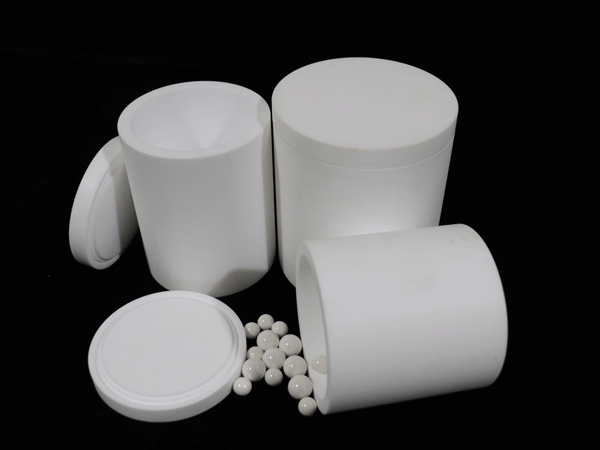
Common Applications of PTFE Grinding Jars
- Hydrofluoric acid (HF) containing materials: For example, grinding fluorite, fluorine-containing minerals, or etching residues.
- Strong acid or base digestion: Sample preparation for ICP, XRF, or AAS analysis where the sample must be ground in the presence of acids.
- High-purity ceramics and electronic materials: Lithium battery cathode precursors, solid electrolytes, and piezoelectric ceramics that cannot tolerate metal contamination.
- Pharmaceutical and biological samples: Active pharmaceutical ingredients (APIs) that react with metals or require inert processing.
- Organic and polymer materials: PTFE’s non-stick surface prevents sticking of thermoplastic powders.
- Mechanical alloying of reactive metals: When combined with a vacuum or inert gas atmosphere, PTFE jars can be used for air-sensitive materials.
How to Select a PTFE Planetary Mill Jar: Key Parameters
Working Pressure
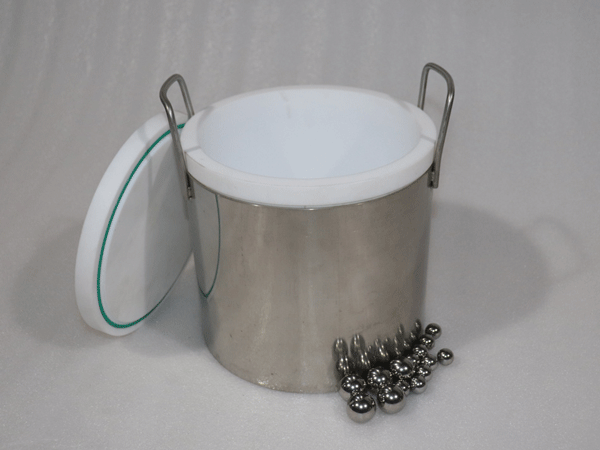
PTFE jars are not designed for high internal pressure. The maximum working pressure is typically around 1 MPa (10 bar) at room temperature. If your grinding process generates significant gas (e.g., from decomposition or from liquid evaporation), you must either vent the jar periodically or use a jar with a pressure relief valve. For high-energy milling with very high speeds, consider a stronger jar material like stainless steel or tungsten carbide, or use a PTFE-lined stainless steel jar for a balance of chemical resistance and mechanical strength.
Volume and Dimensions
Most PTFE planetary mill jars are available in standard volumes from 50 mL to 500 mL, with some suppliers offering up to 1 L. The jar shape must match your planetary mill’s clamping system (e.g., fixed or adjustable). TENCAN offers PTFE jars that are compatible with their own planetary ball mills and many other common models. Always confirm the outer diameter, height, and locking mechanism before purchasing.
Sealing and Vacuum Capability
Standard PTFE jars come with a PTFE or silicone gasket for basic sealing. For oxygen- or moisture-sensitive materials, you may need a vacuum or inert gas option. Some PTFE jars can be equipped with a vacuum valve and a viton o-ring to achieve a vacuum level of about -0.1 MPa. However, due to PTFE’s relatively low rigidity, vacuum holding may not be as stable as with metal jars. For demanding vacuum applications, consider a vacuum planetary mill jar made of stainless steel with a PTFE lining.
PTFE Jar vs. Other Common Jar Materials
| Material | Chemical Resistance | Max Temp | Hardness | Contamination | Best For |
|---|---|---|---|---|---|
| PTFE | Excellent (almost all chemicals) | 260°C | Low (soft) | Very low | Corrosive, high-purity, sticky materials |
| 304 Stainless Steel | Good, but attacked by chlorides, acids | ~800°C | High | Fe, Cr, Ni possible | Hard, dry materials (non-corrosive) |
| Zirconia (ZrO2) | Good, but not HF | ~1200°C | Very high | Zr, Y possible | Hard ceramics, mechanical alloying |
| Agate (SiO2) | Poor (HF, strong bases) | ~200°C | Moderate | Silica possible | Soft minerals, gentle grinding |
| Tungsten Carbide | Poor (oxidizing acids) | ~600°C | Extremely high | W, Co possible | Very hard materials, wear resistance |
As you can see, PTFE stands out when chemical inertness and purity are the top priorities. However, for grinding very hard materials (like quartz, corundum, or cemented carbides), a PTFE jar will wear quickly because it is soft. In such cases, consider using a harder jar material or a lined jar.
Practical Tips for Using a PTFE Planetary Mill Jar
- Ball-to-powder ratio: Start with a ratio of 10:1 by weight. For PTFE jars, avoid using very large grinding balls (e.g., >15 mm) because the impact force can deform the jar over time.
- Grinding media: Matching the media material to the jar is essential. For PTFE jars, we recommend using zirconia or agate balls to minimize wear. Avoid steel balls as they can abrade the PTFE and introduce metal contamination.
- Speed: Because PTFE is less rigid, operate at lower rotational speeds (typically 200–400 rpm for a planetary mill) to prevent excessive jar deformation or leakage. High speeds can cause the jar to flex, leading to poor sealing or even rupture.
- Cleaning: PTFE is non-stick, but stubborn residues can be removed by soaking in dilute nitric acid or using a soft brush. Do not use abrasive cleaners that scratch the surface.
- Temperature monitoring: If you are milling for long periods, check the jar temperature. PTFE softens above 260°C, so intermittent runs with pauses for cooling are recommended for heat-sensitive experiments.
When Not to Use a PTFE Jar
Despite its advantages, a PTFE jar is not a universal solution. Avoid using it for:
- Grinding very hard materials (Mohs hardness >7) – the jar will wear rapidly.
- High-energy milling at speeds above 500 rpm – the jar may deform or fail.
- Applications requiring high internal pressure (e.g., some mechanochemical reactions) – PTFE is not a pressure vessel material.
- Materials that react with fluorine at high temperatures (e.g., alkali metals, strong oxidizing agents) – though PTFE is stable, under extreme conditions it can decompose and release toxic gases.
Making the Right Choice for Your Lab
Selecting the right PTFE planetary mill jar involves matching the jar’s properties to your material’s chemistry, hardness, and temperature sensitivity. If you frequently work with corrosive acids, ultra-pure ceramics, or sticky organic powders, a PTFE jar can save you time, reduce contamination, and extend the life of your mill. For other materials, you might consider zirconia jars for high hardness and low wear, or 304 stainless steel jars for general-purpose grinding.
When you contact a supplier like TENCAN, be ready to provide the following information to get the best recommendation: material name and composition, initial particle size, target particle size, batch volume, dry or wet grinding, any special atmosphere requirements, and your mill model. This allows the engineering team to suggest the appropriate jar volume, sealing option, and even the optimal grinding parameters for your first trial.
In the end, a PTFE planetary mill jar is a specialized but invaluable tool for laboratories that demand the highest level of chemical resistance and purity. With proper selection and operation, it can help you achieve consistent, high-quality results in even the most challenging milling tasks.