
A Grade Corundum Planetary Mill Jar: Material, Applications, and Selection Guide
Why the Grinding Jar Material Matters in Planetary Ball Milling
When you work with a planetary ball mill, the grinding jar is not just a container. It is the vessel where the entire milling process takes place. The material of the jar directly influences the purity of your final powder, the efficiency of size reduction, and the wear life of the equipment. For many researchers, the challenge is to find a jar that offers high hardness, low contamination, and good chemical stability — especially when processing hard, abrasive, or high-purity materials.
Among the various options available, the A Grade Corundum planetary mill jar stands out as a reliable choice for laboratories that demand clean grinding results and long service life. In this article, we will walk through what makes this jar special, which materials it suits best, and how to select and use it effectively.
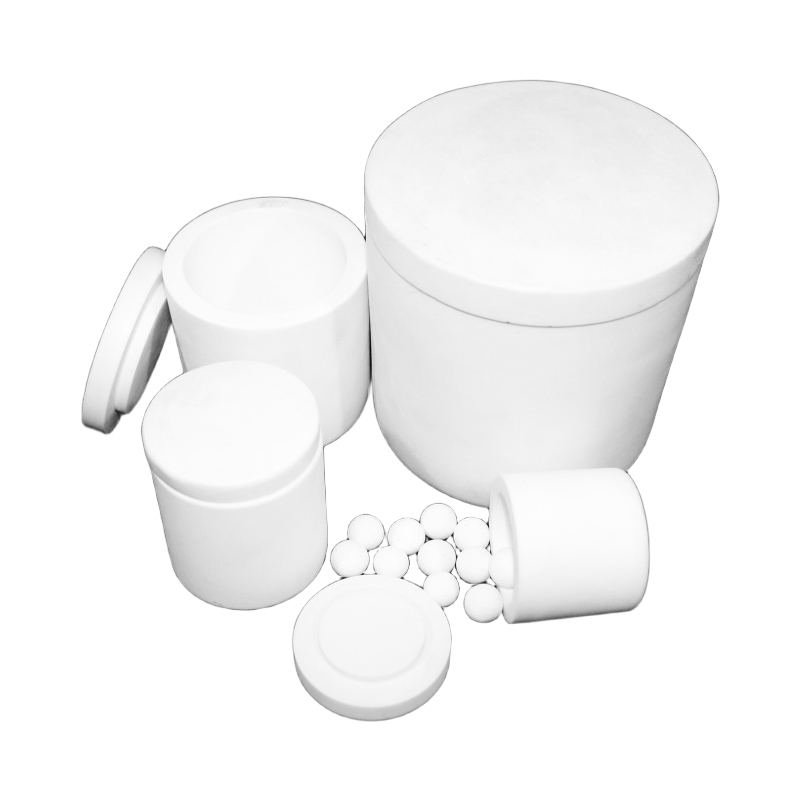
What Is an A Grade Corundum Planetary Mill Jar?
Corundum is the natural crystalline form of aluminum oxide (Al₂O₃). It is one of the hardest materials known, ranking 9 on the Mohs scale — second only to diamond. The term "A Grade" refers to a high-purity, dense, and well-sintered alumina ceramic with minimal impurities. A planetary mill jar made from A Grade corundum typically contains over 99% Al₂O₃, with a density close to the theoretical value of corundum (approximately 3.9 g/cm³).
Key Properties of A Grade Corundum Jars
- Extreme Hardness: The high hardness ensures that the jar itself wears very slowly during milling, even when processing hard materials like silicon carbide, quartz, or alumina powders.
- Low Contamination: Because the jar is made of alumina, the only potential contaminant introduced is alumina itself. This makes it an excellent choice when you need to avoid metallic contamination from steel jars or other materials.
- Excellent Chemical Resistance: Corundum is inert to most acids, alkalis, and organic solvents. It can be used for wet grinding with water, ethanol, or other common liquids without degradation.
- High Temperature Stability: Alumina retains its strength and dimensional stability at elevated temperatures, which is beneficial if the milling process generates heat or if you need to dry the jar after cleaning.
- Smooth Inner Surface: A well-polished inner wall reduces powder adhesion and makes cleaning between samples easier, minimizing cross-contamination.
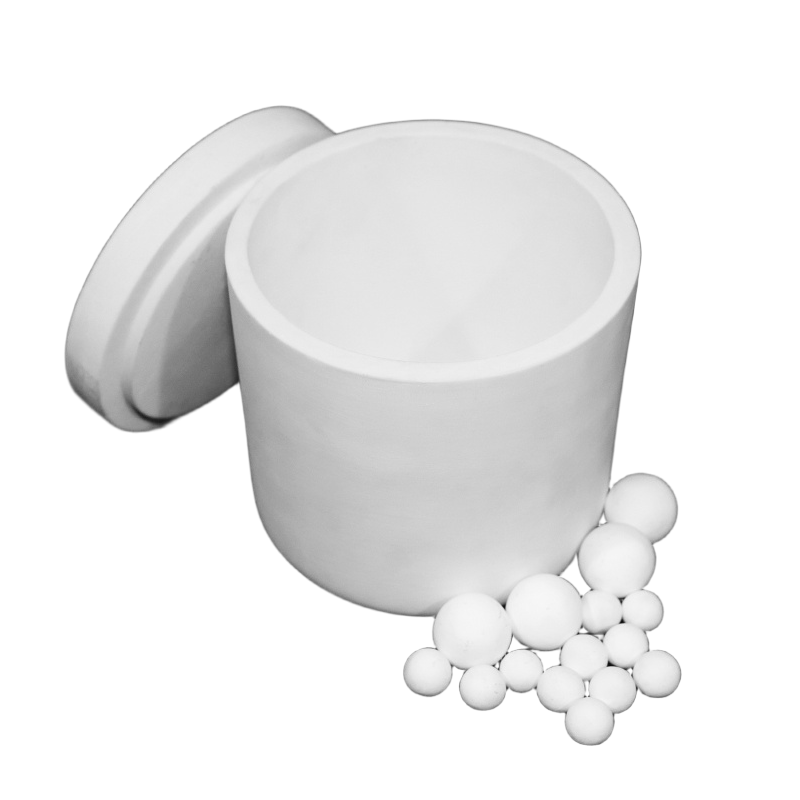
Common Applications for A Grade Corundum Jars
Because of its combination of hardness, purity, and chemical stability, the A Grade corundum jar is widely used in the following areas:
Ceramics and Refractories
When grinding ceramic raw materials such as feldspar, kaolin, zircon, or alumina itself, the corundum jar avoids introducing foreign elements. This is critical for producing high-purity ceramic powders for electronic substrates, insulators, or advanced structural ceramics.
Minerals and Geological Samples
Rock, ore, sand, and cement clinker are often very hard and abrasive. A corundum jar can withstand the impact and abrasion without excessive wear, and the alumina contamination is often acceptable for subsequent analysis (e.g., XRF, XRD) where the sample matrix already contains aluminum.
Glass and Enamel
Glass powders, enamel frits, and glazes are typically hard and brittle. Milling them in a corundum jar helps achieve fine particle size while maintaining the chemical composition required for melting and vitrification.
Pharmaceuticals and Food Additives
For applications where metal contamination is strictly prohibited, such as grinding certain pharmaceutical excipients or food-grade minerals, an alumina jar provides a safe, inert grinding environment.
How to Select a Corundum Jar: Key Factors to Consider
Choosing the right grinding jar involves more than just picking the material. Here are some practical considerations when selecting an A Grade corundum planetary mill jar for your lab:
1. Jar Volume and Capacity
Planetary mill jars are available in various volumes, typically ranging from 50 mL to 1000 mL or more. The jar volume should match your sample quantity. A common rule is to fill the jar to about one-third of its volume with grinding balls, and the sample powder should occupy about the same volume as the voids between the balls. For example, a 500 mL corundum jar might be used with 150–200 mL of balls and 30–50 mL of powder, depending on the ball-to-powder ratio you choose.
2. Matching with Grinding Media
For best results, use grinding balls made of the same material as the jar — in this case, corundum (alumina) balls. This minimizes differential wear and contamination. If you use harder balls like zirconia or tungsten carbide, the jar may wear faster because the harder balls can abrade the alumina surface. Conversely, softer balls like agate may wear too quickly themselves. In many laboratory applications, matching the jar and ball material is the most straightforward approach.
3. Sealing and Vacuum Compatibility
Some experiments require grinding under vacuum or inert gas to prevent oxidation or moisture absorption. A Grade corundum jars can be equipped with sealing rings and vacuum ports, allowing you to maintain a controlled atmosphere. If your material is sensitive to air, look for a jar design that includes a gasket and a valve for vacuum or gas purging.
4. Cleaning and Reusability
Alumina jars are easy to clean. You can rinse with water or solvent, and if necessary, use a mild abrasive cleaner. Avoid using strong acids or alkalis for extended periods, as they can slowly etch the surface. Because the jar is dense and non-porous, it does not absorb contaminants, making it suitable for multiple different materials with proper cleaning between runs.
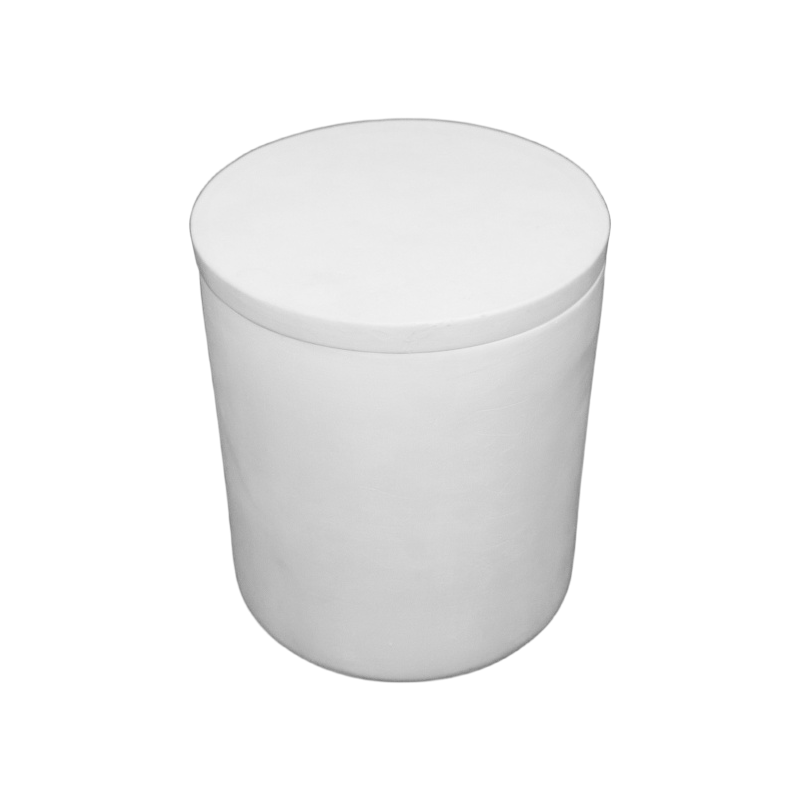
Comparison with Other Common Jar Materials
To help you decide whether an A Grade corundum jar is the right choice, here is a brief comparison with other popular jar materials used in planetary ball mills:
| Material | Hardness (Mohs) | Density (g/cm³) | Main Contamination | Best For |
|---|---|---|---|---|
| A Grade Corundum (Al₂O₃) | 9 | ~3.9 | Al₂O₃ | Hard ceramics, minerals, glass, high-purity grinding |
| Zirconia (ZrO₂) | 8.5 | ~5.7 | ZrO₂ | Very hard materials, mechanical alloying, where higher density is beneficial |
| Agate (SiO₂) | 7 | ~2.6 | SiO₂ | Soft to medium-hard materials, XRD sample preparation, low contamination |
| Stainless Steel (304) | ~5.5 | ~7.9 | Fe, Cr, Ni | General-purpose grinding, where metallic contamination is acceptable |
| Tungsten Carbide | 9.5 | ~14.8 | WC, Co | Extremely hard materials, high-energy milling, but expensive |
As you can see, the A Grade corundum jar offers a good balance of hardness, purity, and cost. It is less expensive than tungsten carbide or zirconia, yet provides nearly the same hardness as tungsten carbide, with the advantage of alumina contamination being acceptable in many ceramic and mineral applications.
Practical Tips for Using a Corundum Jar
- Always use matching balls: For minimal contamination and optimal wear, use alumina grinding balls of similar purity.
- Control the ball-to-powder ratio: A typical starting point is a ball-to-powder weight ratio of 5:1 to 10:1. Adjust based on the material's hardness and target fineness.
- Do not overfill: Leave about one-third of the jar empty to allow room for the balls to move freely. Overfilling reduces milling efficiency and can cause excessive wear.
- Use wet grinding if heat generation is a concern: Adding a liquid (water, ethanol, isopropanol) helps dissipate heat and reduces agglomeration. The corundum jar is chemically resistant to most common solvents.
- Inspect the jar regularly: Check for cracks, chips, or excessive wear, especially around the lid sealing area. Corundum is hard but brittle; avoid dropping or striking the jar.
- Clean thoroughly between different materials: Use a brush and appropriate solvent. If necessary, mill a small amount of clean silica sand or alumina powder to remove residual material from the previous batch.
Final Thoughts
The A Grade corundum planetary mill jar is a workhorse in many laboratories. Its high hardness, chemical inertness, and low contamination profile make it a versatile choice for grinding a wide range of hard and abrasive materials. Whether you are preparing ceramic powders, mineral samples, or glass frits, a corundum jar can help you achieve consistent, reproducible results with minimal interference from the container.
When selecting a jar, consider your specific material properties, the acceptable contamination level, and the required jar volume. If you are unsure about the best jar material for your application, start with a corundum jar — it is often the safest starting point for many high-purity grinding tasks. Remember that the final particle size and grinding efficiency depend on multiple factors, including the feed size, ball size, rotation speed, and milling time, so always perform small-scale tests to optimize your process.