
Agate Grinder with Three Working Stations: A Practical Guide for Laboratory Sample Preparation
Introduction
If you work in a laboratory that regularly prepares small batches of hard, brittle materials such as ceramics, minerals, cement clinker, or chemical reagents, you know how critical it is to achieve a fine, uniform powder without introducing impurities. Traditional manual grinding with an agate mortar and pestle is time-consuming and inconsistent, especially when multiple samples need to be processed simultaneously. This is where an agate grinder with three working stations becomes a valuable tool. It allows you to grind up to three samples in parallel, reduces labor, and maintains the high purity that agate grinding surfaces offer. In this article, we will walk through the design, working principle, typical applications, and key selection considerations so you can determine whether this equipment fits your sample preparation workflow.
What Is an Agate Grinder with Three Working Stations?
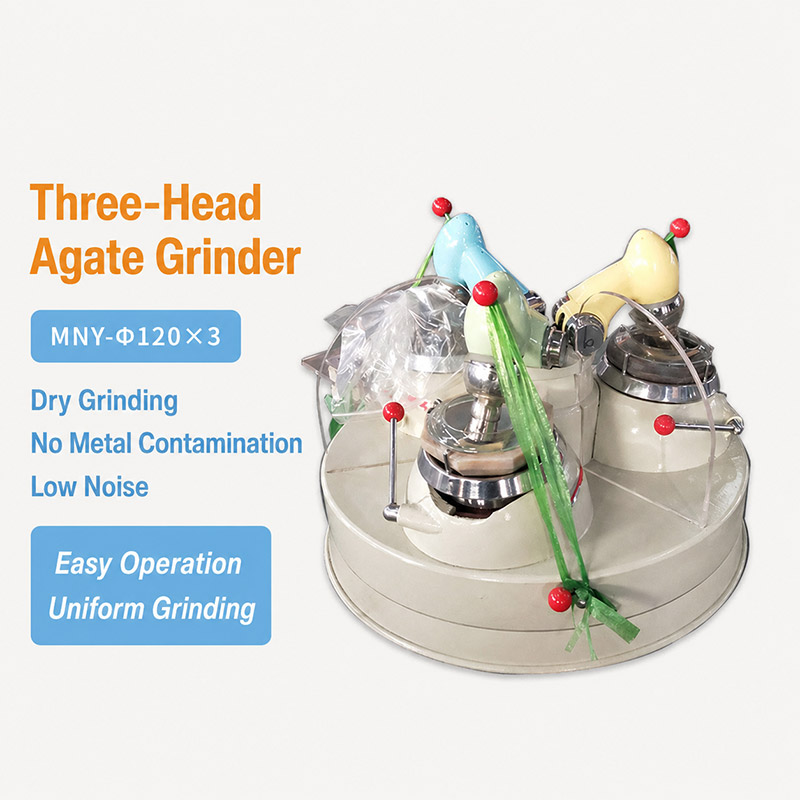
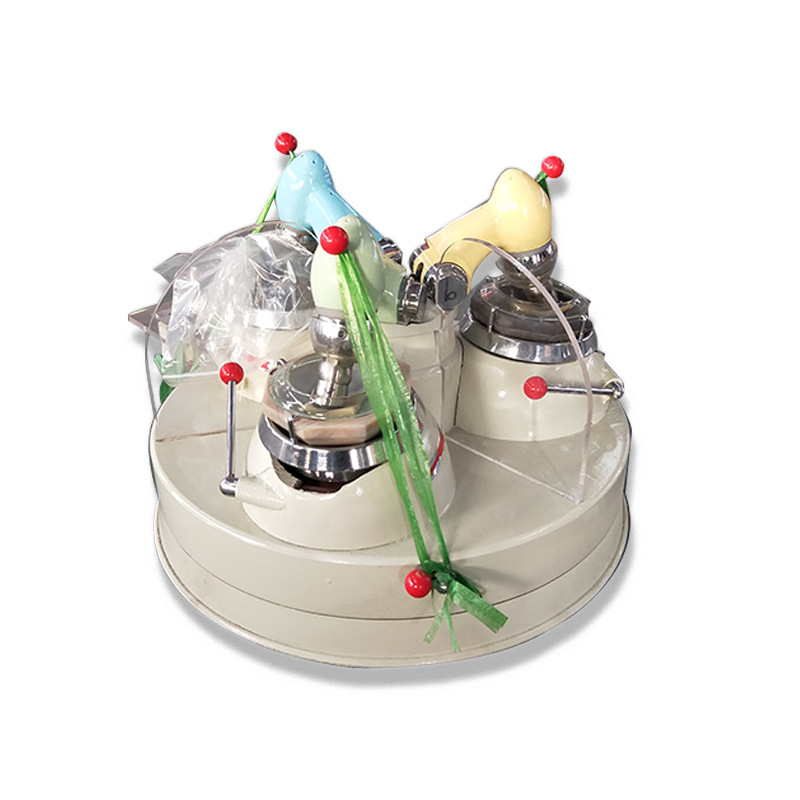
An agate grinder, sometimes called an agate mortar grinder or agate pestle mill, uses a rotating mortar and a pestle made from natural agate to crush and grind materials by friction and pressure. The "three working stations" version features three independent grinding units, each with its own mortar and pestle assembly, mounted on a single drive frame. This design is particularly useful when you need to prepare three different samples under identical conditions, or when you want to increase throughput for routine analysis.
The grinding surfaces are made of natural agate (a form of microcrystalline quartz), which is extremely hard (Mohs hardness 7) and chemically inert. Agate introduces very little contamination into the sample, making it ideal for trace element analysis, X-ray fluorescence (XRF) sample preparation, and other applications where purity is paramount. The three-station model typically allows you to set the grinding pressure and speed independently or collectively, depending on the manufacturer's design.
How Does the Three-Station Agate Grinder Work?
The working principle of an agate grinder is straightforward yet effective. Each station consists of a round agate mortar that rotates slowly, and a spring-loaded agate pestle that remains in contact with the material. The relative motion between the mortar and pestle creates a combination of shearing and crushing forces, breaking down particles into finer sizes.
In a three-station model, a single motor drives all three mortars simultaneously through a gear or belt transmission. The operator places the sample (typically 1–10 grams per station, depending on the mortar size) into the mortar, lowers the pestle, and selects the grinding time. Many models offer adjustable pressure on the pestle, which allows you to adapt to different material hardness. For example, softer materials like limestone may require lighter pressure, while harder materials like corundum or quartz sand need higher pressure.
The grinding frequency is usually in the range of 50–200 rpm, and the action can be dry or wet (with a liquid such as water or ethanol). After the set time, the fine powder is easily collected from the mortar. The three-station design ensures that all samples experience the same grinding action, improving reproducibility across batches.
Key Applications and Materials Suitable for Agate Grinding
Because agate is chemically inert and hard, the grinder is suitable for a wide range of materials. Common applications include:
- Geological and mineral samples: rocks, ores, soils, sediments for XRF, XRD, and ICP analysis.
- Ceramic and glass raw materials: feldspar, quartz, kaolin, alumina, zirconia (preliminary grinding).
- Cement and building materials: clinker, gypsum, slag, fly ash for quality control testing.
- Chemical and pharmaceutical substances: pigments, dyes, catalysts, active pharmaceutical ingredients (APIs) where contamination must be avoided.
- Battery materials: cathode and anode precursors, solid electrolytes, conductive additives (small-scale trials).
It is important to note that the agate grinder is not designed for very tough or abrasive materials such as metal alloys, silicon carbide, or diamond. For such materials, ball mills or tungsten carbide mills are more appropriate. Also, the maximum feed particle size should typically be less than 2–3 mm; larger pieces may need pre-crushing.
Advantages of Three Working Stations in Laboratory Grinding
Increased Throughput
Running three samples simultaneously can cut total preparation time by up to 60% compared to a single-station unit. This is especially beneficial when you have multiple samples from the same batch or when you need to prepare replicates for statistical analysis.
Consistent Processing Conditions
Because all three stations are driven by the same motor and share the same control settings, the grinding parameters (speed, pressure, time) are identical. This reduces variability between samples, which is critical for method validation and comparative studies.
Space Efficiency
Instead of purchasing three separate single-station grinders, a three-station unit occupies a similar footprint but offers three times the capacity. This saves bench space in crowded labs.
Cost-Effectiveness
For laboratories that process more than a few samples per day, the investment in a multi-station grinder often pays for itself through labor savings and faster turnaround.
Factors to Consider When Choosing an Agate Grinder with Three Working Stations
Before selecting a model, you should evaluate the following aspects:
- Mortar volume: Common sizes range from 50 mL to 300 mL per station. Choose according to your typical sample weight. For most analytical preparations, 100–150 mL is sufficient.
- Adjustable pestle pressure: A spring-loaded mechanism with adjustable tension allows you to optimize grinding for different materials.
- Speed control: Variable speed (e.g., 50–200 rpm) gives you flexibility to avoid overheating or excessive wear.
- Material of construction: Ensure the frame, pestle holder, and other contact parts are made of stainless steel or other non-contaminating materials.
- Ease of cleaning: The mortars should be removable for quick cleaning between samples. Some models offer interchangeable mortars for different materials.
- Safety features: Look for a lid interlock that stops the motor when the cover is opened, and a timer with automatic shut-off.
- Power supply: Confirm the voltage and frequency match your local electrical standard (110V/60Hz or 220V/50Hz).
For laboratories that already have a single-station grinder and need higher throughput, the three-station model is a natural upgrade. If you are new to agate grinding, you may also consider the standard agate grinder for smaller workloads.
Tips for Getting the Best Results
- Always pre-crush large chunks to below 2 mm to protect the agate surfaces and reduce grinding time.
- For wet grinding, use a liquid that is compatible with your analysis (e.g., deionized water, ethanol, acetone). The liquid helps prevent re-agglomeration and reduces dust.
- Start with a shorter grinding time (e.g., 2–3 minutes) and check the particle size. Over-grinding can generate heat and cause agate wear.
- Clean the mortars and pestles thoroughly between different materials to avoid cross-contamination. A rinse with dilute acid followed by distilled water is often sufficient.
- If you are grinding materials that are sensitive to trace metal contamination, agate is an excellent choice because it introduces primarily silicon and oxygen, which are often acceptable for analysis.
Conclusion
The agate grinder with three working stations is a practical solution for laboratories that require fast, reproducible, and contamination-free fine grinding of multiple samples. By understanding its working principle, suitable materials, and selection criteria, you can match the equipment to your specific application needs. Whether you are preparing samples for XRF, XRD, or chemical analysis, this tool can significantly improve your sample preparation efficiency. For more details on specifications and configurations, feel free to explore the product page or contact a technical specialist at TENCAN to discuss your requirements.
Note: The actual grinding results depend on material properties, feed size, and operating parameters. Always perform preliminary tests to establish the optimal conditions for your specific samples.