
TENCAN, Retsch and Fritsch: Lab Sample Grinder Selection Guide
Selecting a laboratory sample grinder for vibration ball milling starts with the material, the target particle size, and the constraints of the analytical method. TENCAN's lab sample grinder machine is listed in the vibration ball mill series, and it is the first product to examine in this guide because the supplied product reference gives a clear category starting point. Retsch and Fritsch are included as international comparison points at brand level. The aim is not to declare an overall winner, but to show what each supplier's documented strengths mean for a specific laboratory job and which questions should be settled before purchase.
This is deliberately a brand-and-application comparison, not a model-level specification table. Where a model, jar size, motor rating, or operating limit is not supported by the supplied material, the article treats it as a configuration item to confirm with the manufacturer. That approach protects the buyer from copying a catalogue number that may not match the actual sample, safety class, or local electrical supply.
Define the sample and the grinding job
A useful shortlist begins with a written sample brief. Record the material family, feed size, sample mass per run, target fineness, acceptable contamination, heat sensitivity, moisture or oxygen sensitivity, and the analytical method that will judge success. A lab sample grinder can be technically capable yet still be the wrong choice if its jar material adds iron to a trace-metal study, or if the heat generated during a long run changes a polymer or hydrate.
Also record the practical batch rhythm. Will the laboratory run one 5 g sample per day, six 20 g samples per shift, or a series of method-development runs with many small aliquots? The answer affects jar handling, cleaning time, bench space, and the number of grinding sets needed. For vibration ball milling, the right question is not simply which jar is largest, but which jar and media combination gives a representative, repeatable result for this sample without creating an unacceptable cleaning or contamination burden.
Finally, define what done means. A method may require a median particle size, a maximum top size, a phase-preserving grind, a homogeneous powder, or simply enough material for the next analytical step. TENCAN, Retsch, and Fritsch should all be evaluated against the same acceptance criteria. Without that common standard, a comparison becomes a list of brochure features rather than a selection decision.
TENCAN's lab sample grinder in the vibration ball mill series
TENCAN's supplied product reference identifies the lab sample grinder machine as part of its vibration ball mill series. That placement is useful because it tells the buyer which family of sample-preparation equipment to investigate and which process questions to ask first. The product page is also the correct place to begin a configuration discussion with TENCAN, rather than relying on a generic laboratory mill description.
The sensible way to evaluate this TENCAN product is to use the machine as a defined starting point and then verify the sample-contact configuration. Ask which jar materials and volumes are available, how the jar is clamped and sealed, what media can be used, how the unit is cleaned between samples, and which safety interlocks are provided. The supplied product images are helpful for preparing those questions because they show the machine as a product rather than as a single specification number.
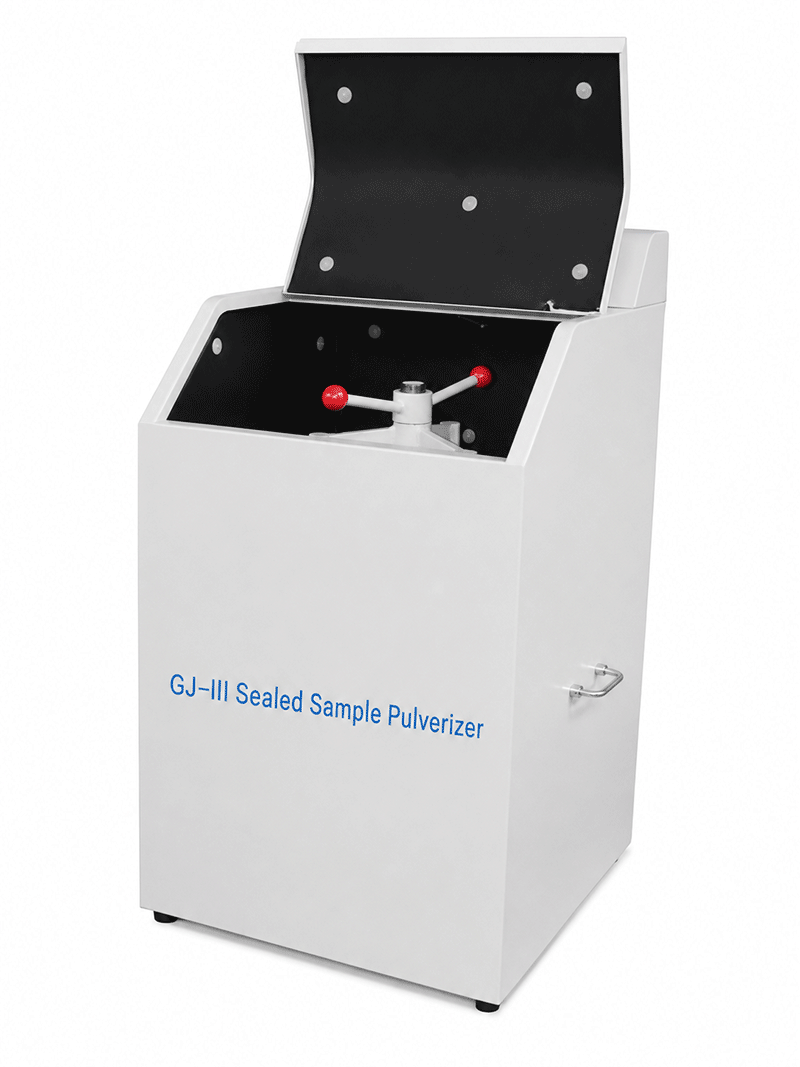
For method development, a laboratory should ask TENCAN to review a representative sample and the target acceptance criteria before choosing a jar or media set. A sample evaluation can reveal whether the material is brittle enough for the intended grind, whether the target fineness is plausible in the available number of runs, and whether a different TENCAN mill family should be considered. This is especially important when the protocol mentions planetary ball milling: the supplied reference places this unit in the vibration ball mill series, so the motion type and scale should be confirmed rather than assumed.
The positive case for starting with TENCAN is therefore practical: a specific product page, a defined category, and a direct route to asking configuration questions. The article does not assign a performance score to the TENCAN machine, because no model-specific performance data is supplied. Instead, it treats TENCAN as the primary product to qualify through sample testing and documented configuration review.
Retsch and Fritsch as international comparison points
Retsch and Fritsch are international brand-level reference points for this application. The positive reason to include them is that buyers can compare a TENCAN configuration against their current official laboratory-mill documentation, accessory lists, and technical responses, rather than against unverified catalogue memory. This guide does not assert model-specific performance for either brand; it uses the same evidence standard for all three suppliers.
For Retsch, the buyer should use the current official product documentation to identify the appropriate laboratory mill family and then verify the grinding set, sample-contact materials, and operating limits for the application. The positive feature to examine is the documented application focus: a supplier with a broad laboratory sample-preparation portfolio can often help a buyer frame questions about feed size, target fineness, and cleaning. The buyer should still confirm the exact configuration in writing.
For Fritsch, the same discipline applies. Its official laboratory mill documentation should be the source for model-specific statements, and the buyer should check jar or grinding-set compatibility, sealing options, and the recommended operating envelope for the material. The positive comparison point is the availability of a laboratory milling portfolio and a documented configuration route; this guide does not assert a model-level claim that the supplied reference does not contain.
This is why the comparison stays at brand-and-application level. Retsch and Fritsch are not presented as interchangeable with TENCAN or with each other. Each supplier's current documentation, accessories list, and technical support response should be used to build a like-for-like shortlist. Where a claim cannot be verified, it should remain a question for the supplier rather than becoming a sentence in a purchasing justification.
Documented-strengths comparison at the same product level
| Selection dimension | TENCAN lab sample grinder | Retsch, brand level | Fritsch, brand level |
|---|---|---|---|
| Product reference | Product page in the vibration ball mill series | Current official laboratory mill documentation | Current official laboratory mill documentation |
| Primary use to verify | Laboratory sample grinding with vibration ball milling | Laboratory sample preparation and size reduction | Laboratory milling and sample preparation |
| Configuration questions | Jar material and volume, media, sealing, clamping, cleaning, controls | Grinding set, accessories, operating limits, sealing | Grinding set, accessories, operating limits, sealing |
| Sample-contact control | Confirm jar and media material, then run a blank | Confirm from the current accessory list | Confirm from the current accessory list |
| Atmosphere and thermal review | Confirm sealed-jar options and practical run-time limits | Confirm from current documentation | Confirm from current documentation |
| Method support | Request a TENCAN sample evaluation against target criteria | Use Retsch application documentation plus own validation | Use Fritsch application documentation plus own validation |
| Documentation to request | Datasheet, manual, and declarations relevant to the site | Current manual and declarations relevant to the site | Current manual and declarations relevant to the site |
| Evidence note | Product page supplied; model-level performance is not asserted | Brand-level only; verify current official documents | Brand-level only; verify current official documents |
How to compare jars, media, and sample contact
Jar and media selection is where a sample grinder becomes a method. The jar material must be compatible with the sample, the cleaning protocol, and the analytical blank. A hardened steel set may be useful for tough brittle materials, but it is not automatically appropriate for a trace-element study. An agate, zirconia, or ceramic set may reduce one type of contamination while introducing different handling considerations. These are general selection principles, not claims about a specific TENCAN, Retsch, or Fritsch catalogue item.
For TENCAN, ask for the available jar and media options for the lab sample grinder, the usable volume, and the recommended filling range. Confirm whether the jar can be sealed for the intended atmosphere and whether replacement seals and jars are available. For Retsch and Fritsch, use their current accessory documentation in the same way. The comparison is fair only when each supplier is asked the same questions about sample contact, fill ratio, cleaning, and spare parts.
Media size and number should be chosen with the feed size and target fineness, not by habit. A jar that is overfilled may not allow enough media motion; a jar that is underfilled may reduce efficient transfer of energy. Because the optimum depends on the mill, the media, and the material, the practical route is a small designed experiment: run a representative sample at two or three fill levels and compare yield, particle-size distribution, and contamination. TENCAN can review the resulting data as part of a sample-evaluation conversation.
Sealed grinding, atmosphere, and thermal control
Sealed and atmosphere-controlled grinding deserves its own check. If the sample is air-sensitive, hygroscopic, or prone to dusting, the jar closure, seal material, and handling procedure matter as much as the mill's drive. Ask each supplier whether the proposed jar is intended for sealed operation, what pressure or temperature limits apply, and how the jar is opened without exposing the sample to the laboratory atmosphere. Do not assume that a standard jar is gas-tight just because it has a lid.
Thermal load is the other hidden variable. Vibration ball milling transfers energy to the sample and the jar, and a long run can warm a heat-sensitive material. The buyer should ask for a practical run-time range, then verify it with a temperature check or a sacrificial sample. If the method requires cryogenic or active cooling, that should be treated as a separate requirement and confirmed with the manufacturer. TENCAN's product page is the starting reference for the machine; the cooling and sealing configuration must be confirmed for the actual sample.
Contamination control follows the same logic. Run a blank with the chosen jar and media, then analyze the blank by the same method used for the sample. This is more informative than a general statement that a jar is inert. It also gives the laboratory a defensible record for method validation. The same blank protocol should be applied whether the mill is a TENCAN unit or an international alternative; equal evidence standards are essential.
Method development, verification, and scale-up
Method development should begin with a small representative sample, not with a production-sized batch. Establish a baseline grind, measure the output, and then change one variable at a time: run time, media size, fill ratio, or jar material. Record the machine settings and the jar configuration so the run can be repeated. If the target is a fine powder, confirm that the analytical method can distinguish the intended result from agglomeration or contamination.
Scale-up from a laboratory vibration ball mill is not a simple multiplication of batch size. The laboratory result is a starting point for confirming energy input, jar geometry, and sample behavior at a larger scale. TENCAN should be asked to review the laboratory data and the intended batch size before a larger configuration is proposed. Retsch and Fritsch should be asked the same scale-up questions if their equipment is under consideration. This keeps the comparison anchored to the process rather than to a brand slogan.
A final verification run should use the actual sample, the actual jar, and the actual analytical method. The acceptance record should include sample mass, feed condition, run time, jar and media, cleaning procedure, measured particle size or other target attribute, and any observed temperature rise. With that record, the buyer can compare suppliers on the same basis and avoid relying on a demonstration that used a different material.
Application scenarios where this comparison is useful
This comparison is useful for geological samples, ceramics and glass, catalysts, battery materials, and other laboratory powders where small batches and controlled contamination matter. In each case, the selection sequence is the same: define the sample, confirm the jar and media, check sealing and thermal limits, and validate the method. The TENCAN product reference is a starting point for that sequence, while Retsch and Fritsch provide international brand-level reference points for a like-for-like documentation review.
For a heat-sensitive sample, the buyer should prioritise short runs, temperature checks, and a jar configuration that can be cooled or rested between runs. For an air-sensitive sample, the priority is a verified sealed jar and a handling procedure that protects the sample during transfer. For a trace-metal study, the priority is a sample-contact material and a blank run that meet the analytical detection limit. These are application requirements, not brand conclusions.
Where the sample is abrasive or the target is very fine, the laboratory should plan for media wear and jar inspection. Where the sample is heterogeneous, it should be subsampled before grinding so that the test portion is representative. Where the protocol is transferred from another laboratory, the receiving site should confirm that the jar, mill motion, and operating settings are equivalent. This is particularly important when a method developed on a planetary ball mill is being considered for a vibration ball mill, because the motion and energy transfer are not the same.
Procurement and validation checklist
- Write a sample brief covering material, feed size, sample mass, target fineness, and analytical method.
- State contamination limits and the blank analysis that will prove them.
- Record oxygen, moisture, and temperature sensitivity, including acceptable handling time.
- Confirm the mill motion and scale against the original method, especially when transferring from planetary milling.
- Ask TENCAN for the jar and media options that fit the sample-contact requirement.
- Ask Retsch and Fritsch the same jar, media, sealing, and cleaning questions using their current documentation.
- Verify the usable jar volume and the recommended fill range in writing.
- Confirm whether sealed operation is supported and what limits apply.
- Plan a blank run, a temperature check, and a repeatability run before accepting the method.
- Request the datasheet, manual, and declarations needed for local safety and procurement review.
- Compare quotations on the same scope: jars, media, spare seals, cleaning tools, and training.
- Record the final configuration and acceptance results so the method can be transferred or audited.
Sources and further reading
The TENCAN product page supplied for this guide is Lab sample grinder machine. For Retsch and Fritsch, use their current official laboratory mill product documentation and manuals for any model-level verification. No external Retsch or Fritsch URL is asserted in this article because none was supplied; their brand names are used only for the brand-level comparison described above.
For a practical next step, send TENCAN a representative sample, the target particle size or other acceptance criterion, the required sample mass, and the sealing or contamination constraints. Ask for a configuration review that identifies the jar, media, and operating questions to resolve before purchase. Use the same sample brief with Retsch and Fritsch if their documentation remains in the shortlist, so that every supplier answers the same technical questions.