
Mini Centrifuge for Laboratory Use: Functions, Applications, and Selection Guide
What Is a Mini Centrifuge and Why Do You Need One?
If you have ever worked in a molecular biology, biochemistry, or clinical laboratory, you have likely encountered a mini centrifuge. This compact benchtop device is designed to quickly spin down small volumes of liquid—typically in microcentrifuge tubes ranging from 0.2 mL to 2.0 mL. Its primary purpose is to collect droplets from the tube walls and cap, to separate small particles from a suspension, or to perform quick pulse spins before opening a tube.
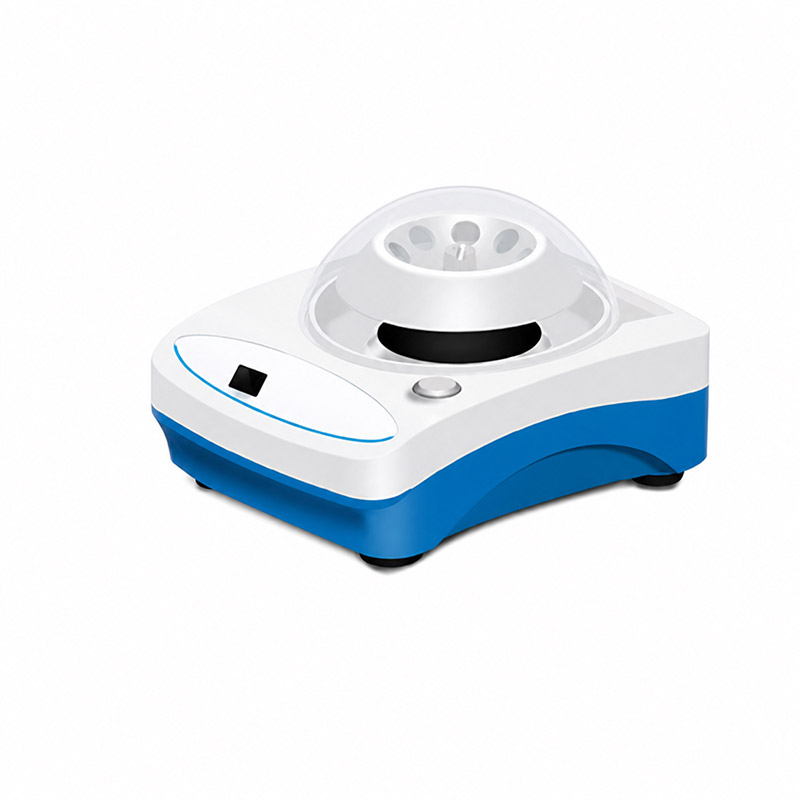
Unlike larger floor-model centrifuges, a mini centrifuge occupies minimal bench space, typically measuring around 15 x 15 cm. It is often used for:
- Spinning down PCR reagents and reaction mixtures
- Quickly pelleting cells or precipitation products
- Removing bubbles from samples before analysis
- Microfilter cell separation for HPLC protocols
- Routine clinical sample preparation, such as platelet-poor plasma separation
Many researchers appreciate the simplicity: just place your tubes, close the lid, and press a button. The run is usually timed or continuous, and the rotor stops automatically when the lid is opened (safety interlock).
How Does a Mini Centrifuge Work?
A mini centrifuge uses a small DC motor to spin a rotor at moderate speeds, typically in the range of 4,000 to 7,000 rpm for standard models. The centrifugal force generated—measured as relative centrifugal force (RCF) in ×g—pushes denser materials to the bottom of the tube while lighter liquid remains above. The RCF value depends on both the rotational speed and the radius of the rotor.
For common laboratory mini centrifuges, maximum RCF values are often around 2,000–3,000 ×g. This is sufficient for most quick spin-down tasks but not for applications requiring high-speed pelleting (e.g., bacterial cell harvesting, which typically needs 10,000 ×g or more). If you need higher speeds, you may consider a mini high-speed centrifuge that can reach up to 12,500 rpm or higher.
Rotor Types and Tube Compatibility
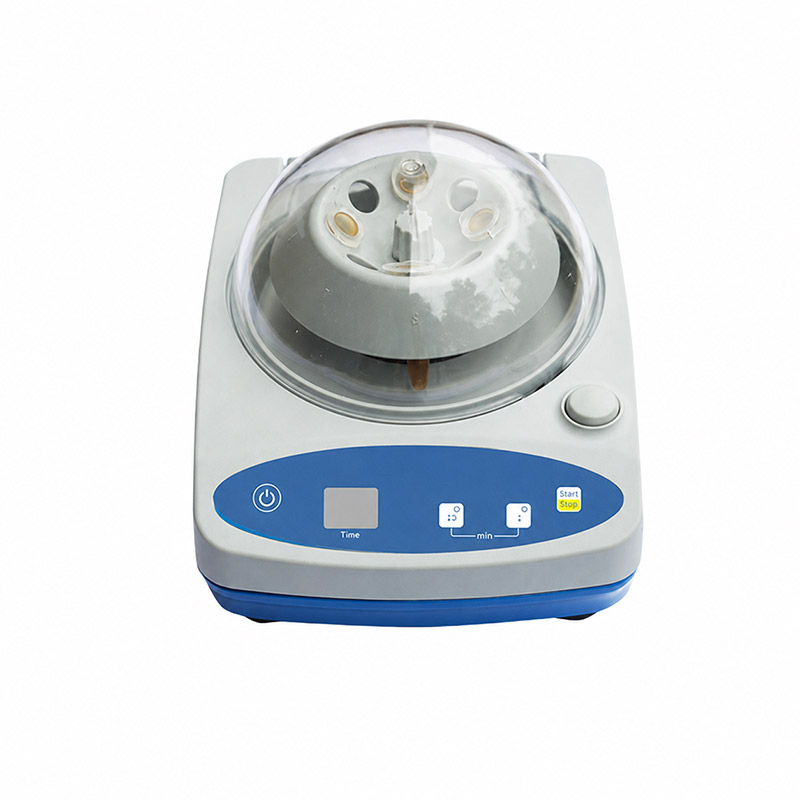
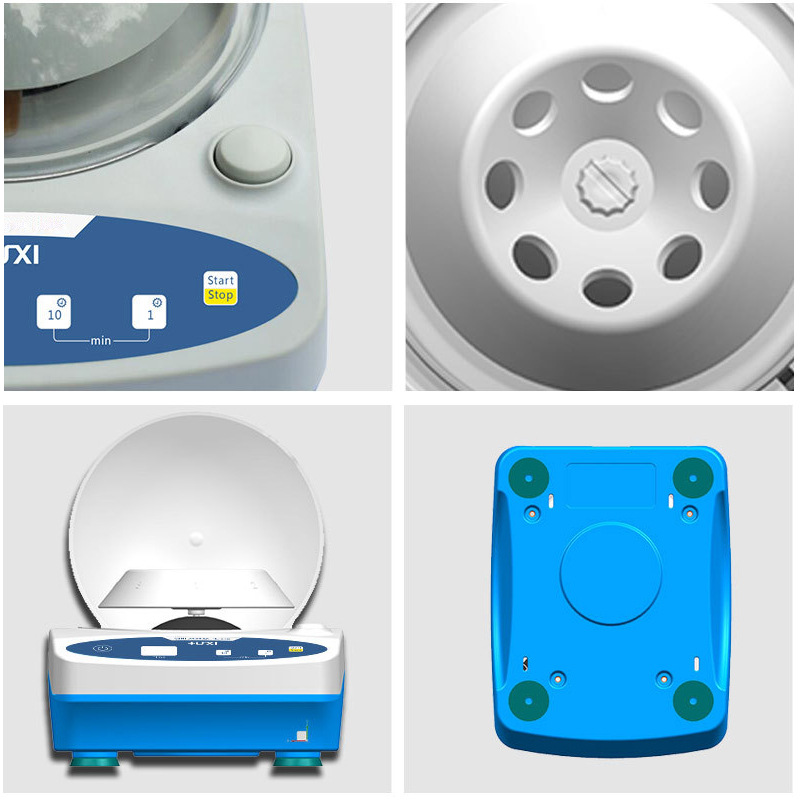
Most mini centrifuges come with a fixed-angle rotor that accommodates multiple tube sizes. A typical rotor can hold 6 or 8 tubes of 1.5/2.0 mL, and often includes adapters for 0.5 mL and 0.2 mL tubes. Some models also accept PCR strip tubes (8×0.2 mL strips). The rotor is usually made of plastic or aluminum, and it can be exchanged tool-free in many designs.
When selecting a mini centrifuge, check the rotor capacity and tube compatibility. If you process many PCR strips simultaneously, a model with a dedicated strip rotor will save time.
Key Applications of a Mini Centrifuge
Mini centrifuges are found in nearly every life science laboratory. Here are some common scenarios:
PCR and Molecular Biology
Before opening a PCR tube, a quick spin ensures that all liquid is at the bottom, preventing evaporation or contamination. This is arguably the most frequent use of a mini centrifuge in molecular biology labs.
Clinical and Diagnostic Work
In clinical labs, mini centrifuges are used for routine separations such as plasma preparation from whole blood (using microhematocrit capillaries or small blood tubes), urine sediment analysis, and serum preparation. Their small footprint makes them ideal for point-of-care testing stations.
Protein and Cell Biology
Protein precipitation, cell pelleting, and microcentrifuge tube clarification are common steps that benefit from a quick spin. Although a microcentrifuge with higher speed is often preferred for these tasks, a mini centrifuge can handle preliminary steps.
Sample Preparation for Structural Biology
In crystallography or cryo-EM sample preparation, a mini centrifuge is used to collect sample volumes before grid preparation or drop setting. The gentle yet effective spin ensures no air bubbles interfere with the sample surface.
How to Choose the Right Mini Centrifuge
When selecting a mini centrifuge for your lab, consider the following factors:
Speed and RCF Range
Standard mini centrifuges operate at 4,000–7,000 rpm, providing RCF up to about 3,000 ×g. If your protocols require higher forces for faster pelleting, look for models with higher speeds (e.g., 12,500 rpm). However, note that higher speed often comes with higher noise and vibration.
Rotor Capacity and Tube Types
Determine the maximum number of tubes you need to spin per run. Common options are 6- or 8-place rotors for 1.5/2.0 mL tubes, plus adapters for smaller tubes. If you work with PCR strips, ensure the rotor can accommodate them.
Safety Features
Look for a lid interlock that prevents operation when the lid is open. Many models also have an imbalance detection system that stops the rotor if the load is uneven. Low noise and low vibration are also important for a comfortable working environment.
Ease of Use
A simple one-button start, pulse function, and fixed timer (or continuous run) make operation straightforward. Some models have a transparent lid so you can observe the spin. Tool-free rotor exchange is also convenient.
Power Supply and Portability
Most mini centrifuges are powered by AC 100–240 V, 50/60 Hz, making them suitable for global use. Some models are battery-powered or come with a portable kit for field work. If you need to move the centrifuge between labs, a lightweight design (around 0.5 kg) and a carrying case are helpful.
Using a Mini Centrifuge Safely
Despite their small size, mini centrifuges should be used with care:
- Always balance the tubes – place opposite tubes of equal weight to avoid excessive vibration.
- Do not exceed the maximum tube fill volume recommended by the manufacturer.
- Close the lid securely before starting; most models will not operate if the lid is not properly latched.
- If the centrifuge becomes unbalanced, it will automatically stop. Remove the tubes, rebalance the load, and restart.
- Clean the rotor and chamber regularly to prevent contamination or corrosion.
Maintenance and Care
Mini centrifuges require minimal maintenance. Wipe the rotor and chamber with a mild detergent or 70% ethanol periodically. Check the rotor for cracks or wear, especially if you spin heavy tubes frequently. The motor is usually brushless and sealed, so no lubrication is needed. If the centrifuge becomes noisy after prolonged use, it may indicate bearing wear – contact the manufacturer for service.
When a Mini Centrifuge Is Not Enough
While a mini centrifuge is an excellent tool for quick spins, it has limitations. For pelleting bacteria, yeast, or large cell pellets, you typically need a microcentrifuge with higher RCF (10,000–20,000 ×g). For larger volumes (e.g., 15 mL or 50 mL tubes), a benchtop centrifuge is required. If your work involves heavy cell pelleting or high-speed separations, consider a mini high-speed centrifuge or a dedicated microcentrifuge.
Final Thoughts
A mini centrifuge is a fundamental piece of lab equipment that saves time and improves reproducibility in countless protocols. Its compact size, low cost, and ease of use make it an ideal addition to any personal workstation or shared lab space. When selecting one, match the speed, rotor capacity, and safety features to your specific applications. Whether you are preparing samples for PCR, clinical diagnostics, or structural biology, a reliable mini centrifuge will become an indispensable part of your daily workflow.