
Micro-computerized Touch Screen Planetary Ball Mill: Precision Control for Advanced Laboratory Milling
Why Choose a Micro-computerized Touch Screen Planetary Ball Mill?
In many laboratory settings, planetary ball mills are the workhorses for pulverizing, mixing, and mechanochemical synthesis. However, traditional models often rely on manual knobs or simple digital timers, making it cumbersome to set precise parameters, store reproducible recipes, or track the grinding process in real time. If you have ever struggled with inconsistent results due to variable speed control or forgotten to document the exact program for a critical experiment, you understand the need for a more intelligent solution.
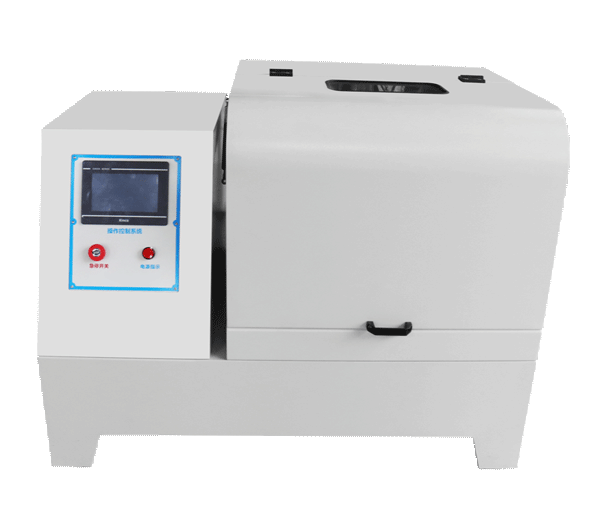
The Micro-computerized Touch Screen Planetary Ball Mill addresses these pain points directly. By integrating a full-color touch screen with a microcomputer control system, this mill allows you to program rotation speed, grinding time, pause intervals, and even forward/reverse cycles with a few taps. The digital interface eliminates guesswork and helps you achieve better reproducibility across batches—a crucial requirement in research, quality control, and small-scale production.
How Does It Work? The Science Behind the Touch Screen
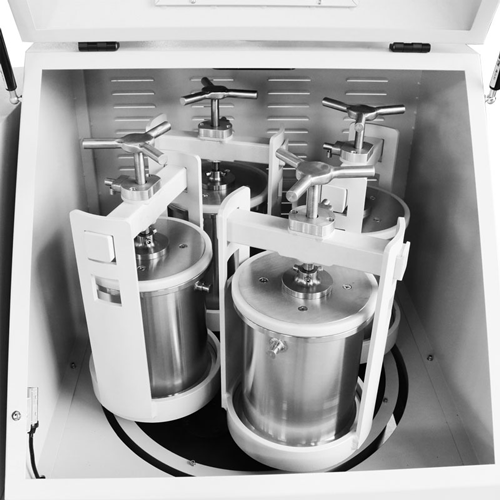
Like all planetary ball mills, this equipment operates on a simple but powerful mechanical principle: a turning plate (the sun wheel) carries four grinding jar holders, each rotating on its own axis in the opposite direction. This planetary motion generates high centrifugal forces that make the grinding balls collide against the jar walls and the sample, producing impact, friction, and shear forces. The result is rapid size reduction down to the nanometer range for many materials.
What sets the micro-computerized version apart is the programmable control layer. The touch screen interface lets you set:
- Rotation speed (typically 50–600 rpm for laboratory models, but the safe operating range depends on the jar volume and material);
- Grinding time from minutes to hours, with the option of multiple segments;
- Interval pauses to allow heat dissipation when milling temperature-sensitive samples;
- Direction change (forward/reverse) to promote uniform mixing and reduce agglomeration.
These parameters can be saved as individual programs, so you can recall them for future runs without re-entering every value. This is especially valuable when you need to replicate a milling procedure across different operators or time points.
Key Applications in Modern Materials Research
The combination of high-energy milling and precise digital control makes this mill suitable for a wide range of powder processing tasks. Common applications include:
- Nano-material preparation – Reducing particle size of ceramics, oxides, and metals to sub-micron or nanometer scale. Final particle size depends heavily on material hardness, milling time, ball-to-powder ratio, and the choice of grinding media. In many cases, the achievable size can reach below 100 nm after sufficient milling, but this is not guaranteed for every material.
- Mechanical alloying – Mixing different elemental powders to form alloys or composite powders through repeated cold welding and fracturing. The programmable intervals help manage temperature buildup during long runs.
- Battery material processing – Grinding and mixing cathode, anode, and solid electrolyte powders for lithium-ion and solid-state batteries. The touch screen allows precise control of the milling atmosphere when using vacuum or inert gas jars.
- Catalyst synthesis – Mechanochemical activation of catalyst precursors, where consistent energy input is critical.
Selecting the Right Configuration for Your Lab
When choosing a Micro-computerized Touch Screen Planetary Ball Mill, you should consider several factors to ensure it meets your specific needs:
Grinding Jar Volume and Material
Laboratory planetary ball mills typically offer jar volumes from 50 mL to 1 L (or even larger for production-scale models). The effective working capacity is about one-half to two-thirds of the jar volume to allow space for the grinding balls and sample movement. Jar materials include stainless steel, zirconia, agate, tungsten carbide, and nylon. Your choice should be based on the material being ground, acceptable contamination levels, and chemical compatibility.
Ball-to-Powder Ratio
This ratio (BPR) is one of the most influential factors in milling efficiency. A common starting point is 10:1 by weight, but ratios from 5:1 to 20:1 are used depending on the material hardness and target fineness. The touch screen cannot adjust BPR directly, but the programmable timer and speed settings allow you to optimize the process for a fixed BPR.
Rotational Speed
Higher speeds generate more impact energy and faster milling, but also raise the temperature inside the jar. For heat-sensitive materials, lower speeds with longer duration or interval pauses are recommended. The microcomputer can store multiple speed profiles for different materials.
Atmosphere Control
If you work with air-sensitive or easily oxidized powders, consider ordering the mill with vacuum or inert gas compatible jars. The touch screen control remains fully functional with these optional accessories, allowing you to program the entire process under a protective atmosphere.
Getting the Most Out of Your Touch Screen Planetary Ball Mill
To achieve consistent, reliable results, keep these practical tips in mind:
- Document your programs. Use the save function to store parameters for each material. Note the ball size, BPR, and jar material alongside the program number.
- Perform a short test run with a small sample to verify that the chosen speed and time produce the desired particle size before committing a large batch.
- Monitor temperature rise. Even with interval pauses, some materials may become excessively hot. If the jar surface temperature exceeds 60–70°C, increase the pause duration or reduce the running speed.
- Use the forward/reverse cycle to prevent the powder from sticking to the jar walls and to promote more uniform grinding.
- Clean jars and balls thoroughly between different materials to avoid cross-contamination. The microcomputer will retain your programs, so you can quickly restart after cleaning.
A Reliable Partner for Your Powder Processing Needs
Whether you are developing new battery materials, synthesizing advanced ceramics, or conducting routine sample preparation, a touch screen planetary ball mill can elevate your lab’s efficiency and reproducibility. The intuitive interface reduces the learning curve for new operators and helps experienced researchers fine-tune their protocols with precision.
When evaluating suppliers, look for a manufacturer that offers not only the mill but also a range of jar materials, grinding balls, and optional accessories like vacuum seals. TENCAN (Changsha Tianchuang Powder Technology Co., Ltd.) has been providing reliable planetary ball mills for laboratory and industrial use, and their Micro-computerized Touch Screen Planetary Ball Mill stands as a solid choice for researchers who value control, consistency, and ease of use.