
Micro Planetary Ball Mill: Compact High-Energy Milling for Precision Laboratory Applications
Why Choose a Micro Planetary Ball Mill for Your Lab?
In many research laboratories, the challenge is not just grinding a material, but doing so with limited sample quantities while still achieving submicron or even nanometer particle sizes. Standard planetary ball mills, with jar capacities starting from 50 mL, can be too large for handling precious or scarce samples like pharmaceutical intermediates, new catalyst formulations, or high-purity ceramics. This is where the Micro Planetary Ball Mill steps in—a compact high-energy milling system designed specifically for very small batch processing, typically with a total jar volume as low as 20 mL to 50 mL per station.
Despite its small footprint, this equipment shares the same powerful planetary motion principle as its larger counterparts, enabling it to generate enough impact and friction to reduce particles down to the nanometer range. It is an ideal tool for materials science, nanotechnology, chemistry, and geology labs where sample economy, precise process control, and contamination avoidance are critical.
How Does a Micro Planetary Ball Mill Work?
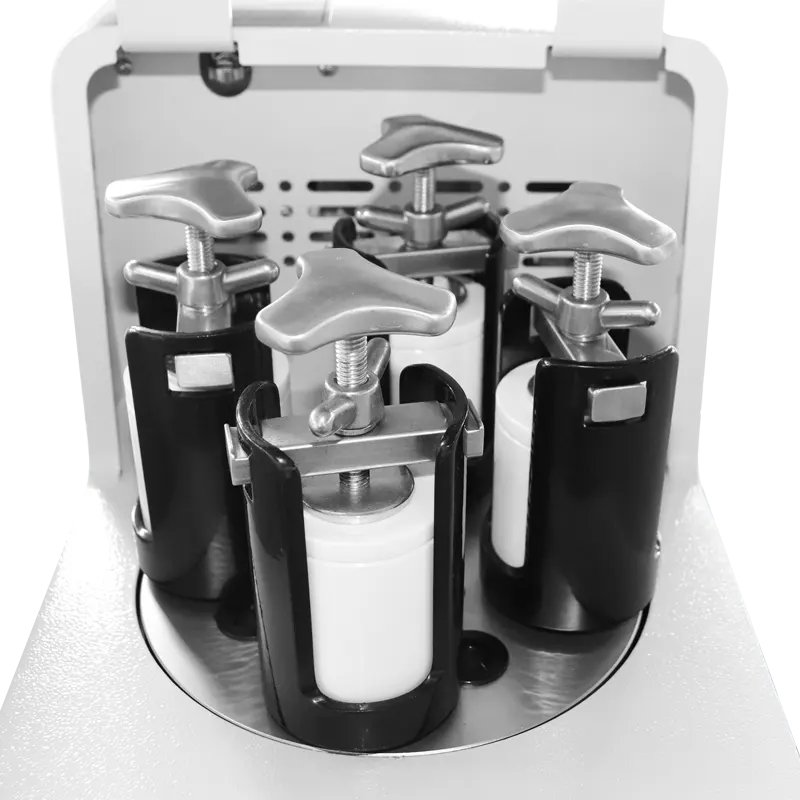
The working principle of a micro planetary ball mill is identical to that of standard planetary mills. The grinding jars (usually two or four) are mounted on a rotating sun disk. As the sun disk rotates, each jar also rotates in the opposite direction around its own axis—similar to the planetary motion of our solar system.
This dual rotation creates strong Coriolis forces and high centrifugal acceleration (traditionally up to 100 G or more). The grinding balls inside the jars are thrown against the jar walls and collide with each other, producing intense impact, shear, and friction. As a result, the sample trapped between the balls and the jar wall is continuously fractured and refined.
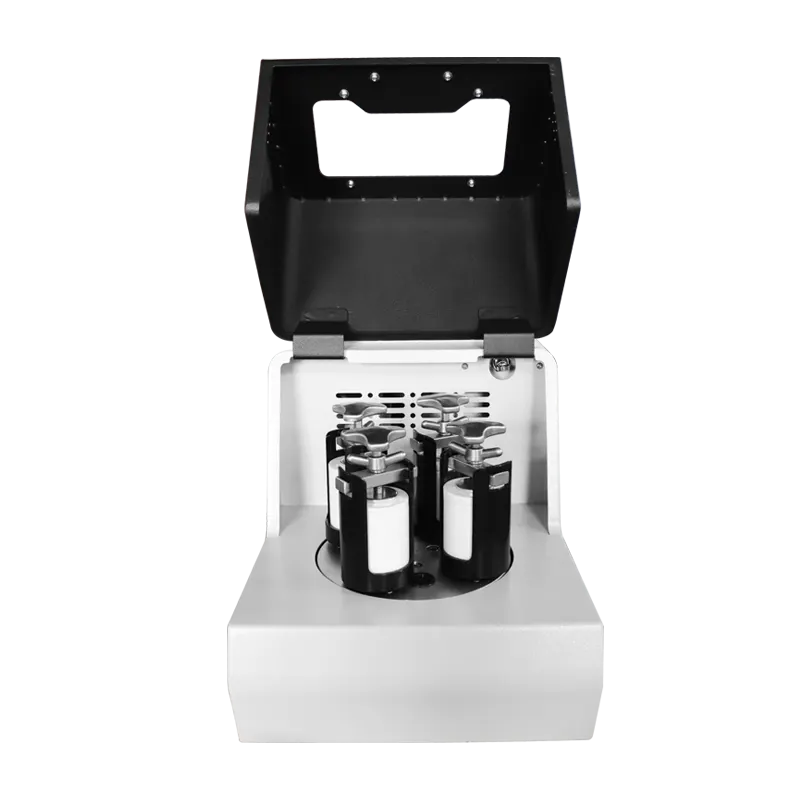
Because the jars are small, the energy density per unit volume is very high, allowing short grinding cycles—often 15 to 60 minutes—to reach submicron fineness. For heat-sensitive materials, the mill can be programmed with pauses to allow cooling, or equipped with a special cooling system if needed.
Key Parameters That Affect Grinding Results
To get the best performance from your micro planetary ball mill, you need to understand several adjustable parameters. Each one influences the final particle size, uniformity, and processing time.
Grinding Jar Volume and Material
Common jar capacities in micro mills range from 12 mL to 50 mL per station. The usable capacity is typically about one-third of the jar volume to leave room for grinding balls and sample movement. Jar materials include stainless steel, agate, zirconia, alumina, cemented carbide, nylon, and PTFE. Choosing the right jar material helps minimize contamination—for example, use agate or zirconia for ceramics, and PTFE for highly corrosive samples.
Grinding Ball Size and Composition
Smaller balls (1–3 mm) create more contact points and are better for fine grinding and dispersion, while larger balls (5–10 mm) provide stronger impact force for breaking down coarse particles. The ball material should match or exceed the hardness of the sample to avoid excessive wear. Zirconia (YTZ) is a common choice for many materials due to its high density and toughness.
Ball-to-Powder Ratio (BPR)
In many lab-scale experiments, a ball-to-powder ratio of 10:1 to 20:1 by weight is used. A ratio that is too low reduces the collision frequency and prolongs grinding; a ratio that is too high increases wear and may cause excessive temperature rise. For a micro mill with 20 mL jars, a typical BPR might be 10:1 using 3 mm balls, but this should always be optimized for your specific material.
Rotational Speed and Programming
Micro planetary ball mills usually offer speed ranges from 100 rpm to 600 rpm or higher. Higher speeds increase impact energy but also raise the temperature inside the jar. Many models allow forward/reverse rotation and timed pauses, which help redistribute sample and prevent agglomeration. For example, grinding for 10 minutes in one direction, then reversing for 10 minutes, and pausing for 5 minutes can improve homogeneity and reduce heat buildup.
Applications in Research and Industry
The micro planetary ball mill is widely used in fields where sample size is small but quality requirements are high:
- Nanomaterials synthesis: Grinding metal oxides, graphene, carbon nanotubes to nanometer scale.
- Pharmaceuticals: Reducing active pharmaceutical ingredients (APIs) for improved bioavailability.
- Ceramics and refractories: Homogeneous mixing of fine powders for sintering.
- Geological and mineral samples: Fine pulverization for XRF, XRD, or ICP analysis.
- Mechanical alloying: Creating alloy phases from elemental powders at room temperature.
- Battery material research: Preparing cathode and anode powders for lithium-ion batteries or solid-state electrolytes.
Practical Tips for Successful Micro Milling
Based on our experience helping researchers set up micro planetary mills, here are some practical suggestions:
1. Dry vs. Wet Grinding
Dry grinding is simpler but can cause caking or sticking. Wet grinding (adding a liquid like ethanol, water, or hexane) often reduces agglomeration and improves fineness. Use about 1.5 to 2 times the sample weight of liquid for suspension grinding. After milling, the slurry can be dried in an oven or freeze-dryer.
2. Avoid Overfilling
Never fill the jar more than two-thirds of its volume (including balls). Overfilling reduces ball movement and grinding efficiency. A typical guideline is: 50% of jar volume for balls, 25% for sample and liquid (if wet), leaving 25% empty space for ball motion.
3. Use Vacuum or Inert Gas Protection
If your sample is air-sensitive (e.g., lithium metal, titanium, some sulfides), consider using a vacuum grinding jar or purging the jar with argon or nitrogen. Some micro mills are specially designed to fit inside a glove box—such as the XQM-0.2S glove box special edition, which allows safe handling of highly reactive materials.
4. Control Contamination
Choose jar and ball materials with the same composition as your sample if possible, or at least with minimal potential contamination. Perform a pre-cleaning run with pure grinding media (no sample) to remove residues from previous experiments.
5. Monitor Temperature
High-energy milling generates heat. For temperature-sensitive materials, use intermittent grinding cycles (e.g., 10 minutes run, 10 minutes pause) or use a mill with a forced air cooling or liquid cooling system. The low temperature planetary grinding machine is one option for extreme cases.
Selecting the Right Micro Planetary Ball Mill Configuration
When choosing a micro planetary ball mill for your lab, consider the following factors:
- Number of stations: 2-station or 4-station models. Four stations allow simultaneous grinding of up to four different samples.
- Jar capacity: 12 mL, 20 mL, 25 mL, 50 mL per station. Smaller jars are suitable for extremely limited samples.
- Maximum speed: Higher speed (e.g., 600 rpm) enables shorter grinding time but may increase wear and temperature.
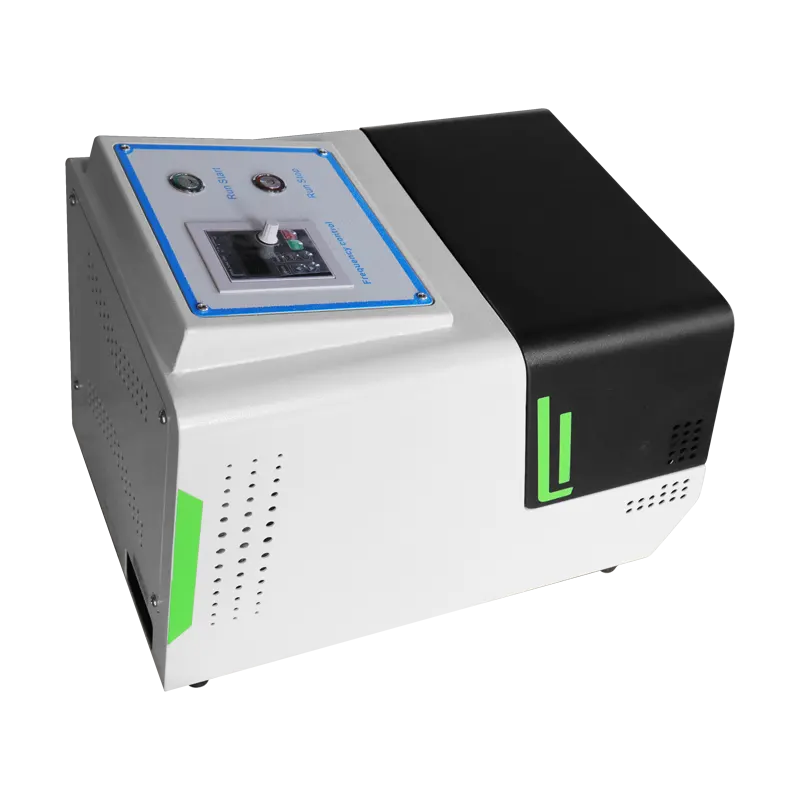
- Control system: Look for programmable controllers with timer, reverse rotation, and pause functions. Many micro mills now feature a touch screen interface for easy parameter setting and process memory.
- Safety features: Lid interlock, emergency stop, and protective enclosure are essential for safe operation.
- Accessories: Vacuum jars, cooling jackets, glove box compatibility, and customized ball materials can extend the range of applications.
Final Thoughts
The micro planetary ball mill is a powerful yet compact tool that solves the problem of fine grinding and mixing for small-volume samples in research environments. By understanding its working principle and carefully selecting parameters like jar material, ball size, ball-to-powder ratio, and speed, you can achieve reliable and reproducible results down to the submicron level. Whether you are working on new nanomaterials, pharmaceutical formulations, or advanced ceramics, this equipment offers the precision and control needed for cutting-edge development.
If you are ready to evaluate your specific application, we recommend contacting an experienced laboratory ball mill supplier to discuss your material type, feed size, target particle size, and batch volume. They can help confirm the appropriate micro mill configuration and accessory choices, ensuring you get the most out of your investment.